Kirjojen hintavertailu. Mukana 11 244 527 kirjaa ja 12 kauppaa.

Kirjahaku

Etsi kirjoja tekijän nimen, kirjan nimen tai ISBN:n perusteella.

7 kirjaa tekijältä Kieran Allen

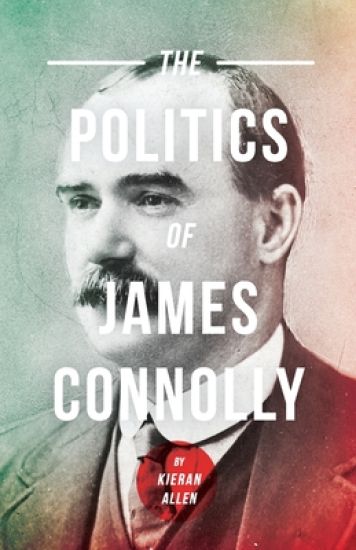
The Politics Of James Connolly

The Politics Of James Connolly

Kieran Allen

Pluto Press
1995
nidottu
Born in 1868 and executed by the British in 1916 for his role in the Easter Rising, the work of Irish national hero James Connolly has long been misunderstood. From Fianna Fáil and Sinn Féin, to conservative Irish nationalists and the Church, many groups have claimed Connolly as their own, his ideas and strategies used and distorted to justify particular political positions. Kieran Allen breaks this mould, assessing the founder of the Irish Marxist movement ideas from a revolutionary socialist perspective. Allen considers the strengths and weaknesses of Connolly’s revolutionary strategy, the effect of his commitment to international socialism on his nationalist loyalties and arguing that, ultimately, Connolly's enduring relevance derives from his anti-imperialism. Any socialist movement today ignores this book at its peril.
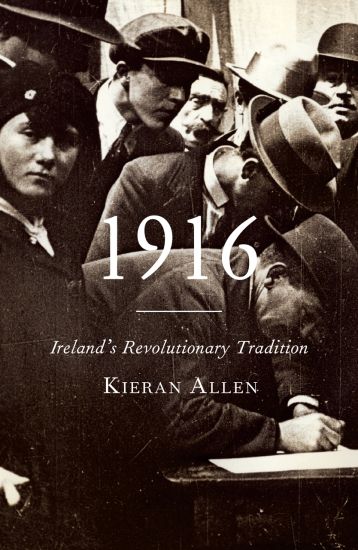
1916

1916

Kieran Allen

Pluto Press
2016
pokkari
A few minutes after noon on the 24th April, 1916, Patrick Pearse stepped outside the newly occupied GPO on Sackville Street with a copy of the Proclamation of the Irish Republic. Reading aloud, he declared a strike for Irish freedom against the world’s greatest imperial power. The Easter Rising, as the six days of intense, bloody fighting that followed came to be known, set the course for the next 100 years of Irish history; the ‘Heroes of ‘16’ becoming a national cultural and political touchstone down the generations. But today, canonised and mummified, the radical visions of Pearse and the socialist James Connolly are an awkward encumbrance on an Irish state that has its roots in the counter-revolution of the civil war, and which has emerged as a haven of economic neoliberalism. In this fascinating alternative history of modern Ireland, Kieran Allen follows the thread of 1916’s ‘revolutionary tradition’ - an uneasy marriage of Socialism and Republicanism - as it has unravelled across the century. From the strikes, boycotts, occupations and land redistribution that accompanied the war of independence; to the ‘carnival of reaction’ that followed; all the way up to the current movement against water charges and austerity, Allen reveals the complexities, ruptures and continuities of a revolutionary tradition that continues to haunt the establishment today.
1916

1916

Kieran Allen

Pluto Press
2016
sidottu
A few minutes after noon on the 24th April, 1916, Patrick Pearse stepped outside the newly occupied GPO on Sackville Street with a copy of the Proclamation of the Irish Republic. Reading aloud, he declared a strike for Irish freedom against the world’s greatest imperial power. The Easter Rising, as the six days of intense, bloody fighting that followed came to be known, set the course for the next 100 years of Irish history; the ‘Heroes of ‘16’ becoming a national cultural and political touchstone down the generations. But today, canonised and mummified, the radical visions of Pearse and the socialist James Connolly are an awkward encumbrance on an Irish state that has its roots in the counter-revolution of the civil war, and which has emerged as a haven of economic neoliberalism. In this fascinating alternative history of modern Ireland, Kieran Allen follows the thread of 1916’s ‘revolutionary tradition’ - an uneasy marriage of Socialism and Republicanism - as it has unravelled across the century. From the strikes, boycotts, occupations and land redistribution that accompanied the war of independence; to the ‘carnival of reaction’ that followed; all the way up to the current movement against water charges and austerity, Allen reveals the complexities, ruptures and continuities of a revolutionary tradition that continues to haunt the establishment today.
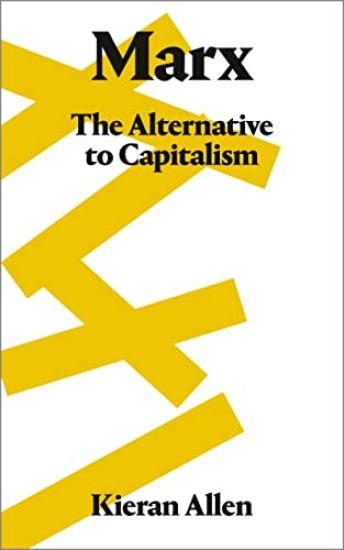
Marx

Marx

Kieran Allen

Pluto Press
2017
pokkari
If we are serious about finding a different way to run the post-credit crunch society, we must start by introducing alternatives to undergraduates. Kieran Allen begins the task with an accessible and comprehensive look at the ideas of Karl Marx. Dispensing with the dryness of traditional explanations of Marx, Allen shows how Marx's ideas apply to modern society. The first section briefly outlines Marx's life and the development of his work, then goes on to clearly explain his key theories, including historical materialism and surplus value. The second section examines alternatives to capitalism, the concept of 'anti-capitalism' and provides concrete, contemporary examples of Marx’s theories being put into practice in today's world.
Weber

Weber

Kieran Allen

Pluto Press
2017
pokkari
Max Weber is one of the founding fathers of sociology. He is often referred to as a sophisticated 'value-free' sociologist. This new critical introduction argues that Weber's sociology cannot be divorced from his political standpoint. Weber saw himself as a 'class conscious bourgeois' and his sociology reflects this outlook. Providing clear summaries of Weber's ideas - concentrating on the themes most often encountered on sociology courses - Kieran Allen provides a lively introduction to this key thinker. Kieran Allen explores Weber's political background through his life and his writing. Weber was a neo-liberal who thought that the market guaranteed efficiency and rationality. He was an advocate of empire. He supported the carnage of WW1 and vehemently attacked German socialists such as Rosa Luxemburg. Weber's most famous book, The Protestant Ethic and the Spirit of Capitalism, ignores the bloody legacy associated with the early accumulation of capital. Instead, he locates the origins of the system in a new rigorous morality. Using a political framework, Kieran Allen's book is is ideal for students who want to develop a critical approach.
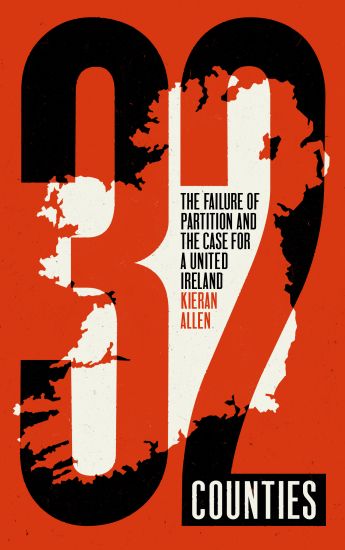
32 Counties

32 Counties

Kieran Allen

Pluto Press
2021
pokkari
'This is Irish history seen anew, from below, bristling with practical lessons for working-class struggle today' - Eamonn McCann The 32 counties of Ireland were divided through imperial terror and gerrymandering. Partition was borne from a Tory strategy to defend the British Empire and has spawned a ‘carnival of reaction’ in Irish politics ever since. Over the last 100 years, conservative forces have dominated both states offering religious identity as a diversion from economic failures and inequality. Through a sharp analysis of the history of partition, Kieran Allen rejects the view that the 'two cultures' of Catholic and Protestant communities lock people into permanent antagonism. Instead, the sectarian states have kept its citizens divided through political and economic measures like austerity, competition for reduced services and low wages. Overturning conventional narratives, 32 Counties evokes the tradition of James Connolly and calls for an Irish unity movement from below to unite the North and the Republic into a secular, socialist and united Ireland.
32 Counties

32 Counties

Kieran Allen

Pluto Press
2021
sidottu
'This is Irish history seen anew, from below, bristling with practical lessons for working-class struggle today' - Eamonn McCann The 32 counties of Ireland were divided through imperial terror and gerrymandering. Partition was borne from a Tory strategy to defend the British Empire and has spawned a ‘carnival of reaction’ in Irish politics ever since. Over the last 100 years, conservative forces have dominated both states offering religious identity as a diversion from economic failures and inequality. Through a sharp analysis of the history of partition, Kieran Allen rejects the view that the 'two cultures' of Catholic and Protestant communities lock people into permanent antagonism. Instead, the sectarian states have kept its citizens divided through political and economic measures like austerity, competition for reduced services and low wages. Overturning conventional narratives, 32 Counties evokes the tradition of James Connolly and calls for an Irish unity movement from below to unite the North and the Republic into a secular, socialist and united Ireland.