Kirjojen hintavertailu. Mukana 11 342 296 kirjaa ja 12 kauppaa.

Kirjahaku

Etsi kirjoja tekijän nimen, kirjan nimen tai ISBN:n perusteella.

10 kirjaa tekijältä Kieran Setiya

Practical Knowledge

Practical Knowledge

Kieran Setiya

Oxford University Press Inc
2016
sidottu
In the last forty years, action theory has revitalized moral philosophy. Philosophers have explored the nature of agency, what is involved in acting for a reason, how we know what we are doing, the role of intention, desire, and belief in motivating action, and more. At their most ambitious, philosophers have claimed that action theory is the foundation of ethics. For rationalists or constitutivists, the standards of practical reason derive from the nature of agency as a functional or teleological kind. They are no more mysterious than the standards for being a good clock or a good heart, given the function of clocks and hearts. In this collection of new and previously published essays, Kieran Setiya defends a causal theory of intentional action on which it is explained by knowledge in intention, a form of practical knowledge that transcends prior evidence. Such knowledge rests on knowing how to do the things we do. The theory is otherwise minimalist: agents need not regard their reasons as good, put means to ends, or adopt particular aims. It follows that we must reject the rationalist or constitutivist approach: the nature of agency is too thin to support the standards of practical reason. But the upshot is not nihilism. Instead, the requirement of means-end coherence is explained by the cognitive aspect of intention; and the standards of practical reason are those of ethical virtue, applied to practical thought.
Knowing Right From Wrong

Knowing Right From Wrong

Kieran Setiya

Oxford University Press
2014
nidottu
Can we have objective knowledge of right and wrong, of how we should live and what there is reason to do? The thought that we can is beset by sceptical problems. In the face of radical disagreement, can we be sure that we are not deceived? If the facts are independent of what we think, is our reliability a mere coincidence? Can it be anything but luck when our beliefs are true? In Knowing Right From Wrong, Kieran Setiya confronts these questions in their most compelling and articulate forms: the argument from ethical disagreement; the argument from reliability and coincidence; and the argument from accidental truth. In order to resist the inference from disagreement to scepticism, he argues, we must reject epistemologies of intuition, coherence, and reflective equilibrium. The problem of disagreement can be solved only if the basic standards of epistemology in ethics are biased towards the truth. In order to solve the problem of coincidence, we must embrace arguments for reliability in ethics that rely on ethical beliefs. Such arguments do not beg the question in an epistemically damaging way. And in order to make sense of ethical knowledge as non-accidental truth, we must give up the independence of ethical fact and belief. We can do so without implausible predictions of convergence or relativity if the facts are bound to us through the natural history of human life. If there is objective ethical knowledge, human nature is its source.
Knowing Right From Wrong

Knowing Right From Wrong

Kieran Setiya

Oxford University Press
2012
sidottu
Can we have objective knowledge of right and wrong, of how we should live and what there is reason to do? The thought that we can is beset by sceptical problems. In the face of radical disagreement, can we be sure that we are not deceived? If the facts are independent of what we think, is our reliability a mere coincidence? Can it be anything but luck when our beliefs are true? In Knowing Right From Wrong, Kieran Setiya confronts these questions in their most compelling and articulate forms: the argument from ethical disagreement; the argument from reliability and coincidence; and the argument from accidental truth. In order to resist the inference from disagreement to scepticism, he argues, we must reject epistemologies of intuition, coherence, and reflective equilibrium. The problem of disagreement can be solved only if the basic standards of epistemology in ethics are biased towards the truth. In order to solve the problem of coincidence, we must embrace arguments for reliability in ethics that rely on ethical beliefs. Such arguments do not beg the question in an epistemically damaging way. And in order to make sense of ethical knowledge as non-accidental truth, we must give up the independence of ethical fact and belief. We can do so without implausible predictions of convergence or relativity if the facts are bound to us through the natural history of human life. If there is objective ethical knowledge, human nature is its source.
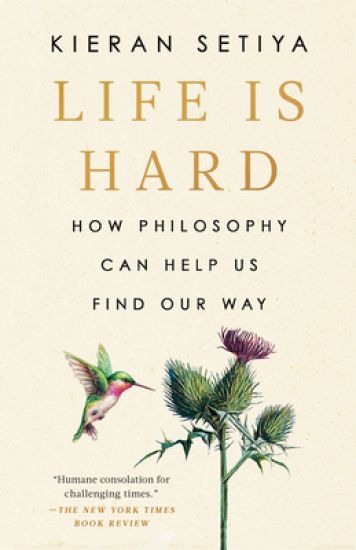
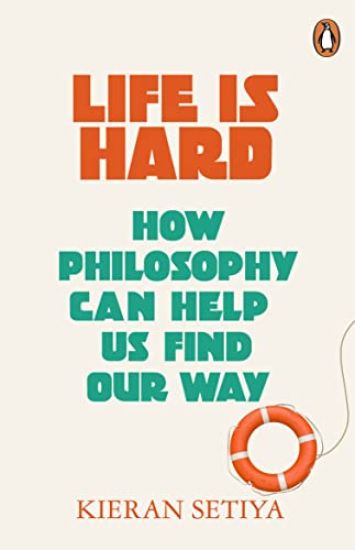
Life Is Hard: How Philosophy Can Help Us Find Our Way
NAMED A BEST BOOK OF THE YEAR BY THE NEW YORKER AND THE ECONOMIST "Life Is Hard is a humane consolation for challenging times. Reading it is like speaking with a thoughtful friend who never tells you to cheer up, but, by offering gentle companionship and a change of perspective, makes you feel better anyway." --The New York Times Book ReviewThere is no cure for the human condition: life is hard. But Kieran Setiya believes philosophy can help. He offers us a map for navigating rough terrain, from personal trauma to the injustice and absurdity of the world. In this profound and personal book, Setiya shows how the tools of philosophy can help us find our way. Drawing on ancient and modern philosophy as well as fiction, history, memoir, film, comedy, social science, and stories from Setiya's own experience, Life Is Hard is a book for this moment--a work of solace and compassion. Warm, accessible, and good-humored, this book is about making the best of a bad lot. It offers guidance for coping with pain and making new friends, for grieving the lost and failing with grace, for confronting injustice and searching for meaning in life. Countering pop psychologists and online influencers who admonish us to "find our bliss" and "live our best lives," Setiya acknowledges that the best is often out of reach. Instead, he asks how we can weather life's adversities, finding hope and living well when life is hard.
Reasons without Rationalism

Reasons without Rationalism

Kieran Setiya

Princeton University Press
2010
pokkari
Modern philosophy has been vexed by the question "Why should I be moral?" and by doubts about the rational authority of moral virtue. In Reasons without Rationalism, Kieran Setiya shows that these doubts rest on a mistake. The "should" of practical reason cannot be understood apart from the virtues of character, including such moral virtues as justice and benevolence, and the considerations to which the virtues make one sensitive thereby count as reasons to act. Proposing a new framework for debates about practical reason, Setiya argues that the only alternative to this "virtue theory" is a form of ethical rationalism in which reasons derive from the nature of intentional action. Despite its recent popularity, however, ethical rationalism is false. It wrongly assumes that we act "under the guise of the good," or it relies on dubious views about intention and motivation. It follows from the failure of rationalism that the virtue theory is true: we cannot be fully good without the perfection of practical reason, or have that perfection without being good. Addressing such topics as the psychology of virtue and the explanation of action, Reasons without Rationalism is essential reading for philosophers interested in ethics, rationality, or the philosophy of mind.
Midlife

Midlife

Kieran Setiya

PRINCETON UNIVERSITY PRESS
2017
sidottu
Philosophical wisdom and practical advice for overcoming the problems of middle age How can you reconcile yourself with the lives you will never lead, with possibilities foreclosed, and with nostalgia for lost youth? How can you accept the failings of the past, the sense of futility in the tasks that consume the present, and the prospect of death that blights the future? In this self-help book with a difference, Kieran Setiya confronts the inevitable challenges of adulthood and middle age, showing how philosophy can help you thrive. You will learn why missing out might be a good thing, how options are overrated, and when you should be glad you made a mistake. You will be introduced to philosophical consolations for mortality. And you will learn what it would mean to live in the present, how it could solve your midlife crisis, and why meditation helps. Ranging from Aristotle, Schopenhauer, and John Stuart Mill to Virginia Woolf and Simone de Beauvoir, as well as drawing on Setiya's own experience, Midlife combines imaginative ideas, surprising insights, and practical advice. Writing with wisdom and wit, Setiya makes a wry but passionate case for philosophy as a guide to life.
Midlife

Midlife

Kieran Setiya

Princeton University Press
2018
pokkari
How can you reconcile yourself with the lives you will never lead, with possibilities foreclosed, and with nostalgia for lost youth? How can you accept the failings of the past, the sense of futility in the tasks that consume the present, and the prospect of death that blights the future? In this self-help book with a difference, Kieran Setiya confronts the inevitable challenges of adulthood and middle age, showing how philosophy can help you thrive. You will learn why missing out might be a good thing, how options are overrated, and when you should be glad you made a mistake. You will be introduced to philosophical consolations for mortality. And you will learn what it would mean to live in the present, how it could solve your midlife crisis, and why meditation helps. Ranging from Aristotle, Schopenhauer, and John Stuart Mill to Virginia Woolf and Simone de Beauvoir, as well as drawing on Setiya’s own experience, Midlife combines imaginative ideas, surprising insights, and practical advice. Writing with wisdom and wit, Setiya makes a wry but passionate case for philosophy as a guide to life.
Life Is Hard

Life Is Hard

Kieran Setiya

Cornerstone
2023
pokkari
A NEW YORKER AND THE ECONOMIST BEST BOOK OF 2022"Life Is Hard is a humane consolation for challenging times. Reading it is like speaking with a thoughtful friend who never tells you to cheer up, but, by offering gentle companionship and a change of perspective, makes you feel better anyway" The New York Times Book Review'An eloquent, moving, witty and above all useful demonstration of philosophy's power to help us weather the storms of being human' Oliver Burkeman, author of FOUR THOUSAND WEEKS______________________________________Pain, Loneliness, Grief, Injustice ... Hope?Life is hard - as the past few years have made painfully clear. From personal trauma to the injustice and absurdity of the world, sometimes simply going on can feel too much.But could there be solace - and even hope - in acknowledging the hardships of the human condition? Might doing so free us from the tyranny of striving for our "best lives" and help us find warmth, humanity, and humour in the lives we actually have? Could it inspire in us the desire for a better world?In this profound and personal book, Kieran Setiya shows how philosophy can help us find our way. He shares his own experience with chronic pain and the consolation that comes from making sense of it. He asks what we can learn from loneliness and loss about the value of human life. And he explores how we can fail with grace, confront injustice, and search for meaning in the face of despair. Drawing on ancient and modern philosophy, as well as fiction, comedy, social science and personal essay, Life is Hard is a book for this moment - a work of solace and compassion. It draws us towards justice, for ourselves and others, by acknowledging what it means to be alive.