Kirjojen hintavertailu. Mukana 11 699 587 kirjaa ja 12 kauppaa.

Kirjahaku

Etsi kirjoja tekijän nimen, kirjan nimen tai ISBN:n perusteella.

4 kirjaa tekijältä Kim Fridkin; Patrick Kenney

Taking Aim at Attack Advertising

Taking Aim at Attack Advertising

Kim Fridkin; Patrick Kenney

Oxford University Press Inc
2019
sidottu
Negative campaigning is a central component of politics in the United States. Yet, until now, demonstrating the impact of combative advertising on voters has been elusive. How can we reconcile the findings of a plethora of studies with the methods of politicians? This book cuts through to the central issue: how negative advertising influences voters' attitudes and actions. Focusing on U.S. senatorial campaigns, Kim Fridkin and Patrick Kenney draw from surveys, experiments, facial expression analysis, content analyses, and focus groups. They develop the "tolerance and tactics theory of negativity" that marries citizens' tolerance for negativity with campaign messages varying in their civility and relevance and demonstrate how citizens' beliefs and behaviors are affected. Using this original framework, they find harsh and relevant messages influence voters' decisions, especially for people with less tolerance for negativity. And, irrelevant and uncivil advertisements demobilize voters, with low tolerance individuals affected most sharply.

Taking Aim at Attack Advertising

Taking Aim at Attack Advertising

Kim Fridkin; Patrick Kenney

Oxford University Press Inc
2019
nidottu
Negative campaigning is a central component of politics in the United States. Yet, until now, demonstrating the impact of combative advertising on voters has been elusive. How can we reconcile the findings of a plethora of studies with the methods of politicians? This book cuts through to the central issue: how negative advertising influences voters' attitudes and actions. Focusing on U.S. senatorial campaigns, Kim Fridkin and Patrick Kenney draw from surveys, experiments, facial expression analysis, content analyses, and focus groups. They develop the "tolerance and tactics theory of negativity" that marries citizens' tolerance for negativity with campaign messages varying in their civility and relevance and demonstrate how citizens' beliefs and behaviors are affected. Using this original framework, they find harsh and relevant messages influence voters' decisions, especially for people with less tolerance for negativity. And, irrelevant and uncivil advertisements demobilize voters, with low tolerance individuals affected most sharply.
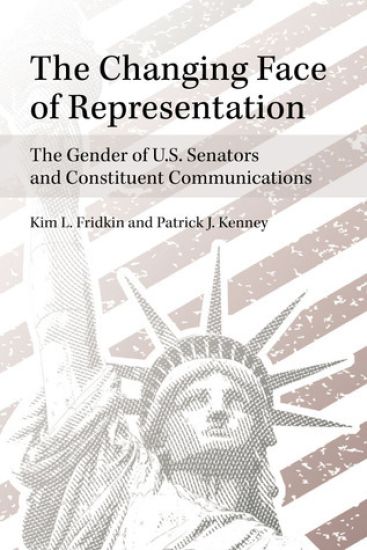
The Changing Face of Representation

The Changing Face of Representation

Kim Fridkin; Patrick Kenney

The University of Michigan Press
2015
nidottu
As the number of women in the U.S. Senate grows, so does the number of citizens represented by women senators. At the same time, gender remains a key factor in senators’ communications to constituents as well as in news media portrayals of senators. Focusing on 32 male and female senators during the 2006 congressional election year, Kim L. Fridkin and Patrick J. Kenney examine in detail senators’ official websites, several thousand press releases and local news stories, and surveys of 18,000 citizens to discern constituents’ attitudes about their senators. The authors conclude that gender role expectations and stereotypes do indeed constrain representational and campaign messages and influence news coverage of both candidates and elected senators. Further, while citizens appear to be less influenced by entrenched stereotypes, they pay more attention to female senators’ messages and become more knowledgeable about them, in comparison to male senators.
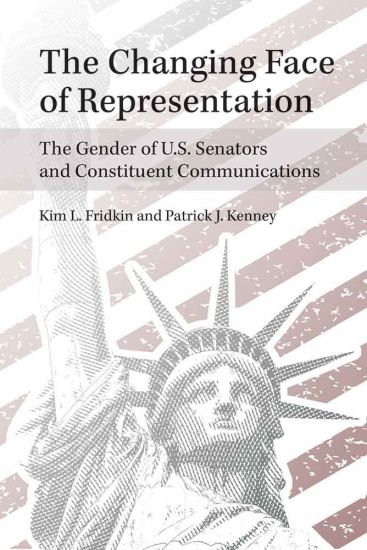
The Changing Face of Representation

The Changing Face of Representation

Kim Fridkin; Patrick Kenney

The University of Michigan Press
2014
sidottu
As the number of women in the U.S. Senate grows, so does the number of citizens represented by women senators. At the same time, gender remains a key factor in senators’ communications to constituents as well as in news media portrayals of senators. Focusing on 32 male and female senators during the 2006 congressional election year, Kim L. Fridkin and Patrick J. Kenney examine in detail senators’ official websites, several thousand press releases and local news stories, and surveys of 18,000 citizens to discern constituents’ attitudes about their senators. The authors conclude that gender role expectations and stereotypes do indeed constrain representational and campaign messages and influence news coverage of both candidates and elected senators. Further, while citizens appear to be less influenced by entrenched stereotypes, they pay more attention to female senators’ messages and become more knowledgeable about them, in comparison to male senators.