Kirjojen hintavertailu. Mukana 11 342 296 kirjaa ja 12 kauppaa.

Kirjahaku

Etsi kirjoja tekijän nimen, kirjan nimen tai ISBN:n perusteella.

8 kirjaa tekijältä Kim Hyesoon

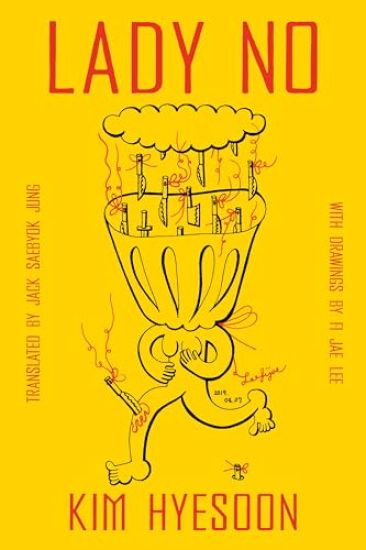
Lady No

Lady No

Kim Hyesoon

HARPERCOLLINS PUBLISHERS INC
2026
sidottu
From the legendary avant-garde poet Kim Hyesoon, a landmark collection documenting her first and only work of digital performance art to date. “Poetry in Korea has been a vaunted form—and traditionally left to men. Kim broke away from the masculine styles that came before her. . . . Kim has pursued a vernacular that’s intensely Korean yet open to the world.” —E. Tammy Kim, New Yorker In March 2014, Kim Hyesoon, the grand dame of contemporary Korean poetry, began to post anonymously on the online blog of Munhakdongne, a major South Korean publisher. Rather than use her own name, Kim Hyesoon’s chosen persona for these blog posts was Lady No. Fittingly, Lady No’s writings are dissenting, combative, subversive, and ontologically feminine; formally, they defy any attempt at easy categorization. They are neither poems, nor are they prose, but a radical innovation Kim calls shisanmun—an ungovernable style that heralds her internationally acclaimed works Autobiography of Death and Phantom Pain Wings. The entries in this seminal collection, arranged chronologically and in their entirety here for the first time, are an eclectic hybrid of opinion editorials, aphorisms, recipes, daydreams, travelogues, art criticism, as well as treatises on the metaphysics of poetry and the current state of international literature. They take place in and around the world but most often they return to a country called Aerok, a frightening yet familiar mirror of contemporary Korea. First unwittingly, and then with concentrated grief, they chart the course of one of the most politically significant years in recent South Korean history: the sinking of the MV Sewol on the morning of April 16th that killed 304 people, including 250 high school students, and the reverberations of this national tragedy that culminated in the impeachment and ouster of the country’s then-sitting president. Taken together, these writings bear witness to the people’s shame, mourning, and perseverance under a corrupt administration—a painful public reckoning not dissimilar from our own. Surreal but visceral, and inflected with both humor and rage, Lady No contains perhaps the most accessible of Kim Hyesoon’s writing to date and documents her first and only work of digital performance art. Totaling 179 individual entries and featuring 34 drawings by the artist Fi Jae Li, Lady No explores the inner and outer lives of contemporary Korean women and embodies the inextricable link between social justice and literary citizenship.
Autobiography of Death

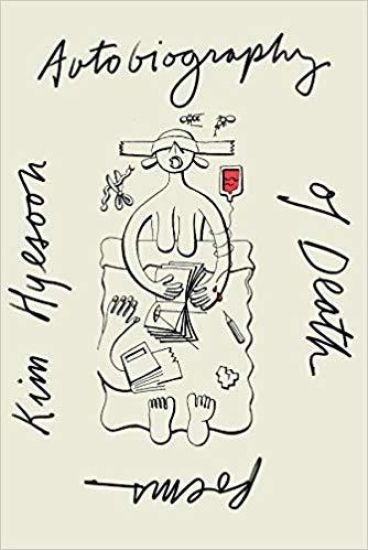
Autobiography of Death

Kim Hyesoon

New Directions Publishing Corporation
2018
nidottu
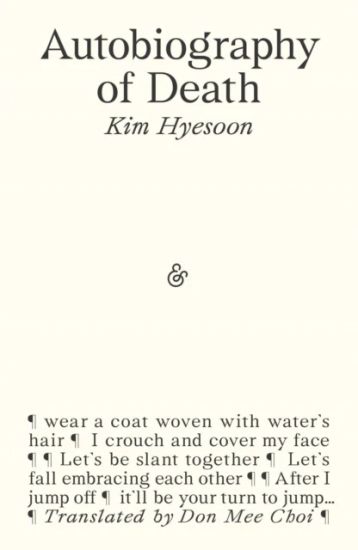
*Winner of The Griffin International Poetry Prize and the Lucien Stryk Asian Translation Award* The title section of Kim Hyesoon’s powerful new book, Autobiography of Death, consists of forty-nine poems, each poem representing a single day during which the spirit roams after death before it enters the cycle of reincarnation. The poems not only give voice to those who met unjust deaths during Korea’s violent contemporary history, but also unveil what Kim calls “the structure of death, that we remain living in.” Autobiography of Death, Kim’s most compelling work to date, at once reenacts trauma and narrates our historical death—how we have died and how we survive within this cyclical structure. In this sea of mirrors, the plural “you” speaks as a body of multitudes that has been beaten, bombed, and buried many times over by history. The volume concludes on the other side of the mirror with “Face of Rhythm,” a poem about individual pain, illness, and meditation.
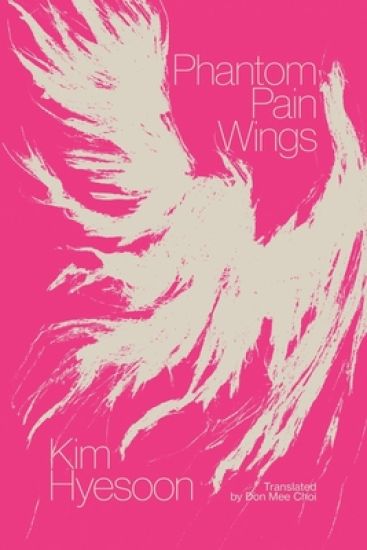
Phantom Pain Wings

Phantom Pain Wings

Kim Hyesoon

NEW DIRECTIONS PUBLISHING CORPORATION
2023
nidottu
WINNER OF THE NATIONAL BOOK CRITICS CIRCLE AWARD FOR POETRY An iconic figure in the emergence of feminist poetry in South Korea and now internationally renowned, Kim Hyesoon pushes the poetic envelope into the farthest reaches of the lyric universe. In her new collection, Kim depicts the memory of war trauma and the collective grief of parting through what she calls an “I-do-bird-sequence,” where “Bird-human is the ‘I.’” Her remarkable essay “Bird Rider” explains: “I came to write Phantom Pain Wings after Daddy passed away. I called out for birds endlessly. I wanted to become a translator of bird language. Bird language that flies to places I’ve never been.” What unfolds is an epic sequence of bird ventriloquy exploring the relentless physical and existential struggles against power and gendered violence in “the eternal void of grief” (Victoria Chang, The New York Times Magazine). Through intensely rhythmic lines marked by visual puns and words that crash together and then fly away as one, Kim mixes traditional folklore and mythology with contemporary psychodramatic realities as she taps into a cremation ceremony, the legacies of Rimbaud and Yi Sang, a film by Agnes Varda, Francis Bacon’s portrait of Pope Innocent X, cyclones, a princess trapped in a hospital, and more. A simultaneity of voices and identities rises and falls, existing and exiting on their delayed wings of pain.
I'm Ok, I'm Pig!

I'm Ok, I'm Pig!

Kim Hyesoon

Bloodaxe Books Ltd
2014
nidottu
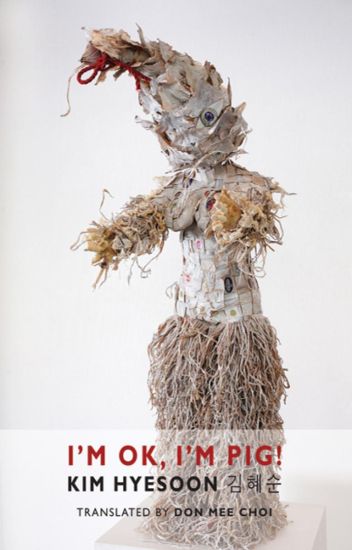
Kim Hyesoon is one of South Korea's most important contemporary poets. She began publishing in 1979 and was one of the first few women in South Korea to be published in Munhak kwa jisong (Literature and Intellect), one of two key journals which championed the intellectual and literary movement against the US-backed military dictatorships of Park Chung Hee and Chun Doo Hwan in the 1970s and 80s. Don Mee Choi writes: 'Kim's poetry goes beyond the expectations of established aesthetics and traditional "female poetry" (yoryusi), which is characterised by its passive, refined language. In her experimental work she explores women's multiple and simultaneous existence as grandmothers, mothers, and daughters in the context of Korea's highly patriarchal society, a nation that is still under neo-colonial rule by the US. Kim's poetics are rooted in her attempt to resist conventional literary forms and language long defined by men in Korea. According to Kim, "women poets oppose and resist their conditions, using unconventional forms of language because their resistance has led them to a language that is unreal, surreal, and even fantastical. The language of women's poetry is internal, yet defiant and revolutionary".'
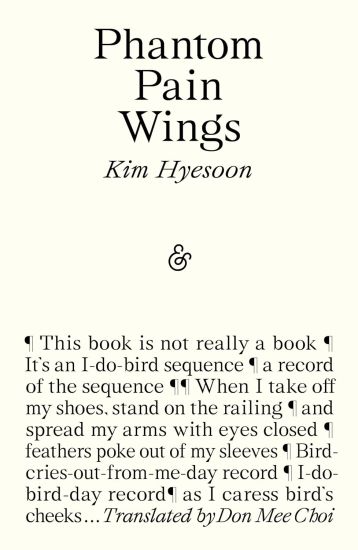
Phantom Pain Wings

Phantom Pain Wings

Kim Hyesoon

And Other Stories
2024
pokkari
Winner of the 2024 National Book Critics Circle Award for Poetry (USA)2024 Poetry Book Society Translation ChoiceKim Hyesoon here shapeshifts into birds as she explores trauma, grief and parting. Kim mixes folklore and mythology with contemporary psychodramatic realities as she taps into a cremation ceremony, Rimbaud, Agnès Varda, Francis Bacon’s portrait of Pope Innocent X, cyclones and more.‘Reads like a variety of horror – haunted, grotesque, futureless. I love the way scale works here; both largeness and smallness can be forms of strength, the tiny and the epic. … In Kim’s metapoetics, the apparent futility of poetry is part of its surreptitious power.’ New York Times, The Best Poetry of 2023
Autobiography of Death

Autobiography of Death

Kim Hyesoon

And Other Stories
2025
pokkari
Winner of the 2019 International Griffin Poetry Prize Winner of the 2019 Lucien Stryk Asian Translation Prize‘I thought to myself that I needed to sing death, perform a rite for death, write death, then bid farewell to it. The way to send death away was to sing with my own death all the death in the sky and on the ground.’The title section of Kim Hyesoon’s visceral Autobiography of Death consists of forty-nine poems, each poem representing a single day during which the spirit roams after death before it enters the cycle of reincarnation. The poems not only give voice to those who met unjust deaths during Korea’s violent contemporary history, but also unveil what Kim calls ‘the structure of death, that we remain living in’. Autobiography of Death at once re-enacts trauma and narrates death – how we die and how we survive within this cyclical structure. In this sea of mirrors, the plural ‘you’ speaks as a body of multitudes that has been beaten, bombed, and buried many times over by history. The volume concludes on the other side of the mirror with ‘Face of Rhythm’, a poem about individual pain, illness, and meditation.