Kirjojen hintavertailu. Mukana 11 717 486 kirjaa ja 12 kauppaa.

Kirjahaku

Etsi kirjoja tekijän nimen, kirjan nimen tai ISBN:n perusteella.

4 kirjaa tekijältä Kim Phillips-Fein

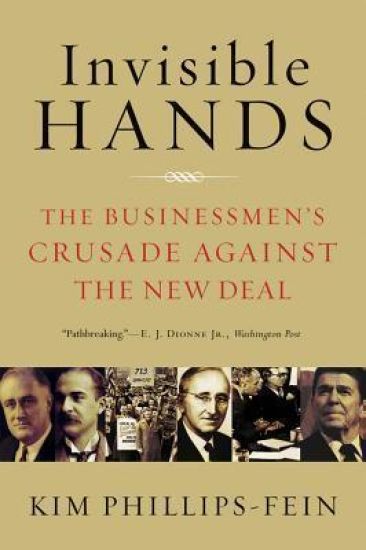
Invisible Hands

Invisible Hands

Kim Phillips-Fein

WW Norton Co
2010
nidottu
In the wake of the profound economic crisis known as the Great Depression, a group of high-powered individuals joined forces to campaign against the New Deal—not just its practical policies but the foundations of its economic philosophy. The titans of the National Association of Manufacturers and the chemicals giant DuPont, together with little-known men like W. C. Mullendore, Leonard Read, and Jasper Crane, championed European thinkers Friedrich von Hayek and Ludwig von Mises and their fears of the “nanny state.” Through fervent activism, fundraising, and institution-building, these men sought to educate and organize their peers as a political force to preserve their profit margins and the “American way” of doing business. In the public relations department of General Electric, they would find the perfect spokesman: Ronald Reagan.
1973 to the Present

1973 to the Present

Kim Phillips-Fein

American Historical Association
2012
nidottu
Diving into the murky waters of recent history, Phillips-Fein takes an intriguing look at scholarship in American history of the past 40-plus years, and discovers an era starting to develop a distinction of its own beyond the previous post-World War IIclassification.
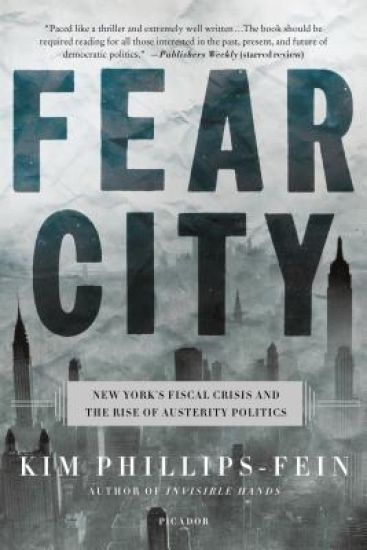
Fear City: New York's Fiscal Crisis and the Rise of Austerity Politics
PULITZER PRIZE FINALIST An epic, riveting history of New York City on the edge of disaster--and an anatomy of the austerity politics that continue to shape the world today When the news broke in 1975 that New York City was on the brink of fiscal collapse, few believed it was possible. How could the country's largest metropolis fail? How could the capital of the financial world go bankrupt? Yet the city was indeed billions of dollars in the red, with no way to pay back its debts. Bankers and politicians alike seized upon the situation as evidence that social liberalism, which New York famously exemplified, was unworkable. The city had to slash services, freeze wages, and fire thousands of workers, they insisted, or financial apocalypse would ensue. In this vivid account, historian Kim Phillips-Fein tells the remarkable story of the crisis that engulfed the city. With unions and ordinary citizens refusing to accept retrenchment, the budget crunch became a struggle over the soul of New York, pitting fundamentally opposing visions of the city against each other. Drawing on never-before-used archival sources and interviews with key players in the crisis, Fear City shows how the brush with bankruptcy permanently transformed New York--and reshaped ideas about government across America. At once a sweeping history of some of the most tumultuous times in New York's past, a gripping narrative of last-minute machinations and backroom deals, and an origin story of the politics of austerity, Fear City is essential reading for anyone seeking to understand the resurgent fiscal conservatism of today. Fear City is one of Publishers Weekly's Top 10 Best Books of 2017, and a finalist for the Pulitzer Prize for History
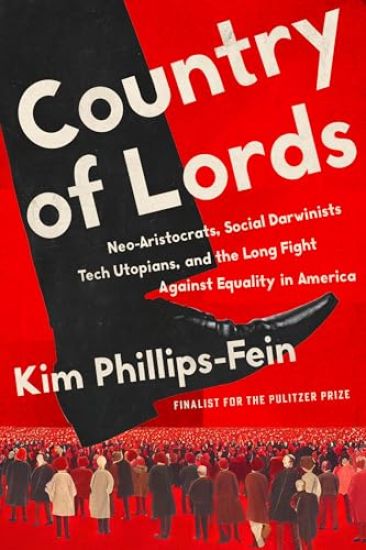
Country of Lords: Neo-Aristocrats, Social Darwinists, Tech Utopians, and the Long Fight Against Equality in America
We think of the United States as a nation committed, at least on paper, to ideals of human equality, under God and/or under the law. But as robust as the notion of the "American dream" is a longstanding defense of social hierarchies, including vast gulfs between rich and poor. Drawing on forgotten characters and neglected archives, Kim Phillips-Fein tells the story of the executives, intellectuals, and political leaders who have argued that the words of the Declaration of Independence--that "all men are created equal"--are a myth. John Adams, William Graham Sumner, Andrew Carnegie, journalist Lothrop Stoddard, Henry Ford, Harvard psychologist Richard Herrnstein, Peter Thiel, and others represent this counter-tradition of hostility to democratic government. Phillips-Fein explores their ideas, and the aspirations they were reacting to, in order to understand our political life today--in hopes we might imagine a more egalitarian way forward.