Kirjojen hintavertailu. Mukana 12 367 984 kirjaa ja 12 kauppaa.

Kirjahaku

Etsi kirjoja tekijän nimen, kirjan nimen tai ISBN:n perusteella.

4 kirjaa tekijältä Kimberly J. Morgan

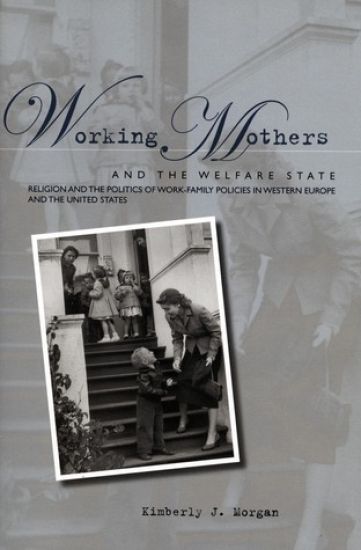
Working Mothers and the Welfare State

Working Mothers and the Welfare State

Kimberly J. Morgan

Stanford University Press
2006
sidottu
While the extent of female participation in the labor force varies across western countries, most have experienced a substantial change in women's attachment to the world of paid work. Everywhere, this trend has raised two central questions related to the children of working mothers: Should mothers of young children work outside the home at all? And if so, who bears responsibility for assuring the care and well-being of their children? Comparing the various policy choices made across France, the Netherlands, Sweden, and the United States, the book shows that there are differences in the extent to which societies accept both the idea of working mothers and the role of the state in shaping gender roles and children's lives. Morgan employs a comparative historical approach that focuses on three time periods: the late nineteenth century, the era of rapid welfare state expansion from 1945 to 1975, and the period of seeming welfare state stagnation since the mid-1970s. The author shows how, starting in the nineteenth century, religion influenced political development in the four countries the book studies. Historic patterns of church-state relations and conflicts over religion affected ideologies about gender roles and the family, as well as the way religious forces would be incorporated into political life. These forces shaped welfare policy between 1945 and 1975, a critical time for social policy expansion. During this period, socially conservative forces in countries such as the Netherlands and the United States blocked policies that would encourage mothers to work, while the weakness of these forces enabled such policies in both Sweden and France. Morgan concludes that these policy decisions have had an enduring impact, in part because the expansion of the welfare state has been curtailed since the 1970s.
Working Mothers and the Welfare State

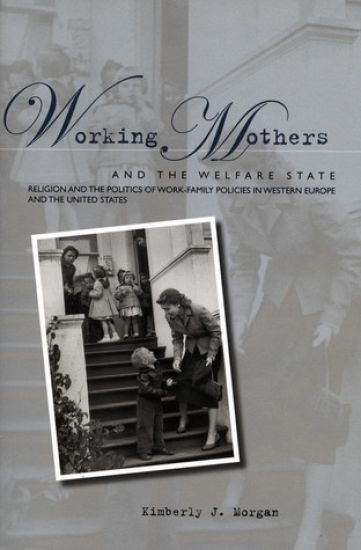
Working Mothers and the Welfare State

Kimberly J. Morgan

Stanford University Press
2006
pokkari
While the extent of female participation in the labor force varies across western countries, most have experienced a substantial change in women's attachment to the world of paid work. Everywhere, this trend has raised two central questions related to the children of working mothers: Should mothers of young children work outside the home at all? And if so, who bears responsibility for assuring the care and well-being of their children? Comparing the various policy choices made across France, the Netherlands, Sweden, and the United States, the book shows that there are differences in the extent to which societies accept both the idea of working mothers and the role of the state in shaping gender roles and children's lives. Morgan employs a comparative historical approach that focuses on three time periods: the late nineteenth century, the era of rapid welfare state expansion from 1945 to 1975, and the period of seeming welfare state stagnation since the mid-1970s. The author shows how, starting in the nineteenth century, religion influenced political development in the four countries the book studies. Historic patterns of church-state relations and conflicts over religion affected ideologies about gender roles and the family, as well as the way religious forces would be incorporated into political life. These forces shaped welfare policy between 1945 and 1975, a critical time for social policy expansion. During this period, socially conservative forces in countries such as the Netherlands and the United States blocked policies that would encourage mothers to work, while the weakness of these forces enabled such policies in both Sweden and France. Morgan concludes that these policy decisions have had an enduring impact, in part because the expansion of the welfare state has been curtailed since the 1970s.

The Delegated Welfare State

The Delegated Welfare State

Kimberly J. Morgan; Andrea Louise Campbell

Oxford University Press Inc
2011
sidottu
Why are so many American social programs delegated to private actors? And what are the consequences for efficiency, accountability, and the well-being of beneficiaries? The Delegated Welfare State examines the development of the American welfare state through the lens of delegation: how policymakers have repeatedly avoided direct governmental provision of benefits and services, instead turning to non-state actors for the governance of social programs. More recent versions, such as the Medicare Part D prescription drug program, delegate responsibility to consumers themselves, who must choose from an array of private providers in social welfare marketplaces. Utilizing a case study of Medicare, along with the 2009-10 health care reform, authors Andrea Campbell and Kimberly Morgan argue that the prevalence of delegated governance derives from fundamental contradictions in American public opinion. Americans want both social programs and small government, leaving policy makers in a bind. In response, they contract out public programs to non-state actors as a way to mask the role of the state. Such arrangements also pull in interest group allies--the providers of these programs--who help pass policies in a political landscape fraught with obstacles. Although delegated governance has been politically expedient, enabling the passage and growth of government programs in an anti-government political climate, it raises questions about fraud, abuse, administrative effectiveness, and accountability. Social welfare marketplaces also suffer due to the difficulties individuals have in making choices about the benefits they need. In probing both the causes and consequences of delegated governance,The Delegated Welfare State offers a novel interpretation of both American social welfare politics and the nature of the American state.
The Delegated Welfare State

The Delegated Welfare State

Kimberly J. Morgan; Andrea Louise Campbell

Oxford University Press Inc
2011
nidottu
Why are so many American social programs delegated to private actors? And what are the consequences for efficiency, accountability, and the well-being of beneficiaries? The Delegated Welfare State examines the development of the American welfare state through the lens of delegation: how policymakers have repeatedly avoided direct governmental provision of benefits and services, instead turning to non-state actors for the governance of social programs. More recent versions, such as the Medicare Part D prescription drug program, delegate responsibility to consumers themselves, who must choose from an array of private providers in social welfare marketplaces. Utilizing a case study of Medicare, along with the 2009-10 health care reform, authors Andrea Campbell and Kimberly Morgan argue that the prevalence of delegated governance derives from fundamental contradictions in American public opinion. Americans want both social programs and small government, leaving policy makers in a bind. In response, they contract out public programs to non-state actors as a way to mask the role of the state. Such arrangements also pull in interest group allies--the providers of these programs--who help pass policies in a political landscape fraught with obstacles. Although delegated governance has been politically expedient, enabling the passage and growth of government programs in an anti-government political climate, it raises questions about fraud, abuse, administrative effectiveness, and accountability. Social welfare marketplaces also suffer due to the difficulties individuals have in making choices about the benefits they need. In probing both the causes and consequences of delegated governance,The Delegated Welfare State offers a novel interpretation of both American social welfare politics and the nature of the American state.