Kirjojen hintavertailu. Mukana 11 342 296 kirjaa ja 12 kauppaa.

Kirjahaku

Etsi kirjoja tekijän nimen, kirjan nimen tai ISBN:n perusteella.

8 kirjaa tekijältä Kirk Curnutt

The Critical Response to Gertrude Stein

The Critical Response to Gertrude Stein

Kirk Curnutt

Greenwood Press
2000
sidottu
From her early classic Three Lives to her best-selling Autobiography of Alice B. Toklas to Brewsie and Willie, a loving tribute to the G.I.s who adored her, Gertrude Stein's work was among the most controversial of the modernist movement. Alternately praised and derided, emulated and ridiculed, Stein was as unique a celebrity as the mass media of the early 20th century ever produced. As her influence spread through the lost generation she nurtured, critics from Edmund Wilson to confidant Carl Van Vechten defended her experimentation against the slings and arrows of the literary establishment. At the same time, Stein found herself parodied and caricatured from the pages of the New York Sun to the New Yorker. Her reputation solidified only after her 1946 death from cancer prompted a series of reminiscences and reestimations from the Chicago Tribune to the Saturday Review. While previous collections of Stein criticism typically reprint commentary by her most ardent supporters, this study reconstructs her precarious position in the eyes of American newspaper and magazine columnists and is thus a guide to her critical reception. While including quintessential pieces on Stein by Carl Van Vechten, William Carlos Williams, and Katherine Anne Porter, this collection also includes previously obscure estimations from contemporaries such as H. L. Mencken, Mina Loy, and Conrad Aiken. The book borrows from a range of sources—from leading literary outlets such as the New Yorker to a number of regional newspapers. Some 75% of the material in the volume has never before been reprinted.
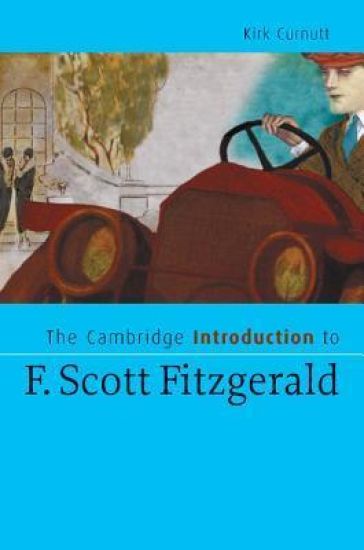
The Cambridge Introduction to F. Scott Fitzgerald

The Cambridge Introduction to F. Scott Fitzgerald

Kirk Curnutt

Cambridge University Press
2007
pokkari
Although F. Scott Fitzgerald remains one of the most recognizable literary figures of the twentieth century, his legendary life - including his tempestuous romance with his wife and muse Zelda - continues to overshadow his art. However glamorous his image as the poet laureate of the 1920s, he was first and foremost a great writer with a gift for fluid, elegant prose. This introduction reminds readers why Fitzgerald deserves his preeminent place in literary history. It discusses not only his best-known works, The Great Gatsby (1925) and Tender Is the Night (1934), but the full scope of his output, including his other novels and his short stories. This book introduces new readers and students of Fitzgerald to his trademark themes, his memorable characters, his significant plots, the literary modes and genres from which he borrowed, and his inimitable style.
The Cambridge Introduction to F. Scott Fitzgerald

The Cambridge Introduction to F. Scott Fitzgerald

Kirk Curnutt

Cambridge University Press
2007
sidottu
Although F. Scott Fitzgerald remains one of the most recognizable literary figures of the twentieth century, his legendary life - including his tempestuous romance with his wife and muse Zelda - continues to overshadow his art. However glamorous his image as the poet laureate of the 1920s, he was first and foremost a great writer with a gift for fluid, elegant prose. This introduction reminds readers why Fitzgerald deserves his preeminent place in literary history. It discusses not only his best-known works, The Great Gatsby (1925) and Tender Is the Night (1934), but the full scope of his output, including his other novels and his short stories. This book introduces new readers and students of Fitzgerald to his trademark themes, his memorable characters, his significant plots, the literary modes and genres from which he borrowed, and his inimitable style.
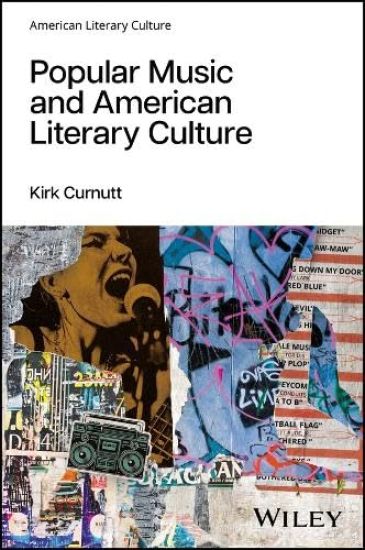
Popular Music and American Literary Culture

Popular Music and American Literary Culture

Kirk Curnutt

JOHN WILEY AND SONS LTD
2026
nidottu
Explores how American Literature has represented the sound and spirit of popular music From the birth of rhythm and blues to the rise of hip-hop, American writers have long grappled with how to capture in words the energy, rebellion, and cultural power of popular music. Popular Music and American Literary Culture traces this complex relationship, offering the most comprehensive exploration yet of how novelists, poets, and playwrights have responded to the sounds that have defined the last eight decades of American life. Kirk Curnutt examines how writers have celebrated, critiqued, and been inspired by the sonic revolutions of their time—from Elvis and Motown to punk and rap—while questioning literature’s ability to match music’s visceral immediacy. Moving from 1950s pulp paperbacks to twenty-first-century drama, Curnutt uncovers how depictions of performers, fans, and media reflect broader debates about art, authenticity, and cultural authority. His wide-ranging readings recover overlooked works and authors who confronted rock and soul with as much seriousness as the revered voices of American fiction, poetry, and theater. Illuminating how writers have tried, and often struggled, to translate rhythm, emotion, and the pulse of a generation into prose and verse, Popular Music and American Literary Culture: Addresses scholarship on rock, soul, funk, and hip-hop within a single, cohesive framework Reveals how literary portrayals of music reflect shifting cultural attitudes toward race, class, gender, and generational identity Examines canonical authors including Thomas Pynchon and James Baldwin, as well as overlooked writers such as Kristin Hunter and Greg Randolph Reclaims forgotten or neglected texts that expand the boundaries of American musical and literary study Integrates historical, cultural, and formal perspectives to show the evolution of music in American artistic consciousness Popular Music and American Literary Culture: Reading the Beat is ideal for undergraduate and graduate courses in American literature, popular culture, and music history. It is especially relevant for English, American Studies, and Cultural Studies programs seeking to blend literary analysis with media and performance studies. Written in an engaging and accessible style, it is also well-suited for general readers interested in the interplay between sound and story in American artistic life.
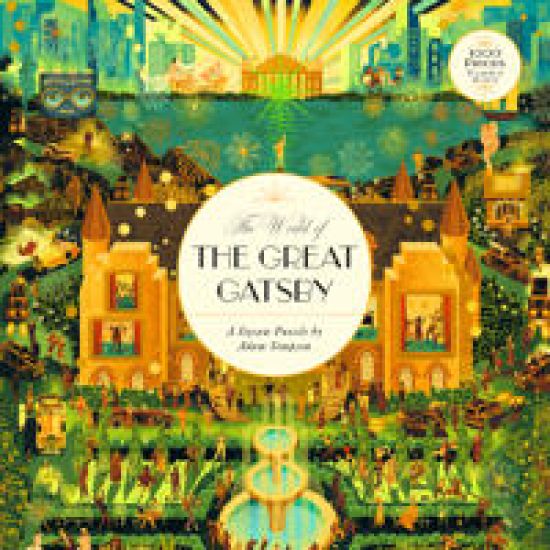
The World of The Great Gatsby

The World of The Great Gatsby

Kirk Curnutt

ORION PUBLISHING CO
2024
muu
Piece together one of Jay Gatsby's notorious parties, where figures both real and fictional from Fitzgerald's life and work are hidden among the enigmatic guests. Find Daisy Buchanan weeping over a pile of silk shirts, Gatsby gazing towards the green light of his dreams, Ernest Hemingway working at his typewriter and the all-seeing eyes of Doctor T. J. Eckleburg surveying the wreckage as you puzzle towards the story's tragic conclusion.PART OF THE WORLD OF JIGSAW PUZZLE SERIES which immerse puzzlers in the worlds of their favourite writers and works. FEATURING AN ORIGINAL ILLUSTRATION packed with detail and a large poster with an introduction to the novel by Kirk Curnutt, executive director of the F. Scott Fitzgerald Society1000-PIECE PUZZLE that measures 48.5 x 68 cm (19 x 27 in.) when completed.
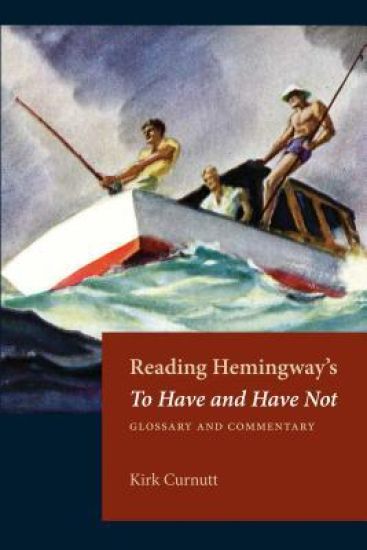
Reading Hemingway’s To Have and Have Not

Reading Hemingway’s To Have and Have Not

Kirk Curnutt

Kent State University Press
2017
nidottu
Published in 1937, Ernest Hemingway's To Have and Have Not is that rare example of a novel whose cultural impact far outweighs its critical reputation. Long criticized for its fragmented form, its ham-fisted approach to politics, and its hard-boiled obsession with cojones, this blistering tale of a Florida Straits boat captain named Harry Morgan desperately trying to survive the economic ravages of the Great Depression by running rum and revolutionaries to Havana has fueled tourist industries in Key West and Cuba and has inspired at least three movie adaptations (including a classic cowritten by William Faulkner and starring Humphrey Bogart and Lauren Bacall).In Reading Hemingway's To Have and Have Not, Kirk Curnutt explicates dozens of topics that arise from this controversial novel's dense, tropical swelter of references and allusions. From Cuban politics to multifarious New Deal "alphabet agencies," from rum running to human smuggling to byways, bars, and brothels, Curnutt delves deeply into the plot's rich textural back- drop. Most important, he reminds us what a very different novel To Have and Have Not would have been had Hemingway not undergone a political change of heart while covering the Spanish Civil War and revised a narrative originally feral in its suspicion of partisans and ideologues at odds with the newfound ideals of activism and intervention that Hemingway felt essential to halting the global rise of fascism.More than any study of the only novel Ernest Hemingway set on American soil, this book reads To Have and Have Not in the peculiar juxtaposition of literary innovation and popular appeal that made Hemingway the world's most famous writer. While valorizing Hemingway's artistry, Curnutt never lets readers forget the visceral thrills of what one movie adaptation called "Hemingway-Hot Adventure."
Brian Wilson

Brian Wilson

Kirk Curnutt

Equinox Publishing Ltd
2012
nidottu
Brian Wilson is a musical genius. Ever since British press agent Derek Taylor launched a publicity campaign with that theme to promote the landmark LP Pet Sounds in 1966, some variation of that claim has been obligatory when discussing the significance of the Beach Boys' founder and chief composer. Originally designed to liberate Wilson from his outmoded image as a purveyor of sun-and-surf teen pop so the symphonic sophistication of his music might be properly appreciated, the assertion has been repeated so often in the forty-plus years since as to render it virtually meaningless. Indeed, if anything, the label today seems an albatross around the man's neck, inasmuch as Wilson's slow-but-steady reemergence as a working musician since 1998 after three decades of mental illness and drug abuse, has been freighted with expectations that he again produce something as epochal as Good VibrationsA" to justify the adoration he inspires in impassioned defenders. Brian Wilson interrogates this and other paradigms that stymie critical appreciation of Wilson's work both with the Beach Boys and as a solo artist.This is the first study of Wilson to eschew chronology in favor of a topical organization that allows discussion of lyrical themes and musical motifs outside of any prejudicial presumptions about their place in the trajectory of his career. The meanings of Brian Wilson's work have tended to be determined by the well-known storyline of his rise, fall, and redemption.A" From abused child to seemingly unstoppable hit-maker to eccentric with a living-room sandbox to the 300-pound Orson Wells of rockA" to the heavily medicated Icarus figure with the full-time Svengali psychiatrist to his current incarnation as a fragile, elder-statesman survivor, Brian Wilson has, quite simply, lived the most celebrated bizarre life in pop music. Its sheer Shakespearean proportions have overshadowed a beauty and gentleness of spirit that is as vibrant in Farmer's DaughterA" (1963) as it is in recent efforts such as Live Let LiveA" (2008).While no one would disagree that Wilson peakedA" in 1966 with Pet Sounds his current CD, That Old Lucky Sun (2008), finds him creating beautiful music steeped in Americana that deserves discussion on its own terms rather than as a coda to the accomplishments of his gold-record youth.
Brian Wilson

Brian Wilson

Kirk Curnutt

Equinox Publishing Ltd
2012
sidottu
Brian Wilson is a genius. Ever since British press agent Derek Taylor launched a publicity campaign with that theme to promote the landmark LP Pet Sounds in 1966, some variation of that claim has been obligatory when discussing the significance of the Beach Boys' founder and chief composer. Originally designed to liberate Wilson from his outmoded image as a purveyor of sun-and-surf teen pop so the symphonic sophistication of his music might be properly appreciated, the assertion has been repeated so often in the forty-plus years since as to render it virtually meaningless. Indeed, if anything, the label today seems an albatross around the man's neck, inasmuch as Wilson's slow-but-steady reemergence as a working musician since the mid-nineties after three decades of mental illness and drug abuse, has been freighted with expectations that he again produce something as epochal as "Good Vibrations" to justify the adoration he inspires in impassioned defenders. Brian Wilson interrogates this and other paradigms that stymie critical appreciation of Wilson's work both with the Beach Boys and as a solo artist.This is the first study of Wilson to eschew chronology for a topical organization that allows discussion of lyrical themes and musical motifs outside of any prejudicial presumptions about their place in the trajectory of his career. The chapter on lyrics explores questions of quality, asking why the words to Wilson's songs are often considered a detriment, before surveying such tendencies as melancholy and introspection, the conceit of childlike wisdom, his depiction of women, and Americana/nostalgia. The section on music focuses on his falsetto, the famous harmonies, the peculiar whiteness of the Beach Boys' sound, as well as song structure. A final chapter on iconicity asks how rock criticism's investment in auteurship both maintains and limits his reputation. Finally, Curnutt examines what Brian Wilson means to his most fervent fans. Together, these issues emphasize the often overlooked point that, despite his status as a "living legend," Brian Wilson does not always fit neatly into the paradigms of taste and value by which critics grant certain artists entry into the pantheon of pop and rock importance.