Kirjojen hintavertailu. Mukana 12 016 292 kirjaa ja 12 kauppaa.

Kirjahaku

Etsi kirjoja tekijän nimen, kirjan nimen tai ISBN:n perusteella.

7 kirjaa tekijältä Koen Stroeken

Ageing in Africa

Ageing in Africa

Koen Stroeken

Ashgate Publishing Limited
2002
sidottu
African gerontology has expanded dramatically as a discipline with population ageing and its consequences for societies and for individual experiences of ageing becoming prominent issues all over the continent. This volume therefore brings together some of the most prolific and skilful researchers working on ageing in Africa today. The book is based on sociolinguistic and anthropological research conducted in different regions of Southern Africa, West and East Africa, and in different types of communities, rural, urban and nomadic. Hence the book is able to adopt a pan-African slant to issues about ageing. The data and their interpretation are characterized by the richness, typicity and authenticity of both narratives and ethnographical fieldwork. Because the authors aim to present insider views and experiences of ageing in Africa from these diverse contexts, the book is able to distil common and variable aspects of ageing in Africa. These permit a formulation of critical models of ageing which are sensitive to the elderly person’s experience and to the dynamics of the historical contexts in which are sensitive to the elderly person’s experience and to the dynamics of the historical contexts in which elderly persons have lived. Critical models of ageing appear to shed a new light on the social change that affects all of us today. (e.g. post-apartheid, post-colonialism). The volume includes an introduction to the study of ageing, which proposes a conceptual apparatus that is transdisciplinary and cross-cultural. It also includes a concluding chapter sketching future directions of research and policy. The volume is divided into three sections: (1) Narratives and the construction of elderliness; (2) Cross-cultural perspectives on ageing and seniority; and (3) Crises and strategies of elderhood. The contributions employ a number of methodological approaches, ranging from discursive and literary analyses, to anthropological studies. The chapters in
Moral Power

Moral Power

Koen Stroeken

Berghahn Books
2012
pokkari
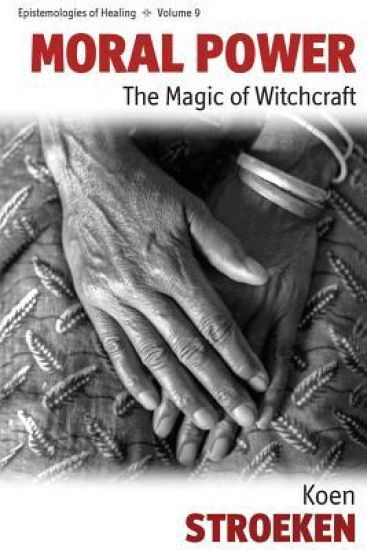
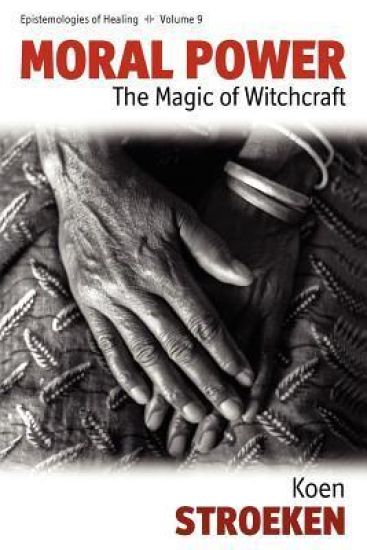
Neither power nor morality but both. Moral power is what Sukuma farmers in Tanzania in times of crisis attribute to an unknown figure they call their witch. A universal process is involved, as much bodily as social, which obstructs the patient’s recovery. Healers turn the table on the witch through rituals showing that the community and the ancestral spirits side with the victim. In contrast to biomedicine, their magic and divination introduce moral values that assess the state of the system and that remove the obstacles to what is taken as key: self-healing. The implied ‘sensory shifts’ and therapeutic effectiveness have largely eluded the literature on witchcraft. This book shows how to comprehend culture other than through the prism of identity politics. It offers a framework to comprehend the rise of witch killings and human sacrifice, just as ritual initiation disappears.
Medicinal Rule

Medicinal Rule

Koen Stroeken

Berghahn Books
2018
sidottu
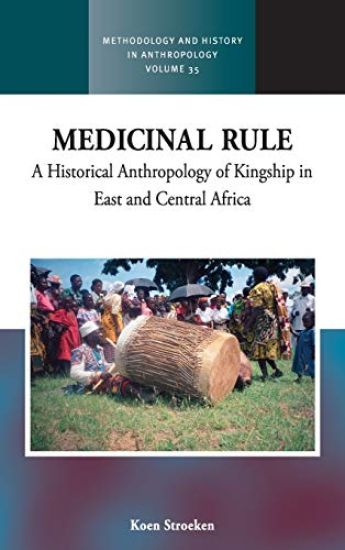
As soon as Europeans set foot on African soil, they looked for the equivalents of their kings – and found them. The resulting misunderstandings have lasted until this day. Based on ethnography-driven regional comparison and a critical re-examination of classic monographs on some forty cultural groups, this volume makes the arresting claim that across equatorial Africa the model of rule has been medicine – and not the colonizer’s despotic administrator, the missionary’s divine king, or Vansina’s big man. In a wide area populated by speakers of Bantu and other languages of the Niger-Congo cluster, both cult and dynastic clan draw on the fertility shrine, rainmaking charm and drum they inherit.
Medicinal Rule

Medicinal Rule

Koen Stroeken

Berghahn Books
2021
pokkari
As soon as Europeans set foot on African soil, they looked for the equivalents of their kings – and found them. The resulting misunderstandings have lasted until this day. Based on ethnography-driven regional comparison and a critical re-examination of classic monographs on some forty cultural groups, this volume makes the arresting claim that across equatorial Africa the model of rule has been medicine – and not the colonizer’s despotic administrator, the missionary’s divine king, or Vansina’s big man. In a wide area populated by speakers of Bantu and other languages of the Niger-Congo cluster, both cult and dynastic clan draw on the fertility shrine, rainmaking charm and drum they inherit.
Moral Power

Moral Power

Koen Stroeken

Berghahn Books
2010
sidottu
Neither power nor morality but both. Moral power is what Sukuma farmers in Tanzania in times of crisis attribute to an unknown figure they call their witch. A universal process is involved, as much bodily as social, which obstructs the patient’s recovery. Healers turn the table on the witch through rituals showing that the community and the ancestral spirits side with the victim. In contrast to biomedicine, their magic and divination introduce moral values that assess the state of the system and that remove the obstacles to what is taken as key: self-healing. The implied ‘sensory shifts’ and therapeutic effectiveness have largely eluded the literature on witchcraft. This book shows how to comprehend culture other than through the prism of identity politics. It offers a framework to comprehend the rise of witch killings and human sacrifice, just as ritual initiation disappears.
Simplex Society

Simplex Society

Koen Stroeken

Springer International Publishing AG
2023
sidottu
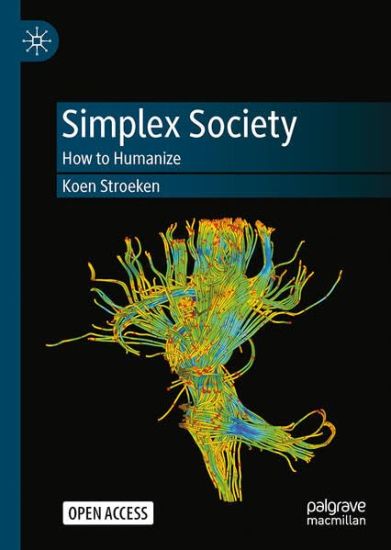
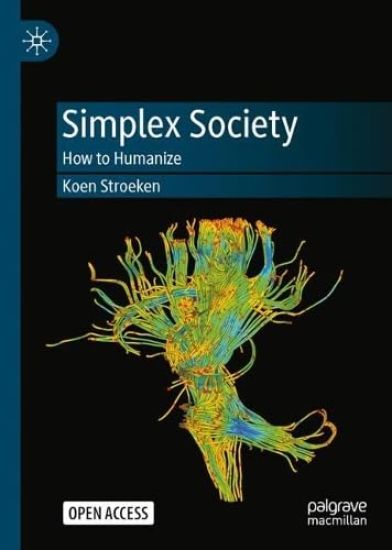
This open access book provides thought-provoking anthropology grounded in comparative ethnography. The theory captures the current historical moment, the long-term trends that led us here, and the prospects for a humane future. The experience of complexity characterizing a globalized information society triggers simplexes. These unidimensional responses instrumental in bringing about a predictable effect are altering our ways of communicating and the technologies we design. In Part I, a ‘speciated’ history, injected with the anthropology of Bateson and Gluckman, describes the semantic and experiential impoverishment of the lifeworld. After going through the affects of distrust (the neolithic lifeway), of futility (industrial lifeway) and disconnection (post-knowledge), the human species today depends for its survival on installing a new lifeway, which manages to wed (eco-social) inclusion to the already difficult first pair of the French Revolution. The species needs to rehumanize. Part II illustrates the remedies currently developed: to reframe, re-sphere and re-source. What do critical street art, international football matches, presidential elections, hip-hop dissing performances, charismatic church services, intuition stimulation, and ‘pre-ceptive’ experiences of consciousness have in common? They are moments of the real. Rooted in ‘life sensing’, they are tensors organizing frameshift. As multiplex measures tackling the simplex, these tensors overcome the cultural relativism of the postmodern matrix.
Simplex Society

Simplex Society

Koen Stroeken

Springer International Publishing AG
2023
nidottu
This open access book provides thought-provoking anthropology grounded in comparative ethnography. The theory captures the current historical moment, the long-term trends that led us here, and the prospects for a humane future. The experience of complexity characterizing a globalized information society triggers simplexes. These unidimensional responses instrumental in bringing about a predictable effect are altering our ways of communicating and the technologies we design. In Part I, a ‘speciated’ history, injected with the anthropology of Bateson and Gluckman, describes the semantic and experiential impoverishment of the lifeworld. After going through the affects of distrust (the neolithic lifeway), of futility (industrial lifeway) and disconnection (post-knowledge), the human species today depends for its survival on installing a new lifeway, which manages to wed (eco-social) inclusion to the already difficult first pair of the French Revolution. The species needs to rehumanize. Part II illustrates the remedies currently developed: to reframe, re-sphere and re-source. What do critical street art, international football matches, presidential elections, hip-hop dissing performances, charismatic church services, intuition stimulation, and ‘pre-ceptive’ experiences of consciousness have in common? They are moments of the real. Rooted in ‘life sensing’, they are tensors organizing frameshift. As multiplex measures tackling the simplex, these tensors overcome the cultural relativism of the postmodern matrix.