Kirjojen hintavertailu. Mukana 11 699 587 kirjaa ja 12 kauppaa.

Kirjahaku

Etsi kirjoja tekijän nimen, kirjan nimen tai ISBN:n perusteella.

4 kirjaa tekijältä Kris Cohen

Never Alone, Except for Now

Never Alone, Except for Now

Kris Cohen

Duke University Press
2017
sidottu
How is it that one can be connected to a vast worldwide network of other people and places via digital technologies and yet also be completely alone? Kris Cohen tackles this philosophical question in Never Alone, Except for Now by exploring how contemporary technologies are changing group formations and affiliations within social life. He identifies a new form of collectivity that exists between publics, which are built through conscious acts, and populations, which are automatically constructed through the collection of Big Data. Finding traditional liberal concepts of the public sphere and neoliberal ideas of populations inadequate on their own to examine these new forms of sociality, Cohen places familiar features of the web-such as emoticons, trolling, and search engines-in conversation with artworks by Felix Gonzalez-Torres, William Gibson, Sharon Hayes, and Thomson & Craighead to more precisely articulate the affective and aesthetic experiences of living between publics and populations. This liminal experience-caught between existing as a set of data points and as individuals newly empowered to create their own online communities-explains, Cohen contends, how one is simultaneously alone and connected in ways never before possible.

Never Alone, Except for Now

Never Alone, Except for Now

Kris Cohen

Duke University Press
2017
pokkari
How is it that one can be connected to a vast worldwide network of other people and places via digital technologies and yet also be completely alone? Kris Cohen tackles this philosophical question in Never Alone, Except for Now by exploring how contemporary technologies are changing group formations and affiliations within social life. He identifies a new form of collectivity that exists between publics, which are built through conscious acts, and populations, which are automatically constructed through the collection of Big Data. Finding traditional liberal concepts of the public sphere and neoliberal ideas of populations inadequate on their own to examine these new forms of sociality, Cohen places familiar features of the web-such as emoticons, trolling, and search engines-in conversation with artworks by Felix Gonzalez-Torres, William Gibson, Sharon Hayes, and Thomson & Craighead to more precisely articulate the affective and aesthetic experiences of living between publics and populations. This liminal experience-caught between existing as a set of data points and as individuals newly empowered to create their own online communities-explains, Cohen contends, how one is simultaneously alone and connected in ways never before possible.
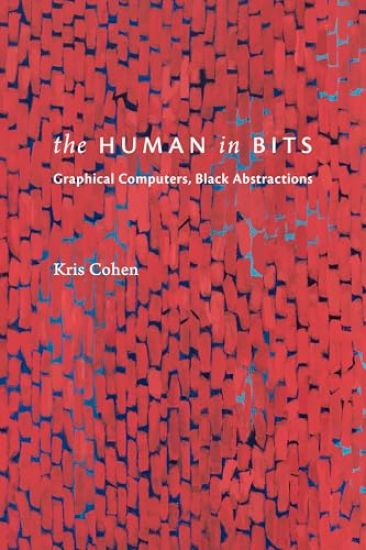
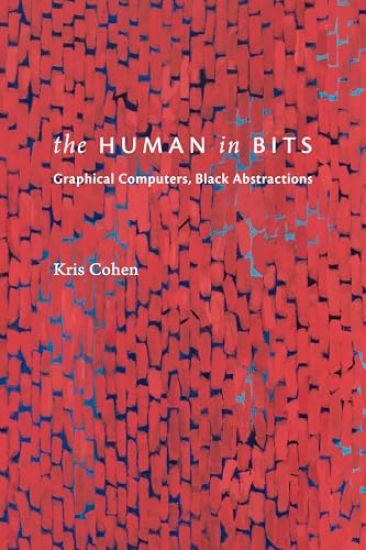
The Human in Bits: Graphical Computers, Black Abstractions
In The Human in Bits, Kris Cohen examines black abstractionist painting to demonstrate how race and computation are intimately entangled with the personal computer's graphic user interface. He shows how the personal computer and the graphical field of its screen meant to transform the human by transforming what environments humans were to labor in. It also provided the means for whiteness to tie itself to notions of colorblind meritocracy. Cohen focuses on the post-1960s experiments of black abstractionists Alma Thomas, Jack Whitten, Charles Gaines, and Julie Mehretu, who developed a nonrepresentational approach to blackness that was oriented more toward constraint than human expression. From Gaines's use of grids to Mehretu's layering of paint, these artists--in their knowledge that black life had always been conflated with numbers and bits of information--flirted with repetition, systems, and formulas to test other ways of being human. By demonstrating how these artists bypassed the white fear that the human would become interchangeable with data, Cohen reframes modernism and modernist art to account for racialization in computational cultures.