Kirjojen hintavertailu. Mukana 12 390 323 kirjaa ja 12 kauppaa.

Kirjahaku

Etsi kirjoja tekijän nimen, kirjan nimen tai ISBN:n perusteella.

8 kirjaa tekijältä Kristen P. Williams

Despite Nationalist Conflicts

Despite Nationalist Conflicts

Kristen P. Williams

Praeger Publishers Inc
2001
sidottu
Williams explores the effectiveness of various types of responses and strategies available to states when faced with demands for territorial revisions. She examines the situations surrounding the 19th-century unification of Germany, the breakup of Yugoslavia and the strife in Bosnia and Kosovo, and the ongoing struggle over the fate of Kashmir.The type of demand for territorial revisions, she argues, and the responses determine whether the outcome will be peace or war. While states should deter those states or groups that are imperialist, she points to the utility of pursuing a firm-but-flexible strategy toward those that are consolidationists. This analysis will be of considerable value to scholars, students, and policy makers involved with issues of contemporary nationalism, ethnic politics, and international relations.
Despite Nationalist Conflicts

Despite Nationalist Conflicts

Kristen P. Williams

Praeger Publishers Inc
2001
nidottu
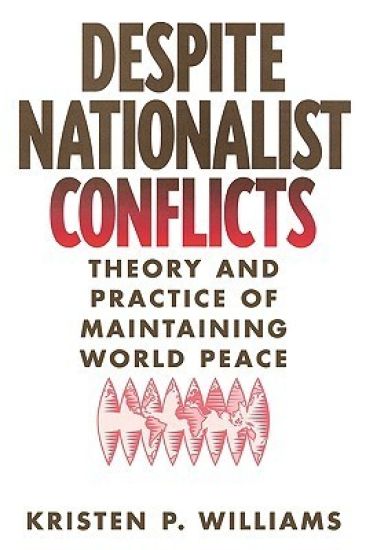
Williams explores the effectiveness of various types of responses and strategies available to states when faced with demands for territorial revisions. She examines the situations surrounding the 19th-century unification of Germany, the breakup of Yugoslavia and the strife in Bosnia and Kosovo, and the ongoing struggle over the fate of Kashmir.The type of demand for territorial revisions, she argues, and the responses determine whether the outcome will be peace or war. While states should deter those states or groups that are imperialist, she points to the utility of pursuing a firm-but-flexible strategy toward those that are consolidationists. This analysis will be of considerable value to scholars, students, and policy makers involved with issues of contemporary nationalism, ethnic politics, and international relations.
Women, the State, and War

Women, the State, and War

Joyce P. Kaufman; Kristen P. Williams

Lexington Books
2007
sidottu
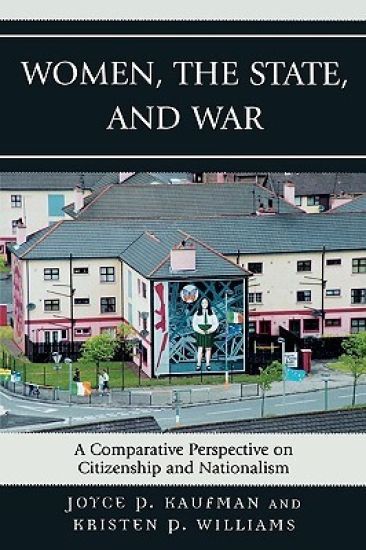
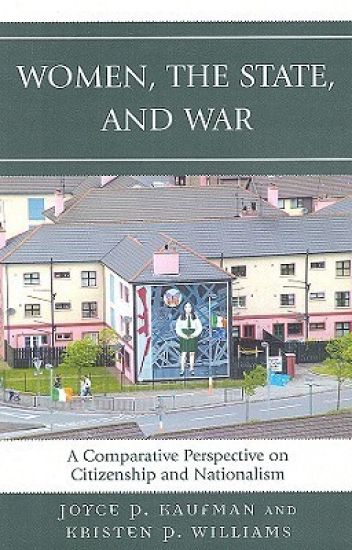
Women, the State, and War looks at the intersection of gender, citizenship, and nationalism; marriage, intermarriage, and how states gender that relationship; and the ways in which women are used as symbols to reinforce or further nationalistic goals. Women have long struggled with issues of citizenship, identity, and the challenge of being recognized as equal members of the community. Governments use feminine imagery (e.g., mother country) to create a national identity, while simultaneously minimizing the role that women play as productive contributors to the society. Authors Joyce P. Kaufman and Kristen P. Williams examine the relationship of government and women in four different countries: the United States, Israel, the former Yugoslavia, and Northern Ireland. In each case, numerous similarities appear: conflict plays a significant role in the definition of citizenship for women; women's movements have worked in contradiction to the state; and citizenship and marriage are gendered undertakings.
Women, the State, and War

Women, the State, and War

Joyce P. Kaufman; Kristen P. Williams

Lexington Books
2007
nidottu
Women, the State, and War looks at the intersection of gender, citizenship, and nationalism; marriage, intermarriage, and how states gender that relationship; and the ways in which women are used as symbols to reinforce or further nationalistic goals. Women have long struggled with issues of citizenship, identity, and the challenge of being recognized as equal members of the community. Governments use feminine imagery (e.g., mother country) to create a national identity, while simultaneously minimizing the role that women play as productive contributors to the society. Authors Joyce P. Kaufman and Kristen P. Williams examine the relationship of government and women in four different countries: the United States, Israel, the former Yugoslavia, and Northern Ireland. In each case, numerous similarities appear: conflict plays a significant role in the definition of citizenship for women; women's movements have worked in contradiction to the state; and citizenship and marriage are gendered undertakings.
Gender, Race, and Power

Gender, Race, and Power

Joyce P. Kaufman; Kristen P. Williams

BLOOMSBURY PUBLISHING PLC
2024
sidottu
There are currently many books and articles that look at aspects of gender or race and international relations but none that embrace a broad intersectional approach (in terms of both gender and race that goes beyond a postcolonial perspective) to the study of the field. After introducing the approach, Kaufman and Williams then proceed through critical issues in international relations and the ways in which an intersectional approach that examines race, gender, class, ethnicity, and power can help us arrive at better explanations for these IR issues. The approach in this text builds on what many of the feminist IR theorists called for to address traditional issues such as security and war. Feminist IR theorists, led by scholars such as Ann Tickner and Cynthia Enloe, asked the question “Where are the women?” as a guiding principle. Feminist approaches to IR have been a part of the field for decades, but it is only fairly recently that students of IR have broadened the approach to the field to incorporate the dimensions of race, ethnicity, and class as well as gender. Thus, we ask questions like: How does gender matter for understanding war and peace? How does race matter? Where are the men? What is intersectionality in IR? How does an intersectional approach change/broaden our understanding of international relations?
Gender, Race, and Power

Gender, Race, and Power

Joyce P. Kaufman; Kristen P. Williams

BLOOMSBURY PUBLISHING PLC
2024
nidottu
There are currently many books and articles that look at aspects of gender or race and international relations but none that embrace a broad intersectional approach (in terms of both gender and race that goes beyond a postcolonial perspective) to the study of the field. After introducing the approach, Kaufman and Williams then proceed through critical issues in international relations and the ways in which an intersectional approach that examines race, gender, class, ethnicity, and power can help us arrive at better explanations for these IR issues. The approach in this text builds on what many of the feminist IR theorists called for to address traditional issues such as security and war. Feminist IR theorists, led by scholars such as Ann Tickner and Cynthia Enloe, asked the question “Where are the women?” as a guiding principle. Feminist approaches to IR have been a part of the field for decades, but it is only fairly recently that students of IR have broadened the approach to the field to incorporate the dimensions of race, ethnicity, and class as well as gender. Thus, we ask questions like: How does gender matter for understanding war and peace? How does race matter? Where are the men? What is intersectionality in IR? How does an intersectional approach change/broaden our understanding of international relations?
Ethnic Conflict

Ethnic Conflict

Neal G. Jesse; Kristen P. Williams

CQ Press
2010
nidottu
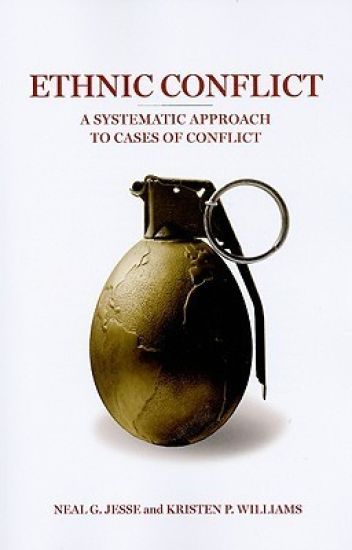
As ethnic groups clash, the international community faces the challenge of understanding the multiple causes of violence and formulating solutions that will bring about peace. Allowing for greater insight, Jesse and Williams bridge two sub-fields of political science in Ethnic Conflict—international relations and comparative politics. They systematically apply a "levels of analysis" framework, looking at the individual, domestic, and international contexts to better explore and understand its complexity. Five case study chapters apply the book’s framework to disputes around the world and include coverage of Bosnia, the Israeli-Palestinian conflict, Northern Ireland, Sri Lanka, and Sudan. Never losing sight of their analytical framework, the authors provide richly detailed case studies that help students understand both the unique and shared causes of each conflict. Students will appreciate the book’s logical presentation and excellent pedagogical features including detailed maps that show political, demographic, and cultural data.
World Politics in a New Era

World Politics in a New Era

Steven L. Spiegel; Elizabeth G. Matthews; Jennifer M. Taw; Kristen P. Williams

Oxford University Press Inc
2014
nidottu
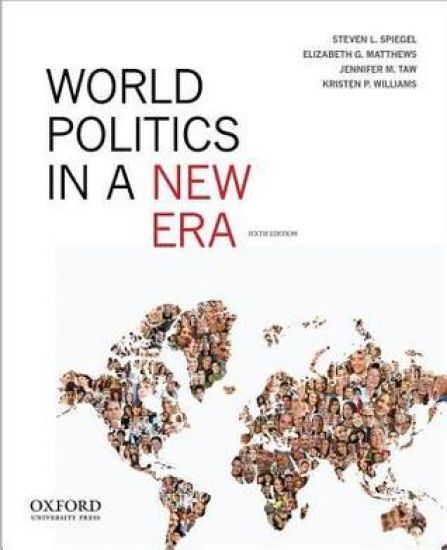
World Politics in a New Era is a comprehensive and thought-provoking text for introductory courses on world politics. Reflecting the changes that have occurred worldwide - from the collapse of the Berlin Wall to recent upheavals in the global financial sphere - the book integrates coverage of the competing threads of globalization and fragmentation, examining how they tangle and weave through studies of global politics, economics, and culture. World Politics in a New Era, 6e, provides an in-depth treatment of the field by introducing key contemporary issues along with theory; supporting these issues with historical context; and giving students the analytical tools to apply the theories to current issues. It introduces the major theories used to explain international relations - realism, liberalism, constructivism, and a few select alternatives. Discussions of these theories are then incorporated into the narrative throughout the text, creating a useful framework for analysis. Extensive historical coverage in four chapters (3-6) reviews key events in world politics from the Peace of Westphalia in 1648 to the present, offering students the best context to fully comprehend the modern political stage. Chapters 7-14 cover key topics in contemporary world politics: security, trade and investment, development, human and resource issues, global governance, and ethics.