Kirjojen hintavertailu. Mukana 11 244 527 kirjaa ja 12 kauppaa.

Kirjahaku

Etsi kirjoja tekijän nimen, kirjan nimen tai ISBN:n perusteella.

5 kirjaa tekijältä Kristen Poole

Philip Pullman and the Historical Imagination

Philip Pullman and the Historical Imagination

Kristen Poole

Oxford University Press
2025
sidottu
Philip Pullman and the Historical Imagination takes the general reader on a fascinating tour of seventeenth-century thought, exploring how this time period shaped Pullman's extraordinary trilogies His Dark Materials and The Book of Dust. In Part One, readers are taken into the mysteries of Renaissance allegory and hieroglyphics, tracing how the alethiometer and Lyra's way of reading the device emerged from these traditions. Part Two enters the exciting and revolutionary world of seventeenth-century science. We see how the amber spyglass imitates Galileo's telescope, how early modern fantasies of space travel led to ideas of multiple worlds, how alchemy entered Lyra's later adventures in Oxford and Prague, and how the concept of Dust shares in the physics and philosophies of early scientists like Margaret Cavendish. Part Three invites readers into the thrilling epic poem Paradise Lost--John Milton's dramatic account of the creation of the world following a violent war in Heaven--that was Pullman's inspiration for His Dark Materials. Pullman's vibrant re-telling of this core story brings us rebel angels, recasts Satan as a brooding Lord Asriel, and presents Lyra as the new Eve. Written by an eminent scholar of seventeenth-century literature and history, Philip Pullman and the Historical Imagination is crafted in an engaging and accessible style aimed at popular readers and fans of Pullman's work. It enlivens a historical period that has long attracted Pullman himself, bringing to life intriguing figures and the richly complex ideas of the time. This book is an exploration of history through the worlds and characters Pullman has invented. Ultimately, it not only reveals how seventeenth-century history helps readers better understand Pullman's novels, but shows how reading history through the lens of Pullman's imagination offers new ways of thinking about the past.
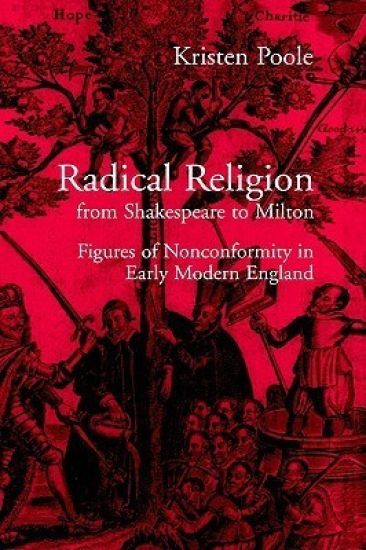
Radical Religion from Shakespeare to Milton

Radical Religion from Shakespeare to Milton

Kristen Poole

Cambridge University Press
2000
sidottu
The figure of the puritan has long been conceived as dour and repressive in character, an image which has been central to ways of reading sixteenth- and seventeenth-century history and literature. Kristen Poole’s original study challenges this perception arguing that, contrary to current critical understanding, radical reformers were most often portrayed in literature of the period as deviant, licentious and transgressive. Through extensive analysis of early modern pamphlets, sermons, poetry and plays, the fictional puritan emerges as a grotesque and carnivalesque figure; puritans are extensively depicted as gluttonous, sexually promiscuous, monstrously procreating, and even as worshipping naked. By recovering this lost alternative satirical image, Poole sheds new light on the role played by anti-puritan rhetoric. Her book contends that such representations served an important social role, providing an imaginative framework for discussing familial, communal, and political transformations that resulted from the Reformation.
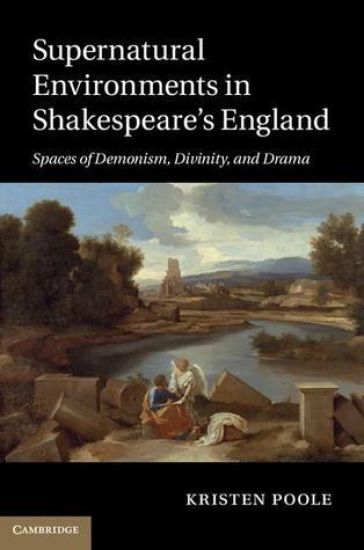
Supernatural Environments in Shakespeare's England

Supernatural Environments in Shakespeare's England

Kristen Poole

Cambridge University Press
2011
sidottu
Bringing together recent scholarship on religion and the spatial imagination, Kristen Poole examines how changing religious beliefs and transforming conceptions of space were mutually informative in the decades around 1600. Supernatural Environments in Shakespeare's England explores a series of cultural spaces that focused attention on interactions between the human and the demonic or divine: the deathbed, purgatory, demonic contracts and their spatial surround, Reformation cosmologies and a landscape newly subject to cartographic surveying. It examines the seemingly incongruous coexistence of traditional religious beliefs and new mathematical, geometrical ways of perceiving the environment. Arguing that the late sixteenth- and early seventeenth-century stage dramatized the phenomenological tension that resulted from this uneasy confluence, this groundbreaking study considers the complex nature of supernatural environments in Marlowe's Doctor Faustus and Shakespeare's Othello, Hamlet, Macbeth and The Tempest.
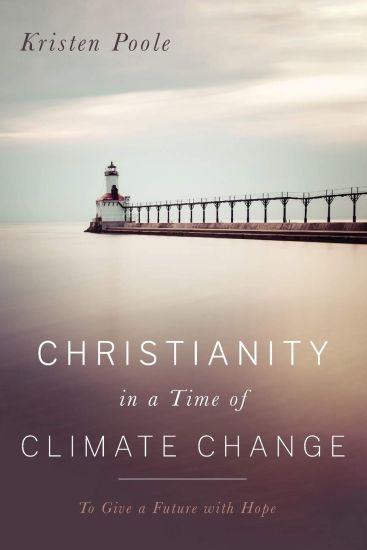
Christianity in a Time of Climate Change

Christianity in a Time of Climate Change

Kristen Poole

Wipf Stock Publishers
2020
pokkari
What does climate change have to do with religion and spirituality? Even though a changing environment will have a dire impact on human populations--affecting everything from food supply to health to housing--the vast majority of Americans do not consider climate change a moral or a religious issue. Yet the damage of climate change, a phenomenon to which we all contribute through our collective carbon emissions, presents an unprecedented ethical problem, one that touches a foundational moral principle of Christianity: Jesus's dictate to love the neighbor. This care for the neighbor stretches across time as well as space. We are called to care for the neighbors of the future as well as those of the present. How can we connect the ethical considerations of climate change--the knowledge that our actions directly or indirectly cause harm to others--to our individual and collective spiritual practice? Christianity in a Time of Climate Change offers a series of reflective essays that consider the Christian ethics of climate change and suggest ways to fold the neighbors of the future into our spiritual lives as an impetus to meaningful personal, social, and ultimately environmental transformations.
Christianity in a Time of Climate Change

Christianity in a Time of Climate Change

Kristen Poole

Wipf Stock Publishers
2020
sidottu
What does climate change have to do with religion and spirituality? Even though a changing environment will have a dire impact on human populations--affecting everything from food supply to health to housing--the vast majority of Americans do not consider climate change a moral or a religious issue. Yet the damage of climate change, a phenomenon to which we all contribute through our collective carbon emissions, presents an unprecedented ethical problem, one that touches a foundational moral principle of Christianity: Jesus's dictate to love the neighbor. This care for the neighbor stretches across time as well as space. We are called to care for the neighbors of the future as well as those of the present. How can we connect the ethical considerations of climate change--the knowledge that our actions directly or indirectly cause harm to others--to our individual and collective spiritual practice? Christianity in a Time of Climate Change offers a series of reflective essays that consider the Christian ethics of climate change and suggest ways to fold the neighbors of the future into our spiritual lives as an impetus to meaningful personal, social, and ultimately environmental transformations.