Kirjojen hintavertailu. Mukana 12 494 838 kirjaa ja 12 kauppaa.

Kirjahaku

Etsi kirjoja tekijän nimen, kirjan nimen tai ISBN:n perusteella.

13 kirjaa tekijältä Kristen Renwick Monroe

When Conscience Calls

When Conscience Calls

Kristen Renwick Monroe

THE UNIVERSITY OF CHICAGO PRESS
2023
sidottu
What is moral courage? Why is it important and what drives it? An argument for why we should care about moral courage and how it shapes the world around us. War, totalitarianism, pandemics, and political repression are among the many challenges and crises that force us to consider what humane people can do when the world falls apart. When tolerance disappears, truth becomes rare, and civilized discourse is a distant ideal, why do certain individuals find the courage to speak out when most do not? When Conscience Calls offers powerful portraits of ordinary people performing extraordinary acts—be it confronting presidents and racist mobs or simply caring for and protecting the vulnerable. Uniting these portraits is the idea that moral courage stems not from choice but from one’s identity. Ultimately, Kristen Renwick Monroe argues bravery derives from who we are, our core values, and our capacity to believe we must change the world. When Conscience Calls is a rich examination of why some citizens embrace anger, bitterness, and fearmongering while others seek common ground, fight against dogma, and stand up to hate.
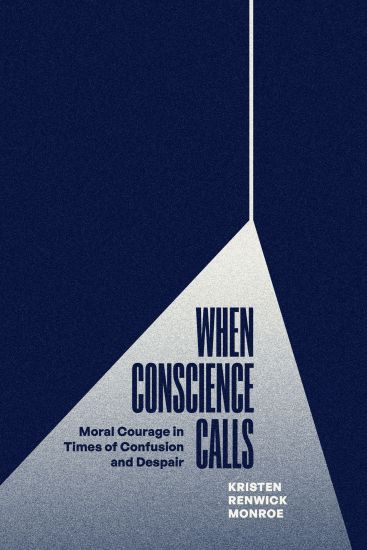
When Conscience Calls

When Conscience Calls

Kristen Renwick Monroe

THE UNIVERSITY OF CHICAGO PRESS
2023
nidottu
What is moral courage? Why is it important and what drives it? An argument for why we should care about moral courage and how it shapes the world around us. War, totalitarianism, pandemics, and political repression are among the many challenges and crises that force us to consider what humane people can do when the world falls apart. When tolerance disappears, truth becomes rare, and civilized discourse is a distant ideal, why do certain individuals find the courage to speak out when most do not? When Conscience Calls offers powerful portraits of ordinary people performing extraordinary acts—be it confronting presidents and racist mobs or simply caring for and protecting the vulnerable. Uniting these portraits is the idea that moral courage stems not from choice but from one’s identity. Ultimately, Kristen Renwick Monroe argues bravery derives from who we are, our core values, and our capacity to believe we must change the world. When Conscience Calls is a rich examination of why some citizens embrace anger, bitterness, and fearmongering while others seek common ground, fight against dogma, and stand up to hate.

Contemporary Empirical Political Theory

Contemporary Empirical Political Theory

Kristen Renwick Monroe

University of California Press
2022
pokkari
How can we best understand the major debates and recent movements in contemporary empirical political theory? In this volume, the contributors, including four past presidents of the APSA and one past president of the IPSA, present their views of the central core, methodologies and development of empirical political science. Their disparate views of the unifying themes of the discipline reflect different theoretical orientations, from behavioralism to rational choice, cultural theory to postmodernism, and feminism to Marxism. Is there a human nature on which we can construct scientific theories of political life? What is the role of culture in shaping any such nature? How objective and value-free can political theories be? These are only a few of the issues the volume addresses. By assessing where we have traveled intellectually as a discipline and asking what remains of lasting significance in the various theoretical approaches that have engulfed the profession, Contemporary Empirical Political Theory provides an important evaluation of the current state of empirical political theory and a valuable guide to future developments in political science.CONTRIBUTORS: Gabriel Almond, David Easton, Murray Edelman, J. Peter Euben, Bernard Grofman, John Gunnell, Russell Hardin, Edward Harpham, Nancy Hartsock, Jean Laponce, Theodore Lowi, Kristen Monroe, William Riker, Ian Shapiro, Alexander Wendt, Catherine Zuckert, Michael Zuckert This title is part of UC Press's Voices Revived program, which commemorates University of California Press’s mission to seek out and cultivate the brightest minds and give them voice, reach, and impact. Drawing on a backlist dating to 1893, Voices Revived makes high-quality, peer-reviewed scholarship accessible once again using print-on-demand technology. This title was originally published in 1997.
Contemporary Empirical Political Theory

Contemporary Empirical Political Theory

Kristen Renwick Monroe

University of California Press
2022
sidottu
How can we best understand the major debates and recent movements in contemporary empirical political theory? In this volume, the contributors, including four past presidents of the APSA and one past president of the IPSA, present their views of the central core, methodologies and development of empirical political science. Their disparate views of the unifying themes of the discipline reflect different theoretical orientations, from behavioralism to rational choice, cultural theory to postmodernism, and feminism to Marxism. Is there a human nature on which we can construct scientific theories of political life? What is the role of culture in shaping any such nature? How objective and value-free can political theories be? These are only a few of the issues the volume addresses. By assessing where we have traveled intellectually as a discipline and asking what remains of lasting significance in the various theoretical approaches that have engulfed the profession, Contemporary Empirical Political Theory provides an important evaluation of the current state of empirical political theory and a valuable guide to future developments in political science.CONTRIBUTORS: Gabriel Almond, David Easton, Murray Edelman, J. Peter Euben, Bernard Grofman, John Gunnell, Russell Hardin, Edward Harpham, Nancy Hartsock, Jean Laponce, Theodore Lowi, Kristen Monroe, William Riker, Ian Shapiro, Alexander Wendt, Catherine Zuckert, Michael Zuckert This title is part of UC Press's Voices Revived program, which commemorates University of California Press’s mission to seek out and cultivate the brightest minds and give them voice, reach, and impact. Drawing on a backlist dating to 1893, Voices Revived makes high-quality, peer-reviewed scholarship accessible once again using print-on-demand technology. This title was originally published in 1997.
The Heart of Altruism

The Heart of Altruism

Kristen Renwick Monroe

Princeton University Press
1998
pokkari
Is all human behavior based on self-interest? Many social and biological theories would argue so, but such a perspective does not explain the many truly heroic acts committed by people willing to risk their lives to help others. In The Heart of Altruism, Kristen Renwick Monroe boldly lays the groundwork for a social theory receptive to altruism by examining the experiences described by altruists themselves: from Otto, a German businessman who rescued over a hundred Jews in Nazi Germany, to Lucille, a newspaper poetry editor, who, armed with her cane, saved a young girl who was being raped. Monroe's honest and moving interviews with these little-known heroes enable her to explore the causes of altruism and the differences between altruists and other people. By delineating an overarching perspective of humanity shared by altruists, Monroe demonstrates how social theories may begin to account for altruism and debunks the notions of scientific inevitability that stem from an overemphasis on self-interest. As Monroe has discovered, the financial and religious backgrounds of altruists vary greatly--as do their views on issues such as welfare, civil rights, and morality. Altruists do, however, share a certain way of looking at the world: where the rest of us see a stranger, altruists see a fellow human being. It is this perspective that many social theories overlook. Monroe restores altruism to a general theory of ethical political behavior. She argues that to understand what makes one person act out of concern for others and not the self, we need to ask how that individual's perspective sets the range of options he or she finds available.
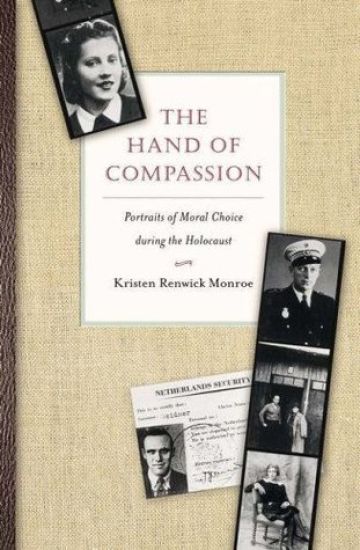
The Hand of Compassion

The Hand of Compassion

Kristen Renwick Monroe

Princeton University Press
2006
pokkari
Through moving interviews with five ordinary people who rescued Jews during the Holocaust, Kristen Monroe casts new light on a question at the heart of ethics: Why do people risk their lives for strangers and what drives such moral choice? Monroe's analysis points not to traditional explanations--such as religion or reason--but to identity. The rescuers' perceptions of themselves in relation to others made their extraordinary acts spontaneous and left the rescuers no choice but to act. To turn away Jews was, for them, literally unimaginable. In the words of one German Czech rescuer, "The hand of compassion was faster than the calculus of reason." At the heart of this unusual book are interviews with the rescuers, complex human beings from all parts of the Third Reich and all walks of life: Margot, a wealthy German who saved Jews while in exile in Holland; Otto, a German living in Prague who saved more than 100 Jews and provides surprising information about the plot to kill Hitler; John, a Dutchman on the Gestapo's "Most Wanted List"; Irene, a Polish student who hid eighteen Jews in the home of the German major for whom she was keeping house; and Knud, a Danish wartime policeman who took part in the extraordinary rescue of 85 percent of his country's Jews. We listen as the rescuers themselves tell the stories of their lives and their efforts to save Jews. Monroe's analysis of these stories draws on philosophy, ethics, and political psychology to suggest why and how identity constrains our choices, both cognitively and ethically. Her work offers a powerful counterpoint to conventional arguments about rational choice and a valuable addition to the literature on ethics and moral psychology. It is a dramatic illumination of the power of identity to shape our most basic political acts, including our treatment of others. But always Monroe returns us to the rescuers, to their strong voices, reminding us that the Holocaust need not have happened and revealing the minds of the ethically exemplary as they negotiated the moral quicksand that was the Holocaust.
Ethics in an Age of Terror and Genocide

Ethics in an Age of Terror and Genocide

Kristen Renwick Monroe

Princeton University Press
2011
pokkari
What causes genocide? Why do some stand by, doing nothing, while others risk their lives to help the persecuted? Ethics in an Age of Terror and Genocide analyzes riveting interviews with bystanders, Nazi supporters, and rescuers of Jews during the Holocaust to lay bare critical psychological forces operating during genocide. Monroe's insightful examination of these moving--and disturbing--interviews underscores the significance of identity for moral choice. Monroe finds that self-image and identity--especially the sense of self in relation to others--determine and delineate our choice options, not just morally but cognitively. She introduces the concept of moral salience to explain how we establish a critical psychological relationship with others, classifying individuals in need as "people just like us" or reducing them to strangers perceived as different, threatening, or even beyond the boundaries of our concern. Monroe explicates the psychological dehumanization that is a prerequisite for genocide and uses her knowledge of human behavior during the Holocaust to develop a broader theory of moral choice, one applicable to other forms of ethnic, religious, racial, and sectarian prejudice, aggression, and violence. Her book fills a long-standing void in ethics and suggests that identity is more fundamental than reasoning in our treatment of others.
A Darkling Plain

A Darkling Plain

Kristen Renwick Monroe

Cambridge University Press
2014
sidottu
How do people maintain their humanity during wars? Despite its importance, this question receives scant scholarly attention, perhaps because war is overwhelming. The generally accepted belief is that wars bring out the worst in us, pitting one against another. 'War is hell', William Tecumseh Sherman famously noted, and even 'just' wars are massively destructive and inhumane. Since ethics is concerned with discovering what takes us to a morally superior place, one conducive to betterment and happiness - studying what helps people survive wartime trauma thus becomes an extremely valuable enterprise. A Darkling Plain fills an important scholarly void, analyzing wartime stories that reveal much about our capacity to process trauma, heal wounds, reclaim lost spirits, and derive meaning and purpose from the most horrific of personal events.
A Darkling Plain

A Darkling Plain

Kristen Renwick Monroe

Cambridge University Press
2014
pokkari
How do people maintain their humanity during wars? Despite its importance, this question receives scant scholarly attention, perhaps because war is overwhelming. The generally accepted belief is that wars bring out the worst in us, pitting one against another. 'War is hell', William Tecumseh Sherman famously noted, and even 'just' wars are massively destructive and inhumane. Since ethics is concerned with discovering what takes us to a morally superior place, one conducive to betterment and happiness - studying what helps people survive wartime trauma thus becomes an extremely valuable enterprise. A Darkling Plain fills an important scholarly void, analyzing wartime stories that reveal much about our capacity to process trauma, heal wounds, reclaim lost spirits, and derive meaning and purpose from the most horrific of personal events.
Science, Ethics, and Politics

Science, Ethics, and Politics

Kristen Renwick Monroe

Paradigm
2011
sidottu
The relationship between science and ethics has been subject to much debate. This volume demonstrates the mutually beneficial relationship that can take place between ethics and science. It presents work that utilises the tools of science - broadly conceptualised - to elucidate ethical issues, showing that careful scientific analysis of ethical issues can reveal new insights. This is supplemented by conversations with the authors - some of them pre-eminent scientists addressing issues of ethics, including two Nobel laureates - to learn how they came to the study of ethics and ask how they conceptualise and think about ethical issues. Science, Ethics and Politics provides substantive insight into particular ethical issues, ranging from issues of torture during war to parents' obligations to children. This book is designed as a complement to traditional texts on ethics and should appeal to students of ethics as well as to the general public.
Science, Ethics, and Politics

Science, Ethics, and Politics

Kristen Renwick Monroe

Paradigm
2012
nidottu
The relationship between science and ethics has been subject to much debate. This volume demonstrates the mutually beneficial relationship that can take place between ethics and science. It presents work that utilises the tools of science - broadly conceptualised - to elucidate ethical issues, showing that careful scientific analysis of ethical issues can reveal new insights. This is supplemented by conversations with the authors - some of them pre-eminent scientists addressing issues of ethics, including two Nobel laureates - to learn how they came to the study of ethics and ask how they conceptualise and think about ethical issues. Science, Ethics and Politics provides substantive insight into particular ethical issues, ranging from issues of torture during war to parents' obligations to children. This book is designed as a complement to traditional texts on ethics and should appeal to students of ethics as well as to the general public.
The Unspoken Morality of Childhood

The Unspoken Morality of Childhood

Kristen Renwick Monroe

ANTHEM PRESS
2022
sidottu
The Unspoken Morality of Childhood reflects the thoughts of a senior ethicist as she ponders the moral questions we all encounter in everyday life. Each essay describes a commonplace event: a child learning to read or asking to be quizzed on spelling, first graders bonding on playground swings, brothers talking on the way home from school, a young girl leaving for college. Monroe sensitively infuses these moments with a thoughtful tenderness that reveals the beauty in our daily routine and the wisdom all parents crave. Her reflections on the ethical issues raised as part of our daily lives lend valuable insight into critical moral topics: how nostalgia and love of home can be exploited by unscrupulous politicians who turn fear into political weapons that divide us but elect them. How forgiveness may not always be the best way to move on after a hurt. Moral imagination's unique ability to help us conceptualize our way out of seemingly intransigent problems. Agency, passion, unconditional love, and the painful growth that can accompany loss. Above all, Monroe highlights the tremendous power of identity and self-esteem and the recognition that we must honor the humanity in others in order to fully claim it in ourselves.