Kirjojen hintavertailu. Mukana 11 717 486 kirjaa ja 12 kauppaa.

Kirjahaku

Etsi kirjoja tekijän nimen, kirjan nimen tai ISBN:n perusteella.

6 kirjaa tekijältä Kristine Larsen

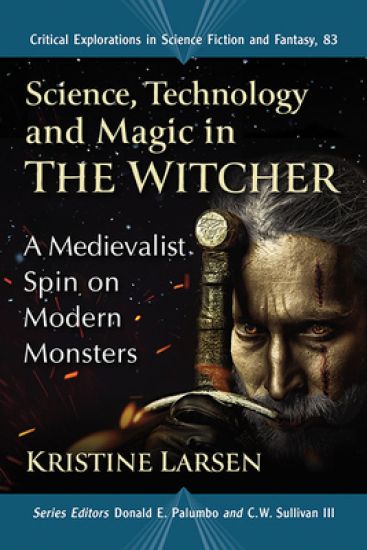
Science, Technology and Magic in The Witcher

Science, Technology and Magic in The Witcher

Kristine Larsen

MCFARLAND CO INC
2023
pokkari
As Andrzej Sapkowski was fleshing out his character Geralt of Rivia for a writing contest, he did not set out to write a science textbook--or even a work of science fiction. However, the world that Sapkowski created in his series The Witcher resulted in a valuable reflection of real-world developments in science and technology. As the Witcher books have been published across decades, the sorcery in the series acts as an extension of the modern science it grows alongside. This book explores the fascinating entanglement of science and magic that lies at the heart of Sapkowski's novel series and its widely popular video game and television adaptations. This is the first English-language book-length treatment of magic and science in the Witcher universe. These are examined through the lenses of politics, religion, history and mythology. Sapkowski's richly detailed universe investigates the sociology of science and ponders some of the most pressing modern technological issues, such as genetic engineering, climate change, weapons of mass destruction, sexism, speciesism and environmentalism. Chapters explore the unsettling realization that the greatest monsters are frequently human, and their heinous acts often involve the unwitting hand of science.
The Sun We Share

The Sun We Share

Kristine Larsen

MCFARLAND CO INC
2024
nidottu
As the dominant star in our sky, the Sun has been alternately worshipped as a god and viewed as a threat over the course of human history. Despite significant advances in astronomy, the Sun continues to surprise us, most notably in its production of so-called "space weather" that impacts technology here on Earth. This unique mixture of familiarity and mystery has made the Sun a main character in popular media over the past three centuries. This well-researched book examines how popular media has adopted and adapted to our ever-changing understanding of the inner workings of the Sun, providing a valuable lens through which to observe the inherent problems of communicating science to a non-technical audience. Chapters cut through the widespread hype found on the Internet, and instead explore our ever-improving scientific exploration of the Sun, the persistent misconceptions surrounding our star, the fate of the Sun (and its relation to the fate of the Earth) and why, despite infamous comments to the contrary by Oscar Wilde, the average person should care about sunspots.
Particle Panic!: How Popular Media and Popularized Science Feed Public Fears of Particle Accelerator Experiments
From novels and short stories to television and film, popular media has made a cottage industry of predicting that the end of the world will be caused by particle accelerators. Rather than allay such fears, public pronouncements by particle scientists themselves often unwittingly fan the flames of hysteria.This audiobook surveys media depictions of particle accelerator physics and the perceived dangers these experiments pose. In addition, it describes the role of scientists in propagating such fears and misconceptions, offering as a conclusion ways in which the scientific community could successfully allay such misplaced fears through more effective communication strategies.This audiobook is aimed at the general reader interested in separating fact from fiction in the field of high-energy physics, at science educators and communicators, and, last but not least, at all scientists concerned about these issues.
Particle Panic!

Particle Panic!

Kristine Larsen

Springer Nature Switzerland AG
2019
nidottu
From novels and short stories to television and film, popular media has made a cottage industry of predicting the end of the world will be caused by particle accelerators. Rather than allay such fears, public pronouncements by particle scientists themselves often unwittingly fan the flames of hysteria. This book surveys media depictions of particle accelerator physics and the perceived dangers these experiments pose. In addition, it describes the role of scientists in propagating such fears and misconceptions, offering as a conclusion ways in which the scientific community could successfully allay such misplaced fears through more effective communication strategies. The book is aimed at the general reader interested in separating fact from fiction in the field of high-energy physics, at science educators and communicators, and, last but not least, at all scientists concerned about these issues. About the Author KristineM Larsen holds a Ph.D. in Physics and is currently a professor at Central Connecticut State University, New Britain, CT, in the Geological Sciences Department. She has published a number of books, among them The Women Who Popularized Geology in the 19th Century (Springer, 2017), The Mythological Dimensions of Neil Gaiman (eds. Anthony Burdge, Jessica Burke, and Kristine Larsen. Kitsune Press, 2012. Recipient of the Gold Medal for Science Fiction/Fantasy in the 2012 Florida Publishing Association Awards), The Mythological Dimensions of Doctor Who (eds. Anthony Burdge, Jessica Burke, and Kristine Larsen. Kitsune Press, 2010), as well as Stephen Hawking: A Biography (Greenwood Press, 2005) and Cosmology 101 (Greenwood Press, (2007).
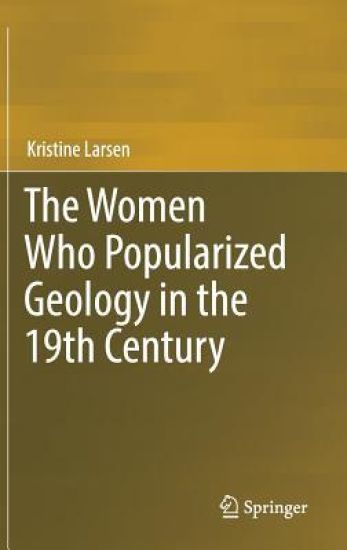
The Women Who Popularized Geology in the 19th Century

The Women Who Popularized Geology in the 19th Century

Kristine Larsen

Springer International Publishing AG
2017
sidottu
The female authors highlighted in this monograph represent a special breed of science writer, women who not only synthesized the science of their day (often drawing upon their own direct experience in the laboratory, field, classroom, and/or public lecture hall), but used their works to simultaneously educate, entertain, and, in many cases, evangelize. Women played a central role in the popularization of science in the 19th century, as penning such works (written for an audience of other women and children) was considered proper "women's work." Many of these writers excelled in a particular literary technique known as the "familiar format," in which science is described in the form of a conversation between characters, especially women and children. However, the biological sciences were considered more “feminine” than the natural sciences (such as astronomy and physics), hence the number of geological “conversations” was limited. This, in turn, makes the few that were completed all the more crucial to analyze.
The Women Who Popularized Geology in the 19th Century

The Women Who Popularized Geology in the 19th Century

Kristine Larsen

Springer International Publishing AG
2018
nidottu
The female authors highlighted in this monograph represent a special breed of science writer, women who not only synthesized the science of their day (often drawing upon their own direct experience in the laboratory, field, classroom, and/or public lecture hall), but used their works to simultaneously educate, entertain, and, in many cases, evangelize. Women played a central role in the popularization of science in the 19th century, as penning such works (written for an audience of other women and children) was considered proper "women's work." Many of these writers excelled in a particular literary technique known as the "familiar format," in which science is described in the form of a conversation between characters, especially women and children. However, the biological sciences were considered more “feminine” than the natural sciences (such as astronomy and physics), hence the number of geological “conversations” was limited. This, in turn, makes the few that were completed all the more crucial to analyze.