Kirjojen hintavertailu. Mukana 11 244 527 kirjaa ja 12 kauppaa.

Kirjahaku

Etsi kirjoja tekijän nimen, kirjan nimen tai ISBN:n perusteella.

3 kirjaa tekijältä Kristofer Ray

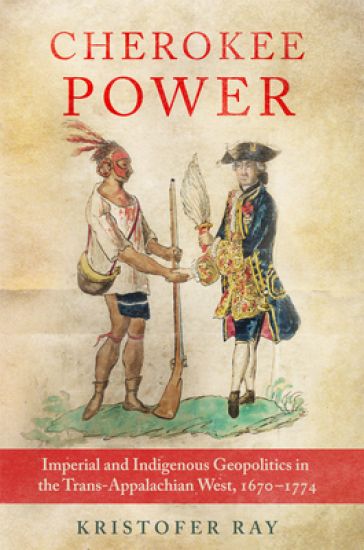
Cherokee Power Volume 22

Cherokee Power Volume 22

Kristofer Ray

UNIVERSITY OF OKLAHOMA PRESS
2023
sidottu
In 1754 South Carolina governor James Glen observed that the Tennessee River “has its rise in the Cherokee Nation and runs a great way through it.” While noting the “prodigious” extent of the corridor connecting the Tennessee, Ohio, and Wabash River valleys—and the Cherokees’ “undoubted” ownership of this watershed—Glen and other European observers were much less clear about the ambitions and claims of European empires and other Indigenous polities regarding the North American interior. In Cherokee Power, Kristofer Ray brings long-overdue clarity to this question by highlighting the role of the Overhill Cherokees in shaping imperial and Indigenous geopolitics in seventeenth- and eighteenth-century America. As Great Britain and France eyed the Illinois country and the Tennessee, Ohio, and Wabash River valleys for their respective empires, the Overhill Cherokees were coalescing and maintaining a conspicuous presence throughout the territory. Contrary to the traditional narrative of westward expansion, the Europeans were not the drivers behind the ensuing contest over the Tennessee corridor. The Overhills traded, negotiated, and fought with other Indigenous peoples along this corridor, in the process setting parameters for European expansion. Through the eighteenth century, the British and French struggled to overcome a dissonance between their visions of empire and the reality of Overhill mobility and sovereignty—a struggle that came to play a crucial role in the Anglo-American revolutionary debate that dominated the 1760s and 1770s. By emphasizing Indigenous agency in this rapidly changing world, Cherokee Power challenges long-standing ideas about the power and reach of European empires in eighteenth-century North America.
Cherokee Power Volume 22

Cherokee Power Volume 22

Kristofer Ray

UNIVERSITY OF OKLAHOMA PRESS
2023
nidottu
In 1754 South Carolina governor James Glen observed that the Tennessee River “has its rise in the Cherokee Nation and runs a great way through it.” While noting the “prodigious” extent of the corridor connecting the Tennessee, Ohio, and Wabash River valleys—and the Cherokees’ “undoubted” ownership of this watershed—Glen and other European observers were much less clear about the ambitions and claims of European empires and other Indigenous polities regarding the North American interior. In Cherokee Power, Kristofer Ray brings long-overdue clarity to this question by highlighting the role of the Overhill Cherokees in shaping imperial and Indigenous geopolitics in seventeenth- and eighteenth-century America. As Great Britain and France eyed the Illinois country and the Tennessee, Ohio, and Wabash River valleys for their respective empires, the Overhill Cherokees were coalescing and maintaining a conspicuous presence throughout the territory. Contrary to the traditional narrative of westward expansion, the Europeans were not the drivers behind the ensuing contest over the Tennessee corridor. The Overhills traded, negotiated, and fought with other Indigenous peoples along this corridor, in the process setting parameters for European expansion. Through the eighteenth century, the British and French struggled to overcome a dissonance between their visions of empire and the reality of Overhill mobility and sovereignty—a struggle that came to play a crucial role in the Anglo-American revolutionary debate that dominated the 1760s and 1770s. By emphasizing Indigenous agency in this rapidly changing world, Cherokee Power challenges long-standing ideas about the power and reach of European empires in eighteenth-century North America.
Middle Tennessee, 1775-1825

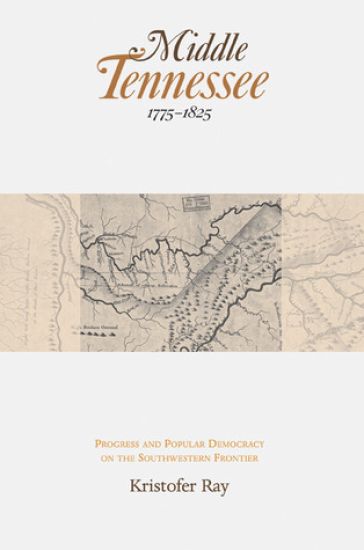
Middle Tennessee, 1775-1825

Kristofer Ray

University of Tennessee Press
2007
sidottu
"In tracing the evolution of political culture in early Tennessee, Kris Ray provides a sweeping study of the multifaceted ways in which early Americans understood leadership and democratic participation. Readers will find Middle Tennessee, 1775–1825 an engaging contribution to our understanding of how, in the crucible of the Early American Republic, democracy did not have to take the form of competing political parties to be vibrant and challenging." —Craig Thompson Friend, author of Along the Maysville Road: The Early American Republic in the Trans-Appalachian West“Ray's work is an excellent reflection of current historical scholarship, the first systematic attempt to place Middle Tennessee within the same framework developed in other recent books on Trans-Appalachian states.” —John R. Finger, author of Tennessee Frontiers: Three Regions in TransitionDuring its early years, the frontier region of Middle Tennessee developed from thinly settled outposts to a premier destination for thousands of land-hungry immigrants. The resulting population explosion led to a shift in political power from a small group of surveyors and speculators to the farmers, merchants, and entrepreneurs attracted by a burgeoning, globally-connected agricultural economy.Kristofer Ray chronicles the rise of Middle Tennessee's political system as it transformed from one dominated by land interests to an increasingly vibrant democracy in which the “common man” had more of a voice. He also explores the fact that, as the economy grew, a sharp debate emerged between the mercantile class and ordinary farmers as to the best way to sustain regional progress.This book explores the issues, values, and visions around which the politics of early Middle Tennessee were based. It convincingly shows how the region's emerging political culture established a foundation for the rise of popular democracy, which, as Ray reveals, meant that Tennesseans not only expressed themselves through voting, but also through the social realms of town hall meetings, parades, and even effigy burnings.This book explores both the promises and limitations of political cultural development in early Middle Tennessee. It provides the context out of which Andrew Jackson would emerge as a national political force. It will appeal to those interested in southern studies, American history or political science.Kristofer Ray is assistant professor of history at Ashland University in Ashland, Ohio. His articles have appeared in Ohio Valley History and the Tennessee Historical Quarterly.