Kirjojen hintavertailu. Mukana 11 244 527 kirjaa ja 12 kauppaa.

Kirjahaku

Etsi kirjoja tekijän nimen, kirjan nimen tai ISBN:n perusteella.

3 kirjaa tekijältä Kyle Stevens

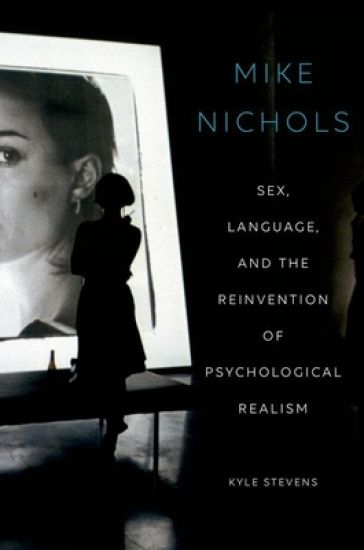
Mike Nichols

Mike Nichols

Kyle Stevens

Oxford University Press Inc
2015
sidottu
During the late 1960s and 1970s, as Film Studies crystallized into an academic discipline, psychological realism became linked to both classical Hollywood and continuity editing. The style was derided as theatrical, or worse, bourgeois, a product of a capitalism that valorized individual personality. This view persists, though often tacitly. However, we must attribute some degree of mindedness to any figure that we might call a character, even if that psyche is established not by a performer but by another aspect of the film, such as editing. Through the study of performer and director Mike Nichols, Kyle Stevens questions the aesthetic-ideological stance against psychological realism. He argues that characters' actions are not just filmed concepts but can be film concepts whose forms resonate politically. Nichols' oeuvre centers on moments when words and gestures cease to mean, or to mean in typical ways. In doing so, he exposes the pretense of tropes that constitute conventionally realist characters, and participates in changes in U.S. cultural attitudes toward language, subjectivity, embodiment, and the social, particularly with regard to sexual politics. This book thus sheds light on Hollywood history, historicizes Film Studies' turn away from humanism, and reassesses paradigms that hold psychological realism to be "transparent"-thereby blinding us to potentially subtle and subversive uses of this aesthetic choice.
Mike Nichols

Mike Nichols

Kyle Stevens

Oxford University Press Inc
2015
nidottu
With iconic movies like Who's Afraid of Virginia Woolf?, The Graduate, and Carnal Knowledge, Mike Nichols was the most prominent American director during the cultural upheavals of the 1960s. Mike Nichols: Sex, Language, and the Reinvention of Psychological Realism argues that he overhauled the style of psychological realism, and, in doing so, continues to shape the legacies of Hollywood cinema. It also reveals that misreadings of his films were central to foundational debates at the emergence of Cinema Studies as a discipline, inviting new reflections on critical dogma. Focusing on Nichols' classic movies, as well as later films such as Silkwood, The Birdcage, and Angels in America, Kyle Stevens demonstrates that Nichols' realism lies not in the plausibility of his characters but in their inherent mystery. By attending to the puzzling words and silences, breaths and laughter, that comprise these characters, Stevens uncovers new insights into the subversive potential of a range of cinematic elements, and reveals how Nichols' satirical oeuvre, and Hollywood itself, participated in several of the nation's most urgent social, political, and philosophical advances.