Kirjojen hintavertailu. Mukana 11 244 527 kirjaa ja 12 kauppaa.

Kirjahaku

Etsi kirjoja tekijän nimen, kirjan nimen tai ISBN:n perusteella.

4 kirjaa tekijältä Kyriaki Messiou

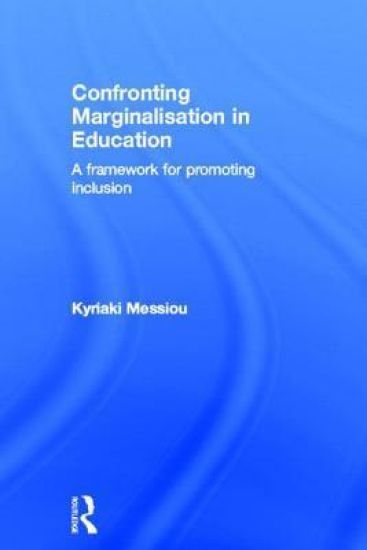
Confronting Marginalisation in Education
One of the key challenges facing schools today is that of reducing marginalisation amongst pupils in educational contexts. This timely book provides guidance and illustrative examples of the ways in which primary and secondary schools can include all of their students in the academic and social experiences they provide. Developed around a framework that practitioners and researchers can use in order to understand and address marginalisation, the author’s approach takes account of the views of children and young people throughout. This framework consists of a unique four-step process:Step 1: Opening doors: Enabling voices to emerge. Step 2: Looking closely: Bringing concerns to the surface. Step 3: Making sense of the evidence: Sharing data with learners. Step 4: Dealing with marginalisation: Encouraging inclusive thinking and practice.By helping practitioners to reach out to all learners, regardless of the labels assigned to them, the book explains how teachers can make sure that every child matters, and, in so doing, create a classroom that is all the more inclusive. Importantly, the book focuses on all learners, including those who might experience marginalisation but whose voices might have not previously been heard. Relevant to teachers of pupils of all ages, students on initial teacher education and undergraduate and postgraduate students, this book will also be of interest to researchers and academics who are focusing on the role of children’s voices in promoting inclusive education.
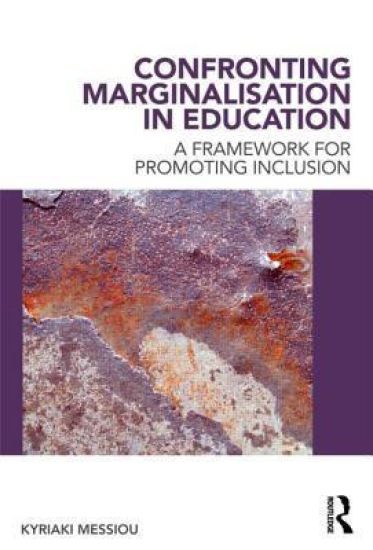
Confronting Marginalisation in Education
One of the key challenges facing schools today is that of reducing marginalisation amongst pupils in educational contexts. This timely book provides guidance and illustrative examples of the ways in which primary and secondary schools can include all of their students in the academic and social experiences they provide. Developed around a framework that practitioners and researchers can use in order to understand and address marginalisation, the author’s approach takes account of the views of children and young people throughout. This framework consists of a unique four-step process:Step 1: Opening doors: Enabling voices to emerge. Step 2: Looking closely: Bringing concerns to the surface. Step 3: Making sense of the evidence: Sharing data with learners. Step 4: Dealing with marginalisation: Encouraging inclusive thinking and practice.By helping practitioners to reach out to all learners, regardless of the labels assigned to them, the book explains how teachers can make sure that every child matters, and, in so doing, create a classroom that is all the more inclusive. Importantly, the book focuses on all learners, including those who might experience marginalisation but whose voices might have not previously been heard. Relevant to teachers of pupils of all ages, students on initial teacher education and undergraduate and postgraduate students, this book will also be of interest to researchers and academics who are focusing on the role of children’s voices in promoting inclusive education.
Inclusive Journeys

Inclusive Journeys

Kyriaki Messiou

TAYLOR FRANCIS LTD
2025
nidottu
There is considerable interest in inclusion and equity in schools internationally, however, widespread confusion accompanies what this means for policy and practice in the field. Recent policy proclaims, ‘All Means All’, yet the focus lies on particular groups of learners who continue to be marginalised, such as children from ethnic minorities or those who have special educational needs. In Inclusive Journeys, renowned researcher Kyriaki Messiou draws on her involvement in a series of international development and research projects over thirty years to propose a new way of thinking about inclusive education. This book explores how “All Means All” can be conceptualised by adopting a broader view of who is marginalised within school contexts. Central to this approach is the creation of new relationships amongst teachers and students, encouraging dialogue to identify barriers experienced by some learners, as well as co-constructing solutions. Extensive use is made of examples to illustrate how this can be put into practice both within schools and across education systems. The challenges involved in taking these ‘inclusive journeys’ are also addressed. The central argument made by Kyriaki is that progress regarding inclusive education requires collaborative forms of research. This involves researchers, practitioners and students to become co-researchers and ensure that no child is left out of school or marginalised within education systems.The book is relevant to researchers and academics focusing on developing inclusion in schools through collaborative forms of research. It will also be of interest to teachers of students of all ages, and to students on initial teacher education courses, undergraduate and postgraduate courses.
Inclusive Journeys

Inclusive Journeys

Kyriaki Messiou

TAYLOR FRANCIS LTD
2025
sidottu
There is considerable interest in inclusion and equity in schools internationally, however, widespread confusion accompanies what this means for policy and practice in the field. Recent policy proclaims, ‘All Means All’, yet the focus lies on particular groups of learners who continue to be marginalised, such as children from ethnic minorities or those who have special educational needs. In Inclusive Journeys, renowned researcher Kyriaki Messiou draws on her involvement in a series of international development and research projects over thirty years to propose a new way of thinking about inclusive education. This book explores how “All Means All” can be conceptualised by adopting a broader view of who is marginalised within school contexts. Central to this approach is the creation of new relationships amongst teachers and students, encouraging dialogue to identify barriers experienced by some learners, as well as co-constructing solutions. Extensive use is made of examples to illustrate how this can be put into practice both within schools and across education systems. The challenges involved in taking these ‘inclusive journeys’ are also addressed. The central argument made by Kyriaki is that progress regarding inclusive education requires collaborative forms of research. This involves researchers, practitioners and students to become co-researchers and ensure that no child is left out of school or marginalised within education systems.The book is relevant to researchers and academics focusing on developing inclusion in schools through collaborative forms of research. It will also be of interest to teachers of students of all ages, and to students on initial teacher education courses, undergraduate and postgraduate courses.