Kirjojen hintavertailu. Mukana 11 244 527 kirjaa ja 12 kauppaa.

Kirjahaku

Etsi kirjoja tekijän nimen, kirjan nimen tai ISBN:n perusteella.

3 kirjaa tekijältä L. T. C. Rolt

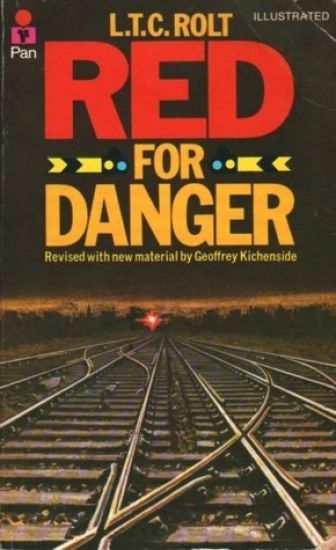
Red for Danger

Red for Danger

L. T. C. Rolt

Sutton Publishing Ltd
2007
nidottu
Railway disasters are almost always the result of human fallibility - a single mistake by an engine-driver, guard or signalman, or some lack of communication between them - and it is in the short distance between the trivial error and its terrible consequence that the drama of the railway accident lies. First published in 1955, and the result of Rolt's careful investigation and study of the verbatim reports and findings by HM Inspectorate of Railways, this book was the first work to record the history of railway disasters, and it remains the classic account. It covers every major accident on British railways between 1840 and 1957 which resulted in a change in railway working practice, and reveals the evolution of safety devices and methods which came to make the British railway carriage one of the safest modes of transport in the world. This edition uses the last text produced by Rolt himself in 1966 and includes a new introduction by his friend and fellow railway historian Professor Jack Simmons.
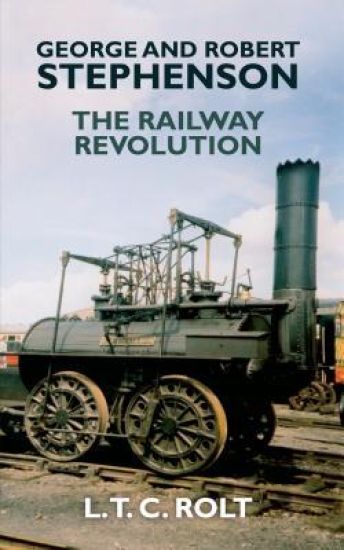
George and Robert Stephenson

George and Robert Stephenson

L. T. C. Rolt

Amberley Publishing
2016
pokkari
The railways were the most revolutionary innovation of Victorian times. They carried Britain into the modern age with dramatic speed, transforming the pace and style of everyday life. We owe them to two men who, father and son, can lay claim to be the most important engineers of their time, George and Robert Stephenson. In this excellent biography L. T. C. Rolt, author of Brunel and Thomas Telford, assesses their life and their work. ‘This biography is a work of distinction in both the historical and social sense. It is written by one who adds engineering knowledge to biographical skill.’ E. W. Martin in the Listener ‘Mr Rolt is a master of correct terminology and can even turn it to literary advantage where, under another hand, it would cumber context with jargon. This gift, coupled with his own practical knowledge of mechanical and civil engineering, has enabled the author to produce yet another contribution to English history, which would have been quite beyond the power of the academic historian.’ Edmund Vale in the Observer