Kirjojen hintavertailu. Mukana 11 390 014 kirjaa ja 12 kauppaa.

Kirjahaku

Etsi kirjoja tekijän nimen, kirjan nimen tai ISBN:n perusteella.

8 kirjaa tekijältä Laird Scranton

Ganesha: The Scientific Symbolism of a Hindu God

Ganesha: The Scientific Symbolism of a Hindu God

Laird Scranton

Independently Published
2019
nidottu
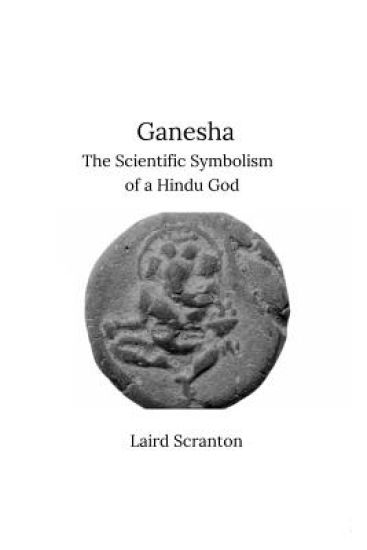
The Hindu Elephant god Ganesha is perhaps the most widely popular of ancient deities, and so was the focus of many popular myths. However, his very interesting symbolism is also pivotal to ancient concepts of creation in India. While evidence for Ganesha dates back only to the late centuries BCE in India, comparative studies tie him to ancient African and Egyptian concepts that originated thousands of years earlier. These references provide us with a sensible context for Ganesha's symbolism, described in distinctly scientific terms. These link his various incarnations, attributes and icons to root dynamics of energy - the very ones that modern-day science tells us lie at the heart of concepts of material creation. Those dynamics, along with important clues uncovered in ancient language and myth, make it possible to reformulate a sensible myth of origin for Ganesha, in much the same form that it may have originally taken.
The Cosmological Origins of Myth and Symbol

The Cosmological Origins of Myth and Symbol

Laird Scranton

Inner Traditions Bear and Company
2010
pokkari
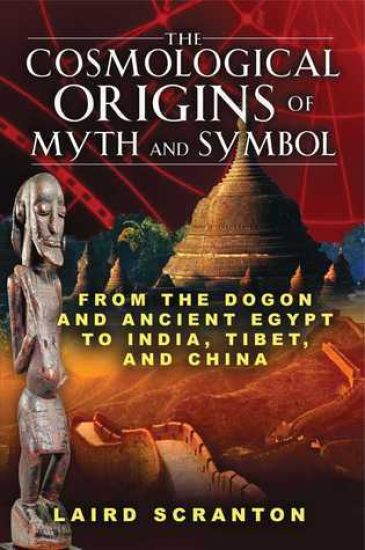
Great thinkers and researchers such as Carl Jung have acknowledged the many broad similarities that exist between the myths and symbols of ancient cultures. One largely unexplored explanation for these similarities lies in the possibility that these systems of myth all descended from one common cosmological plan. Outlining the most significant aspects of cosmology found among the Dogon, ancient Egyptians, and ancient Buddhists, including the striking physical and cosmological parallels between the Dogon granary and the Buddhist stupa, Laird Scranton identifies the signature attributes of a theoretic ancient parent cosmology--a planned instructional system that may well have spawned these great ancient creation traditions. Examining the esoteric nature of cosmology itself, Scranton shows how this parent cosmology encompassed both a plan for the civilized instruction of humanity as well as the conceptual origins of language. The recurring shapes in all ancient religions were key elements of this plan, designed to give physical manifestation to the sacred and provide the means to conceptualize and compare earthly dimensions with those of the heavens. As a practical application of the plan, Scranton explores the myths and language of an obscure Chinese priestly tribe known as the Na-Khi--the keepers of the world’s last surviving hieroglyphic language. Suggesting that cosmology may have engendered civilization and not the other way around, Scranton reveals how this plan of cosmology provides the missing link between our macroscopic universe and the microscopic world of atoms.
Point of Origin

Point of Origin

Laird Scranton

Inner Traditions Bear and Company
2015
pokkari
How could multiple ancient cultures, spanning both years and geography, have strikingly similar creation myths and cosmologies? Why do the Dogon of Africa and the civilizations of ancient Egypt, India, Tibet, and China share sacred words and symbols? Revealing the existence of a long-forgotten primal culture and the world's first center of higher learning, Laird Scranton shows how the sophisticated complex at Gobekli Tepe in Turkey is the definitive point of origin from which all the great civilizations of the past inherited their cosmology, esoteric teachings, and civilizing skills, such as agriculture, metallurgy, and stone masonry, fully developed. Scranton explains how the carved images on Gobekli Tepe's stone pillars were the precursors to the sacred symbols of the Dogon, Egyptians, Tibetans, and Chinese as well as the matriarchal Sakti cult of ancient Iran and India. Scranton reveals how Gobekli Tepe's enigmatic "H" carvings and animal symbolism, symbolic of stages of creation, was presented as a kind of prototype of written language accessible to the hunter-gathers who inhabited the region. He shows how the myths and deities of many ancient cultures are connected linguistically, extending even to the name of Gobekli Tepe and the Egyptian concept of Zep Tepi, the mythical age of the "First Time." Identifying Gobekli Tepe not only as the first university but also as the first temple, perhaps built as a civilizing exercise, Scranton definitively places this enigmatic archaeological site at the point of origin of civilization, religion, and ancient science.
The Mystery of Skara Brae

The Mystery of Skara Brae

Laird Scranton

Inner Traditions Bear and Company
2017
pokkari
In 3200 BC, Orkney Island off the coast of Northern Scotland was home to a small farming village called Skara Brae. For reasons unknown, after nearly six centuries of continuous habitation, the village was abandoned around 2600 BC and its stone structures covered over--perhaps deliberately, like the structures at Gobekli Tepe. Although now well-excavated, very little is known about the peaceful people who lived at Skara Brae or their origins. Who were they and where did they go? Drawing on his in-depth knowledge of the connections between the cosmology and linguistics of Egyptian, Dogon, Chinese, and Vedic traditions, Laird Scranton reveals the striking similarities between Skara Brae and the Dogon of Mali, who still practice the same cosmology and traditions they once shared with pre-dynastic Egypt. He shows how the earliest Skara Brae houses match the typical Dogon stone house as well as Schwaller de Lubicz’s intrepretation of the Egyptian Temple of Man at Luxor. He explains how megalithic stone sites near Skara Brae conform to Dogon cosmology, each representing sequential stages of creation as described by Dogon priests, and he details how the houses at Skara Brae also represent a concept of creation. Citing a linguistic phenomenon known as “ultraconserved words,” the author compares words of the Faroese language at Skara Brae, a language with no known origin, with important cosmological words from Dogon and ancient Egyptian traditions, finding obvious connections and similarities.
Primal Wisdom of the Ancients

Primal Wisdom of the Ancients

Laird Scranton

Inner Traditions Bear and Company
2020
pokkari
Examines how the similarities of symbols and wisdom across many cultures point to an ancient civilizing plan and system of ancient instruction • Reveals the shared cosmological knowledge of Dogon and Maori cultures, ancient Egypt, Gobekli Tepe, Vedic India, the pre-Indian Sakti civilization, Buddhism, the Tibetan Bon religion, and the kabbalistic tradition of the Hebrews • Explores symbols and techniques used to frame and preserve instructed knowledge as it was transmitted orally from generation to generation • Explains how this shared ancient knowledge relates to the precessional year and the cycles of time known as the yugas Exploring the mystery of why so many ancient cultures, separated by time and distance, share remarkably similar cosmological philosophies and religious symbolism, Laird Scranton reveals how this shared creation tradition upholds the idea that ancient instruction gave birth to the great civilizations, each of which preserves fragments of the original knowledge. Looking at the many manifestations of this shared cosmological knowledge, including in the Dogon and Maori cultures and in ancient Egypt, Gobekli Tepe, Vedic India, Buddhism, the Tibetan Bon religion, and the kabbalistic tradition of the Hebrews, Scranton explores the thought processes that went into formulating the archetype themes and metaphors of the ancient symbolic system. He examines how commonly shared principles of creational science are reflected in key terms of the ancient languages. He discusses how the primal cosmology also transmitted key components of sacred science, such as sacred geometry, knowledge of material creation, and the nature of a nonmaterial universe--evidence for which lies in the orientation of ancient temples, the drama of initiations and rituals, and countless traditional myths. He analyzes how this shared knowledge relates to the precessional year and the cycles of time known as the yugas. He also explores evidence of the concept of a nonmaterial twin universe to our own--the “above” to our “below” in the famous alchemical and hermetic maxim. Through his extensive research into the interconnected wisdom of the ancients, Scranton shows that the forgotten instructional tradition at the source of this knowledge was deliberately encoded to survive for countless generations. By piecing it back together, we can discover the ancient plan for guiding humanity forward toward greater enlightenment.
Seeking the Primordial: Exploring Root Concepts of Cosmological Creation

Seeking the Primordial: Exploring Root Concepts of Cosmological Creation

Laird Scranton

Createspace Independent Publishing Platform
2017
nidottu
Einstein believed that matter must arise from a simple set of physical dynamics. So did many of the classic ancient creation traditions, such as the Buddhist and Hindu traditions in India, the Kabbalist tradition of Judaism, and the Dogon and Egyptian creation traditions of Africa.Priests of the modern-day Dogon tribe of Mali point to a set of primordial processes of matter that go well beyond what modern popularizers of physics typically discuss. Techniques of comparative cosmology help us to align those processes with likely scientific counterparts, based on a consensus of ancient views.What's revealed are new and compelling perspectives on how our universe is said to interact with a non-material twin universe, how the dimensions of time and space are understood to emerge from non-materiality, and how these seemingly scientific archaic concepts formed an enduring foundation for ancient and modern religion.This book is the most recent in a series of comparative studies of ancient cosmology and language by independent researcher, Laird Scranton.
Decoding Maori Cosmology

Decoding Maori Cosmology

Laird Scranton

Inner Traditions Bear and Company
2018
pokkari
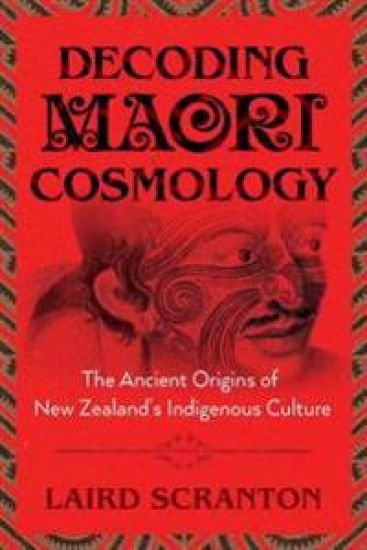
An exploration of New Zealand’s Maori cosmology and how it relates to classic ancient symbolic traditions around the world New evidence suggests that Maori culture of New Zealand is most likely centuries older than previously believed. The roots can be traced back to the archaic Göbekli Tepe site in Turkey, built around 10,000 BC. Extending his global cosmology comparisons to New Zealand, Laird Scranton shows how the same cosmological concepts and linguistic roots that began at Göbekli Tepe are also evident in Maori culture and language. These are the same elements that underlie Dogon, ancient Egyptian, and ancient Chinese cosmologies as well as the Sakti Cult of India (a precursor to Vedic, Buddhist, and Hindu traditions) and the Neolithic culture of Orkney Island in northern Scotland. While the cultural and linguistic roots of the Maori are distinctly Polynesian, the author shows how the cosmology in New Zealand was sheltered from outside influences and likely reflects ancient sources better than other Polynesian cultures. In addition to shared creation concepts, he details a multitude of strikingly similar word pronunciations and meanings, shared by Maori language and the Dogon and Egyptian languages, as well as likely connections to various Biblical terms and traditions. He discusses the Maori use of standing stones to denote spiritual spaces and sanctuaries and how their esoteric mystery schools are housed in structures architecturally similar to those commonly found in Ireland. He discusses the symbolism of the Seven Mythic Canoes of the Maori and uncovers symbolic aspects of the elephant-headed Hindu god Ganesha in Maori cosmology. The author also explores the outwardly similar pygmy traditions of Ireland and New Zealand, characterized by matching fairy mound constructions and mythic references in both regions. He reveals how the trail of a group of Little People who vanished from Orkney Island in ancient times might be traced first to Scotland, Ireland, and England and then on to New Zealand, accompanied by signature elements of the global cosmology first seen at Gobekli Tepe.
China's Cosmological Prehistory

China's Cosmological Prehistory

Laird Scranton

Inner Traditions Bear and Company
2014
pokkari
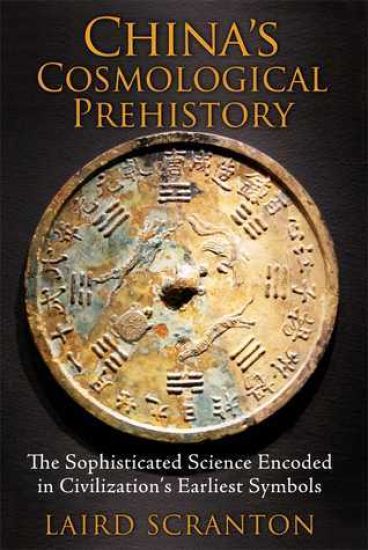
Building on his extensive research into the sacred symbols and creation myths of the Dogon of Africa and those of ancient Egypt, India, and Tibet, Laird Scranton investigates the myths, symbols, and traditions of prehistoric China, providing further evidence that the cosmology of all ancient cultures arose from a single now-lost source. Scranton explores the fundamental similarities between the language that defined ancient Chinese cosmology and that of other creation traditions, revealing the connections between the phonetic structure of the words, their glyphs, and their use. He demonstrates striking parallels between the earliest systems of writing in China and the hieroglyphs of ancient Egypt. He examines the 8 levels of creation in Taoism and the cosmological origins of Chinese ancestor worship, mythical emperors, the zodiac, the mandala, and the I Ching. He details the fundamental principles of land-use in ancient China in relation to the symbolism of a Buddhist stupa and the Dogon granary, ritual shrines that are also the central symbol of other creation traditions. Understanding the true meanings of these symbol complexes also reveals the sophisticated scientific understanding of these ancient cultures, for these creation symbols directly correlate with our modern understanding of atoms and the energetic makeup of matter. In exploring Chinese cosmological traditions, Scranton sheds new light on the contention that the sacred knowledge of the ancients is the legacy of an earlier culture who gave primitive humanity the tools they needed to birth the first known civilizations.