Kirjojen hintavertailu. Mukana 11 627 220 kirjaa ja 12 kauppaa.

Kirjahaku

Etsi kirjoja tekijän nimen, kirjan nimen tai ISBN:n perusteella.

22 kirjaa tekijältä Lambert Zuidervaart

Shattering Silos

Shattering Silos

Lambert Zuidervaart

MCGILL-QUEEN'S UNIVERSITY PRESS
2022
sidottu
Questions first raised by Hannah Arendt in the 1960s take on new urgency in the post-truth era, as political leaders blithely reject facts in the public domain: Is truth politically impotent? Are politics inherently false? Is the search for truth still relevant?Shattering Silos, a companion volume to Religion, Truth, and Social Transformation and Art, Education, and Cultural Renewal, provides a path-breaking response. As in his two previous books, Lambert Zuidervaart challenges the boundaries philosophers set up between epistemology, ethics, and political philosophy. Knowledge, he argues, takes different forms in various social domains, and all are subject to political struggle. A critique of contemporary society must draw on many social domains of knowledge, including the arts and religion, and should recast politics as a striving for truth in the broadest sense. Proposing a new conception of truth – one that emphasizes the unity of knowledge and truth, as well as their diversity among different social domains – Zuidervaart asks what such holism and pluralism suggest about how we understand politics and society. This book proposes a new understanding of large-scale social change, challenging how most people think about knowledge and truth.Interweaving epistemology, social criticism, and political thought, Shattering Silos aims to help redirect an allegedly post-truth society.
Shattering Silos

Shattering Silos

Lambert Zuidervaart

MCGILL-QUEEN'S UNIVERSITY PRESS
2022
nidottu
Questions first raised by Hannah Arendt in the 1960s take on new urgency in the post-truth era, as political leaders blithely reject facts in the public domain: Is truth politically impotent? Are politics inherently false? Is the search for truth still relevant?Shattering Silos, a companion volume to Religion, Truth, and Social Transformation and Art, Education, and Cultural Renewal, provides a path-breaking response. As in his two previous books, Lambert Zuidervaart challenges the boundaries philosophers set up between epistemology, ethics, and political philosophy. Knowledge, he argues, takes different forms in various social domains, and all are subject to political struggle. A critique of contemporary society must draw on many social domains of knowledge, including the arts and religion, and should recast politics as a striving for truth in the broadest sense. Proposing a new conception of truth – one that emphasizes the unity of knowledge and truth, as well as their diversity among different social domains – Zuidervaart asks what such holism and pluralism suggest about how we understand politics and society. This book proposes a new understanding of large-scale social change, challenging how most people think about knowledge and truth.Interweaving epistemology, social criticism, and political thought, Shattering Silos aims to help redirect an allegedly post-truth society.

Truth in Husserl, Heidegger, and the Frankfurt School
An innovative, ambitious, tradition-crossing study drawing on the work of Husserl, Heidegger, Horkheimer, Adorno, and Habermas to propose a new and transformative concept of truth.The idea of truth is a guiding theme for German continental philosophers from Husserl through Habermas. In this book, Lambert Zuidervaart examines debates surrounding the idea of truth in twentieth-century German continental philosophy. He argues that the Heideggerian and critical theory traditions have much in common-despite the miscommunication, opposition, and even outright hostility that have prevailed between them-including significant roots in the phenomenology of Edmund Husserl. Zuidervaart sees the tensions between Heideggerian thought and critical theory as potentially generative sources for a new approach to the idea of truth. He argues further that the "critical retrieval" of insights from German continental philosophy can shed light on current debates in analytic truth theory.Zuidervaart structures his account around three issues: the distinction between propositional truth and truth that is more than propositional (which he calls existential truth); the relationship between propositional truth and the discursive justification of propositional truth claims, framed in analytic philosophy by debates between epistemic and nonepistemic conceptions of truth; and the relationship between propositional truth and the objectivity of knowledge, often presented in analytic philosophy as a conflict between realists and antirealists over the relation between "truth bearers" and "truth makers." In an innovative and ambitious argument, drawing on the work of Husserl, Heidegger, Horkheimer, Adorno, and Habermas, Zuidervaart proposes a new and transformative conception of truth.
Adorno's Aesthetic Theory

Adorno's Aesthetic Theory

Lambert Zuidervaart

MIT Press
1993
pokkari
This is the first book to put Aesthetic Theory into context and outline the main ideas and relevant debates, offering readers a valuable guide through this huge, difficult, but revelatory work.Theodor Adorno's Aesthetic Theory is a vast labyrinth that anyone interested in modern aesthetic theory must at some time enter. Because of his immense difficulty of the same order as Derrida - Adorno's reception has been slowed by the lack of a comprehensive and comprehensible account of the intentions of his aesthetics. This is the first book to put Aesthetic Theory into context and outline the main ideas and relevant debates, offering readers a valuable guide through this huge, difficult, but revelatory work. Its extended argument is that, despite Adorno's assumptions of autonomism, cognitivism, and aesthetic modernism, his idea of artistic truth content offers crucial insights for contemporary philosophical aesthetics.The eleven chapters are divided into three parts: Context, Content, and Critique. The first part offers a brief biography, describes Adorno's debates with Benjamin, Brecht, and Lukacs, and outlines his philosophical program. The second part is an interpretation of Adorno's aesthetics, examining how he situates art in society, production, politics, and history and uncovering the social, political, and historical dimensions of his idea of artistic truth. The third part evaluates Adorno's contribution by confronting it with the critiques of Peter Burger, Frederic Jameson, and Albrecht Wellmer.
Artistic Truth

Artistic Truth

Lambert Zuidervaart

Cambridge University Press
2009
pokkari
It is unfashionable to talk about artistic truth. Yet the issues traditionally addressed under that term have not disappeared. Indeed, questions concerning the role of the artist in society, the relationship between art and knowledge and the validity of cultural interpretation have intensified. Lambert Zuidervaart challenges intellectual fashions. He proposes a new critical hermeneutics of artistic truth that engages with both analytic and continental philosophies and illuminates the contemporary cultural scene. People turn to the arts as a way of finding orientation in their lives, communities and institutions. But philosophers, hamstrung by their own theories of truth, have been unsuccessful in accounting for this common feature in our lives. This book portrays artistic truth as a process of imaginative disclosure in which expectations of authenticity, significance and integrity prevail. Understood in this way, truth becomes central to the aesthetic and social value of the arts.
Art in Public

Art in Public

Lambert Zuidervaart

Cambridge University Press
2010
sidottu
This book examines fundamental questions about funding for the arts: why should governments provide funding for the arts? What do the arts contribute to daily life? Do artists and their publics have a social responsibility? Challenging questionable assumptions about the state, the arts and a democratic society, Lambert Zuidervaart presents a vigorous case for government funding, based on crucial contributions the arts make to civil society. He argues that the arts contribute to democratic communication and a social economy, fostering the critical and creative dialogue that a democratic society needs. Informed by the author's experience leading a non-profit arts organisation as well as his expertise in the arts, humanities and social sciences, this book proposes an entirely new conception of the public role of art with wide-ranging implications for education, politics and cultural policy.
Art in Public

Art in Public

Lambert Zuidervaart

Cambridge University Press
2010
pokkari
This book examines fundamental questions about funding for the arts: why should governments provide funding for the arts? What do the arts contribute to daily life? Do artists and their publics have a social responsibility? Challenging questionable assumptions about the state, the arts and a democratic society, Lambert Zuidervaart presents a vigorous case for government funding, based on crucial contributions the arts make to civil society. He argues that the arts contribute to democratic communication and a social economy, fostering the critical and creative dialogue that a democratic society needs. Informed by the author's experience leading a non-profit arts organisation as well as his expertise in the arts, humanities and social sciences, this book proposes an entirely new conception of the public role of art with wide-ranging implications for education, politics and cultural policy.
Social Philosophy after Adorno

Social Philosophy after Adorno

Lambert Zuidervaart

Cambridge University Press
2007
pokkari
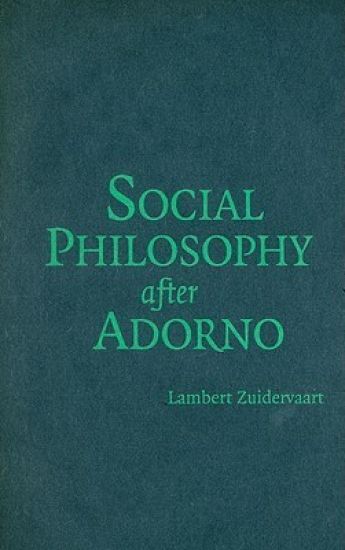
Lambert Zuidervaart examines what is living and what is dead in the social philosophy of Theodor W. Adorno, the most important philosopher and social critic in Germany after World War II. When he died in 1969, Adorno's successors abandoned his critical-utopian passions. Habermas in particular, rejected or ignored Adorno's central insights on the negative effects of capitalism and new technologies upon nature and human life. Zuidervaart reclaims Adorno's insights from Habermasian neglect while taking up legitimate Habermasian criticisms. He also addresses the prospects for radical and democratic transformations of an increasingly globalized world. The book proposes a provocative social philosophy 'after Adorno'.
Artistic Truth

Artistic Truth

Lambert Zuidervaart

Cambridge University Press
2004
sidottu
It is unfashionable to talk about artistic truth. Yet the issues traditionally addressed under that term have not disappeared. Indeed, questions concerning the role of the artist in society, the relationship between art and knowledge, and the validity of cultural interpretation have intensified. Lambert Zuidervaart challenges current intellectual fashions by proposing a new hermeneutic theory of artistic truth that engages with both analytic and continental philosophies and illuminates the contemporary cultural scene. People turn to the arts as a way of finding orientation in their lives, communities and institutions. However, as the author shows, philosophers, hamstrung by their own theories of truth, have been unsuccessful in accounting for this common feature in our lives. This book portrays artistic truth as a process of imaginative disclosure in which expectations of authenticity, significance and integrity prevail. Understood in this way, truth becomes central to the aesthetic and social value of the arts.
Social Philosophy after Adorno

Social Philosophy after Adorno

Lambert Zuidervaart

Cambridge University Press
2007
sidottu
Lambert Zuidervaart examines what is living and what is dead in the social philosophy of Theodor W. Adorno, the most important philosopher and social critic in Germany after World War II. When he died in 1969, Adorno's successors abandoned his critical-utopian passions. Habermas in particular, rejected or ignored Adorno's central insights on the negative effects of capitalism and new technologies upon nature and human life. Zuidervaart reclaims Adorno's insights from Habermasian neglect while taking up legitimate Habermasian criticisms. He also addresses the prospects for radical and democratic transformations of an increasingly globalized world. The book proposes a provocative social philosophy 'after Adorno'.
Religion, Truth, and Social Transformation

Religion, Truth, and Social Transformation

Lambert Zuidervaart

McGill-Queen's University Press
2016
sidottu
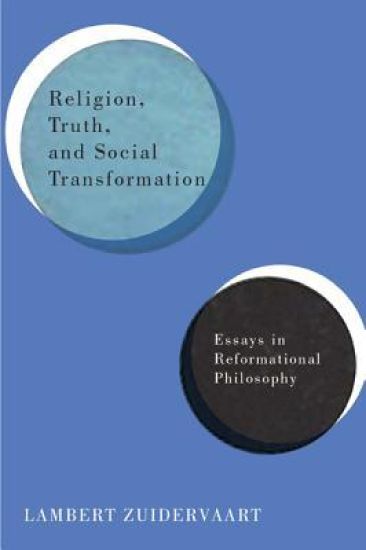
Reformational philosophy rests on the ideas of nineteenth-century educator, church leader, and politician Abraham Kuyper, and it emerged in the early twentieth century among Reformed Protestant thinkers in the Netherlands. Combining comprehensive criticisms of Western philosophy with robust proposals for a just society, it calls on members of religious communities to transform harmful cultural practices, social institutions, and societal structures. Well known for his work in aesthetics and critical theory, Lambert Zuidervaart is a leading figure in contemporary reformational philosophy. In Religion, Truth, and Social Transformation - the first of two volumes of original essays from the past thirty years - he forges new interpretations of art, politics, rationality, religion, science, and truth. In dialogue with modern and contemporary philosophers, among them Immanuel Kant, G.F.H Hegel, Martin Heidegger, Theodor Adorno, Jurgen Habermas, and reformational thinkers such as Herman Dooyeweerd, Dirk Vollenhoven, and Hendrik Hart, Zuidervaart explains and expands on reformational philosophy's central themes. This interdisciplinary collection offers a normative critique of societal evil, a holistic and pluralist conception of truth, and a call for both religion and science to serve the common good. Illustrating the connections between philosophy, religion, and culture, and daring to think outside the box, Religion, Truth, and Social Transformation gives a voice to hope in a climate of despair.
Religion, Truth, and Social Transformation

Religion, Truth, and Social Transformation

Lambert Zuidervaart

McGill-Queen's University Press
2016
nidottu
Reformational philosophy rests on the ideas of nineteenth-century educator, church leader, and politician Abraham Kuyper, and it emerged in the early twentieth century among Reformed Protestant thinkers in the Netherlands. Combining comprehensive criticisms of Western philosophy with robust proposals for a just society, it calls on members of religious communities to transform harmful cultural practices, social institutions, and societal structures. Well known for his work in aesthetics and critical theory, Lambert Zuidervaart is a leading figure in contemporary reformational philosophy. In Religion, Truth, and Social Transformation - the first of two volumes of original essays from the past thirty years - he forges new interpretations of art, politics, rationality, religion, science, and truth. In dialogue with modern and contemporary philosophers, among them Immanuel Kant, G.F.H Hegel, Martin Heidegger, Theodor Adorno, Jurgen Habermas, and reformational thinkers such as Herman Dooyeweerd, Dirk Vollenhoven, and Hendrik Hart, Zuidervaart explains and expands on reformational philosophy's central themes. This interdisciplinary collection offers a normative critique of societal evil, a holistic and pluralist conception of truth, and a call for both religion and science to serve the common good. Illustrating the connections between philosophy, religion, and culture, and daring to think outside the box, Religion, Truth, and Social Transformation gives a voice to hope in a climate of despair.
Art, Education, and Cultural Renewal

Art, Education, and Cultural Renewal

Lambert Zuidervaart

McGill-Queen's University Press
2017
sidottu
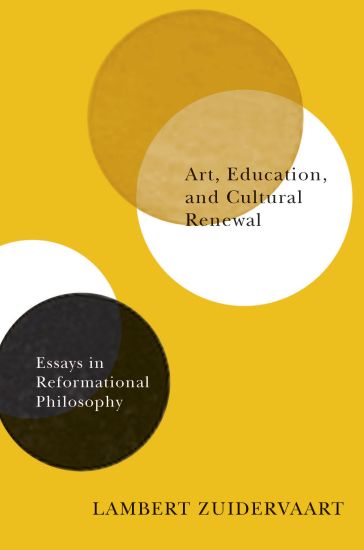
What good is art? What is the point of a university education? Can philosophers contribute anything to social liberation? Such questions, both ancient and urgent, are the pulse of reformational philosophy. Inspired by the vision of the Dutch religious and political leader Abraham Kuyper, reformational philosophy pursues social transformation for the common good. In this companion volume to Religion, Truth, and Social Transformation, Lambert Zuidervaart presents a socially engaged philosophy of the arts and higher education. Interacting with the ideas of leading Kuyperian thinkers such as Calvin Seerveld and Nicholas Wolterstorff, Zuidervaart shows why renewal in the arts needs to coincide with political and economic transformation. He also calls for education and research that serve the common good. Deeply rooted in reformational philosophy, his book brings a fresh and inspiring voice to current discussions of religious aesthetics and Christian scholarship. Art, Education, and Cultural Renewal is a testament to the practical and intellectual richness of a unique religious tradition, compelling in its call for social solidarity and cultural critique.
Art, Education, and Cultural Renewal

Art, Education, and Cultural Renewal

Lambert Zuidervaart

McGill-Queen's University Press
2017
nidottu
What good is art? What is the point of a university education? Can philosophers contribute anything to social liberation? Such questions, both ancient and urgent, are the pulse of reformational philosophy. Inspired by the vision of the Dutch religious and political leader Abraham Kuyper, reformational philosophy pursues social transformation for the common good. In this companion volume to Religion, Truth, and Social Transformation, Lambert Zuidervaart presents a socially engaged philosophy of the arts and higher education. Interacting with the ideas of leading Kuyperian thinkers such as Calvin Seerveld and Nicholas Wolterstorff, Zuidervaart shows why renewal in the arts needs to coincide with political and economic transformation. He also calls for education and research that serve the common good. Deeply rooted in reformational philosophy, his book brings a fresh and inspiring voice to current discussions of religious aesthetics and Christian scholarship. Art, Education, and Cultural Renewal is a testament to the practical and intellectual richness of a unique religious tradition, compelling in its call for social solidarity and cultural critique.
Social Domains of Truth

Social Domains of Truth

Lambert Zuidervaart

TAYLOR FRANCIS LTD
2023
sidottu
Truth is in trouble. In response, this book presents a new conception of truth. It recognizes that prominent philosophers have questioned whether the idea of truth is important. Some have asked why we even need it. Their questions reinforce broader trends in Western society, where many wonder whether or why we should pursue truth. Indeed, some pundits say we have become a "post-truth" society. Yet there are good reasons not to embrace the cultural Zeitgeist or go with the philosophical flow, reasons to regard truth as a substantive and socially significant idea.This book explains why. First it argues that propositional truth is only one kind of truth—an important kind, but not all important. Then it shows how propositional truth belongs to the more comprehensive process of truth as a whole. This process is a dynamic correlation between human fidelity to societal principles and a life-giving disclosure of society. The correlation comes to expression in distinct social domains of truth, where either propositional or nonpropositional truth is primary. The final chapters lay out five such domains: science, politics, art, religion, and philosophy. Anyone who cares about the future of truth in society will want to read this pathbreaking book.
Social Domains of Truth

Social Domains of Truth

Lambert Zuidervaart

TAYLOR FRANCIS LTD
2024
nidottu
Truth is in trouble. In response, this book presents a new conception of truth. It recognizes that prominent philosophers have questioned whether the idea of truth is important. Some have asked why we even need it. Their questions reinforce broader trends in Western society, where many wonder whether or why we should pursue truth. Indeed, some pundits say we have become a "post-truth" society. Yet there are good reasons not to embrace the cultural Zeitgeist or go with the philosophical flow, reasons to regard truth as a substantive and socially significant idea.This book explains why. First it argues that propositional truth is only one kind of truth—an important kind, but not all important. Then it shows how propositional truth belongs to the more comprehensive process of truth as a whole. This process is a dynamic correlation between human fidelity to societal principles and a life-giving disclosure of society. The correlation comes to expression in distinct social domains of truth, where either propositional or nonpropositional truth is primary. The final chapters lay out five such domains: science, politics, art, religion, and philosophy. Anyone who cares about the future of truth in society will want to read this pathbreaking book.
Adorno, Heidegger, and the Politics of Truth

Adorno, Heidegger, and the Politics of Truth

Lambert Zuidervaart

STATE UNIVERSITY OF NEW YORK PRESS
2024
pokkari
A critical and creative reconstruction of Adorno's conception of truth that shows its relevance for contemporary philosophy, art, and politics.An elusive and complex idea of truth lies at the center of Theodor Adorno's thought. Yet he never spells out what it is. Through close readings of Negative Dialectics, Aesthetic Theory, and related course lectures, Lambert Zuidervaart reconstructs Adorno's conception of truth, contrasts it with the conceptions of Martin Heidegger and Michel Foucault, and explores its relevance for contemporary philosophy, art, and politics. Adorno regards truth as a dynamic constellation in which various dialectical polarities intersect. The most decisive polarity, Zuidervaart argues, occurs between society as it has developed and the historical possibility of a completely transformed world. Critically reconstructed, Adorno's conception of truth can help inspire hopeful critiques of an allegedly post-truth society.
Adorno, Heidegger, and the Politics of Truth

Adorno, Heidegger, and the Politics of Truth

Lambert Zuidervaart

STATE UNIVERSITY OF NEW YORK PRESS
2024
sidottu
A critical and creative reconstruction of Adorno's conception of truth that shows its relevance for contemporary philosophy, art, and politics.An elusive and complex idea of truth lies at the center of Theodor Adorno's thought. Yet he never spells out what it is. Through close readings of Negative Dialectics, Aesthetic Theory, and related course lectures, Lambert Zuidervaart reconstructs Adorno's conception of truth, contrasts it with the conceptions of Martin Heidegger and Michel Foucault, and explores its relevance for contemporary philosophy, art, and politics. Adorno regards truth as a dynamic constellation in which various dialectical polarities intersect. The most decisive polarity, Zuidervaart argues, occurs between society as it has developed and the historical possibility of a completely transformed world. Critically reconstructed, Adorno's conception of truth can help inspire hopeful critiques of an allegedly post-truth society.