Kirjojen hintavertailu. Mukana 12 016 292 kirjaa ja 12 kauppaa.

Kirjahaku

Etsi kirjoja tekijän nimen, kirjan nimen tai ISBN:n perusteella.

6 kirjaa tekijältä Lance Newman

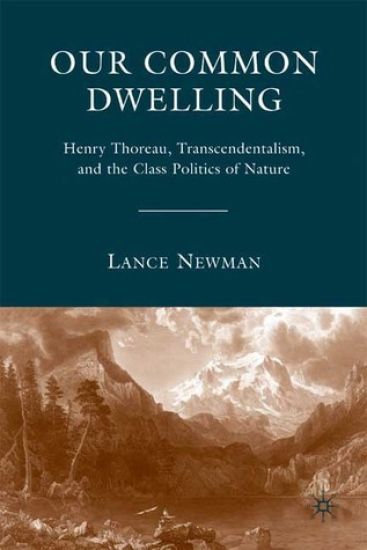
Our Common Dwelling

Our Common Dwelling

Lance Newman

Palgrave Macmillan
2008
nidottu
OurCommonDwelling explores why America's first literary circle turned to nature in the 1830s and '40s. When the New England Transcendentalists spiritualized nature, they were reacting to intense class conflict in the region's industrializing cities. Their goal was to find a secular foundation for their social authority as an intellectual elite. New England Transcendentalism engages with works by William Wordsworth, Henry David Thoreau, Ralph Waldo Emerson, Margaret Fuller, Nathaniel Hawthorne, and others. The works of these great authors, interpreted in historical context, show that both environmental exploitation and conscious love of nature co-evolved as part of the historical development of American capitalism.
Our Common Dwelling

Our Common Dwelling

Lance Newman

Palgrave Macmillan
2005
nidottu
OurCommonDwelling explores why America's first literary circle turned to nature in the 1830s and '40s. When the New England Transcendentalists spiritualized nature, they were reacting to intense class conflict in the region's industrializing cities. Their goal was to find a secular foundation for their social authority as an intellectual elite. New England Transcendentalism engages with works by William Wordsworth, Henry David Thoreau, Ralph Waldo Emerson, Margaret Fuller, Nathaniel Hawthorne, and others. The works of these great authors, interpreted in historical context, show that both environmental exploitation and conscious love of nature co-evolved as part of the historical development of American capitalism.
Our Common Dwelling

Our Common Dwelling

Lance Newman

Palgrave Macmillan
2005
sidottu
OurCommonDwelling explores why America's first literary circle turned to nature in the 1830s and '40s. When the New England Transcendentalists spiritualized nature, they were reacting to intense class conflict in the region's industrializing cities. Their goal was to find a secular foundation for their social authority as an intellectual elite. New England Transcendentalism engages with works by William Wordsworth, Henry David Thoreau, Ralph Waldo Emerson, Margaret Fuller, Nathaniel Hawthorne, and others. The works of these great authors, interpreted in historical context, show that both environmental exploitation and conscious love of nature co-evolved as part of the historical development of American capitalism.
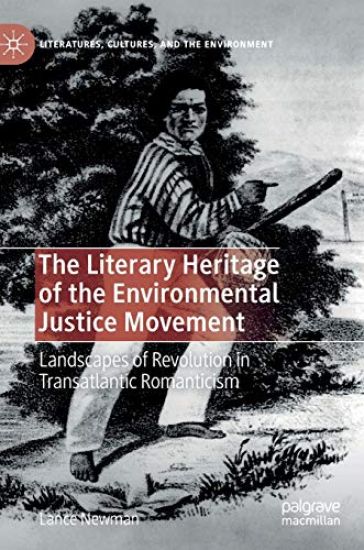
The Literary Heritage of the Environmental Justice Movement

The Literary Heritage of the Environmental Justice Movement

Lance Newman

Springer Nature Switzerland AG
2019
sidottu
The Literary Heritage of the Environmental Justice Movement showcases environmental literature from writers who fought for women’s rights, native rights, workers’ power, and the abolition of slavery during the Romantic Era. Many Romantic texts take flight from society and enact solitary white male encounters with a feminine nature. However, the symbolic landscapes of Romanticism were often radicalized by writers like Olaudah Equiano, Frederick Douglass, William Apess, George Copway, Mary Wollstonecraft, Lydia Maria Child, John Clare, and Henry Thoreau. These authors showed how the oppression of human beings and the exploitation of nature are the twin driving forces of capitalism and colonialism. In addition to spotlighting new kinds of environmental literature, this book also reinterprets familiar texts by figures like William Blake, Nathaniel Hawthorne, Mary Shelley, William Wordsworth, and Walt Whitman, and it shows how these household figures were writing in conversation with their radical contemporaries.
The Literary Heritage of the Environmental Justice Movement

The Literary Heritage of the Environmental Justice Movement

Lance Newman

Springer Nature Switzerland AG
2019
nidottu
The Literary Heritage of the Environmental Justice Movement showcases environmental literature from writers who fought for women’s rights, native rights, workers’ power, and the abolition of slavery during the Romantic Era. Many Romantic texts take flight from society and enact solitary white male encounters with a feminine nature. However, the symbolic landscapes of Romanticism were often radicalized by writers like Olaudah Equiano, Frederick Douglass, William Apess, George Copway, Mary Wollstonecraft, Lydia Maria Child, John Clare, and Henry Thoreau. These authors showed how the oppression of human beings and the exploitation of nature are the twin driving forces of capitalism and colonialism. In addition to spotlighting new kinds of environmental literature, this book also reinterprets familiar texts by figures like William Blake, Nathaniel Hawthorne, Mary Shelley, William Wordsworth, and Walt Whitman, and it shows how these household figures were writing in conversation with their radical contemporaries.