Kirjojen hintavertailu. Mukana 11 342 296 kirjaa ja 12 kauppaa.

Kirjahaku

Etsi kirjoja tekijän nimen, kirjan nimen tai ISBN:n perusteella.

24 kirjaa tekijältä Larry Cuban

The Enduring Classroom

The Enduring Classroom

Larry Cuban

THE UNIVERSITY OF CHICAGO PRESS
2023
nidottu
A groundbreaking analysis of how teachers actually teach and have taught in the past. The quality and effectiveness of teaching are a constant subject of discussion within the profession and among the broader public. Most of that conversation focuses on the question of how teachers should teach. In The Enduring Classroom, veteran teacher and scholar of education Larry Cuban explores different questions, ones that just might be more important: How have teachers actually taught? How do they teach now? And what can we learn from both? Examining both past and present is crucial, Cuban explains. If reformers want teachers to adopt new techniques, they need to understand what teachers are currently doing if they want to have any hope of having their innovations implemented. Cuban takes us into classrooms then and now, using observations from contemporary research as well as a rich historical archive of classroom accounts, along the way asking larger questions about teacher training and the individual motivations of people in the classroom. Do teachers freely choose how to teach, or are they driven by their beliefs and values about teaching and learning? What role do students play in determining how teachers teach? Do teachers teach as they were taught? By asking and answering these and other policy questions with the aid of concrete data about actual classroom practices, Cuban helps us make a crucial step toward creating reforms that could actually improve instruction.

The Enduring Classroom

The Enduring Classroom

Larry Cuban

THE UNIVERSITY OF CHICAGO PRESS
2023
sidottu
A groundbreaking analysis of how teachers actually teach and have taught in the past. The quality and effectiveness of teaching are a constant subject of discussion within the profession and among the broader public. Most of that conversation focuses on the question of how teachers should teach. In The Enduring Classroom, veteran teacher and scholar of education Larry Cuban explores different questions, ones that just might be more important: How have teachers actually taught? How do they teach now? And what can we learn from both? Examining both past and present is crucial, Cuban explains. If reformers want teachers to adopt new techniques, they need to understand what teachers are currently doing if they want to have any hope of having their innovations implemented. Cuban takes us into classrooms then and now, using observations from contemporary research as well as a rich historical archive of classroom accounts, along the way asking larger questions about teacher training and the individual motivations of people in the classroom. Do teachers freely choose how to teach, or are they driven by their beliefs and values about teaching and learning? What role do students play in determining how teachers teach? Do teachers teach as they were taught? By asking and answering these and other policy questions with the aid of concrete data about actual classroom practices, Cuban helps us make a crucial step toward creating reforms that could actually improve instruction.
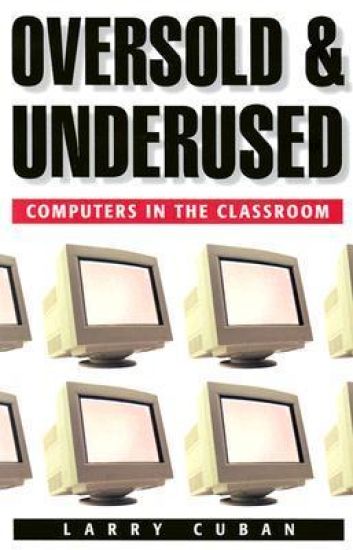
Oversold and Underused

Oversold and Underused

Larry Cuban

Harvard University Press
2003
nidottu
Impelled by a demand for increasing American strength in the new global economy, many educators, public officials, business leaders, and parents argue that school computers and Internet access will improve academic learning and prepare students for an information-based workplace.But just how valid is this argument? In Oversold and Underused, one of the most respected voices in American education argues that when teachers are not given a say in how the technology might reshape schools, computers are merely souped-up typewriters and classrooms continue to run much as they did a generation ago. In his studies of early childhood, high school, and university classrooms in Silicon Valley, Larry Cuban found that students and teachers use the new technologies far less in the classroom than they do at home, and that teachers who use computers for instruction do so infrequently and unimaginatively.Cuban points out that historical and organizational economic contexts influence how teachers use technical innovations. Computers can be useful when teachers sufficiently understand the technology themselves, believe it will enhance learning, and have the power to shape their own curricula. But these conditions can't be met without a broader and deeper commitment to public education beyond preparing workers. More attention, Cuban says, needs to be paid to the civic and social goals of schooling, goals that make the question of how many computers are in classrooms trivial.
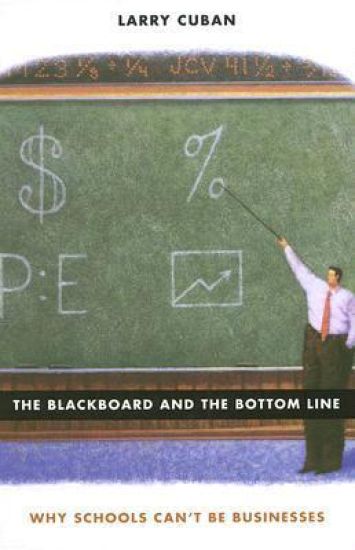
The Blackboard and the Bottom Line

The Blackboard and the Bottom Line

Larry Cuban

Harvard University Press
2007
nidottu
"Ford Motor Company would not have survived the competition had it not been for an emphasis on results. We must view education the same way," the U.S. Secretary of Education declared in 2003. But is he right? In this provocative new book, Larry Cuban takes aim at the alluring cliché that schools should be more businesslike, and shows that in its long history in business-minded America, no one has shown that a business model can be successfully applied to education. In this straight-talking book, one of the most distinguished scholars in education charts the Gilded Age beginnings of the influential view that American schools should be organized to meet the needs of American businesses, and run according to principles of cost-efficiency, bottom-line thinking, and customer satisfaction. Not only are schools by their nature not businesslike, Cuban argues, but the attempt to run them along business lines leads to dangerous over-standardization--of tests, and of goals for our children. Why should we think that there is such a thing as one best school? Is "college for all" achievable--or even desirable? Even if it were possible, do we really want schools to operate as bootcamps for a workforce? Cuban suggests that the best business-inspired improvement for American education would be more consistent and sustained on-the-job worker training, tailored for the job to be done, and business leaders' encouragement--and adoption--of an ethic of civic engagement and public service.
As Good As It Gets

As Good As It Gets

Larry Cuban

Harvard University Press
2010
sidottu
Take an economically and racially diverse urban school district emerging from a long history of segregation. Add an energetic, capable, bridge-building superintendent with ambitious district-wide goals to improve graduation rates, school attendance, and academic performance. Consider that he was well funded and strongly supported by city leaders, teachers, and parents, and ask how much changed in a decade of his tenure—and what remained unchanged? Larry Cuban takes this richly detailed history of the Austin, Texas, school district, under Superintendent Pat Forgione, to ask the question that few politicians and school reformers want to touch. Given effective use of widely welcomed reforms, can school policies and practices put all children at the same academic level? Are class and ethnic differences in academic performance within the power of schools to change?Cuban argues that the overall district has shown much improvement—better test scores, more high school graduates, and more qualified teachers. But the improvements are unevenly distributed. The elementary schools improved, as did the high schools located in affluent, well-educated, largely white neighborhoods. But the least improvement came where it was needed most: the predominantly poor, black, and Latino high schools. Before Forgione arrived, over 10 percent of district schools were failing, and after he left office, roughly the same percentage continued to fail. Austin’s signal successes amid failure hold answers to tough questions facing urban district leaders across the nation.
How Teachers Taught

How Teachers Taught

Larry Cuban

Teachers' College Press
1993
nidottu
In the first edition of this seminal study, Larry Cuban presented the last century of American teaching as one of a stable teacher-centered pedagogy. Within this framework, Cuban explored how major school reform efforts to alter classroom teaching often resulted in modest shifts in pedagogy in elementary schools and even less change in secondary schools.Now, in this second edition, How Teachers Taught: Constancy and Change in American Classrooms, 1890–1990, Larry Cuban returns to his pioneering inquiry into the history of teaching practice in the United States, responds to criticisms, and incorporates the scholarship of the last ten years. While not abandoning his basic thesis of the remarkable continuity in teacher-based instruction, Cuban now examines more closely the phenomenon of "hybrids" of student-centered and teacher-centered pedagogy, and finds many instances of classroom change sufficient to give pause to those who see futility in classroom reform. The author looks closely at socioeconomic contexts and the evolution of curriculum content. In the final chapter, Cuban directly assesses the implications of his work for policymakers, practitioners, and researchers. Historians, sociologists, and educators will also find powerful relevancy to their work, and the general reader will join in an exciting search for historical realities.
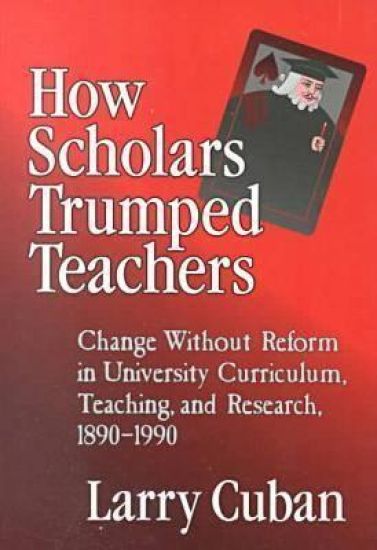
How Scholars Trumped Teachers

How Scholars Trumped Teachers

Larry Cuban

Teachers' College Press
1999
nidottu
Examining a century of university history, Larry Cuban tackles the age-old question: What is more important, teaching or research? Using two departments (history and medicine) at Stanford University as a case study, Cuban shows how universities have organizationally and politically subordinated teaching to research for over one hundred years. He explains how university reforms, decade after decade, not only failed to dislodge the primacy of research but actually served to strengthen it. He examines the academic work of research and teaching to determine how each has influenced university structures and processes, including curricular reform. Can the dilemma of scholars vs. teachers ever be fully reconciled? This fascinating historical journey is a must read for all university administrators, faculty, researchers, and anyone concerned with educational reform.
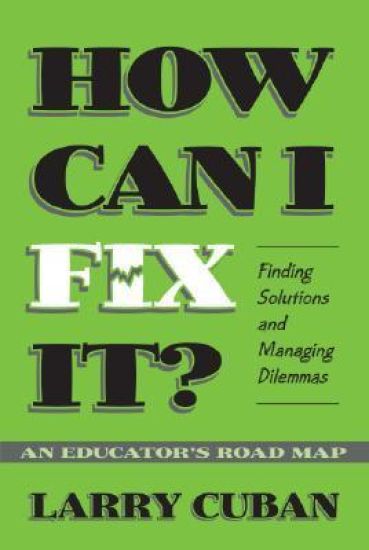
How Can I Fix It?

How Can I Fix It?

Larry Cuban

Teachers' College Press
2001
nidottu
With this highly accessible and unique little guide, Larry Cuban offers educators indispensable tools to make sense of the daily complexities they encounter in their work. Teachers face dozens of classroom situations where conflicts occur. Similarly, principals wrestle with school issues that call for changes in attitudes, behaviors, and procedures. Because the process is so familiar, even expert teachers and principals often have difficulty in explaining what it is that they do and how they go about solving problems and coping with dilemmas in their classrooms and schools. Using concrete and varied examples drawn from the workplace, Cuban presents vivid and provocative case studies of practitioners' experiences in urban and suburban schools that deal with the routine conflicts of school. He draws on his own extensive experience in public schools and his research into teaching and administration to set forth a practical framework for identifying, defining, and coping with both puzzling problems and tension-filled dilemmas. A much-needed resource for both new and experienced practitioners, How Can I Fix It? focuses on common skills that practitioners have - but seldom take time to consider - and applies these skills to concrete situations.
Why Is It So Hard to Get Good Schools?

Why Is It So Hard to Get Good Schools?

Larry Cuban

Teachers' College Press
2003
nidottu
After almost five decades of working in and around public schools, Larry Cuban invites us to think along with him about why it is so hard to get good schools. He offers these reflections because his contact with tens of thousands of public school participants - teachers, policymakers, researchers, parents, and students - has convinced him that ""I am not alone in coping with these thorny dilemmas...as each of us muddles toward the kinds of 'good' schooling that we seek for children.
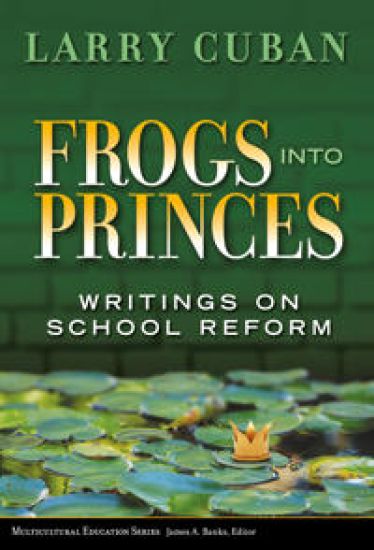
Frogs Into Princes

Frogs Into Princes

Larry Cuban

Teachers' College Press
2008
nidottu
Here is the essential collection of Larry Cuban's writings on urban school reform spanning his 45-year career. These carefully selected studies and articles examine instructional, curricular, organizational, and governance reform in mostly poor and minority districts and schools. The volume includes an Introduction and Epilogue that frames the book, giving readers a sense of Cuban's career as teacher, administrator, and researcher and how those experiences were intimately tied to the writings presented here. Cuban's deep compassion for students and educators and his commitment to educational equality for all children is evident in every page of this stunning collection.
Hugging the Middle

Hugging the Middle

Larry Cuban

Teachers' College Press
2009
nidottu
Larry Cuban's ""How Teachers Taught"" has been widely acclaimed as a pathbreaking text on the history and evolution of classroom teaching. Now Cuban brings his great experience as a classroom teacher, superintendent, and researcher to this highly anticipated follow-up to his groundbreaking work. Focusing on three diverse school districts (Arlington, Virginia; Denver, Colorado; and Oakland, California), ""Hugging the Middle"" offers an incisive portrayal of how teachers teach now.It is a revealing look at a range of current, workable pedagogical options educators are using to engage students while satisfying parents and policymakers - options that succeed by creating hybrid practices that combine both teacher-centered approaches (e.g., mostly direct instruction, textbooks, and lectures) with student-centered ones (e.g., team projects on real-world problems, independent learning, and small-groupwork). This book serves as a state-of-the-profession assessment in an era of top-down educational policy.
The Managerial Imperative and the Practice of Leadership in Schools

The Managerial Imperative and the Practice of Leadership in Schools

Larry Cuban

State University of New York Press
1988
pokkari
With this significant new work, Larry Cuban provides a unique and insightful perspective on the bridging of the long-standing and well-known gap between teachers and administrators. Drawing on the literature of the field as well as personal experience, Cuban recognizes the enduring structural relationship within school organizations inherited by teachers, principals, and superintendents, and calls for a renewal of their sense of common purpose regarding the role of schooling in a democratic society.Cuban analyzes the dominant images (moral and technical), roles (instructional, managerial, and political), and contexts (classroom, school, and district) within which teachers, principals, and superintendents have worked over the last century. He concludes that when these powerful images and roles are wedded to the structural conditions in which schooling occurs, "managerial behavior" results, thus narrowing the potential for more thoughtful, effective, and appropriate leadership. Cuban then turns to consider this situation with respect to the contemporary movement for school reform, identifying significant concerns both for policymakers and practitioners.This honest, thought-provoking book by a leading scholar, writer, and practitioner in the field represents an invaluable resource-an insightful introduction for those just entering the field and a fresh, new perspective for those long-familiar with its complexities. Cuban's ethnographic approach to the development of his own career and viewpoint, as well as his highly readable style, make this a work of lasting value.
Inside the Black Box of Classroom Practice

Inside the Black Box of Classroom Practice

Larry Cuban

Harvard Educational Publishing Group
2013
nidottu
A book that explores the problematic connection between education policy and practice while pointing in the direction of a more fruitful relationship, Inside the Black Box of Classroom Practice is a provocative culminating statement from one of America's most insightful education scholars and leaders.Inside the Black Box of Classroom Practice takes as its starting point a strikingly blunt question: ""With so many major structural changes in U.S. public schools over the past century, why have classroom practices been largely stable, with a modest blending of new and old teaching practices, leaving contemporary classroom lessons familiar to earlier generations of school-goers?""It is a question that ought to be of paramount interest to all who are interested in school reform in the United States. It is also a question that comes naturally to Larry Cuban, whose much-admired books have focused on various aspects of school reform--their promises, wrong turns, partial successes, and troubling failures. In this book, he returns to this territory, but trains his focus on the still baffling fact that policy reforms--no matter how ambitious or determined--have generally had little effect on classroom conduct and practice.Cuban explores this problem from a variety of angles. Several chapters look at how teachers, in responding to major policy initiatives, persistently adopt changes and alter particular routine practices while leaving dominant ways of teaching largely undisturbed. Other chapters contrast recent changes in clinical medical practice with those in classroom teaching, comparing the practical effects of varying medical and education policies. The book's concluding chapter distils important insights from these various explorations, taking us inside the ""black box"" of the book's title: those workings that have repeatedly transformed dramatic policy initiatives into familiar--and largely unchanged--classroom practices.
Inside the Black Box of Classroom Practice

Inside the Black Box of Classroom Practice

Larry Cuban

Harvard Educational Publishing Group
2013
sidottu
A book that explores the problematic connection between education policy and practice while pointing in the direction of a more fruitful relationship, Inside the Black Box of Classroom Practice is a provocative culminating statement from one of America's most insightful education scholars and leaders.Inside the Black Box of Classroom Practice takes as its starting point a strikingly blunt question: ""With so many major structural changes in U.S. public schools over the past century, why have classroom practices been largely stable, with a modest blending of new and old teaching practices, leaving contemporary classroom lessons familiar to earlier generations of school-goers?""It is a question that ought to be of paramount interest to all who are interested in school reform in the United States. It is also a question that comes naturally to Larry Cuban, whose much-admired books have focused on various aspects of school reform--their promises, wrong turns, partial successes, and troubling failures. In this book, he returns to this territory, but trains his focus on the still baffling fact that policy reforms--no matter how ambitious or determined--have generally had little effect on classroom conduct and practice.Cuban explores this problem from a variety of angles. Several chapters look at how teachers, in responding to major policy initiatives, persistently adopt changes and alter particular routine practices while leaving dominant ways of teaching largely undisturbed. Other chapters contrast recent changes in clinical medical practice with those in classroom teaching, comparing the practical effects of varying medical and education policies. The book's concluding chapter distils important insights from these various explorations, taking us inside the ""black box"" of the book's title: those workings that have repeatedly transformed dramatic policy initiatives into familiar--and largely unchanged--classroom practices.
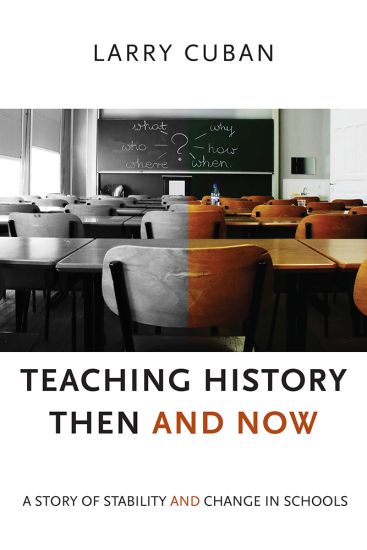
Teaching History Then and Now

Teaching History Then and Now

Larry Cuban

Harvard Educational Publishing Group
2016
nidottu
In Teaching History Then and Now, Larry Cuban explores the teaching of history in American high schools during the past half-century. Drawing on his early career experience as a high school history educator and his more recent work as a historian of US education policy and practice, Cuban examines how determined reformers have and have not changed the teaching of history.The book focuses on two high schools—Cleveland’s Glenville High School and Washington DC’s Cardozo High School—examining both throughout the 1950s and 1960s and then at the present time. Adding to this complex portrait are fascinating accounts of the major reform movements in history teaching over the last half-century: the New Social Studies of the 1960s and the New History of the 1990s. Uniting this nationwide history of the field with his own recollections of and research on the featured high schools, Cuban creates a rich, detailed portrait of an important, contested high school field characterized by enduring features and significant change.The result is exemplary education research, capturing the gritty facts of classroom practice and the larger currents of policy, institutional, and national change. Cuban identifies how large reforms have influenced—and sometimes failed to affect—classroom practice. Teaching History Then and Now portrays a complex, often unpredictable process whereby reformers, school leaders, policy makers, and teachers have all struggled to make the teaching of history best serve students, their communities, and the nation.
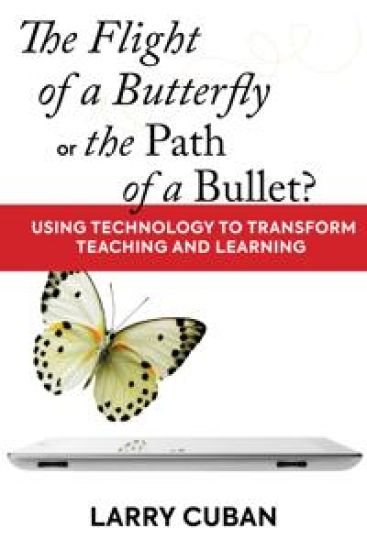
The Flight of a Butterfly or the Path of a Bullet?

The Flight of a Butterfly or the Path of a Bullet?

Larry Cuban

Harvard Educational Publishing Group
2018
nidottu
In this book, Larry Cuban looks at the uses and effects of digital technologies in K–12 classrooms, exploring if and how technology has transformed teaching and learning. In particular, he examines forty-one classrooms across six districts in Silicon Valley that have devoted special attention and resources to integrating digital technologies into their education practices.Cuban observed all of the classrooms and interviewed each of the teachers in an effort to answer several straightforward, if also elusive, questions: Has technology integration been fully implemented and put into practice in these classrooms, and has this integration and implementation resulted in altered teaching practices? Ultimately, Cuban asks if the use of digital technologies has resulted in transformed teaching and learning in these classrooms.The answers to these questions reflect Cuban’s assessment not only of digital technologies and their uses, but of the complex interrelations of policy and practice, and of the many—often unintended—consequences of reforms and initiatives in the education world. Similarly, his answers reflect his subtle understanding of change and continuity in education practice, and of the varying ways in which different actors in the education world—policy makers, school leaders, teachers, and others— understand, and sometimes misinterpret, those changes.The result is a crucial contribution to our knowledge of digital technologies and their place in contemporary education practice from one of our leading scholars of education policy, practice, and reform.
The Flight of a Butterfly or the Path of a Bullet?

The Flight of a Butterfly or the Path of a Bullet?

Larry Cuban

Harvard Educational Publishing Group
2018
sidottu
In this book, Larry Cuban looks at the uses and effects of digital technologies in K–12 classrooms, exploring if and how technology has transformed teaching and learning. In particular, he examines forty-one classrooms across six districts in Silicon Valley that have devoted special attention and resources to integrating digital technologies into their education practices.Cuban observed all of the classrooms and interviewed each of the teachers in an effort to answer several straightforward, if also elusive, questions: Has technology integration been fully implemented and put into practice in these classrooms, and has this integration and implementation resulted in altered teaching practices? Ultimately, Cuban asks if the use of digital technologies has resulted in transformed teaching and learning in these classrooms.The answers to these questions reflect Cuban’s assessment not only of digital technologies and their uses, but of the complex interrelations of policy and practice, and of the many—often unintended—consequences of reforms and initiatives in the education world. Similarly, his answers reflect his subtle understanding of change and continuity in education practice, and of the varying ways in which different actors in the education world—policy makers, school leaders, teachers, and others— understand, and sometimes misinterpret, those changes.The result is a crucial contribution to our knowledge of digital technologies and their place in contemporary education practice from one of our leading scholars of education policy, practice, and reform.
Chasing Success and Confronting Failure in American Public Schools

Chasing Success and Confronting Failure in American Public Schools

Larry Cuban

Harvard Educational Publishing Group
2020
nidottu
Eminent historian and educator Larry Cuban provides a thorough examination of, and challenge to, past and present definitions of what constitutes educational success in the US. Cuban argues that in the history of American education, standards of achievement and inadequacy - as well as the reform efforts issuing from them - have been neither stable nor consistent. Nor are these standards untainted by political considerations. Rather, schools thrive or decline based on a variety of factors, including social and political dynamics, leadership in school districts and communities, and policy improvisations.Chasing Success and Confronting Failure in American Public Schools features profiles of two California high schools, Social Justice Humanitas Academy and MetWest, that are grappling with what it means to be successful (or failing) in the current moment. Each school is expanding conventional views of achievement beyond standard measures, such as test scores, graduation rates, and college admissions. But even as these schools' missions, sense of community, and curricula create an innovative form of success, both remain bound by traditional criteria set forth by district policymakers, practitioners, and parents. Through his exemplary research, Cuban illustrates how school reform is propelled by, and subject to, changing social and political fortunes. He maintains that this understanding offers educators an opportunity to re-envision school performance against an American value system that too often rewards individual merit and competitive capitalism.
Chasing Success and Confronting Failure in American Public Schools

Chasing Success and Confronting Failure in American Public Schools

Larry Cuban

Harvard Educational Publishing Group
2020
sidottu
Eminent historian and educator Larry Cuban provides a thorough examination of, and challenge to, past and present definitions of what constitutes educational success in the US. Cuban argues that in the history of American education, standards of achievement and inadequacy - as well as the reform efforts issuing from them - have been neither stable nor consistent. Nor are these standards untainted by political considerations. Rather, schools thrive or decline based on a variety of factors, including social and political dynamics, leadership in school districts and communities, and policy improvisations.Chasing Success and Confronting Failure in American Public Schools features profiles of two California high schools, Social Justice Humanitas Academy and MetWest, that are grappling with what it means to be successful (or failing) in the current moment. Each school is expanding conventional views of achievement beyond standard measures, such as test scores, graduation rates, and college admissions. But even as these schools' missions, sense of community, and curricula create an innovative form of success, both remain bound by traditional criteria set forth by district policymakers, practitioners, and parents. Through his exemplary research, Cuban illustrates how school reform is propelled by, and subject to, changing social and political fortunes. He maintains that this understanding offers educators an opportunity to re-envision school performance against an American value system that too often rewards individual merit and competitive capitalism.