Kirjojen hintavertailu. Mukana 12 016 292 kirjaa ja 12 kauppaa.

Kirjahaku

Etsi kirjoja tekijän nimen, kirjan nimen tai ISBN:n perusteella.

5 kirjaa tekijältä Larry D. Gragg

A Quest for Security

A Quest for Security

Larry D. Gragg

Praeger Publishers Inc
1990
sidottu
A Quest for Security is the first book-length biography of Samuel Parris, the man who led the 1692 struggle against the scourge of witchcraft. While an examination of Samuel Parris's actions reveals his crucial part in the witchcraft crisis, this biography also serves as a reminder of the concern of early Americans to sustain economic independence for their families. Fully documented with endnotes and featuring a complete bibliography of primary and secondary works, this volume fills a noticeable gap in the literature on Salem witchcraft.The first chapter looks at Samuel Parris's early years. Born in London in 1653, Parris moved with his family to Barbados in the 1660s where both his uncle and father had prospered as sugar planters. Next, the book examines his stay in Boston where he met with modest success as a merchant and started a family. The book then recounts the eight years Parris spent in Salem Village as that divided community's pastor. Beginning with his call to the clergy, the book examines his life as a Puritan pastor, and then covers the conflict in his congregation. In the first year of his ministry, a faction had developed that sought to oust Parris by refusing to pay him. Next the book covers Parris's actions in the spring of 1692 which changed a seemingly ordinary case of a handful of accusations into a full-scale witchhunt. Convinced that an organized witch cult threatened his congregation, Parris sought to root out all conspirators. His leadership in the effort led to an ever increasing escalation of accusations. When the episode finally ended, family members of some of the twenty executed witches conducted a campaign that ultimately resulted in Parris's removal from the pulpit. The final chapter looks at Parris's last years, in which he moved from one small Massachusetts community to another. Parris died in obscurity in 1720. But he achieved his most important goal--that of providing material security for his children.
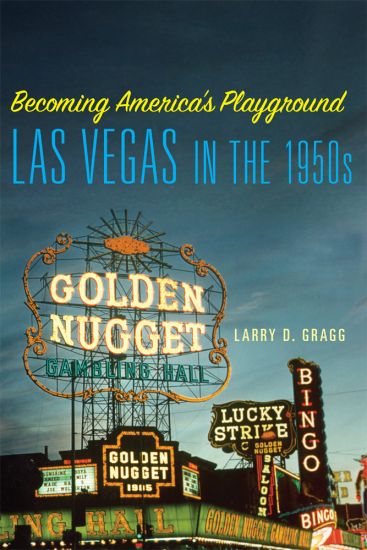
Becoming America's Playground

Becoming America's Playground

Larry D. Gragg

University of Oklahoma Press
2019
nidottu
In 1950 Las Vegas saw a million tourists. In 1960 it attracted ten million. The city entered the fifties as a regional destination where prosperous postwar Americans could enjoy vices largely forbidden elsewhere, and it emerged in the sixties as a national hotspot, the glitzy resort city that lights up the American West today. Becoming America's Playground chronicles the vice and the toil that gave Las Vegas its worldwide reputation in those transformative years. Las Vegas's rise was no happy accident. After World War II, vacationing Americans traveled the country in record numbers, making tourism a top industry in such states as California and Florida. The Las Vegas Chamber of Commerce saw its chance and developed a plan to capitalize on the town's burgeoning reputation for leisure. Las Vegas pinned its hopes for the future on Americans' need for escape. Transforming a vice city financed largely by the mob into a family vacation spot was not easy. Hotel and casino publicists closely monitored media representations of the city and took every opportunity to stage images of good, clean fun for the public - posing even the atomic bomb tests conducted just miles away as an attraction. The racism and sexism common in the rest of the nation in the era prevailed in Las Vegas too. The wild success of Frank Sinatra's Rat Pack performances at the Sands Hotel in 1960 demonstrated the city's slow progress toward equality. Women couldn't work as dealers in Las Vegas until the 1970s, yet they found more opportunities for well-paying jobs there than many American women could find elsewhere. Gragg shows how a place like the Las Vegas Strip - with its glitz and vast wealth and its wildly public consumption of vice - rose to prominence in the 1950s, a decade of Cold War anxiety and civil rights conflict. Becoming America's Playground brings this pivotal decade in Las Vegas into sharp focus for the first time.
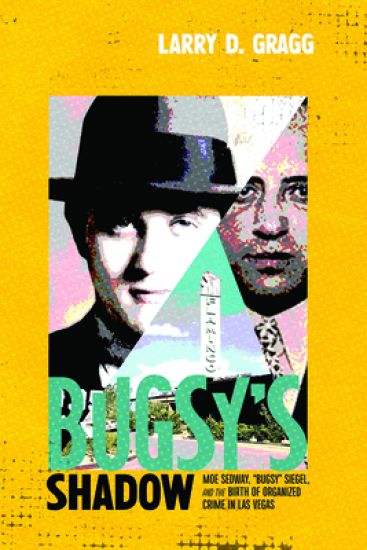
Bugsy's Shadow

Bugsy's Shadow

Larry D. Gragg

UNIVERSITY OF NEW MEXICO PRESS
2023
sidottu
Early in the Prohibition era, Moe Sedway became part of the New York organized crime gang led by Meyer Lansky and Benjamin "Bugsy" Siegel. A loyal and highly effective operative for Siegel, Sedway eventually gained monopoly control of the race wire service in Las Vegas and also became an effective casino manager of the Las Vegas Club, El Cortez, and the Rex Club.A breach in their relationship led to rumors that Sedway had gained Lansky's approval for a "hit" on Siegel. The unsolved mystery of who murdered Bugsy in 1947 has spawned numerous theories about the identity of the hitman, but regardless of who pulled the trigger, Bugsy's death opened the way for Moe to flourish as his own man at last. Long overshadowed by Bugsy in the annals of organized crime in America, Moe Sedway is now at last brought out into the light in this riveting tale of the sensational life and times of one of Vegas's most mysterious and little-known figures.
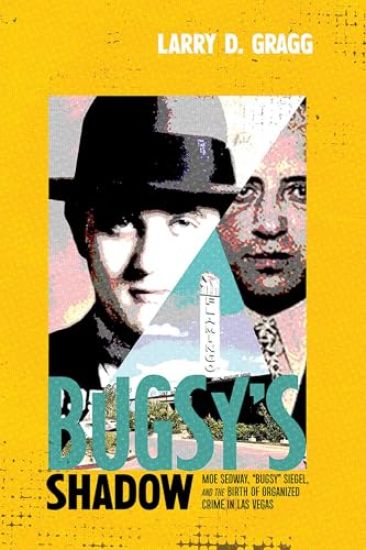
Bugsy's Shadow

Bugsy's Shadow

Larry D. Gragg

UNIVERSITY OF NEW MEXICO PRESS
2026
pokkari
The story of Moe Sedway, the eponymous "shadow" to Benjamin “Bugsy” Siegel, from his days as Bugsy's right hand associate to his suspected role in Bugsy's unsolved disappearance, and the role Sedway played in the creation of modern Las Vegas. Early in the Prohibition era, Moe Sedway became part of the New York organized crime gang led by Meyer Lansky and Benjamin “Bugsy” Siegel. A loyal and highly effective operative for Siegel, Sedway eventually gained monopoly control of the race wire service in Las Vegas and also became an effective casino manager of the Las Vegas Club, El Cortez, and the Rex Club. A breach in their relationship led to rumors that Sedway had gained Lansky’s approval for a “hit” on Siegel. The unsolved mystery of who murdered Bugsy in 1947 has spawned numerous theories about the identity of the hitman, but regardless of who pulled the trigger, Bugsy’s death opened the way for Moe to flourish as his own man at last. Long overshadowed by Bugsy in the annals of organized crime in America, Moe Sedway is now at last brought out into the light in this riveting tale of the sensational life and times of one of Vegas’s most mysterious and little-known figures.
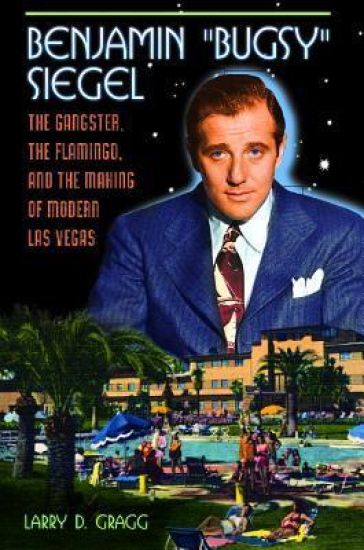
Benjamin "Bugsy" Siegel

Benjamin "Bugsy" Siegel

Larry D. Gragg

Praeger Publishers Inc
2015
sidottu
This intriguing biography recounts the life of the legendary Benjamin "Bugsy" Siegel, revealing his true role in the development of Las Vegas and debunking some of the common myths about his notoriety.This account of the life of Benjamin "Bugsy" Siegel follows his beginnings in the Lower East Side of New York to his role in the development of the famous Flamingo Hotel and Casino. Larry D. Gragg examines Siegel's image as portrayed in popular culture, dispels the myths about Siegel's contribution to the founding of Las Vegas, and reveals some of the more lurid details about his life. Unlike previous biographies, this book is the first to make use of more than 2,400 pages of FBI files on Siegel, referencing documents about the reputed gangster in the New York City Municipal Archives and reviewing the 1950–51 testimony before the Senate Committee on organized crime. Chapters cover his early involvement with gangs in New York, his emergence as a favorite among the Hollywood elite in the late 1930s, his lucrative exploits in illegal gambling and horse racing, and his opening of the "fabulous" Flamingo in 1946. The author also draws upon the recollections of Siegel's eldest daughter to reveal a side of the mobster never before studied—the nature of his family life.