Kirjojen hintavertailu. Mukana 11 699 587 kirjaa ja 12 kauppaa.

Kirjahaku

Etsi kirjoja tekijän nimen, kirjan nimen tai ISBN:n perusteella.

6 kirjaa tekijältä Larry Diamond

In Search of Democracy

In Search of Democracy

Larry Diamond

Routledge
2015
sidottu
This book evaluates the global status and prospects of democracy, with an emphasis on the quality of democratic institutions and the effectiveness of governance as key conditions for stable democracy. Bringing together a wide range of the author’s work over the past three decades, it advances a framework for assessing the quality of democracy and it analyzes alternative measures of democracy. Drawing on the most recent data from Freedom House, it assesses the global state of democracy and freedom, as of the beginning of 2015, and it explains why the world has been experiencing a mild but now deepening recession of democracy and freedom since 2005. A major theme of the book across the three decades of the author’s work is the relationship between democratic quality and stability. Democracies break down, Diamond argues, not so much because of economic factors but because of corrupt, inept governance that violates individual rights and the rule of law. The best way to secure democracy is to ensure that democracy is accountable, transparent, genuinely competitive, respectful of individual rights, inclusive of diverse forms and sources of participation, and responsive to the needs and aspirations of ordinary citizens. Viable democracy requires not only a state that can mobilize power to achieve collective goals, but also one that can restrain and punish the abuse of power—a particularly steep challenge for poor countries and those with natural resource wealth.The book examines these themes both in broad comparative perspective and with a deeper analysis of historical trends and future prospects in Africa and Asia,. Concluding with lessons for sustaining and reforming policies to promote democracy internationally, this book is essential reading for students and scholars interested in democracy, as well as politics and international relations more generally.
In Search of Democracy

In Search of Democracy

Larry Diamond

Routledge
2015
nidottu
This book evaluates the global status and prospects of democracy, with an emphasis on the quality of democratic institutions and the effectiveness of governance as key conditions for stable democracy. Bringing together a wide range of the author’s work over the past three decades, it advances a framework for assessing the quality of democracy and it analyzes alternative measures of democracy. Drawing on the most recent data from Freedom House, it assesses the global state of democracy and freedom, as of the beginning of 2015, and it explains why the world has been experiencing a mild but now deepening recession of democracy and freedom since 2005. A major theme of the book across the three decades of the author’s work is the relationship between democratic quality and stability. Democracies break down, Diamond argues, not so much because of economic factors but because of corrupt, inept governance that violates individual rights and the rule of law. The best way to secure democracy is to ensure that democracy is accountable, transparent, genuinely competitive, respectful of individual rights, inclusive of diverse forms and sources of participation, and responsive to the needs and aspirations of ordinary citizens. Viable democracy requires not only a state that can mobilize power to achieve collective goals, but also one that can restrain and punish the abuse of power—a particularly steep challenge for poor countries and those with natural resource wealth.The book examines these themes both in broad comparative perspective and with a deeper analysis of historical trends and future prospects in Africa and Asia,. Concluding with lessons for sustaining and reforming policies to promote democracy internationally, this book is essential reading for students and scholars interested in democracy, as well as politics and international relations more generally.
Developing Democracy

Developing Democracy

Larry Diamond

Johns Hopkins University Press
1999
pokkari
In this book noted political sociologist Larry Diamond sets forth a distinctive theoretical perspective on democratic evolution and consolidation in the late twentieth century. Rejecting theories that posit preconditions for democracy-and thus dismiss its prospects in poor countries-Diamond argues instead for a "developmental" theory of democracy. This, he explains, is one which views democracy everywhere as a work in progress that emerges piecemeal, at different rates, in different ways and forms, in different countries. Diamond begins by assessing the "third wave" of global democratization that began in 1974. With a wealth of quantitative data and case illustrations, he shows that the third wave has come to an end, leaving a growing gap between the electoral form and the liberal substance of democracy. This underscores the hollow, fragile state of many democracies and the imperative of concolidation. He then defines the concept of democratic consolidation and identifies the conditions that foster it. These include strong political institutions, appropriate institutional designs, decentralization of power, a vibrant civil society, and improved economic and political performance. If new and troubled democracies are to be consolidated, Diamond argues, they must become more deeply democratic-more liberal, accountable, and responsive to their citizens. Drawing on extensive public opinion research in developing and postcommunist states, he demonstrates the importance of freedom, transparency, and the rule of law for generating the broad legitimacy that is the essence of democratic consolidation. The book concludes with a hopeful view of the prospects for a fourth wave of global democratization.
Squandered Victory

Squandered Victory

Larry Diamond

St. Martins Press-3PL
2006
pokkari
"Chilling and often scathing detail . . . Should be read by anyone interested in understanding why the United States' quick military victory has given way to an increasingly virulent insurgency." "The New York Times"In the fall of 2003, Stanford professor Larry Diamond received a call from Condoleezza Rice, asking if he would spend several months in Baghdad as an adviser to the American occupation authorities. Diamond had not been a supporter of the war in Iraq, but he felt that the task of building a viable democracy was a worthy goal. But when he went to Iraq, his experiences proved to be more of an education than he bargained for."Squandered Victory" is Diamond's provocative and vivid account of how the American effort to establish democracy in Iraq was hampered not only by insurgents and terrorists but also by a long chain of miscalculations, missed opportunities, and acts of ideological blindness that helped assure that the transition to independence would be neither peaceful nor entirely democratic. And in a new Afterword for the paperback edition, Diamond shows how the ongoing instability in Iraq is a direct result of the shortsighted choices made during the fourteen months of the American occupation and the subsequent Iraqi interim government."A forceful and detailed critique of the invasion's aftermath. . . . A searing indictment." "The Wall Street Journal""Larry Diamond has a flair for making incisive points at the right moment. . . . "Squandered Victory"] explodes with the frustrations he felt working for the U.S. occupation." "The New Republic""
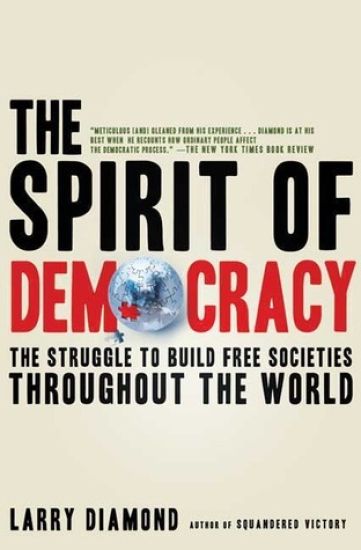
Spirit of Democracy

Spirit of Democracy

Larry Diamond

St. Martin's Griffin
2009
nidottu
"Meticulous . . . Diamond] gleaned that . . . the fate of democracy was not driven by events but by the passion of individual people."--The New York Times Book Review In 1974, nearly three-quarters of all countries were dictatorships; today, more than half are democracies. Yet recent efforts to promote democracy have stumbled, and many democratic governments are faltering. In this sweeping vision for advancing freedom around the world, renowned social scientist Larry Diamond examines how and why democracy progresses. He demonstrates that the desire for democracy runs deep, even in very poor countries, and that seemingly entrenched regimes like Iran and China could become democracies within a generation. He also dissects the causes of the "democratic recession" in critical states, including the crime-infested oligarchy in Russia and the strong-armed populism of Venezuela. To spur a renewed democratic boom Diamond urges the United States to vigorously support good governance and free civic organizations. Only then will the spirit of democracy be secured.
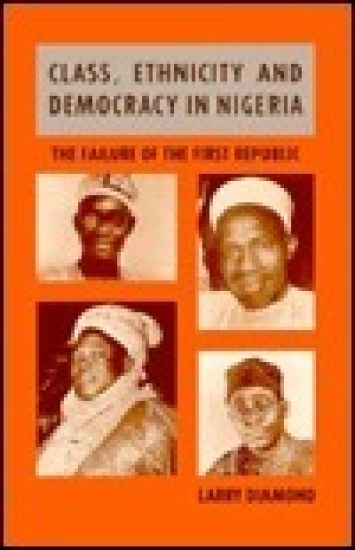
Class, Ethnicity, and Democracy in Nigeria

Class, Ethnicity, and Democracy in Nigeria

Larry Diamond

Syracuse University Press
1988
sidottu
The overthrow in January 1966 of Nigeria’s First Republic erased what had been regarded as perhaps the most promising prospect for liberal democracy in post-colonial Africa. Marking the sweeping failure of parliamentary institutions across a continent of new nations, it accelerated the slide into a ghastly civil war.Class, Ethnicity and Democracy is the first scholarly study to analyze the evolution, decay, and failure of Nigeria’s First Republic and to weigh this crucial experience against theories of the conditions for stable democratic government. Rejecting explanations that focus on political culture, political institutions, or ethnic competition and conflict, Larry Diamond identifies the root of Nigeria’s democratic failure in the interrelationship between class, ethnic and state structures. This led the emergent dominant class in each region to mobilize and exploit ethnicity and to trample the democratic process in furious competition for state control, since that control was the primary means for accumulating wealth and consolidating class dominance.Tracing the polarization of conflict and the erosion of legitimacy through five major crises, Diamond presents a new methodology for analyzing the persistence and failure of democracies and points to the relationship between state and society as a crucial determinant of the possibility for liberal democracy.