Kirjojen hintavertailu. Mukana 12 016 292 kirjaa ja 12 kauppaa.

Kirjahaku

Etsi kirjoja tekijän nimen, kirjan nimen tai ISBN:n perusteella.

3 kirjaa tekijältä Larry Gragg

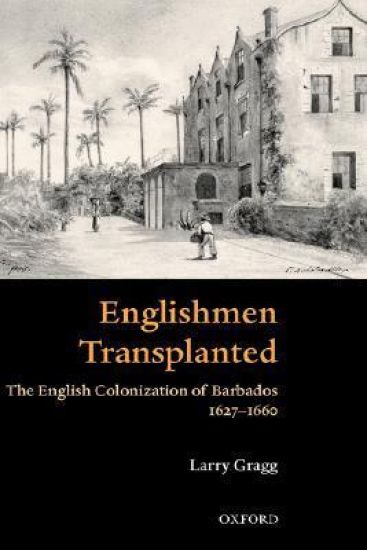
'Englishmen Transplanted'

'Englishmen Transplanted'

Larry Gragg

Oxford University Press
2003
sidottu
Larry Gragg challenges the prevailing view of the seventeenth-century English planters of Barbados as architects of a social disaster. Most historians have described them as profligate and immoral, as grasping capitalists who exploited their servants and slaves in a quest for quick riches in the cultivation of sugar. Yet, they were more than rapacious entrepreneurs. Like English emigrants to other regions in the empire, sugar planters transplanted many familiar governmental and legal institutions, eagerly started families, abided traditional views about the social order, and resisted compromises in their diet, apparel, and housing, despite their tropical setting. Seldom becoming absentee planters, these Englishmen developed an extraordinary attraction to Barbados, where they saw themselves, as one group of planters explained in a petition, as 'being Englishmen transplanted'.
Bright Light City

Bright Light City

Larry Gragg

University Press of Kansas
2013
sidottu
When Elvis crooned “Bright light city . . . gonna set my soul on fire,” he voiced and embraced the siren call of a glittering urban utopia that continues to mesmerise millions. Call it Sin City or Lost Wages, Las Vegas definitely deserves its rapturous “Viva!” Larry Gragg, however, invites readers to view Las Vegas in an entirely new way. While countless other authors have focused on its history or gaming industry or entertainment ties, Gragg considers how popular culture has depicted the city and its powerful allure over its first century. Drawing on hundreds of films, television programs, novels, and articles, Gragg identifies changing trends in the city’s portraits. Until the 1940s, boosters promoted it as the “last frontier town,” a place where prospectors and cowboys enjoyed liquor, women, and wide-open gambling. Then in the early 1950s commentators increasingly characterised Las Vegas as a sophisticated resort city in the desert, and ever since then journalists, filmmakers, and novelists have depicted a city largely built by organised crime and featuring non-stop entertainment, gambling, luxury, and, of course, beautiful—and available—women. In Gragg’s narrative, these images form a kaleidoscope of lights, sounds, characters, and ultimately amazement about this neon oasis. In these pages, readers will meet gangsters like Bugsy Siegel, Tony Spilotro, and Lefty Rosenthal, as well as Las Vegas’s most popular entertainers: Elvis Presley, Sinatra’s Rat Pack, Liberace, and Wayne Newton, not to mention the Folies Bergere showgirls. And Gragg’s skilful interweaving of fictional and journalistic accounts of organised crime shows just how mutually reinforcing they have become over the years. Vegas will always make people’s eyes light up as bright as the Strip: witness the new TV show Vegas or the recent film The Hangover. For everyone entranced by its glitter and glamour, Bright Light City is a must read boasting colour photos and bursting with insider details—an eclectic blend of stories, people, sights, and sounds that together make up this desert city’s extraordinary appeal.
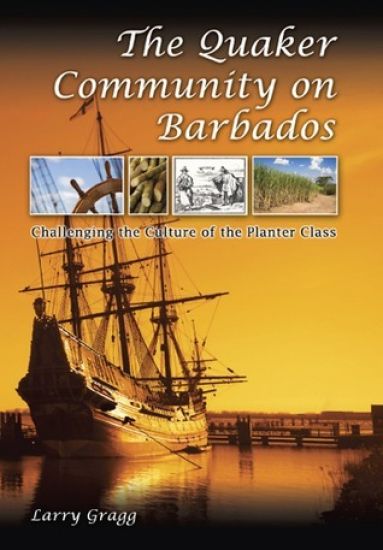
The Quaker Community on Barbados Volume 1

The Quaker Community on Barbados Volume 1

Larry Gragg

University of Missouri Press
2009
sidottu
Prior to the Quakers' large-scale migration to Pennsylvania, Barbados had more Quakers than any other English colony. But on this island of sugar plantations, Quakers confronted material temptations and had to temper founder George Fox's admonitions regarding slavery with the demoralizing realities of daily life in a slave-based economy - one where even most Quakers owned slaves. In The Quaker Community on Barbados, Larry Gragg shows how the community dealt with these contradictions as it struggled to change the culture of the richest of England's seventeenth-century colonies. Gragg has conducted meticulous research on two continents to re-create the Barbados Quaker community. Drawing on wills, censuses, and levy books along with surviving letters, sermons, and journals, he tells how the Quakers sought to implement their beliefs in peace, simplicity, and equality in a place ruled by a planter class that had built its wealth on the backs of slaves. He reveals that Barbados Quakers were a critical part of a transatlantic network of Friends and explains how they established a 'counterculture' on the island - one that challenged the practices of the planter class and the class's dominance in island government, church, and economy. In this compelling study, Gragg focuses primarily on the seventeenth century when the Quakers were most numerous and active on Barbados. He tells how Friends sought to convert slaves and improve their working and living conditions. He describes how Quakers refused to fund the Anglican Church, take oaths, participate in the militia, or pay taxes to maintain forts - and how they condemned Anglican clergymen, disrupted their services, and wrote papers critical of the established church. By the 1680s, Quakers were maintaining five meetinghouses and several cemeteries, paying for their own poor relief, and keeping their own records of births, deaths, and marriages. Gragg also tells of the severe challenges and penalties they faced for confronting and rejecting the dominant culture. With their civil disobedience and stand on slavery, Quakers on Barbados played an important role in the early British Empire but have been largely neglected by scholars. Gragg's work makes their contribution clear as it opens a new window on the seventeenth- and eighteenth-century Atlantic world.