Kirjojen hintavertailu. Mukana 11 244 527 kirjaa ja 12 kauppaa.

Kirjahaku

Etsi kirjoja tekijän nimen, kirjan nimen tai ISBN:n perusteella.

8 kirjaa tekijältä Larry J. Daniel

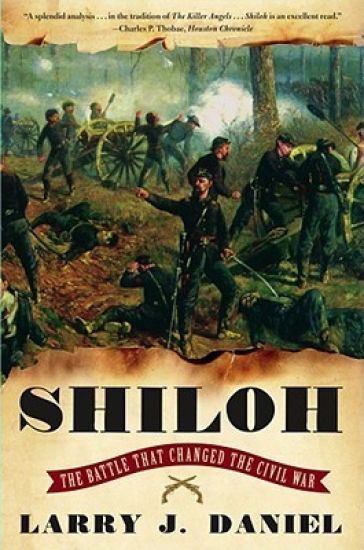
Shiloh

Shiloh

Larry J. Daniel

Simon Schuster
1998
pokkari
The battle of Shiloh, fought in April 1862 in the wilderness of south-central Tennessee, marked a savage turning point in the Civil War. In this masterful book, Larry Daniel re-creates the drama and the horror of the battle and discusses in authoritative detail the political and military policies that led to Shiloh, the personalities of those who formulated and executed the battle plans, the fateful misjudgments made on both sides, and the heroism of the small-unit leaders and ordinary soldiers who manned the battlefield.
Days of Glory

Days of Glory

Larry J. Daniel

Louisiana State University Press
2006
nidottu
A potent fighting force that changed the course of the Civil War, the Army of the Cumberland was the North's second-most-powerful army, surpassed in size only by the Army of the Potomac. The Cumberland army engaged the enemy across five times more territory with one-third to one-half fewer men than the Army of the Potomac, and yet its achievements in the western theater rivaled those of the larger eastern army. In Days of Glory, Larry J. Daniel brings his analytic and descriptive skills to bear on the Cumberlanders as he explores the dynamics of discord, political infighting, and feeble leadership that stymied the army in achieving its full potential. Making extensive use of thousands of letters and diaries, Daniel creates an epic portrayal of the developing Cumberland army, from untrained volunteers to hardened soldiers united in their hatred of the Confederates.
Battle of Stones River

Battle of Stones River

Larry J. Daniel

Louisiana State University Press
2012
sidottu
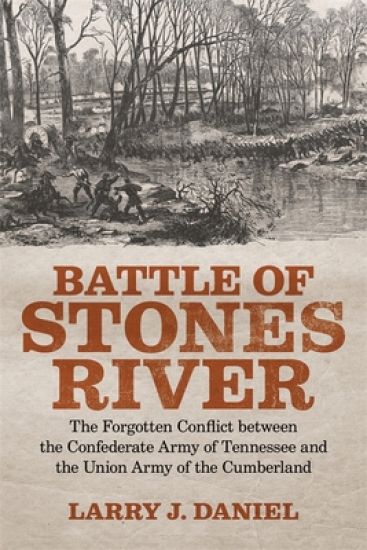
Three days of savage and bloody fighting between Confederate and Union troops at Stones River in Middle Tennessee ended with nearly 25,000 casualties but no clear victor. The staggering number of killed or wounded equaled the losses suffered in the well-known Battle of Shiloh. Using previously neglected sources, Larry J. Daniel rescues this important campaign from obscurity. The Battle of Stones River, fought between December 31, 1862, and January 2, 1863, was a tactical draw but proved to be a strategic northern victory. According to Daniel, Union defeats in late 1862 -- both at Chickasaw Bayou in Mississippi and at Fredericksburg, Virginia -- transformed the clash in Tennessee into a much-needed morale booster for the North. Daniel's study of the battle's two antagonists, William S. Rosecrans for the Union Army of the Cumberland and Braxton Bragg for the Confederate Army of Tennessee, presents contrasts in leadership and a series of missteps. Union soldiers liked Rosecrans's personable nature, whereas Bragg acquired a reputation as antisocial and suspicious. Rosecrans had won his previous battle at Corinth, and Bragg had failed at the recent Kentucky Campaign. But despite Rosecrans's apparent advantage, both commanders made serious mistakes. With only a few hundred yards separating the lines, Rosecrans allowed Confederates to surprise and route his right ring. Eventually, Union pressure forced Bragg to launch a division-size attack, a disastrous move. Neither side could claim victory on the battlefield. In the aftermath of the bloody conflict, Union commanders and northern newspapers portrayed the stalemate as a victory, bolstering confidence in the Lincoln administration and dimming the prospects for the ""peace wing"" of the northern Democratic Party. In the South, the deadlock led to continued bickering in the Confederate western high command and scorn for Braxton Bragg.
Battle of Stones River

Battle of Stones River

Larry J. Daniel

Louisiana State University Press
2020
pokkari
Three days of savage and bloody fighting between Confederate and Union troops at Stones River in Middle Tennessee ended with nearly 25,000 casualties but no clear victor. The staggering number of killed or wounded equaled the losses suffered in the well-known Battle of Shiloh. Using previously neglected sources, Larry J. Daniel rescues this important campaign from obscurity. The Battle of Stones River, fought between December 31, 1862, and January 2, 1863, was a tactical draw but proved to be a strategic northern victory. According to Daniel, Union defeats in late 1862 -- both at Chickasaw Bayou in Mississippi and at Fredericksburg, Virginia -- transformed the clash in Tennessee into a much-needed morale booster for the North. Daniel's study of the battle's two antagonists, William S. Rosecrans for the Union Army of the Cumberland and Braxton Bragg for the Confederate Army of Tennessee, presents contrasts in leadership and a series of missteps. Union soldiers liked Rosecrans's personable nature, whereas Bragg acquired a reputation as antisocial and suspicious. Rosecrans had won his previous battle at Corinth, and Bragg had failed at the recent Kentucky Campaign. But despite Rosecrans's apparent advantage, both commanders made serious mistakes. With only a few hundred yards separating the lines, Rosecrans allowed Confederates to surprise and route his right ring. Eventually, Union pressure forced Bragg to launch a division-size attack, a disastrous move. Neither side could claim victory on the battlefield. In the aftermath of the bloody conflict, Union commanders and northern newspapers portrayed the stalemate as a victory, bolstering confidence in the Lincoln administration and dimming the prospects for the "peace wing" of the northern Democratic Party. In the South, the deadlock led to continued bickering in the Confederate western high command and scorn for Braxton Bragg.
Engineering in the Confederate Heartland

Engineering in the Confederate Heartland

Larry J. Daniel

LOUISIANA STATE UNIVERSITY PRESS
2022
sidottu
While engineers played a critical role in the performance of both the Union and Confederate armies during the Civil War, few historians have examined their experiences or impact. Larry J. Daniel's Engineering in the Confederate Heartland fills a gap in that historiography by analyzing the accomplishments of these individuals working for the Confederacy in the vast region between the Appalachian Mountains and the Mississippi River, commonly referred to as the Western Theater. Though few in number, the members of the western engineer corps were vital in implementing Confederate strategy and tactics.Most Confederate engineers possessed little to no military training, transitioning from the civilian tasks of water drainage, railroad construction, and land surveys to overseeing highly technical war-related projects. Their goal was simple in mission but complex in implementation: utilize their specialized skills to defeat, or at least slow, the Union juggernaut. The geographical diversity of the Heartland further complicated their charge. The expansive area featured elevations reaching over six thousand feet, sandstone bluffs cut by running valleys on the Cumberland Plateau, the Nashville basin's thick cedar glades and rolling farmland, and the wind-blown silt soil of the Loess Plains of the Mississippi Valley. Regardless of the topography, engineers encountered persistent flooding in all sectors.Daniel's study challenges the long-held thesis that the area lacked adept professionals. Engineers' expertise and labor, especially in the construction of small bridges and the laying of pontoons, often proved pivotal. Lacking sophisticated equipment and technical instruments, they nonetheless achieved numerous successes: the Union army never breached the defenses at Vicksburg or Atlanta, and by late 1864, the Army of Tennessee boasted a pontoon train sufficient to span the Tennessee River. Daniel uncovers these and other essential contributions to the war effort made by the Confederacy's western engineers.
Soldiering in the Army of Tennessee

Soldiering in the Army of Tennessee

Larry J. Daniel

The University of North Carolina Press
2003
nidottu
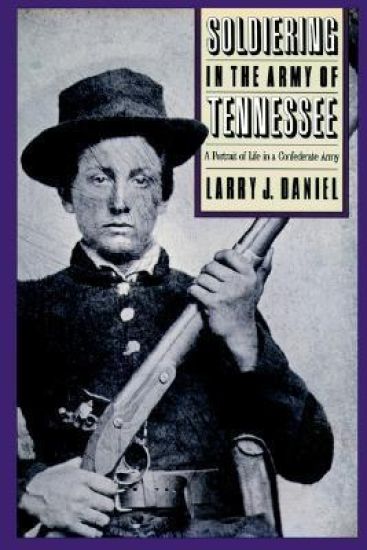
In Soldiering in the Army of Tennessee Larry Daniel offers a view from the trenches of the Confederate Army of Tennessee. his book is not the story of the commanders, but rather shows in intimate detail what the war in the western theater was like for the enlisted men. Daniel argues that the unity of the Army of Tennessee--unlike that of Robert E. Lee's Army of Northern Virginia--can be understood only by viewing the army from the bottom up rather than the top down.The western army had neither strong leadership nor battlefield victories to sustain it, yet it maintained its cohesiveness. The ""glue"" that kept the men in the ranks included fear of punishment, a well-timed religious revival that stressed commitment and sacrifice, and a sense of comradeship developed through the common experience of serving under losing generals.The soldiers here tell the story in their own rich words, for Daniel quotes from an impressive variety of sources, drawing upon his reading of the letters and diaries of more than 350 soldiers as well as scores of postwar memoirs. They write about rations, ordnance, medical care, punishments, the hardships of extensive campaigning, morale, and battle. While eastern and western soldiers were more alike than different, Daniel says, there were certain subtle variances. Western troops were less disciplined, a bit rougher, and less troubled by class divisions than their eastern counterparts. Daniel concludes that shared suffering and a belief in the ability to overcome adversity bonded the soldiers of the Army of Tennessee into a resilient fighting force.
Canoneers in Gray

Canoneers in Gray

Larry J. Daniel

The University of Alabama Press
2005
nidottu
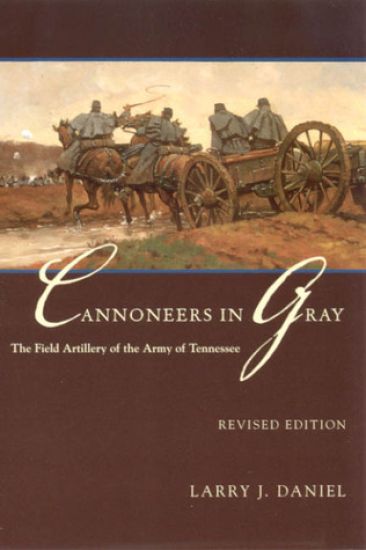
This enlarged edition of Cannoneers in Gray provides new detail concerning the activities of various military units operating in key campaigns of the western theater of the Civil War - at Stones River, Missionary Ridge, Kennesaw Mountain, Shiloh, Peachtree Creek. Larry Daniel traces the four-year history of the artillery branch of the Army of Tennessee from its organization through its scattered demise at the war's end. He provides evidence to show that Civil War canons were of little consequence when used as offensive weapons but could be highly effective as weapons of defense. Daniel includes five new detailed maps of campaigns and battles that are central to his discussion of larger issues, such as command and strategy on the western front. He has consulted and incorporated many new primary sources that more fully document his original work, first published in 1984.