Kirjojen hintavertailu. Mukana 12 390 323 kirjaa ja 12 kauppaa.

Kirjahaku

Etsi kirjoja tekijän nimen, kirjan nimen tai ISBN:n perusteella.

6 kirjaa tekijältä Larry J. Reynolds

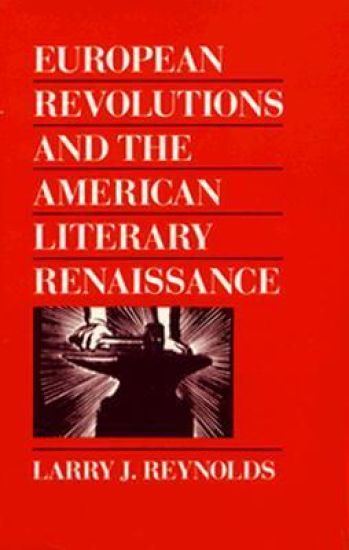
European Revolutions and the American Literary Renaissance

European Revolutions and the American Literary Renaissance

Larry J. Reynolds

Yale University Press
1989
sidottu
Political issues and events have always acted as a catalyst on thought and art. In this pioneering study, Larry J. Reynolds argues that the European revolutions of 1848-49 quickened the American literary imagination and shaped the characters, plots, and themes of the American renaissance. He traces the impact of the revolutions on Emerson, Fuller, Hawthorne, Melville, Whitman, and Thoreau, showing that the upheavals abroad both inspired and disturbed. Unlike many studies that have emphasized the national features and revolutionary spirit of our classic American literature, Reynolds's study, which places this literature in an international context, reveals its conservative, counterrevolutionary side.Emerson, the writer first considered, witnessed the revolutionary turmoil in England and France during the spring of 1848. Reynolds contends that Emerson disdained the revolutions but was unable to resist their challenge: they inspired him to articulate with renewed vigor the idealism at the center of his spiritual life. Reynolds describes next the "Bloody June Days" in Paris and examines their effect on American writings, particularly Uncle Tom's Cabin. In his discussion of Margaret Fuller, Reynolds compares her response to the socialist revolution with Emerson's and demonstrates that her Tribune dispatches from Italy, written during the Roman Revolution, constitute a powerful historical narrative of unrecognized artistry and value. Turning to the writings of Hawthorne and Melville, Reynolds explains that these authors, who viewed the revolutions skeptically, were moved to incorporate into their masterpieces the imagery and issues attracting public attention around them. Focusing on Whitman's fascination with the revolutionary events he covered as an editor, Reynolds describes how under their influence Whitman conceived himself as a poet of insurrection and began Leaves of Grass. He concludes with Thoreau, showing how residual excitement about the revolutions led to the reshaping of Walden into a spiritual autobiography emphasizing purity and serenity.
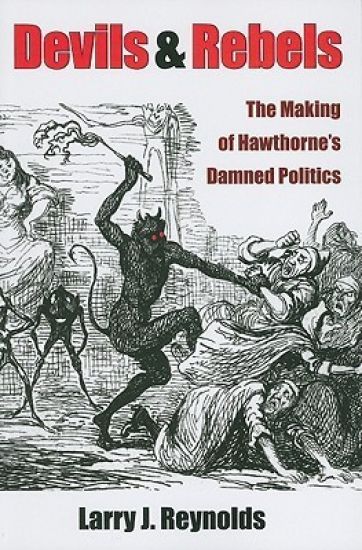
Devils and Rebels

Devils and Rebels

Larry J. Reynolds

The University of Michigan Press
2010
nidottu
"An outstanding combination of literary interpretation and cultural and historical context that will be an important addition to the critical literature on Hawthorne."---Nina Baym, University of Illinois"It is difficult to imagine a more timely book than Devils and Rebels. Examining the role of the public intellectual and writer during a time of political conflict and war, Reynolds takes up his charges with great precision and historical finesse. What particularly distinguishes this book is its attention to the ways in which one of this country's most important authors struggled to resist the waves of political extremism and patriotic hysteria that swept around him."---Jeffrey Steele, University of Wisconsin—Madison Widely condemned even in his own time, Nathaniel Hawthorne's views on abolitionism and slavery are today frequently characterized by scholars as morally reprehensible. Devils and Rebels explores the historical and biographical record to reveal striking evidence of the author's true political values---values grounded in pacifism and resistant to the kind of binary thinking that could lead to violence and war. The book offers fresh readings of not only Hawthorne's four major romances but also some of his less familiar works like "Legends of the Province House," The Whole History of Grandfather's Chair, Journal of an African Cruiser, The Life of Franklin Pierce, and "Septimius Felton." Reynolds argues that Hawthorne---whether in his politics or his art---drew upon racialized imagery from America's past revolution and war on witchcraft to create a politics of quiet imagination, alert to the ways in which New England righteousness could become totalitarian by imposing its narrow view of the world on others. Meticulously researched and cogently argued, this groundbreaking work demonstrates the need to examine perspectives and values from beyond the New England region when studying the literary history of the American Renaissance and illuminates the difficulties faced by public intellectuals during times of political strife---an issue as relevant today as it was some one hundred and fifty years ago. Larry J. Reynolds is Thomas Franklin Mayo Professor of Liberal Arts and Professor of English at Texas A&M University. His previous books include A Historical Guide to Nathaniel Hawthorne, National Imaginaries, American Identities: The Cultural Work of American Iconography, and European Revolutions and the American Literary Renaissance as well as an edition of the European writings of Margaret Fuller.
Righteous Violence

Righteous Violence

Larry J. Reynolds

University of Georgia Press
2011
sidottu
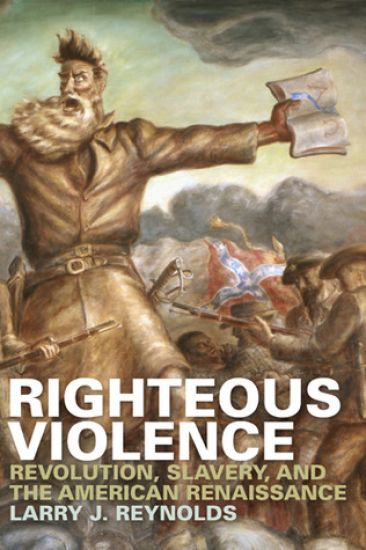
Righteous Violence examines the struggles with the violence of slavery and revolution that engaged the imaginations of seven nineteenth-century American writers—Margaret Fuller, Ralph Waldo Emerson, Frederick Douglass, Henry David Thoreau, Louisa May Alcott, Nathaniel Hawthorne, and Herman Melville.These authors responded not only to the state terror of slavery and the Civil War but also to more problematic violent acts, including unlawful revolts, insurrections, riots, and strikes that resulted in bloodshed and death. Rather than position these writers for or against the struggle for liberty, Larry J. Reynolds examines the profoundly contingent and morally complex perspectives of each author. Tracing the shifting and troubled moral arguments in their work, Reynolds shows that these writers, though committed to peace and civil order, at times succumbed to bloodlust, even while they expressed ambivalence about the very violence they approved. For many of these authors, the figure of John Brown loomed large as an influence and a challenge. Reynolds examines key works such as Fuller’s European dispatches, Emerson’s political lectures, Douglass’s novella The Heroic Slave, Thoreau’s Walden, Alcott’s Moods, Hawthorne’s late unfinished romances, and Melville’s Billy Budd.In addition to demonstrating the centrality of righteous violence to the American Renaissance, this study deepens and complicates our understanding of political violence beyond the dichotomies of revolution and murder, liberty and oppression, good and evil.
Righteous Violence

Righteous Violence

Larry J. Reynolds

University of Georgia Press
2011
pokkari
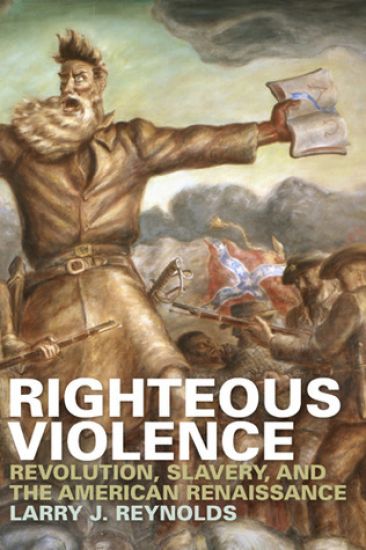
Righteous Violence examines the struggles with the violence of slavery and revolution that engaged the imaginations of seven nineteenth-century American writers—Margaret Fuller, Ralph Waldo Emerson, Frederick Douglass, Henry David Thoreau, Louisa May Alcott, Nathaniel Hawthorne, and Herman Melville.These authors responded not only to the state terror of slavery and the Civil War but also to more problematic violent acts, including unlawful revolts, insurrections, riots, and strikes that resulted in bloodshed and death. Rather than position these writers for or against the struggle for liberty, Larry J. Reynolds examines the profoundly contingent and morally complex perspectives of each author. Tracing the shifting and troubled moral arguments in their work, Reynolds shows that these writers, though committed to peace and civil order, at times succumbed to bloodlust, even while they expressed ambivalence about the very violence they approved. For many of these authors, the figure of John Brown loomed large as an influence and a challenge. Reynolds examines key works such as Fuller’s European dispatches, Emerson’s political lectures, Douglass’s novella The Heroic Slave, Thoreau’s Walden, Alcott’s Moods, Hawthorne’s late unfinished romances, and Melville’s Billy Budd.In addition to demonstrating the centrality of righteous violence to the American Renaissance, this study deepens and complicates our understanding of political violence beyond the dichotomies of revolution and murder, liberty and oppression, good and evil.
The Routledge Introduction to American Renaissance Literature
Examining the most frequently taught works by key writers of the American Renaissance, including Poe, Emerson, Fuller, Douglass, Hawthorne, Melville, Thoreau, Jacobs, Stowe, Whitman, and Dickinson, this engaging and accessible book offers the crucial historical, social, and political contexts in which they must be studied. Larry J. Reynolds usefully groups authors together for more lively and fruitful discussion and engages with current as well as historical theoretical debates on the area. The book includes essential biographical and historical information to situate and contextualize the literature, and incorporates major relevant criticism in each chapter. Recommended readings for further study, along with a list of works cited, conclude each chapter.
The Routledge Introduction to American Renaissance Literature
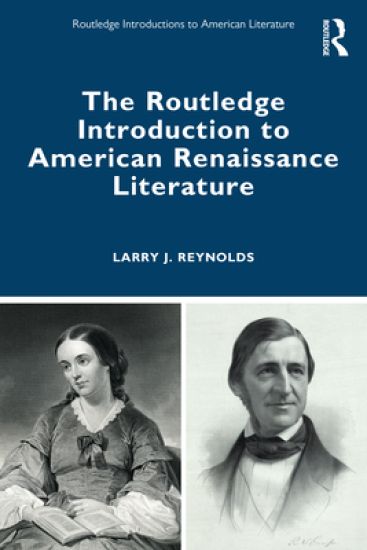
Examining the most frequently taught works by key writers of the American Renaissance, including Poe, Emerson, Fuller, Douglass, Hawthorne, Melville, Thoreau, Jacobs, Stowe, Whitman, and Dickinson, this engaging and accessible book offers the crucial historical, social, and political contexts in which they must be studied. Larry J. Reynolds usefully groups authors together for more lively and fruitful discussion and engages with current as well as historical theoretical debates on the area. The book includes essential biographical and historical information to situate and contextualize the literature, and incorporates major relevant criticism in each chapter. Recommended readings for further study, along with a list of works cited, conclude each chapter.