Kirjojen hintavertailu. Mukana 11 417 157 kirjaa ja 12 kauppaa.

Kirjahaku

Etsi kirjoja tekijän nimen, kirjan nimen tai ISBN:n perusteella.

8 kirjaa tekijältä Larry Laudan

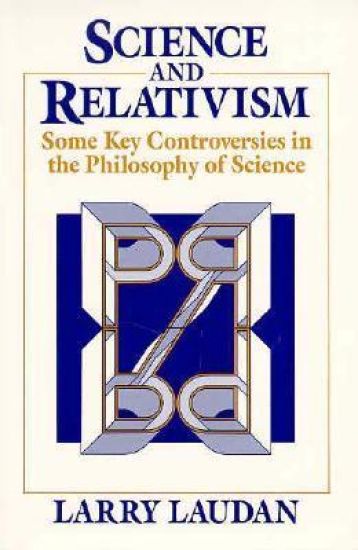
Science and Relativism

Science and Relativism

Larry Laudan

University of Chicago Press
1990
nidottu
In recent years, many members of the intellectual community have embraced a radical relativism regarding knowledge in general and scientific knowledge in particular, holding that Kuhn, Quine, and Feyerabend have knocked the traditional picture of scientific knowledge into a cocked hat. Is philosophy of science, or mistaken impressions of it, responsible for the rise of relativism? In this book, Laudan offers a trenchant, wide-ranging critique of cognitive relativism and a thorough introduction to major issues in the philosophy of knowledge.
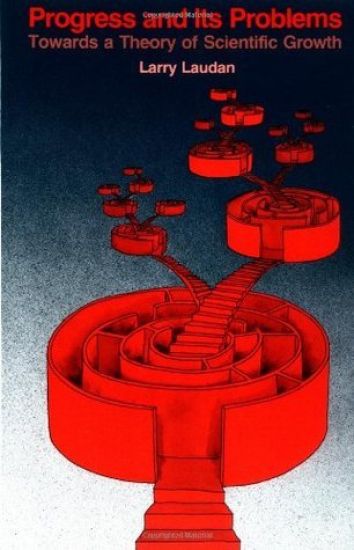
Progress and Its Problems

Progress and Its Problems

Larry Laudan

University of California Press
1978
pokkari
"A book that shakes philosophy of science to its roots. Laudan both destroys and creates. With detailed, scathing criticisms, he attacks the 'pregnant confusions' in extant philosophies of science. The progress they espouse derives from strictly empirical criteria, he complains, and this clashes with historical evidence. Accordingly, Laudan constructs a remedy from historical examples that involves nothing less than the redefinition of scientific rationality and progress ...Surprisingly, after this reshuffling, science still looks like a noble-and progressive-enterprise ...The glory of Laudan's system is that it preserves scientific rationality and progress in the presence of social influence. We can admit extra-scientific influences without lapsing into complete relativism...a must for both observers and practitioners of science." (Physics Today). "A critique and substantial revision of the historic theories of scientific rationality and progress (Popper, Kuhn, Lakatos, Feyerabend, etc.). Laudan focuses on contextual problem solving effectiveness (carefully defined) as a criterion for progress, and expands the notion of 'paradigm' to a 'research tradition,' thus providing a meta-empirical basis for the commensurability of competing theories. From this perspective, Laudan suggests revised programs for history and philosophy of science, the history of ideas, and the sociology of science. A superb work, closely argued, clearly written, and extensively annotated, this book will become a widely required text in intermediate courses." (Choice).
Science and Values

Science and Values

Larry Laudan

University of California Press
1986
pokkari
In this title, Laudan constructs a fresh approach to a longtime problem for the philosopher of science: how to explain the simultaneous and widespread presence of both agreement and disagreement in science. Laudan critiques the logical empiricists and the post-positivists as he stresses the need for centrality and values and the interdependence of values, methods, and facts as prerequisites to solving the problems of consensus and dissent in science.
Truth, Error, and Criminal Law

Truth, Error, and Criminal Law

Larry Laudan

Cambridge University Press
2008
pokkari
Beginning with the premise that the principal function of a criminal trial is to find out the truth about a crime, Larry Laudan examines the rules of evidence and procedure that would be appropriate if the discovery of the truth were, as higher courts routinely claim, the overriding aim of the criminal justice system. Laudan mounts a systematic critique of existing rules and procedures that are obstacles to that quest. He also examines issues of error distribution by offering the first integrated analysis of the various mechanisms - the standard of proof, the benefit of the doubt, the presumption of innocence and the burden of proof - for implementing society's view about the relative importance of the errors that can occur in a trial.
Truth, Error, and Criminal Law

Truth, Error, and Criminal Law

Larry Laudan

Cambridge University Press
2006
sidottu
Beginning with the premise that the principal function of a criminal trial is to find out the truth about a crime, Larry Laudan examines the rules of evidence and procedure that would be appropriate if the discovery of the truth were, as higher courts routinely claim, the overriding aim of the criminal justice system. Laudan mounts a systematic critique of existing rules and procedures that are obstacles to that quest. He also examines issues of error distribution by offering the first integrated analysis of the various mechanisms - the standard of proof, the benefit of the doubt, the presumption of innocence and the burden of proof - for implementing society's view about the relative importance of the errors that can occur in a trial.
La dynamique de la science

La dynamique de la science

Larry Laudan

Mardaga Fonds
1987
pokkari
La Dynamique de la scienceest consid r e, outre-Atlantique, comme l'un des livres majeurs en philosophie des sciences depuis Popper et Kuhn. Il allie la fois la perspective historique et l'approche conceptuelle. Comment la science volue-t-elle ? Comment un savoir, appel science, est-il m me possible ? Pour r pondre ces questions essentielles pour la pens e en g n ral comme pour l' pist mologie en particulier, Larry Laudan adopte une conception centr e sur l'id e du probl me. Il dresse la typologie des questions qui animent la science et s'attache tudier comment elle r sout ces questions de fa on sp cifique et comment celles-ci voluent comme histoire. Larry Laudan enseigne la philosophie et l'histoire des sciences au Virginia Polytechnic Institute ( tats-Unis).
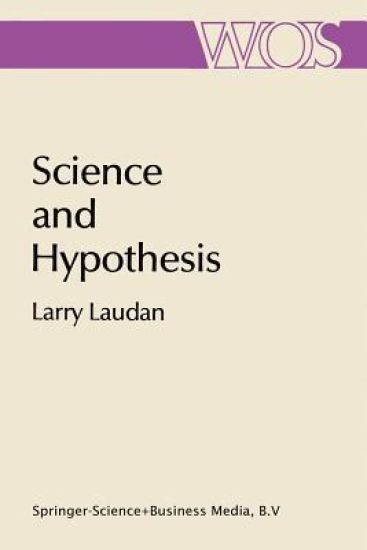
Science and Hypothesis

Science and Hypothesis

Larry Laudan

Springer
2014
nidottu
This book consists of a collection of essays written between 1965 and 1981. Some have been published elsewhere; others appear here for the first time. Although dealing with different figures and different periods, they have a common theme: all are concerned with examining how the method of hy­ pothesis came to be the ruling orthodoxy in the philosophy of science and the quasi-official methodology of the scientific community. It might have been otherwise. Barely three centuries ago, hypothetico­ deduction was in both disfavor and disarray. Numerous rival methods for scientific inquiry - including eliminative and enumerative induction, analogy and derivation from first principles - were widely touted. The method of hypothesis, known since antiquity, found few proponents between 1700 and 1850. During the last century, of course, that ordering has been inverted and - despite an almost universal acknowledgement of its weaknesses - the method of hypothesis (usually under such descriptions as 'hypothetico­ deduction' or 'conjectures and refutations') has become the orthodoxy of the 20th century. Behind the waxing and waning of the method of hypothesis, embedded within the vicissitudes of its fortunes, there is a fascinating story to be told. It is a story that forms an integral part of modern science and its philosophy.