Kirjojen hintavertailu. Mukana 11 717 486 kirjaa ja 12 kauppaa.

Kirjahaku

Etsi kirjoja tekijän nimen, kirjan nimen tai ISBN:n perusteella.

25 kirjaa tekijältä Larry May

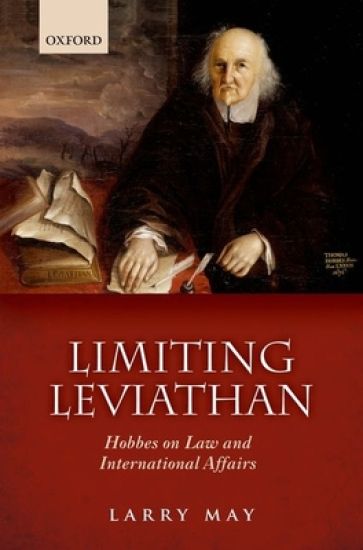
Limiting Leviathan

Limiting Leviathan

Larry May

Oxford University Press
2013
sidottu
Thomas Hobbes wrote extensively about law and was strongly influenced by developments and debates among lawyers of his day. And Hobbes is considered by many commentators to be one of the first legal positivists. Yet there is no book in English that focuses on Hobbes's legal philosophy. Indeed, Hobbes's own book length treatment of law, A Dialogue Between a Philosopher and a Student of the Common Laws of England, has also not received much commentary over the centuries. Larry May seeks to fill the gap in the literature by addressing Hobbes's legal philosophy directly, and comparing Leviathan to the Dialogue, as he offers a new interpretation of Hobbes's views about the connections among law, politics, and morality. May argues that Hobbes is much more amenable to moral, and even legal, limits on the law--indeed closer to Lon Fuller than to today's legal positivists--than he is often portrayed. He shows that Hobbes's views can provide a solid grounding for the rules of war and international relations generally, contrary to the near universal belief that Hobbes is the bête noir of international law. To support these views, May holds that Hobbes places greater weight on equity than on justice, and that understanding the role of equity is the key to his legal philosophy. Equity also is the moral concept that provides restrictions on what a sovereign can legitimately do, and if violated is the kind of limitation on sovereignty that could open the door for possible international institutions.
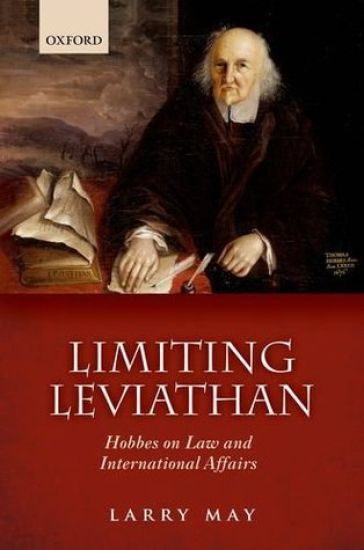
Limiting Leviathan

Limiting Leviathan

Larry May

Oxford University Press
2013
nidottu
Thomas Hobbes wrote extensively about law and was strongly influenced by developments and debates among lawyers of his day. And Hobbes is considered by many commentators to be one of the first legal positivists. Yet there is no book in English that focuses on Hobbes's legal philosophy. Indeed, Hobbes's own book length treatment of law, A Dialogue Between a Philosopher and a Student of the Common Laws of England, has also not received much commentary over the centuries. Larry May seeks to fill the gap in the literature by addressing Hobbes's legal philosophy directly, and comparing Leviathan to the Dialogue, as he offers a new interpretation of Hobbes's views about the connections among law, politics, and morality. May argues that Hobbes is much more amenable to moral, and even legal, limits on the law--indeed closer to Lon Fuller than to today's legal positivists--than he is often portrayed. He shows that Hobbes's views can provide a solid grounding for the rules of war and international relations generally, contrary to the near universal belief that Hobbes is the bête noir of international law. To support these views, May holds that Hobbes places greater weight on equity than on justice, and that understanding the role of equity is the key to his legal philosophy. Equity also is the moral concept that provides restrictions on what a sovereign can legitimately do, and if violated is the kind of limitation on sovereignty that could open the door for possible international institutions.

Sharing Responsibility

Sharing Responsibility

Larry May

University of Chicago Press
1996
nidottu
Are individuals responsible for the consequences of actions taken by their community? What about their community's inaction or its attitudes? In this work, the author departs from the traditional Western view that moral responsibility is limited to the consequences of overt individual action. Drawing on the insights of Arendt, Jaspers and Sartre, he argues that even when individuals are not direct participants, they share responsibility for various harms perpetrated by their communities.
The Socially Responsive Self

The Socially Responsive Self

Larry May

University of Chicago Press
1996
sidottu
In this work, Larry May argues that socially responsive individuals need not be self-sacrificing or overly conscientious. According to the author a person's integrity and moral responsibility are shaped and limited not just by conscience, but also by socialization and moral support from the communities to which he or she belongs. Applying his theory of responsibility to professional ethics, May contends that current methods of professional socialization should be changed so that professionals are not expected to ignore considerations of personal well-being, family, or community. For instance, lawyers should not place client loyalty above concerns for the common good; doctors should not place the physical well-being of patients above their mental and spiritual well-being; scientists and engineers should not feel obliged to blow the whistle on fraud and corruption unless their professional groups protect them from retaliation.
The Socially Responsive Self

The Socially Responsive Self

Larry May

University of Chicago Press
1996
nidottu
In this work, Larry May argues that socially responsive individuals need not be self-sacrificing or overly conscientious. According to the author a person's integrity and moral responsibility are shaped and limited not just by conscience, but also by socialization and moral support from the communities to which he or she belongs. Applying his theory of responsibility to professional ethics, May contends that current methods of professional socialization should be changed so that professionals are not expected to ignore considerations of personal well-being, family, or community. For instance, lawyers should not place client loyalty above concerns for the common good; doctors should not place the physical well-being of patients above their mental and spiritual well-being; scientists and engineers should not feel obliged to blow the whistle on fraud and corruption unless their professional groups protect them from retaliation.
Genocide

Genocide

Larry May

Cambridge University Press
2010
pokkari
Larry May examines the normative and conceptual problems concerning the crime of genocide. Genocide arises out of the worst of horrors. Legally, however, the unique character of genocide is reduced to a technical requirement, that the perpetrator's act manifest an intention to destroy a protected group. From this definition, many puzzles arise. How are groups to be identified and why are only four groups subject to genocide? What is the harm of destroying a group and why is this harm thought to be independent of killing many people? How can a person in the dock, as an individual, be responsible for a collective crime like genocide? How should we understand the specific crimes associated with genocide, especially instigation, incitement, and complicity? Paying special attention to the recent case law concerning the Rwanda genocide, May offers the first philosophical exploration of the crime of genocide in international criminal law.
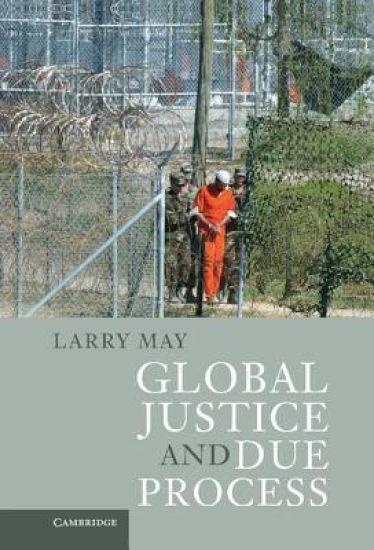
Global Justice and Due Process

Global Justice and Due Process

Larry May

Cambridge University Press
2010
pokkari
The idea of due process of law is recognised as the cornerstone of domestic legal systems, and in this book Larry May makes a powerful case for its extension to international law. Focussing on the procedural rights deriving from Magna Carta, such as the rights of habeas corpus (not to be arbitrarily incarcerated) and nonrefoulement (not to be sent to a state where harm is likely), he examines the legal rights of detainees, whether at Guantanamo or in refugee camps. He offers a conceptual and normative account of due process within a general system of global justice, and argues that due process should be recognised as jus cogens, as universally binding in international law. His vivid and compelling study will be of interest to a wide range of readers in political philosophy, political theory, and the theory and practice of international law.
Genocide

Genocide

Larry May

Cambridge University Press
2010
sidottu
Larry May examines the normative and conceptual problems concerning the crime of genocide. Genocide arises out of the worst of horrors. Legally, however, the unique character of genocide is reduced to a technical requirement, that the perpetrator's act manifest an intention to destroy a protected group. From this definition, many puzzles arise. How are groups to be identified and why are only four groups subject to genocide? What is the harm of destroying a group and why is this harm thought to be independent of killing many people? How can a person in the dock, as an individual, be responsible for a collective crime like genocide? How should we understand the specific crimes associated with genocide, especially instigation, incitement, and complicity? Paying special attention to the recent case law concerning the Rwanda genocide, May offers the first philosophical exploration of the crime of genocide in international criminal law.
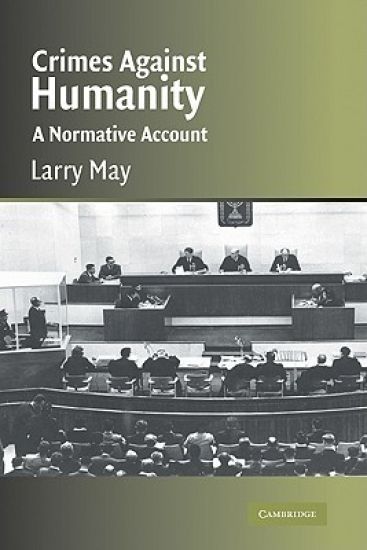
Crimes against Humanity

Crimes against Humanity

Larry May

Cambridge University Press
2004
pokkari
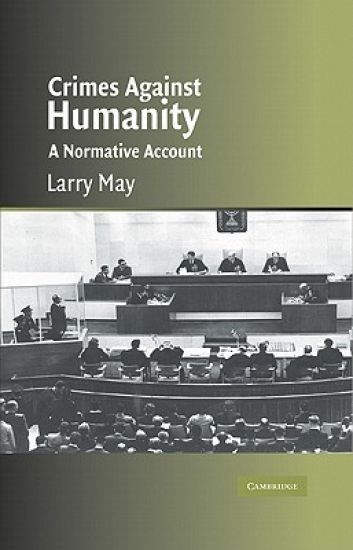
This book was the first booklength treatment of the philosophical foundations of international criminal law. The focus is on the moral, legal, and political questions that arise when individuals who commit collective crimes, such as crimes against humanity, are held accountable by international criminal tribunals. These tribunals challenge one of the most sacred prerogatives of states - sovereignty - and breaches to this sovereignty can be justified in limited circumstances, following what the author calls a minimalist account of the justification of international prosecution. Written in a clear and accessible style, this book should appeal to anyone with an interest in international law, political philosophy, international relations, and human rights theory.
War Crimes and Just War

War Crimes and Just War

Larry May

Cambridge University Press
2007
pokkari
Larry May argues that the best way to understand war crimes is as crimes against humanness rather than as violations of justice. He shows that in a deeply pluralistic world, we need to understand the rules of war as the collective responsibility of states that send their citizens into harm's way, as the embodiment of humanity, and as the chief way for soldiers to retain a sense of honour on the battlefield. Throughout, May demonstrates that the principle of humanness is the cornerstone of international humanitarian law, and is itself the basis of the traditional principles of discrimination, necessity, and proportionality. He draws extensively on the older Just War tradition to assess recent cases from the International Tribunal for Yugoslavia as well as examples of atrocities from the archives of the International Committee of the Red Cross.
Aggression and Crimes Against Peace

Aggression and Crimes Against Peace

Larry May

Cambridge University Press
2008
pokkari
In this volume, the third in his trilogy on the philosophical and legal aspects of war and conflict, Larry May locates a normative grounding for the crime of aggression - the only one of the three crimes charged at Nuremberg that is not currently being prosecuted - that is similar to that for crimes against humanity and war crimes. He considers cases from the Nuremberg trials, philosophical debates in the Just War tradition, and more recent debates about the International Criminal Court, as well as the hard cases of humanitarian intervention and terrorist aggression. His thesis refutes the traditional understanding of aggression. At Nuremberg, crimes against humanity charges were only pursued if the defendant also engaged in the crime of aggression. May argues for a reversal of this position, contending that aggression charges should be pursued only if the defendant's acts involve serious human rights violations.
Global Justice and Due Process

Global Justice and Due Process

Larry May

Cambridge University Press
2010
sidottu
The idea of due process of law is recognised as the cornerstone of domestic legal systems, and in this book Larry May makes a powerful case for its extension to international law. Focussing on the procedural rights deriving from Magna Carta, such as the rights of habeas corpus (not to be arbitrarily incarcerated) and nonrefoulement (not to be sent to a state where harm is likely), he examines the legal rights of detainees, whether at Guantanamo or in refugee camps. He offers a conceptual and normative account of due process within a general system of global justice, and argues that due process should be recognised as jus cogens, as universally binding in international law. His vivid and compelling study will be of interest to a wide range of readers in political philosophy, political theory, and the theory and practice of international law.
Crimes against Humanity

Crimes against Humanity

Larry May

Cambridge University Press
2004
sidottu
This book was the first booklength treatment of the philosophical foundations of international criminal law. The focus is on the moral, legal, and political questions that arise when individuals who commit collective crimes, such as crimes against humanity, are held accountable by international criminal tribunals. These tribunals challenge one of the most sacred prerogatives of states - sovereignty - and breaches to this sovereignty can be justified in limited circumstances, following what the author calls a minimalist account of the justification of international prosecution. Written in a clear and accessible style, this book should appeal to anyone with an interest in international law, political philosophy, international relations, and human rights theory.
War Crimes and Just War

War Crimes and Just War

Larry May

Cambridge University Press
2007
sidottu
Larry May argues that the best way to understand war crimes is as crimes against humanness rather than as violations of justice. He shows that in a deeply pluralistic world, we need to understand the rules of war as the collective responsibility of states that send their citizens into harm's way, as the embodiment of humanity, and as the chief way for soldiers to retain a sense of honour on the battlefield. Throughout, May demonstrates that the principle of humanness is the cornerstone of international humanitarian law, and is itself the basis of the traditional principles of discrimination, necessity, and proportionality. He draws extensively on the older Just War tradition to assess recent cases from the International Tribunal for Yugoslavia as well as examples of atrocities from the archives of the International Committee of the Red Cross.
Masculinity and Morality

Masculinity and Morality

Larry May

Cornell University Press
1998
pokkari
What does it mean to be a morally responsible man? Psychology and the law have offered reasons to excuse men for acting aggressively. In these philosophically reflective essays, Larry May argues against standard accounts of traditional male behavior, discussing male anger, paternity, pornography, rape, sexual harassment, the exclusion of women, and what he terms the myth of uncontrollable male sexuality. While refuting the platitudes of the popular men's movement, his book challenges men to reassess and change behavior that has had detrimental effects on the lives of women and of men. In May's view, the key to solving many problems is to understand how individual actions may combine to produce large-scale, harmful consequences. May is eager to reconceptualize male roles in ways that build on men's strength rather than rendering them androgynous. Each chapter in his book suggests strategies to effect changes based on May's views on the nature of moral responsibility. Examining separatism and the socialization of youth in athletics and the military, specifically at Virginia Military Institute and the Citadel, May analyzes the moral implications of the way all-male environments are constructed. Rejecting the standard arguments for them, he speculates about the positive ways they might be used to transform the socialization of young men.
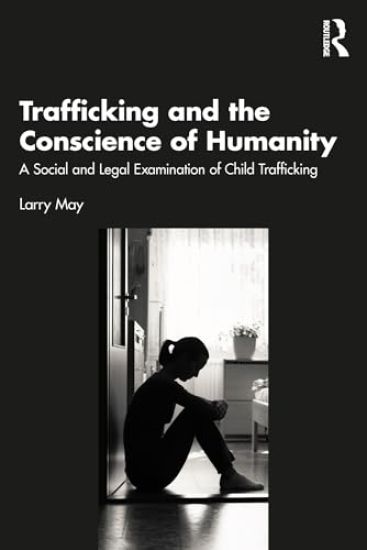
Trafficking and the Conscience of Humanity
Human trafficking has become the scourge of the 21st century, with child trafficking arguably its worst form. As vulnerable children are lured into prostitution, pornography and other forms of exploitation, there is only a patchwork legal regime trying to deal with child trafficking.This book assesses this legal regime, arguing that a more coordinated and international response is needed. Analyzing the moral and conceptual issues at stake across a wide variety of child trafficking cases – child prostitution, child pornography, forced “marriage,” corrupt “adoptions,” organ “donation,” refugee abuse, child soldiers, orphanage abuse, and “normal” parental child abuse – it goes on to argue that the crimes of child trafficking make apparent that there are conceptual, moral, and legal issues concerning child trafficking that differ from other kinds of crime including adult trafficking.Trafficking and the Conscience of Humanity puts forward the case that the crimes of child trafficking could, and should, be prosecuted by an international court such as the International Criminal Court.
Trafficking and the Conscience of Humanity
Human trafficking has become the scourge of the 21st century, with child trafficking arguably its worst form. As vulnerable children are lured into prostitution, pornography and other forms of exploitation, there is only a patchwork legal regime trying to deal with child trafficking.This book assesses this legal regime, arguing that a more coordinated and international response is needed. Analyzing the moral and conceptual issues at stake across a wide variety of child trafficking cases – child prostitution, child pornography, forced “marriage,” corrupt “adoptions,” organ “donation,” refugee abuse, child soldiers, orphanage abuse, and “normal” parental child abuse – it goes on to argue that the crimes of child trafficking make apparent that there are conceptual, moral, and legal issues concerning child trafficking that differ from other kinds of crime including adult trafficking.Trafficking and the Conscience of Humanity puts forward the case that the crimes of child trafficking could, and should, be prosecuted by an international court such as the International Criminal Court.
Ethnic Cleansing

Ethnic Cleansing

Larry May

TAYLOR FRANCIS LTD
2025
nidottu
Putting forward the argument that the strength of democracies can be measured in how well minorities – especially ethnic and racial minorities – are treated by the majority, Larry May’s Ethnic Cleansing maintains that unjust ethnic cleansing is one of the greatest internal challenges to the modern institutions of pluralistic and multicultural states.In order to determine what constitutes the crime of ethnic cleansing, this book details crucial conceptual issues around the topic, such as what ethnicity means, what ethnic cleansing claims to achieve, why these acts are invariably harmful, and the conditions of restitution, reparation, and reconciliation – affirming that ethnic cleansing must be countered by existing institutions such as the International Criminal Court, which is uniquely situated to prosecute ethnic cleansing.The first major study to analyze ethnic cleansing from an explicitly normative and conceptual perspective in the last decade, the increase in number and complexity of cases of ethnic cleansing makes this a timely book to understand the challenges that confront contemporary society.
Ethnic Cleansing

Ethnic Cleansing

Larry May

TAYLOR FRANCIS LTD
2025
sidottu
Putting forward the argument that the strength of democracies can be measured in how well minorities – especially ethnic and racial minorities – are treated by the majority, Larry May’s Ethnic Cleansing maintains that unjust ethnic cleansing is one of the greatest internal challenges to the modern institutions of pluralistic and multicultural states.In order to determine what constitutes the crime of ethnic cleansing, this book details crucial conceptual issues around the topic, such as what ethnicity means, what ethnic cleansing claims to achieve, why these acts are invariably harmful, and the conditions of restitution, reparation, and reconciliation – affirming that ethnic cleansing must be countered by existing institutions such as the International Criminal Court, which is uniquely situated to prosecute ethnic cleansing.The first major study to analyze ethnic cleansing from an explicitly normative and conceptual perspective in the last decade, the increase in number and complexity of cases of ethnic cleansing makes this a timely book to understand the challenges that confront contemporary society.
After War Ends

After War Ends

Larry May

Cambridge University Press
2012
sidottu
There is extensive discussion in current Just War literature about the normative principles which should govern the initiation of war (jus ad bellum) and also the conduct of war (jus in bello), but this is the first book to treat the important and difficult issue of justice after the end of war. Larry May examines the normative principles which should govern post-war practices such as reparations, restitution, reconciliation, retribution, rebuilding, proportionality and the Responsibility to Protect. He discusses the emerging international law literature on transitional justice and the problem of moving from a position of war and possible mass atrocity to a position of peace and reconciliation. He questions the Just War tradition, arguing that contingent pacifism is most in keeping with normative principles after war ends. His discussion is richly illustrated with contemporary examples and will be of interest to students of political and legal philosophy, law and military studies.