Kirjojen hintavertailu. Mukana 12 357 416 kirjaa ja 12 kauppaa.

Kirjahaku

Etsi kirjoja tekijän nimen, kirjan nimen tai ISBN:n perusteella.

8 kirjaa tekijältä Larry R. Churchill

Ethics for Everyone

Ethics for Everyone

Larry R. Churchill

Oxford University Press Inc
2020
nidottu
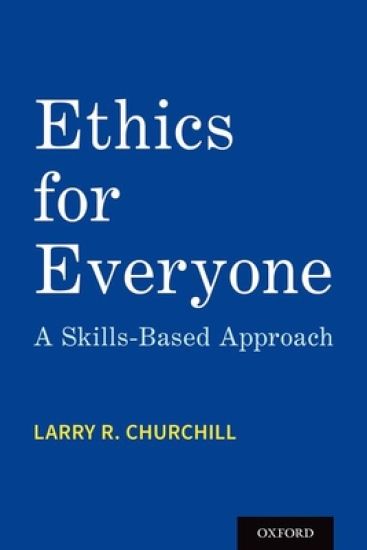
Most of us desire to be moral people, but too often we struggle to translate philosophical concepts about morality and ethics to everyday life. One way we can bridge this gap is by approaching ethics as skills that we can develop rather than a set of ideas we must grasp. Taking this practical approach, and writing especially for medicine, law, and business students trying to understand ethics in the real world Larry R. Churchill examines morality in the context of human experience. His book builds readers' understanding of ethics from the raw materials of moral life: the curiosity we feel when confronted with moral differences, the perplexities of practical life, and the satisfactions of moral growth. The book orients ethics around the skills that are needed for sound ethical reflection and deliberation, acknowledging that ethical issues change as we change, and their concerns extend over a lifespan. To Churchill, learning and honing these personal and relational skills is the fundamental work of ethics and the foundation for judicious use of more theoretical approaches. A succinct and compassionate guide to ethical living, this book draws from literature, as well as philosophical and religious writings. It encompasses both popular and underemphasized concepts, and demonstrates their centrality to ethics. Exercises and case studies reinforce the practical skills it teaches. Ethics for Everyone shows the wide range of skills and human capacities that make the field of ethics true to human experience. It is a book to be read and then re-read at life's major junctures.
Self-Interest and Universal Health Care

Self-Interest and Universal Health Care

Larry R. Churchill

Harvard University Press
1998
sidottu
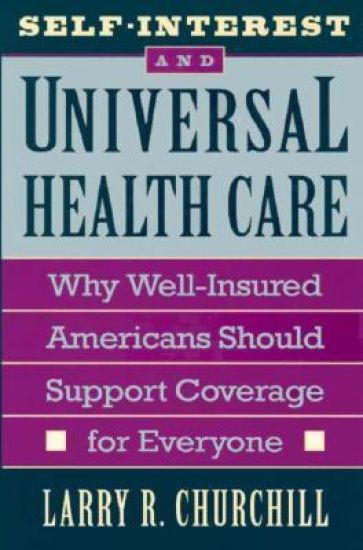
“I’m covered—why should I foot the bill for somebody who isn’t?”This question, unspoken but simmering at the center of the debate over universal health care coverage, comes in for a thoughtful hearing—and, perhaps, gentle corrective—in Larry Churchill’s timely book. Churchill, whose Rationing Health Care in America put the nation’s health care crisis into perspective, here does the same for our crisis of conscience over health care coverage. As Clinton and Congress spar over the financing and organization of a national health system, the true debate, this book reveals, is about moral and political values, about the meaning and ethics of health care reform.Churchill begins by cutting through the confused discussion about rationing health care. Concerns about rationing, with all the moral and political questions they raise, deflect our attention from a more important issue, which this book brings into focus. Arguing that care is already rationed by ability to pay, Churchill suggests that the proper question is not whether to ration but how to do so fairly, and that answering requires a clear sense of the aims of a health care system. In pursuit of this necessary understanding, Churchill explores values and concepts such as security and solidarity, self-interest and social affinity, rights and responsibilities. Drawing on philosophical ideas of justice and individual responsibility, rendered here with remarkable clarity, he shows that universal care is morally as well as economically comprehensible and that a truly inclusive health care system should be seen as a common civic purpose rather than as a supply of services to be consumed. Accessible, deeply felt, and cogently argued, this book should revise the terms of the national debate over health care reform.
What Patients Teach

What Patients Teach

Larry R. Churchill; Joseph B. Fanning; David Schenck

Oxford University Press Inc
2016
nidottu
Being a patient is a unique interpersonal experience but it is also a universal human experience. The relationships formed when we are patients can also teach some of life's most important lessons, and these relationships provide a special window into ethics, especially the ethics of healthcare professionals. This book answers two basic questions: As patients see it, what things allow relationships with healthcare providers to become therapeutic? What can this teach us about healthcare ethics? This volume presents detailed descriptions and analyses of 50 interviews with 58 patients, representing a wide spectrum of illnesses and clinician specialties. The authors argue that the structure, rhythm, and horizon of routine patient care are ultimately grounded in patient vulnerability and clinician responsiveness. From the short interview segments, the longer vignettes and the full patient stories presented here emerge the neglected dimensions of healthcare and healthcare ethics. What becomes visible is an ethics of everyday interdependence, with mutual responsibilities that follow from this moral symbiosis. Both professional expressions of healthcare ethics and the field of bioethics need to be informed and reformed by this distinctive, more patient-centered, turn in how we understand both patient care as a whole and the ethics of care more specifically. The final chapters present revised codes of ethics for health professionals, as well as the implications for medical and health professions education.
What Patients Teach

What Patients Teach

Larry R. Churchill; Joseph B. Fanning; David Schenck

Oxford University Press Inc
2013
sidottu
Being a patient is a unique interpersonal experience but it is also a universal human experience. The relationships formed when we are patients can also teach some of life's most important lessons, and these relationships provide a special window into ethics, especially the ethics of healthcare professionals. This book answers two basic questions: As patients see it, what things allow relationships with healthcare providers to become therapeutic? What can this teach us about healthcare ethics? This volume presents detailed descriptions and analyses of 50 interviews with 58 patients, representing a wide spectrum of illnesses and clinician specialties. The authors argue that the structure, rhythm, and horizon of routine patient care are ultimately grounded in patient vulnerability and clinician responsiveness. From the short interview segments, the longer vignettes and the full patient stories presented here emerge the neglected dimensions of healthcare and healthcare ethics. What becomes visible is an ethics of everyday interdependence, with mutual responsibilities that follow from this moral symbiosis. Both professional expressions of healthcare ethics and the field of bioethics need to be informed and reformed by this distinctive, more patient-centered, turn in how we understand both patient care as a whole and the ethics of care more specifically. The final chapters present revised codes of ethics for health professionals, as well as the implications for medical and health professions education.
Professional Ethics and Primary Care Medicine

Professional Ethics and Primary Care Medicine

Harmon L. Smith; Larry R. Churchill

Duke University Press
1985
sidottu
This volume moves beyond ethics as problem-solving or ethics as etiquette to offer a look at ethics in primary care-as opposed to life-or-death-medical care. Professional Ethics and Primary Care Medicine deals with the ethics of routine, day-to-day encounters between doctors and patients. It probes beneath the hard decisions to look at the moral frameworks, habits of thought, and customs of practice that underlie choices. Harmon Smith and Larry Churchill argue that primary care, far from being merely a setting for the rendering of care, provides a new understanding of both physician and patient, and thereby offers a fresh basis for medical ethics.
Professional Ethics and Primary Care Medicine

Professional Ethics and Primary Care Medicine

Harmon L. Smith; Larry R. Churchill

Duke University Press
1985
pokkari
This volume moves beyond ethics as problem-solving or ethics as etiquette to offer a look at ethics in primary care-as opposed to life-or-death-medical care. Professional Ethics and Primary Care Medicine deals with the ethics of routine, day-to-day encounters between doctors and patients. It probes beneath the hard decisions to look at the moral frameworks, habits of thought, and customs of practice that underlie choices. Harmon Smith and Larry Churchill argue that primary care, far from being merely a setting for the rendering of care, provides a new understanding of both physician and patient, and thereby offers a fresh basis for medical ethics.
Bioethics Reenvisioned

Bioethics Reenvisioned

Nancy M. P. King; Gail E. Henderson; Larry R. Churchill

THE UNIVERSITY OF NORTH CAROLINA PRESS
2022
sidottu
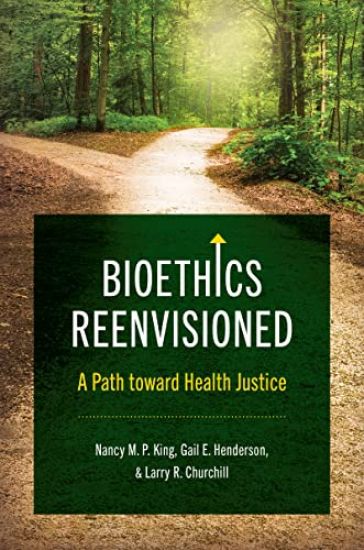
Bioethics needs an expanded moral vision. Born in the ferment of the 1970s, the field responded to rapid developments in biomedical technology and injustices in clinical care and research. Since then, bioethics has predominantly focused on respect for autonomy, beneficence and nonmaleficence, and the zero-sum "lifeboat" ethics of distributive justice, applying these principles almost exclusively within the walls of medical institutions. It is now time for bioethics to take full account of the problems of health disparities and structural injustice that are made newly urgent by the COVID-19 pandemic and the effects of climate change. This book shows why and how the field must embrace a broader and more meaningful view of justice, principally by incorporating the tools and insights of the social sciences, epidemiology, and public health. Nancy M. P. King, Gail E. Henderson, and Larry R. Churchill make the case for a more social understanding and application of justice, a deeper humility in assessing expertise in bioethics consulting, a broader and more relevant research agenda, and greater appreciation of the profound health implications of global warming.
Bioethics Reenvisioned

Bioethics Reenvisioned

Nancy M. P. King; Gail E. Henderson; Larry R. Churchill

THE UNIVERSITY OF NORTH CAROLINA PRESS
2022
pokkari
Bioethics needs an expanded moral vision. Born in the ferment of the 1970s, the field responded to rapid developments in biomedical technology and injustices in clinical care and research. Since then, bioethics has predominantly focused on respect for autonomy, beneficence and nonmaleficence, and the zero-sum "lifeboat" ethics of distributive justice, applying these principles almost exclusively within the walls of medical institutions. It is now time for bioethics to take full account of the problems of health disparities and structural injustice that are made newly urgent by the COVID-19 pandemic and the effects of climate change. This book shows why and how the field must embrace a broader and more meaningful view of justice, principally by incorporating the tools and insights of the social sciences, epidemiology, and public health. Nancy M. P. King, Gail E. Henderson, and Larry R. Churchill make the case for a more social understanding and application of justice, a deeper humility in assessing expertise in bioethics consulting, a broader and more relevant research agenda, and greater appreciation of the profound health implications of global warming.