Kirjojen hintavertailu. Mukana 11 342 296 kirjaa ja 12 kauppaa.

Kirjahaku

Etsi kirjoja tekijän nimen, kirjan nimen tai ISBN:n perusteella.

3 kirjaa tekijältä Larry R. Gerlach

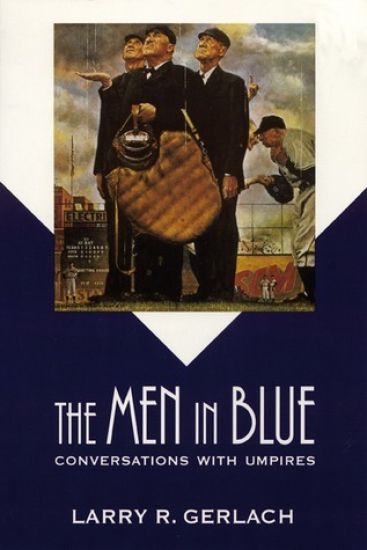
The Men in Blue

The Men in Blue

Larry R. Gerlach

University of Nebraska Press
1994
pokkari
The philosopher Jacques Barzun thought that "whoever wants to know the heart and mind of America had better learn baseball." And whoever wants to know baseball had better learn about umpires. As Larry Gerlach points out in The Men in Blue, these arbiters transform competitive chaos into organized sport. They make it possible to "play ball," but nobody loves them. Considering the abuse meted out by fans and players, why would any sane person want to be an umpire? Many reasons emerge in conversations with a dozen former major league arbiters. While nobody loves them, they love the game. Gerlach has elicited entertaining stories from these figures under fire--about their lonely travels, their dealings with umpire baiters, battles for unionization, breaking through the color line, and much more. From Beans Reardon, who came up to the National League in 1926, to Ed Sudol, who retired in 1977, here is a witty and telling portrait of baseball from the boisterous Golden Age to the Jet Age of Instant Replay.
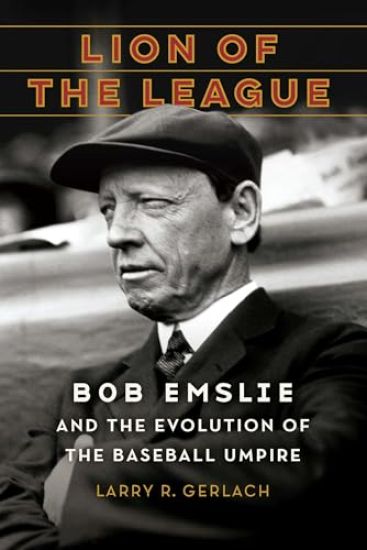
Lion of the League

Lion of the League

Larry R. Gerlach

University of Nebraska Press
2024
sidottu
Winner of the 2025 Seymour Medal Robert Dean Emslie (1859–1943) spent fifty-six of his eighty-four years in professional baseball-eight as a player and forty-nine as an umpire. When arm problems ended his career as a Major League pitcher, he turned to umpiring, serving in that capacity for thirty-five seasons, then as an umpire supervisor for thirteen years. His longevity is all the more remarkable considering he toiled during the three most contentious and difficult decades umpires ever faced: the years from 1890 to 1920, when baseball transitioned from amateur to professional sport and from regional business to commercial entertainment industry. Emslie endured the rough-and-tumble umpire-baiting 1890s, the Deadball era, injuries from thrown and batted balls, physical and verbal assaults from players and fans, and criticism in the press. Among his most notable games, he called four no-hitters and worked as the base umpire in the famous Merkle’s Boner game between the New York Giants and the Chicago Cubs at the Polo Grounds in 1908. He often clashed with Giants manager John McGraw, who nicknamed him “Blind Bob.” Yet he was widely praised by players and his peers. Honus Wagner, the great Pittsburgh shortstop, ranked Emslie the best National League umpire he had seen during his twenty-year career. Umpires Bill McGowan and Billy Evans respectively regarded him as “the greatest base umpire of all time” and “one of the greatest umpires the game ever produced.” Emslie was also the acknowledged master of baseball’s rules such that National League presidents regularly consulted with him on controversial calls and protests. Emslie accepted a position as the chief of National League umpires, serving as an adviser to the National League president.Lion of the League is the biography of an umpire whose career spanned the formative years of modern baseball.
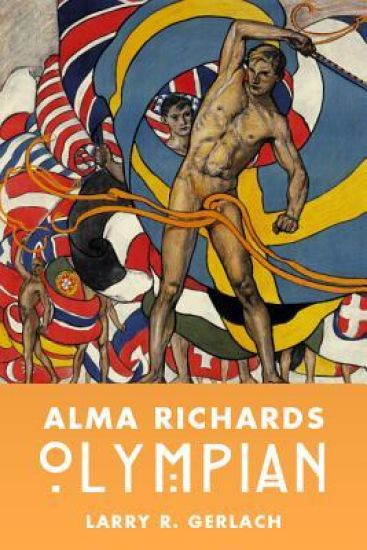
Alma Richards

Alma Richards

Larry R. Gerlach

University of Utah Press,U.S.
2016
sidottu
Alma Richards, as an unsung high school student, surprisingly set an Olympic record for the high jump in the 1912 Stockholm Olympics. He was the only native Utahn and member of the LDS church to win an Olympic gold medal in the twentieth century. After a stellar collegiate track career that saw him lead Cornell to three national championships, Richards for two decades reigned as America’s most accomplished multiple-event track and field athlete, winning national titles in five different events. Despite his prominence in the history of American sports, this is the first treatment of his athletic career and personal life.More than a century has passed since Alma Richards won an Olympic gold medal, yet this story about man and sport—the drive to excel, victory as validation of hard work, the quest for public recognition and, ultimately, the achievement of self-identity and self-satisfaction—still resonates today.