Kirjojen hintavertailu. Mukana 11 472 505 kirjaa ja 12 kauppaa.

Kirjahaku

Etsi kirjoja tekijän nimen, kirjan nimen tai ISBN:n perusteella.

24 kirjaa tekijältä Lars Magnusson

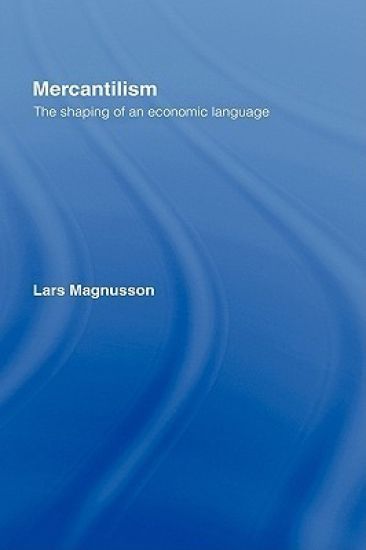
Mercantilism

Mercantilism

Lars Magnusson

Routledge
1994
sidottu
Ever since the Physiocrats and Adam Smith, mercantilism or 'the mercantile system' have been described as the opposite of classical political economy. This view is very much brought into question by the current book. It argues that the sharp distinction between mercantilism and 19th century laissez-faire economics has obscured the meaning, content and contribution of the former. This book presents a full-scale account of the development of mercantilism as a trend of economic thought during the 17th and 18th centuries. Instead of accepting existing interpretations, it begins with the most fundamental questions: What was mercantilism? Did it have a central message? Was it really a coherent school of thought? A central theme of the book is its critique of narrow definitions of its subject. Mercantilism must be understood as a series of written texts appearing in a particular political and economic context, rather than as an all-embracing system of economic thought. Within this context a language and vocabulary of economics was developed that was an essential precondition for the subsequent growth of economic thought and knowledge. In this sense mercantilism was much more modern than has been previously appreciated.
Mercantilism

Mercantilism

Lars Magnusson

Routledge
1995
muu
This set is the most important and authoritative collection of mercantilist writings to date. In all some 26 texts are reproduced in their entirety and the collection is supplemented by a substantial introduction.
Free Trade: 1793-1886

Free Trade: 1793-1886

Lars Magnusson

Routledge
1997
muu
Trade is the dominant subject in nineteenth century economics. During the course of the century, Britain was transformed from a protectionist power to an open economy, a change embodied by the repeal of the Corn Laws in 1846. This is reflected in the economic literature of the period, with the qualified free trade advocacy of the early classical economists developing into more strident views of the Manchester School. However throughout the period free trade did not go unchallenged, and by the end of the century a fully developed protectionist position had emerged represented by, for example, the economic nationalism of Henry Carey in the United States and in the fair trade movement in Britain.Free Trade: 1793-1886 provides a comprehensive collection of materials relating to the major debates about external trade in the nineteenth century. It represents a wide range of opinions, and combines materials by leading figures, with some extremely rare but representative pieces from less well-known names. The collection includes an original introduction by the editor, and each of the individual pieces has been carefully retypeset.The set includes material by: James Mill, Richard Cobden, Robert Torrens, John Ramsey McCulloch, Freidrich List, Henry Carey and M. Frederick Bastiet.
An Economic History of Sweden

An Economic History of Sweden

Lars Magnusson

Routledge
2000
sidottu
This book represents the first recent attempt to provide a comprehensive treatment of Sweden's economic development since the middle of the 18th century. It traces the rapid industrialisation, the political currents and the social ambitions, that transformed Sweden from a backward agrarian economy into what is now regarded by many as a model welfare state.
The Tradition of Free Trade

The Tradition of Free Trade

Lars Magnusson

Routledge
2004
sidottu
In the nineteenth century Adam Smith and others gradually invented a 'tradition' of free trade. This was a towering achievement and has proved to be influential to this day. This book examines this construction of the free trade tradition. Showing how historical contruction is a vital component in the writing of doctrinal history, Lars Magnusson argues that it is important for historians of economic thought to distance themselves from the practice of writing history backwards. Contrasting what occurred in Britain in the nineteenth century with what occurred in the United States and in Sweden, this book shows that perhaps the classical tradition meant something else entirely in different national contexts. This original and thought-provoking book is written such that it will be of great interest not only to historians specializing in economic thought, but also historians with other areas of interest.
The Tradition of Free Trade

The Tradition of Free Trade

Lars Magnusson

Routledge
2006
nidottu
In the nineteenth century Adam Smith and others gradually invented a 'tradition' of free trade. This was a towering achievement and has proved to be influential to this day. This book examines this construction of the free trade tradition. Showing how historical contruction is a vital component in the writing of doctrinal history, Lars Magnusson argues that it is important for historians of economic thought to distance themselves from the practice of writing history backwards. Contrasting what occurred in Britain in the nineteenth century with what occurred in the United States and in Sweden, this book shows that perhaps the classical tradition meant something else entirely in different national contexts. This original and thought-provoking book is written such that it will be of great interest not only to historians specializing in economic thought, but also historians with other areas of interest.
An Economic History of Sweden

An Economic History of Sweden

Lars Magnusson

Routledge
2007
nidottu
This book represents the first recent attempt to provide a comprehensive treatment of Sweden's economic development since the middle of the 18th century. It traces the rapid industrialisation, the political currents and the social ambitions, that transformed Sweden from a backward agrarian economy into what is now regarded by many as a model welfare state.
Nation, State and the Industrial Revolution
The industrial revolution and the creation of the modern (national) state are two of the most important historical processes to have occurred in Europe during the 19th century. The state and other bodies of governance play an important role in the development of capitalist market societies since the 18th century. But modern market economies are to a large degree a product of the interplay between market and governance. Yet we are often told a strikingly different tale about the modern economy, at least how it ought to work and operate - as far as possible without public interference. Even more frequently we have been taught that the modern capitalist market economy is a product of an industrial revolution, originating with the UK in the middle of the 18th century propelled by laissez faire and the triumph of free markets which gradually liberated themselves from the grip of an old dirigiste state. This book argues that in order to get a better understanding of this period and the rise of modern industrial capitalism it is necessary to link the industrial revolution in its various forms to a political and institutional context of state-making and the creation of modern national states. Professor Magnusson demonstrates that a historical narrative which does not acknowledge the role of the state and public governance for the establishment of the modern capitalist market economy is fundamentally flawed.
Nation, State and the Industrial Revolution
The industrial revolution and the creation of the modern (national) state are two of the most important historical processes to have occurred in Europe during the 19th century. The state and other bodies of governance play an important role in the development of capitalist market societies since the 18th century. But modern market economies are to a large degree a product of the interplay between market and governance. Yet we are often told a strikingly different tale about the modern economy, at least how it ought to work and operate - as far as possible without public interference. Even more frequently we have been taught that the modern capitalist market economy is a product of an industrial revolution, originating with the UK in the middle of the 18th century propelled by laissez faire and the triumph of free markets which gradually liberated themselves from the grip of an old dirigiste state. This book argues that in order to get a better understanding of this period and the rise of modern industrial capitalism it is necessary to link the industrial revolution in its various forms to a political and institutional context of state-making and the creation of modern national states. Professor Magnusson demonstrates that a historical narrative which does not acknowledge the role of the state and public governance for the establishment of the modern capitalist market economy is fundamentally flawed.
Mercantilism

Mercantilism

Lars Magnusson

Routledge
2015
nidottu
Ever since the Physiocrats and Adam Smith, mercantilism or 'the mercantile system' have been described as the opposite of classical political economy. This view is very much brought into question by the current book. It argues that the sharp distinction between mercantilism and 19th century laissez-faire economics has obscured the meaning, content and contribution of the former. This book presents a full-scale account of the development of mercantilism as a trend of economic thought during the 17th and 18th centuries. Instead of accepting existing interpretations, it begins with the most fundamental questions: What was mercantilism? Did it have a central message? Was it really a coherent school of thought? A central theme of the book is its critique of narrow definitions of its subject. Mercantilism must be understood as a series of written texts appearing in a particular political and economic context, rather than as an all-embracing system of economic thought. Within this context a language and vocabulary of economics was developed that was an essential precondition for the subsequent growth of economic thought and knowledge. In this sense mercantilism was much more modern than has been previously appreciated.
The Political Economy of Mercantilism
Since the days of Adam Smith, Mercantilism has been a hotly debated issue. Condemned at the end of the 18th century as a "false" system of economic thinking and political practice, it has returned paradoxically to the forefront in regard to issues such as the creation of economic growth in developing countries. This concept is often used in order to depict economic thinking and economic policy in early modern Europe; its meaning and content has been highly debated for over two hundred years. Following on from his 1994 volume Mercantilism – The Shaping of an Economic Language, this new book from Lars Magnusson presents a more synthetic interpretation of Mercantilism not only as a theoretical system, but also as a system of political economy. This book incorporates samples of material from the 1994 publication alongside new material, ordered in a new set of chapters and up-date discussions on mercantilism up to the present day. Tracing the development of a particular political economy of Mercantilism in a period of nascent state making in Western and Continental Europe from the 16th to the 18th century, the book describes how European rulers regarded foreign trade and industrialisation as a means to achieve power and influence amidst international competition over trades and markets. Returning to debates concerning whether Mercantilism was a system of power or of wealth, Magnusson argues that it is in fact was both, and that contemporaries almost without exception saw these goals as interconnected. He also emphasises that Mercantilism was an all-European issue in a time of trade wars and the struggle for international power and recognition. In examining these issues, this book offers an unrivalled modern synthesis of Mercantilist ideas and practices.
The Political Economy of Mercantilism

The Political Economy of Mercantilism

Lars Magnusson

CRC Press Inc
2018
nidottu
Since the days of Adam Smith, Mercantilism has been a hotly debated issue. Condemned at the end of the 18th century as a "false" system of economic thinking and political practice, it has returned paradoxically to the forefront in regard to issues such as the creation of economic growth in developing countries. This concept is often used in order to depict economic thinking and economic policy in early modern Europe; its meaning and content has been highly debated for over two hundred years. Following on from his 1994 volume Mercantilism – The Shaping of an Economic Language, this new book from Lars Magnusson presents a more synthetic interpretation of Mercantilism not only as a theoretical system, but also as a system of political economy. This book incorporates samples of material from the 1994 publication alongside new material, ordered in a new set of chapters and up-date discussions on mercantilism up to the present day. Tracing the development of a particular political economy of Mercantilism in a period of nascent state making in Western and Continental Europe from the 16th to the 18th century, the book describes how European rulers regarded foreign trade and industrialisation as a means to achieve power and influence amidst international competition over trades and markets. Returning to debates concerning whether Mercantilism was a system of power or of wealth, Magnusson argues that it is in fact was both, and that contemporaries almost without exception saw these goals as interconnected. He also emphasises that Mercantilism was an all-European issue in a time of trade wars and the struggle for international power and recognition. In examining these issues, this book offers an unrivalled modern synthesis of Mercantilist ideas and practices.
Contest for Control

Contest for Control

Lars Magnusson

Berg Publishers
1994
sidottu
This study of a specific industry's survival and growth in three countries is a useful resource for research on industrial development in 19th century Europe. Presenting the history of three major cutlery districts in Western Europe during the 19th century - Sheffield in England, Bergische land (Solingen and Remscheid) in Germany, and Eskilstuna in Sweden - the author focuses on each region's industrial development in relation to its socio-cultural context. This work challenges the flexible specialisation thesis often used to explain the seeming persistence of small-scale and decentralised production within the cutlery industry since the 19th century, and argues that growing businesses had to develop competitive strategies for control over important resources.
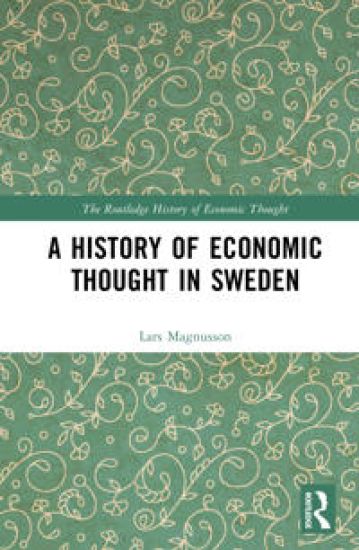
A History of Economic Thought in Sweden

A History of Economic Thought in Sweden

Lars Magnusson

TAYLOR FRANCIS LTD
2025
sidottu
Situating key texts and writers in their proper historical context, this book presents a history of Swedish economic thinking from early modern times to the present day.Highlighting key elements of Swedish political, economic and social history allows the book to shed new light on important parts of the story including the development of neo-classical economics from the late 19th century - associated with leading names such as Knut Wicksell, Gustav Cassel and Eli Heckscher – and the rise of the so-called Stockholm school in the 1920´s and 30´s. But the book also goes back further to explore the Swedish economic literature of the 18th century, particularly its more “liberal” version of mercantilism and cameralism, as well as early modern and medieval developments. Throughout, the book emphasizes the unique nature of much of the economic thinking emanating from Sweden. Emulation and adaption of political economic thinking imported from abroad – primarily the UK, France and German speaking countries - is an important part of this story, but this is shown to be an active process which has resulted in great originality in Swedish economic thought.This book will be of interest to readers in the history of economic thought, economic history, the history of ideas and Swedish history.
Mercantilist Theory and Practice Vol 1
'England is a nation of shopkeepers'. Long before Napolean disdainfully paraphrased Adam Smith, British commerce had become a motor for economic growth and increased state power. This four-volume facsimile edition brings together a range of rare seventeenth- and eighteenth-century documents about the mercantile system.
Mercantilist Theory and Practice Vol 2
'England is a nation of shopkeepers'. Long before Napolean disdainfully paraphrased Adam Smith, British commerce had become a motor for economic growth and increased state power. This four-volume facsimile edition brings together a range of rare seventeenth- and eighteenth-century documents about the mercantile system.
Mercantilist Theory and Practice Vol 3
'England is a nation of shopkeepers'. Long before Napolean disdainfully paraphrased Adam Smith, British commerce had become a motor for economic growth and increased state power. This four-volume facsimile edition brings together a range of rare seventeenth- and eighteenth-century documents about the mercantile system.
Mercantilist Theory and Practice Vol 4
'England is a nation of shopkeepers'. Long before Napolean disdainfully paraphrased Adam Smith, British commerce had become a motor for economic growth and increased state power. This four-volume facsimile edition brings together a range of rare seventeenth- and eighteenth-century documents about the mercantile system.
Mercantilist Theory and Practice

Mercantilist Theory and Practice

Lars Magnusson

Pickering Chatto (Publishers) Ltd
2008
muu
'England is a nation of shopkeepers'. Long before Napolean disdainfully paraphrased Adam Smith, British commerce had become a motor for economic growth and increased state power. This four-volume facsimile edition brings together a range of rare seventeenth- and eighteenth-century documents about the mercantile system.
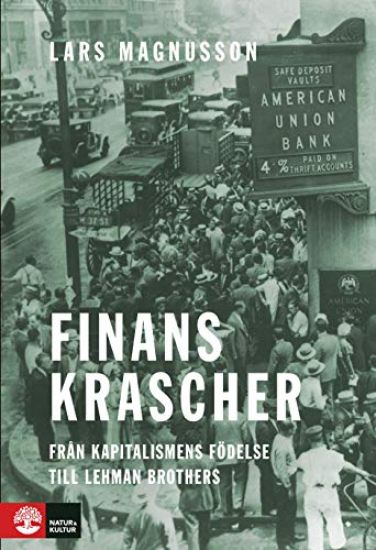
Finanskrascher : från kapitalismens födelse till Lehman Brothers

Finanskrascher : från kapitalismens födelse till Lehman Brothers

Lars Magnusson

Natur Kultur Allmänlitteratur
2020
pokkari
Ända sedan kapitalismens födelse i medeltidens Europa har finansiella bubblor och krascher varit ett alltför bekant fenomen. Men varför uppstår de - och hur?Från påvars och kungars konkurser, via Nederländernas tulpaner, USA:s järnvägsbyggen, Kreugers tändstickor och fram till Lehman Brothers förklaras här det intrikata spel mellan lokala och globala aktörer, hjältar och skurkar, stater och företag, kortsiktiga och långsiktiga analyser som fött fram de dramatiska krängningarna i finanshistorien. Och om historien kan lära något, så är det att framtiden ser osäkrare ut än någonsin.Lars Magnusson är professor i ekonomisk historia vid Uppsala universitet, ledamot av Kungliga Vetenskapsakademien och ordförande i Scandinavian Society of Economic and Social History. Han har skrivit en rad ekonomihistoriska böcker på engelska och svenska, bland annat standardverket Sveriges ekonomiska historia.