Kirjojen hintavertailu. Mukana 11 244 527 kirjaa ja 12 kauppaa.

Kirjahaku

Etsi kirjoja tekijän nimen, kirjan nimen tai ISBN:n perusteella.

7 kirjaa tekijältä Lata Mani

SacredSecular

SacredSecular

Lata Mani

Routledge India
2009
nidottu
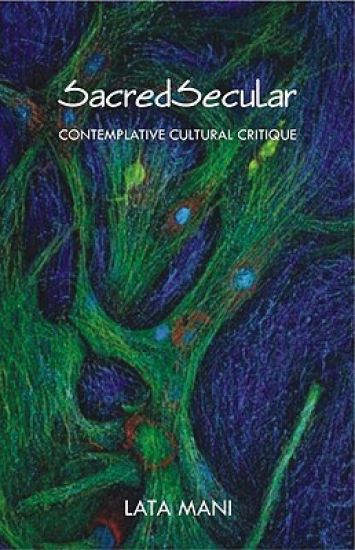
What would it mean to conceive of the sacred as a source of knowledge that is as vital as the secular? What insights does a contemplative approach yield in analysing neoliberal globalisation or Hindu fundamentalism? Is a dew drop sacred, or is it secular? In today’s charged atmosphere many believe that the sacred is best kept firmly apart from the realm of the secular. SacredSecular: Contemplative Cultural Critique offers a contrasting view. It argues that the two are indivisible and can productively interweave in illuminating key contemporary issues. Essays investigate the quotidian (trash, cut flowers), the philosophical (advaita, karma), the economic (work, globalisation) and the political (war, violence). Mani invites us to rethink the prevailing view that secularism is the only progressive response to religious authoritarianism. SacredSecular proposes a conceptual approach in which body, mind, heart, nature, matter and spirit are not merely equals, but equally crucial to crafting an inclusive vision and practice. This book addresses several audiences: scholars of contemporary Indian society and culture, spiritual practitioners striving to integrate their practice with their politics, and all those interested in contemplating the present and what it portends for our collective future.

The Integral Nature of Things

The Integral Nature of Things

Lata Mani

Routledge India
2013
nidottu
The world is an interdependent whole of which everything is an integral, complexly related, part. Yet current ways of thinking, and being, persistently separate social phenomena and the individual self from the multiple dimensions with which they are interconnected. The Integral Nature of Things examines this revealing paradox and its consequences in a variety of sites: everyday language, labour, advertising, technology, post-structuralist theory, political rhetoric, urban planning, sex, neoliberal globalisation. Mani demonstrates how even though the interrelations between things are obscured by the ruling paradigm, the facts of relationality and indivisibility continually assert themselves. The book interweaves prose with poetry and sociocultural analysis with observational accounts to offer an alternative framework for addressing aspects of the cognitive, cultural, political, and ethical crisis we face today.
Contentious Traditions

Contentious Traditions

Lata Mani

University of California Press
1998
pokkari
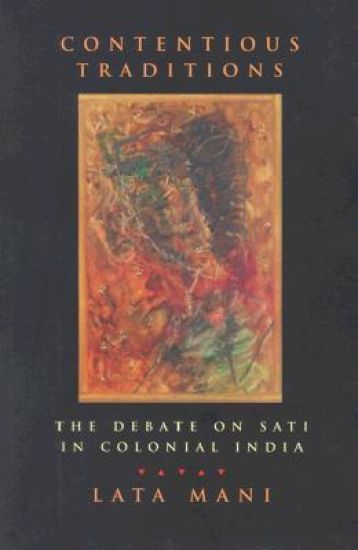
"Contentious Traditions" analyzes the debate on sati, or widow burning, in colonial India. Though the prohibition of widow burning in 1829 was heralded as a key step forward for women's emancipation in modern India, Lata Mani argues that the women who were burned were marginal to the debate and that the controversy was over definitions of Hindu tradition, the place of ritual in religious worship, the civilizing missions of colonialism and evangelism, and the proper role of the colonial state. Mani radically revises colonialist as well as nationalist historiography on the social reform of women's status in the colonial period and clarifies the complex and contradictory character of missionary writings on India. The history of widow burning is one of paradox. While the chief players in the debate argued over the religious basis of sati and the fine points of scriptural interpretation, the testimonials of women at the funeral pyres consistently addressed, the material hardships and societal expectations attached to widowhood. And although historiography has traditionally emphasized the colonial horror of sati, a fascinated ambivalence toward the practice suffused official discussions. The debate normalized the violence of sati and supported the misconception that it was a voluntary act of wifely devotion. Mani brilliantly illustrates how situated feminism and discourse analysis compel a rewriting of history, thus destabilizing the ways we are accustomed to look at women and men, at 'tradition', custom, and modernity.
The Integral Nature of Things

The Integral Nature of Things

Lata Mani

Routledge India
2016
sidottu
The world is an interdependent whole of which everything is an integral, complexly related, part. Yet current ways of thinking, and being, persistently separate social phenomena and the individual self from the multiple dimensions with which they are interconnected. The Integral Nature of Things examines this revealing paradox and its consequences in a variety of sites: everyday language, labour, advertising, technology, post-structuralist theory, political rhetoric, urban planning, sex, neoliberal globalisation. Mani demonstrates how even though the interrelations between things are obscured by the ruling paradigm, the facts of relationality and indivisibility continually assert themselves. The book interweaves prose with poetry and sociocultural analysis with observational accounts to offer an alternative framework for addressing aspects of the cognitive, cultural, political, and ethical crisis we face today.
SacredSecular

SacredSecular

Lata Mani

Routledge India
2017
sidottu
What would it mean to conceive of the sacred as a source of knowledge that is as vital as the secular? What insights does a contemplative approach yield in analysing neoliberal globalisation or Hindu fundamentalism? Is a dew drop sacred, or is it secular? In today‘s charged atmosphere many believe that the sacred is best kept firmly apart from the realm of the secular. SacredSecular: Contemplative Cultural Critique offers a contrasting view. It argues that the two are indivisible and can productively interweave in illuminating key contemporary issues. Essays investigate the quotidian (trash, cut flowers), the philosophical (advaita, karma), the economic (work, globalisation) and the political (war, violence). Mani invites us to rethink the prevailing view that secularism is the only progressive response to religious authoritarianism. SacredSecular proposes a conceptual approach in which body, mind, heart, nature, matter and spirit are not merely equals, but equally crucial to crafting an inclusive vision and practice. This book addresses several audiences: scholars of contemporary Indian society and culture, spiritual practitioners striving to integrate their practice with their politics, and all those interested in contemplating the present and what it portends for our collective future.
Myriad Intimacies

Myriad Intimacies

Lata Mani

DUKE UNIVERSITY PRESS
2022
sidottu
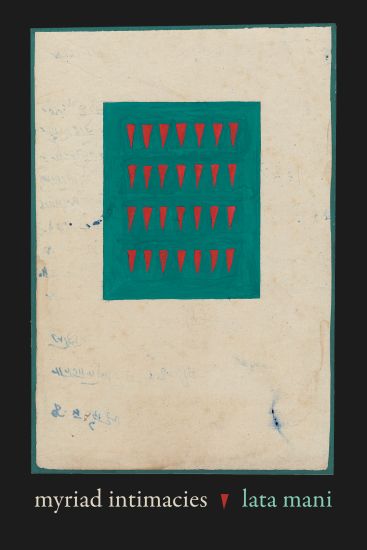
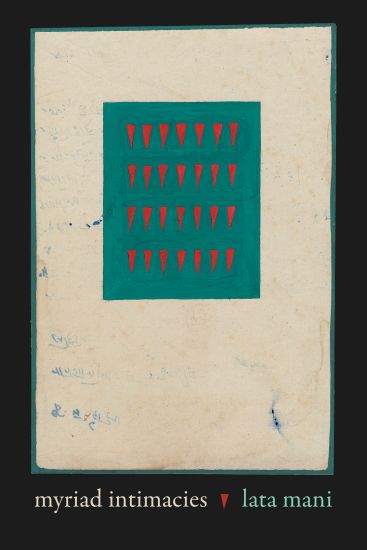
In Myriad Intimacies postcolonial theorist, spiritual practitioner, and filmmaker Lata Mani oscillates between text and video, poetry and prose, genre and form, register and voice, and secular and sacred to offer a transmedia exploration of the interrelatedness of lives, concepts, frameworks, and aspects of self. She draws on concepts from tantra-a philosophy that celebrates matter as alive, embodiment as sacred, and the senses as a form of intelligence-alongside feminist, critical race, and cultural theory to meditate on the ways in which everyone and everything exists in mutually constitutive interrelations. Addressing issues ranging from desire, the body, nature, and love, to otherness, identity politics, social justice, #MeToo, and the COVID-19 pandemic, Mani foregrounds the power and necessity of recognizing relationality as foundational. Throughout, she offers a way of reframing what we think we know and how we come to know it, demonstrating that it is only by acknowledging and embracing the indivisible and interdependent nature of existence that we restore our true intimacy with each other and the world.
Myriad Intimacies

Myriad Intimacies

Lata Mani

DUKE UNIVERSITY PRESS
2022
pokkari
In Myriad Intimacies postcolonial theorist, spiritual practitioner, and filmmaker Lata Mani oscillates between text and video, poetry and prose, genre and form, register and voice, and secular and sacred to offer a transmedia exploration of the interrelatedness of lives, concepts, frameworks, and aspects of self. She draws on concepts from tantra-a philosophy that celebrates matter as alive, embodiment as sacred, and the senses as a form of intelligence-alongside feminist, critical race, and cultural theory to meditate on the ways in which everyone and everything exists in mutually constitutive interrelations. Addressing issues ranging from desire, the body, nature, and love, to otherness, identity politics, social justice, #MeToo, and the COVID-19 pandemic, Mani foregrounds the power and necessity of recognizing relationality as foundational. Throughout, she offers a way of reframing what we think we know and how we come to know it, demonstrating that it is only by acknowledging and embracing the indivisible and interdependent nature of existence that we restore our true intimacy with each other and the world.