Kirjojen hintavertailu. Mukana 11 627 220 kirjaa ja 12 kauppaa.

Kirjahaku

Etsi kirjoja tekijän nimen, kirjan nimen tai ISBN:n perusteella.

9 kirjaa tekijältä Laura Marcus

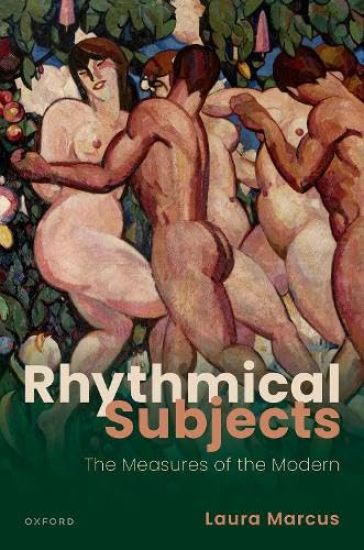
Rhythmical Subjects

Rhythmical Subjects

Laura Marcus

Oxford University Press
2023
sidottu
Tracing a developing fascination with rhythm's significance, its patterns, and its measures, across philosophy, psychology, science, and the whole range of arts, Rhythmical Subjects shows how and why attention to rhythm came to serve as connective tissue between fields of inquiry at a time when modern disciplines were still in the process of formation or consolidation. The concentration on 'rhythm' and its cognates largely arose, Laura Marcus demonstrates, from the desire to reclaim or retain human and natural measures in the face of the coming of the machine and the speed of technological innovation. Rhythmical Subjects uncovers the disparate routes by which rhythm acquired its newfound ability to link ancient and modern forms of intellectual inquiry, and to fathom and re-invigorate temporal articulations of modern subjective life. Among the numerous intellectual and artistic developments set in a new light by this brilliantly wide-ranging book are: the long line of philosophical and theoretical writing on rhythm, from Nietzsche to Bergson and their twentieth-century interlocutors; psychological explorations of rhythm as the fundamental law of life, from Herbert Spencer and Ralph Waldo Emerson to Elsie Fogarty; more experimental engagements with psychology's rhythms, from Wilhelm Wundt, Théodule Ribot, and Karl Groos to the aesthetic writings of Vernon Lee; the history of prosody; pioneering applications of rhythm studies to social and sexual reform, by Havelock Ellis, Marie Stopes, D. H. Lawrence, and Mary Austin (among others); Lebensreform movements and the contribution of Rudolf Steiner and Emile Jaques-Dalcroze; and numerous endeavours in artistic and critical innovation, from the small modernist magazines of Bloomsbury and Paris to art salons and dance studios across Britain, Continental Europe, and America.
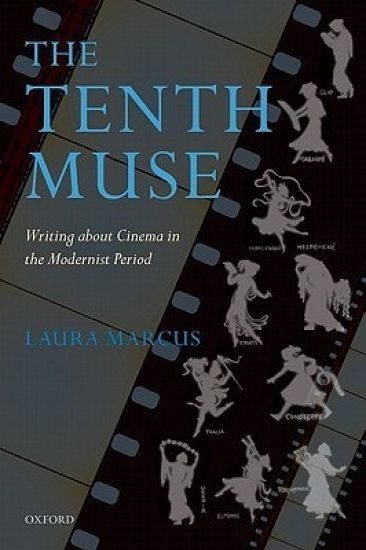
The Tenth Muse

The Tenth Muse

Laura Marcus

Oxford University Press
2007
sidottu
The Tenth Muse explores writings on the cinema in the first decades of the twentieth century. Laura Marcus examines the impact of cinema on early twentieth-century literary and, more broadly, aesthetic and cultural consciousness, by bringing together the study of the terms and strategies of early writings about film with literary engagement with cinema in the same period. She gives a new understanding of the ways in which early writers about film - reviewers, critics, theorists - developed aesthetic categories to define and accommodate what was called 'the seventh art' or 'the tenth muse' and found discursive strategies adequate to the representation of the new art and technology of cinema, with its unprecedented powers of movement. In examining the writings of early film critics and commentators in tandem with those of more specifically literary figures, including H.G.Wells and Virginia Woolf, and in bringing literary texts into this field, Laura Marcus provides a new account of relationships between cinema and literature. Intertwining two major strands of research - the exploration of early film criticism and theory and cinema's presence in literary texts - The Tenth Muse shows how issues central to an understanding of cinema (including questions of time, repetition, movement, vision, sound and silence) are threaded through both kinds of writing, and the ways in which discursive and fictional writings overlapped. The movement that defined cinema was also perceived as a more fragile and unstable ephemerality that inhered at every level, from the fleeting nature of the projected images to the vagaries of cinematic exhibition. It was the anxiety over the mutability of the medium and its exhibition which, from the 1920s onwards, led to the establishment of such institutional spaces for cinema as the London-based Film Society, the new film journals, and, in the 1930s, the first film archives. The Tenth Muse explores the continuities between these sites of cinematic culture and the conceptual, literary and philosophical understandings of the filmic medium.
The Tenth Muse

The Tenth Muse

Laura Marcus

Oxford University Press
2010
nidottu
The Tenth Muse explores writings on the cinema in the first decades of the twentieth century. Laura Marcus examines the impact of cinema on early twentieth-century literary and, more broadly, aesthetic and cultural consciousness, by bringing together the study of the terms and strategies of early writings about film with literary engagement with cinema in the same period. She gives a new understanding of the ways in which early writers about film - reviewers, critics, theorists - developed aesthetic categories to define and accommodate what was called 'the seventh art' or 'the tenth muse' and found discursive strategies adequate to the representation of the new art and technology of cinema, with its unprecedented powers of movement. In examining the writings of early film critics and commentators in tandem with those of more specifically literary figures, including H.G.Wells and Virginia Woolf, and in bringing literary texts into this field, Laura Marcus provides a new account of relationships between cinema and literature. Intertwining two major strands of research - the exploration of early film criticism and theory and cinema's presence in literary texts - The Tenth Muse shows how issues central to an understanding of cinema (including questions of time, repetition, movement, vision, sound and silence) are threaded through both kinds of writing, and the ways in which discursive and fictional writings overlapped. The movement that defined cinema was also perceived as a more fragile and unstable ephemerality that inhered at every level, from the fleeting nature of the projected images to the vagaries of cinematic exhibition. It was the anxiety over the mutability of the medium and its exhibition which, from the 1920s onwards, led to the establishment of such institutional spaces for cinema as the London-based Film Society, the new film journals, and, in the 1930s, the first film archives. The Tenth Muse explores the continuities between these sites of cinematic culture and the conceptual, literary and philosophical understandings of the filmic medium.
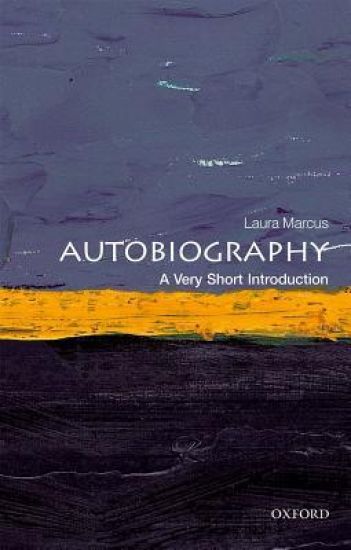
Autobiography

Autobiography

Laura Marcus

Oxford University Press
2018
nidottu
Autobiography is one of the most popular of written forms. From Casanova to Benjamin Franklin to the Kardashians, individuals throughout history have recorded their own lives and experiences. These personal writings are central to the work of literary critics, philosophers, historians and psychologists, who have found in autobiographies from across the centuries not only an understanding of the ways in which lives have been lived, but the most fundamental accounts of what it means to be a self in the world. In this Very Short Introduction Laura Marcus defines what we mean by 'autobiography', and considers its relationship with similar literary forms such as memoirs, journals, letters, diaries, and essays. Analysing the core themes in autobiographical writing, such as confession, conversion and testimony; romanticism and the journeying self; Marcus discusses the autobiographical consciousness (and the roles played by time, memory and identity), and considers the relationship between psychoanalysis and autobiography. Exploring the themes of self-portraiture and performance, Marcus also discusses the ways in which fiction and autobiography have shaped each other. ABOUT THE SERIES: The Very Short Introductions series from Oxford University Press contains hundreds of titles in almost every subject area. These pocket-sized books are the perfect way to get ahead in a new subject quickly. Our expert authors combine facts, analysis, perspective, new ideas, and enthusiasm to make interesting and challenging topics highly readable.
The City

The City

Laura Marcus

Polity Press
2016
sidottu
This book is a fresh and engaging analysis of the city as a central concept in contemporary social thought. It probes the contested and negotiated ways in which cities are built, understood, lived and imagined. Taking a thematic approach and drawing on a range of theoretical, methodological and empirical points of reference, it examines such subjects as urban inequality, public space, creative cities, globalization, the night-time economy, suburbia, and memory and emotion.In "The City "Deborah Stevenson argues that, as theories and concepts shape what is known about cities and urban life, it is necessary to build conceptual frameworks that engage with the intersections and tensions between urban processes and trends, as well as with the complexities of everyday urban life.This book's combination of original insight and critical synthesis will make it an invaluable contribution for an international, interdisciplinary readership of students and scholars in sociology, geography, urban studies and wider social science and the humanities.
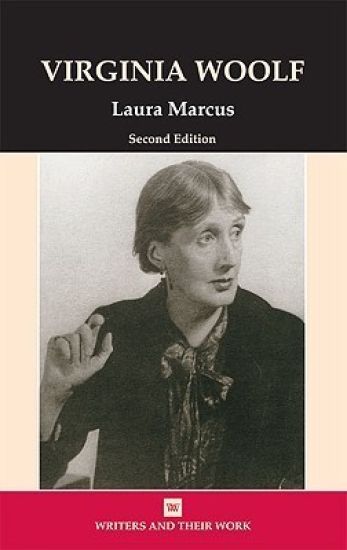
Virginia Woolf

Virginia Woolf

Laura Marcus

Northcote House Publishers Ltd
2004
nidottu
In the new edition of her highly regarded study, Laura Marcus examines a wide range of Virginia Woolf’s novels, short stories, essays and autobiographical writings in the context of themes and topics of central contemporary relevance and interest: time, history and narrative; modernism and the city; gender, sexuality and identity; art and life-writings. As well as exploring her significance for, and contribution to, feminist debates and to definitions of modernism, the book also includes detailed analyses of all Woolf’s novels an her non-fiction writings, including A Room of One’s Own, Three Guineas and the ‘biography’ Flush. It considers current theoretical approaches to Woolf’s work and also engages with Woolf’s own cultural contexts, exploring, for example, her responses to war, to Freud’s theories, and to early twentieth-century theories of sexuality and gender identity, and the transition from Victorianism to modernity.
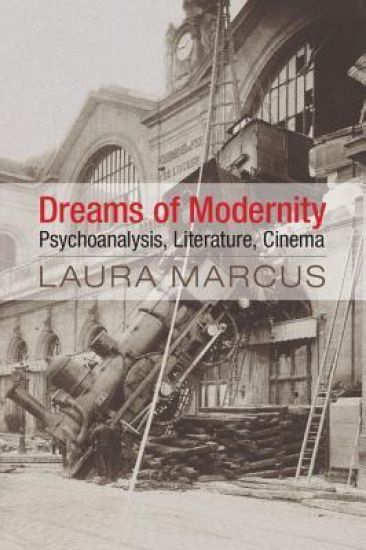
Dreams of Modernity

Dreams of Modernity

Laura Marcus

Cambridge University Press
2014
sidottu
Laura Marcus is one of the leading literary critics of modernist literature and culture. Dreams of Modernity: Psychoanalysis, Literature, Cinema covers the period from around 1880 to 1930, when modernity as a form of social and cultural life fed into the beginnings of modernism as a cultural form. Railways, cinema, psychoanalysis and the literature of detection - and their impact on modern sensibility - are four of the chief subjects explored. Marcus also stresses the creativity of modernist women writers, including H. D., Dorothy Richardson and Virginia Woolf. The overriding themes of this work bear on the understanding of the early twentieth century as a transitional age, thus raising the question of how 'the moderns' understood the conditions of their own modernity.