Kirjojen hintavertailu. Mukana 11 342 296 kirjaa ja 12 kauppaa.

Kirjahaku

Etsi kirjoja tekijän nimen, kirjan nimen tai ISBN:n perusteella.

3 kirjaa tekijältä Laura Quinney

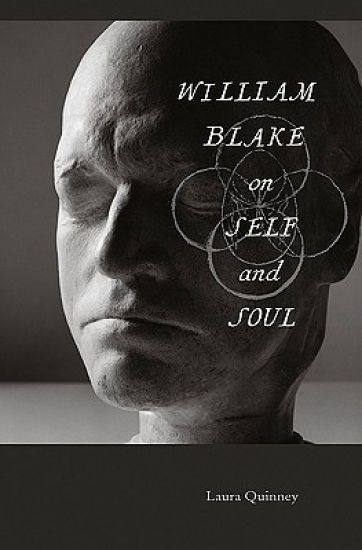
William Blake on Self and Soul

William Blake on Self and Soul

Laura Quinney

Harvard University Press
2010
sidottu
It has been clear from the beginning that William Blake was both a political radical and a radical psychologist. In William Blake on Self and Soul, Laura Quinney uses her sensitive, surprising readings of the poet to reveal his innovative ideas about the experience of subjectivity. Blake’s central topic, Quinney shows us, is a contemporary one: the discomfiture of being a self or subject. The greater the insecurity of the “I” Blake believed, the more it tries to swell into a false but mighty “Selfhood.” And the larger the Selfhood bulks, the lonelier it grows. But why is that so? How is the illusion of “Selfhood” created? What damage does it do? How can one break its hold? These questions lead Blake to some of his most original thinking. Quinney contends that Blake’s hostility toward empiricism and Enlightenment philosophy is based on a penetrating psychological critique: Blake demonstrates that the demystifying science of empiricism deepens the self’s incoherence to itself. Though Blake formulates a therapy for the bewilderment of the self, as he goes on he perceives greater and greater obstacles to the remaking of subjectivity. By showing us this progression, Quinney shows us a Blake for our time.

The Poetics of Disappointment

The Poetics of Disappointment

Laura Quinney

University of Virginia Press
1999
sidottu
The Poetics of Disappointment offers nothing less than a complete revision of our understanding of romantic poetry. By examining the lineage of Wordsworth, Shelley, Stevens, and Ashbery, Quinney challenges Harold Bloom's identification of major romantic poems as ""crisis lyrics"" and questions his idea that the disappointment these poets explore is compensated by their celebration of a heroic self. Rather, Quinney argues, the form of disappointment examined by the romantic poet often finds him bewildered and oppressed, in a state beyond the simple failure of literary ambition or romantic love.Beginning with Wordsworth's major autobiographical poems, including ""Tintern Abbey"" and the Intimations Ode, Quinney identifies a strain of romantic and postromantic lyric that devotes itself to capturing a disoriented sadness, a disappointment in which the self is isolated and frozen. She considers poems by Shelley, Stevens, and Ashbery, which she argues concern not specific disappointments but a psychic state of being disappointed. According to Quinney, an experience of loss has fractured and paralyzed the formerly hopeful self because that self seems in retrospect arrogant and naïve—or, as Ashbery puts it, the dream sustaining all other dreams dies.Quinney's critical prose is wonderfully fluent, conversant with theory but never relying on jargon to make her complex and sensitive argument. Drawing on the psychological insights of Freud and Klein and on the philosophy of Kierkegaard, Quinney sees in her paradigm of disappointment a sophisticated representation of self that goes beyond mere pathos or melancholia. The history of romantic and postromantic poetry, she finds, is not a history of ambitious self-assertion but a collective testimony of chagrin over the broken promises of the self.
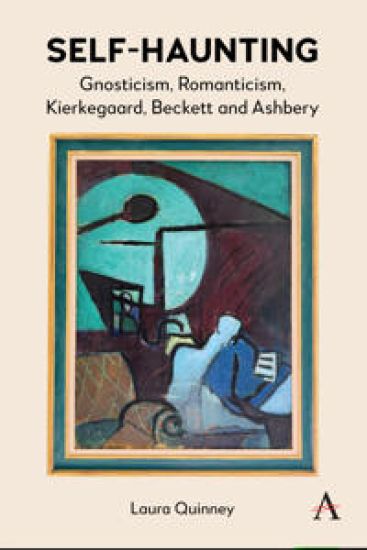
Self-Haunting

Self-Haunting

Laura Quinney

ANTHEM PRESS
2026
sidottu
It has been fashionable to declare that there is no self. Certainly the notion of the unitary subject—a transcendent subject linked to the traditional religious idea of the immortal soul—has not had currency in academic discourse for a very long time, perhaps as much as a century and a half. The psychologically unified subject and the universal subject of shared experience are also things of the past. But is there nothing left of the experience of selfhood? For the self can disenchant itself. But what does the subject feel about itself once it begins to doubt its own integrity? How does it experience its own “decentering”? How does this “who” that is left define itself, for itself? For selfhood is an existential condition, and no matter how elusive the self is to itself, it does not and cannot wholly lose itself. This book analyzes how the Gnostics, the Romantics, Kierkegaard, Beckett, and Ashbery dramatize the self’s self-doubt and what follows. The shared theme of these works, disparate as they are, is the bewilderment of selfhood, the pathos of subjectivity. The self encounters its own selfhood as puzzling and paradoxical. It wants to possess the qualities of an ideal self—to be whole, independent, and free—and it is disappointed to find it does not. Yet after the skeptical dismantling, something remains within, which represents itself as the self and continues to hear the (unfulfillable) call to selfhood. The self can neither become a self, nor cease to be agitated by the desire to become one.