
Kirjahaku
Etsi kirjoja tekijän nimen, kirjan nimen tai ISBN:n perusteella.
11 kirjaa tekijältä Laurence Lerner
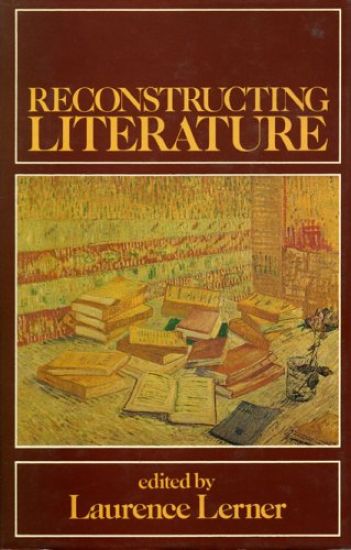
Reconstructing Literature
Laurence Lerner
Barnes Noble Books-Imports, Div of Rowman Littlefield Pubs., Inc
1983
sidottu
English studies have become the scene of the intense controversy with Marxism, feminism, deconstruction and the many varieties of structuralism all claiming to offer new insights into literature. In this book eight critics (John Holloway, Gabriel Josipovici, Cedric Watts, Wayne Booth, Robert Pattison, Anthony Thorlby, Roger Scruton, and Laurence Lerner) respond to the new movements, united by a refusal to abandon their trust in reason, the possibility of meaning and the need for value judgments. The result is a lively and humane book which offers new insights into literary theory and into particular works. The contributors, while taking the new schools of criticism seriously, often disagree with them, offering serious discussion on the value of structuralism and the merits of many of its practitioners.
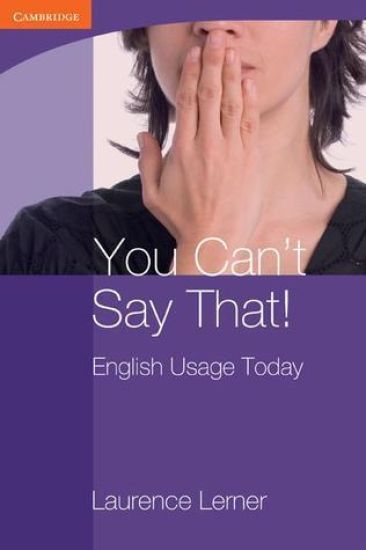
Do you see yourself as a linguistic diehard or a trendy radical? Are you more afraid of being mocked for ignorance or of being laughed at for pedantry? How far should we worry about offending people by our choice of words? In this book, the author takes the reader on an enlightening and often amusing journey. Unlike other books on English usage, which simply tell you whats right and whats wrong, You Cant Say That! discusses the issues and so puts you in a position to make your own informed decision. Laurence Lerner, retired professor, novelist and poet, surveys topics as diverse as language change, Standard English, grammar, register, euphemism, political correctness and the consequences of English becoming a world language.
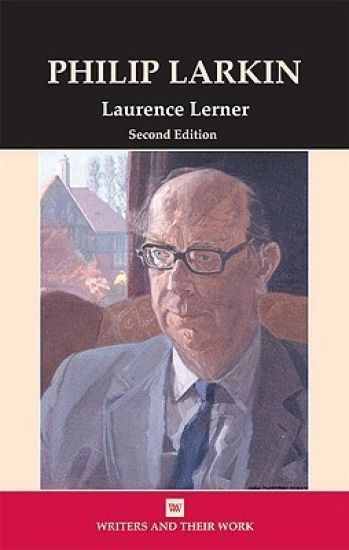
Philip Larkin is one of the finest English poets of our time. His poetic personality – nostalgic, wry, melancholy, ironic, witty and haunting – has appealed to a far wider audience than that of literary specialists, while also winning the respect of leading critics and fellow poets. Lerner’s study relates poetry to Larkin’s life, and to the literary and social environment of post-war Britain; discusses the Larkin persona, and Larkin’s relation to literary criticism; and above all seeks to guide readers to a full appreciation of the power and subtlety of Larkin’s best poems.
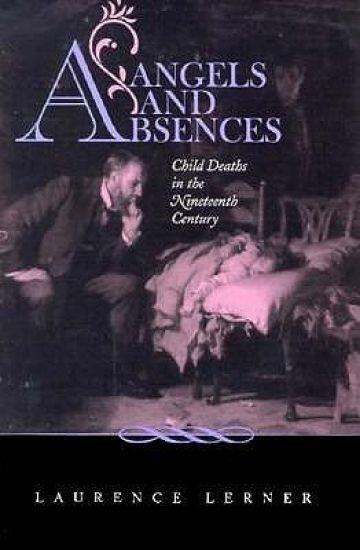
This is look at the portrayal of child deaths, actual and literary, throughout the 19th century, exploring the relationship between grief and words, experience and consolation.
This work has been selected by scholars as being culturally important and is part of the knowledge base of civilization as we know it.This work is in the public domain in the United States of America, and possibly other nations. Within the United States, you may freely copy and distribute this work, as no entity (individual or corporate) has a copyright on the body of the work.Scholars believe, and we concur, that this work is important enough to be preserved, reproduced, and made generally available to the public. To ensure a quality reading experience, this work has been proofread and republished using a format that seamlessly blends the original graphical elements with text in an easy-to-read typeface.We appreciate your support of the preservation process, and thank you for being an important part of keeping this knowledge alive and relevant.
This work has been selected by scholars as being culturally important and is part of the knowledge base of civilization as we know it.This work is in the public domain in the United States of America, and possibly other nations. Within the United States, you may freely copy and distribute this work, as no entity (individual or corporate) has a copyright on the body of the work.Scholars believe, and we concur, that this work is important enough to be preserved, reproduced, and made generally available to the public. To ensure a quality reading experience, this work has been proofread and republished using a format that seamlessly blends the original graphical elements with text in an easy-to-read typeface.We appreciate your support of the preservation process, and thank you for being an important part of keeping this knowledge alive and relevant.
The Truest Poetry; an Essay on the Question: What is Literature?
Laurence Lerner
Hassell Street Press
2021
sidottu
This work has been selected by scholars as being culturally important and is part of the knowledge base of civilization as we know it.This work is in the public domain in the United States of America, and possibly other nations. Within the United States, you may freely copy and distribute this work, as no entity (individual or corporate) has a copyright on the body of the work.Scholars believe, and we concur, that this work is important enough to be preserved, reproduced, and made generally available to the public. To ensure a quality reading experience, this work has been proofread and republished using a format that seamlessly blends the original graphical elements with text in an easy-to-read typeface.We appreciate your support of the preservation process, and thank you for being an important part of keeping this knowledge alive and relevant.
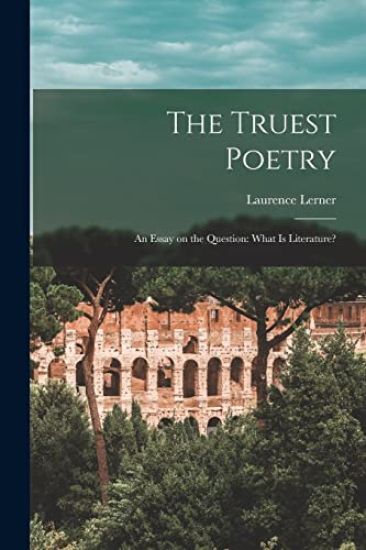
The Truest Poetry; an Essay on the Question: What is Literature?
Laurence Lerner
Hassell Street Press
2021
nidottu
This work has been selected by scholars as being culturally important and is part of the knowledge base of civilization as we know it.This work is in the public domain in the United States of America, and possibly other nations. Within the United States, you may freely copy and distribute this work, as no entity (individual or corporate) has a copyright on the body of the work.Scholars believe, and we concur, that this work is important enough to be preserved, reproduced, and made generally available to the public. To ensure a quality reading experience, this work has been proofread and republished using a format that seamlessly blends the original graphical elements with text in an easy-to-read typeface.We appreciate your support of the preservation process, and thank you for being an important part of keeping this knowledge alive and relevant.
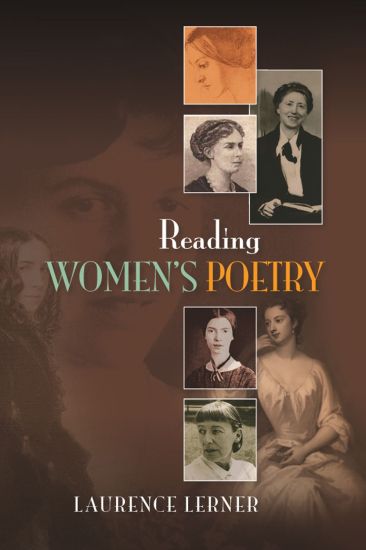
Until quite recently, anthologies of English poetry contained very few poems by women, and histories of English poetry gave little space to women poets. How should poetry lovers respond? The book begins by suggesting four possible responses: the conservative, which claims that women have not written many good poems; individual recuperation, which salvages some fine poems by women but without altering the general view of English poetry; alternative canon, which claims that women do not write the same kind of poetry as men, so that their work should be judged by different standards; and cultural recuperation, which claims that women's poetry is a significant cultural phenomenon, and should be read and studied without subjecting it to any tests. All these positions can be defended, and this book has elements of them all. As the title indicates, this book is about reading women's poems, rather than forming theories about them: it explores the experience of reading Aphra Behn, Elizabeth Browning, Christina Rossetti, Emily Dickinson and many others. Beginning with Katherine Philips, the first Englishwoman to achieve fame as a poet, it covers three centuries to the work of Marianne Moore and Stevie Smith, but does not include the many living women poets who deserve a volume to themselves. In order to discuss adequately the work of those included, it was necessary to omit many other women poets: the selection has been made on merit, and to readers who miss some of their favourite poets the only answer can be that the book does nothing to discourage reading other poets. Indeed, it is hoped that the form of discussion of the selected poems will be helpful in engaging further with women poets of all calibres. Do women write differently from men? The author assumes no predetermined answer but is very willing to ask the question; and in order to do so he frequently compares poems by women with poems by men, not so much to ask who writes better as to explore similarities and differences: thus Lady Mary Wortley Montagu is discussed along with Alexander Pope, Emily Dickinson along with Gerard Manly Hopkins and Elizabeth Browning along with her husband. Poems by women should be read, enjoyed, and argued about. They can be related to the time they were written and first admired, or to our views on women's history, or to our expectations of what poetry can offer -- but above all they should be enjoyed. And that is the faith in which this book is written.
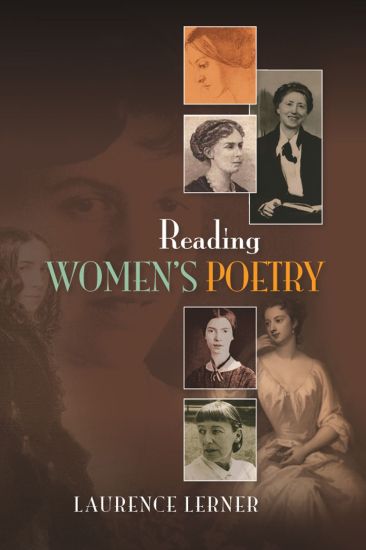
Until quite recently, anthologies of English poetry contained very few poems by women, and histories of English poetry gave little space to women poets. How should poetry lovers respond? The book begins by suggesting four possible responses: the conservative, which claims that women have not written many good poems; individual recuperation, which salvages some fine poems by women but without altering the general view of English poetry; alternative canon, which claims that women do not write the same kind of poetry as men, so that their work should be judged by different standards; and cultural recuperation, which claims that women's poetry is a significant cultural phenomenon, and should be read and studied without subjecting it to any tests. All these positions can be defended, and this book has elements of them all. As the title indicates, this book is about reading women's poems, rather than forming theories about them: it explores the experience of reading Aphra Behn, Elizabeth Browning, Christina Rossetti, Emily Dickinson and many others. Beginning with Katherine Philips, the first Englishwoman to achieve fame as a poet, it covers three centuries to the work of Marianne Moore and Stevie Smith, but does not include the many living women poets who deserve a volume to themselves. In order to discuss adequately the work of those included, it was necessary to omit many other women poets: the selection has been made on merit, and to readers who miss some of their favourite poets the only answer can be that the book does nothing to discourage reading other poets. Indeed, it is hoped that the form of discussion of the selected poems will be helpful in engaging further with women poets of all calibres. Do women write differently from men? The author assumes no predetermined answer but is very willing to ask the question; and in order to do so he frequently compares poems by women with poems by men, not so much to ask who writes better as to explore similarities and differences: thus Lady Mary Wortley Montagu is discussed along with Alexander Pope, Emily Dickinson along with Gerard Manly Hopkins and Elizabeth Browning along with her husband. Poems by women should be read, enjoyed, and argued about. They can be related to the time they were written and first admired, or to our views on women's history, or to our expectations of what poetry can offer -- but above all they should be enjoyed. And that is the faith in which this book is written.