Kirjojen hintavertailu. Mukana 12 022 515 kirjaa ja 12 kauppaa.

Kirjahaku

Etsi kirjoja tekijän nimen, kirjan nimen tai ISBN:n perusteella.

9 kirjaa tekijältä Laurent de Sutter

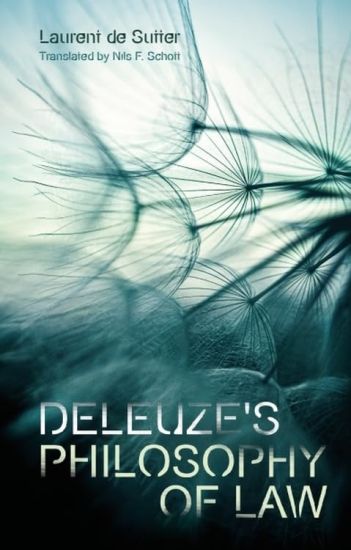
Deleuze'S Philosophy of Law

Deleuze'S Philosophy of Law

Laurent de Sutter

EDINBURGH UNIVERSITY PRESS
2023
nidottu
Aggregates and assesses Deleuze's claims about law, decision, judgement and related themes for the first time Develops a complete and self-sustaining Deleuzian philosophy of law where others have found only fragmentation Examines and uses various interdisciplinary connections, including law and literature, law and political theory, law and metaphysics, law and history of philosophy, and legal history Critiques several approaches to the question of Deleuze's legal thought Promises to ignite debate and draw attention to the importance of legal theory for other fields, including social and political philosophy Gilles Deleuze has provided the most fascinating account of law of the 20th century. Yet it is hidden in a just a few clues dispersed throughout his work and no complete reconstruction of it has ever been produced before. Laurent de Sutter gathers all the elements that compose Deleuze's philosophy of law and articulates them for the first time in a real system. The result is the most devastating critique of the very idea of law. But it is also surprising, praising the actual practice of jurisprudence. This is not simply a practice of judgment; it is a practice of radical creation and leads to an intriguing question: what if lawyers were the only true revolutionaries of our time?

Deleuze'S Philosophy of Law

Deleuze'S Philosophy of Law

Laurent de Sutter

EDINBURGH UNIVERSITY PRESS
2021
sidottu
The most radical philosophy of law of our time. Gilles Deleuze has provided the most fascinating account of law of the twentieth century. Yet it is hidden in a just a few clues dispersed throughout his work and no complete reconstruction of it has ever been produced. Laurent de Sutter gathers all the elements that compose Deleuze's philosophy of law and articulates them for the first time in a real system: the result is the most devastating critique of the very idea of law. But it is also the most surprising, praising the actual practice of jurisprudence. This is not simply a practice of judgment, but a practice of radical creation and leads to an intriguing question: what if lawyers were the only true revolutionaries of our time?
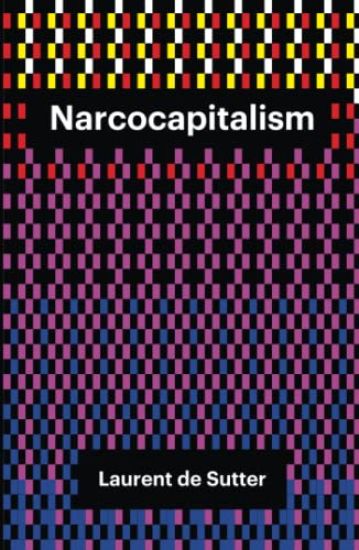
Narcocapitalism

Narcocapitalism

Laurent de Sutter

Polity Press
2017
sidottu
What do the invention of anaesthetics in the middle of the nineteenth century, the Nazis' use of cocaine, and the development of Prozac have in common? The answer is that they're all products of the same logic that defines our contemporary era: 'the age of anaesthesia'. Laurent de Sutter shows how large aspects of our lives are now characterised by the management of our emotions through drugs, ranging from the everyday use of sleeping pills to hard narcotics. Chemistry has become so much a part of us that we can’t even see how much it has changed us. In this era, being a subject doesn't simply mean being subjected to powers that decide our lives: it means that our very emotions have been outsourced to chemical stimulation. Yet we don't understand why the drugs that we take are unable to free us from fatigue and depression, and from the absence of desire that now characterizes our psychopolitical condition. We have forgotten what it means to be excited because our only excitement has become drug-induced. We have to abandon the narcotic stimulation that we’ve come to rely on and find a way back to the collective excitement that is narcocapitalism’s greatest fear.
Narcocapitalism

Narcocapitalism

Laurent de Sutter

Polity Press
2017
nidottu
What do the invention of anaesthetics in the middle of the nineteenth century, the Nazis' use of cocaine, and the development of Prozac have in common? The answer is that they're all products of the same logic that defines our contemporary era: 'the age of anaesthesia'. Laurent de Sutter shows how large aspects of our lives are now characterised by the management of our emotions through drugs, ranging from the everyday use of sleeping pills to hard narcotics. Chemistry has become so much a part of us that we can’t even see how much it has changed us. In this era, being a subject doesn't simply mean being subjected to powers that decide our lives: it means that our very emotions have been outsourced to chemical stimulation. Yet we don't understand why the drugs that we take are unable to free us from fatigue and depression, and from the absence of desire that now characterizes our psychopolitical condition. We have forgotten what it means to be excited because our only excitement has become drug-induced. We have to abandon the narcotic stimulation that we’ve come to rely on and find a way back to the collective excitement that is narcocapitalism’s greatest fear.
After Law

After Law

Laurent de Sutter

Polity Press
2020
sidottu
Law is the most sacred fetish of our time. From radicals to conservatives, there is no militant, activist or thinker who would consider doing without it. But the history of our fascination with law is long and complex, and reaches deeper into our culture than we might think. In After Law, Laurent de Sutter takes us on a journey to uncover the sources of our fascination. He shows that at a certain moment in our history a choice was made to treat law as a decisive feature of civilization, but this choice was neither obvious nor necessary. Other political, social, religious or cultural possibilities could have been chosen instead – from ancient Egypt to Mesopotamia, from medieval Japan to China, from Islam to Judaism, other cultures have devised sophisticated tools to help people live together without having to deal with norms, rules and principles. This is a lesson worth reflecting on, especially at a time when the rule of law and the functioning of justice are increasingly showing their sinister side – and their impotence. Is there life beyond law?
After Law

After Law

Laurent de Sutter

Polity Press
2020
nidottu
Law is the most sacred fetish of our time. From radicals to conservatives, there is no militant, activist or thinker who would consider doing without it. But the history of our fascination with law is long and complex, and reaches deeper into our culture than we might think. In After Law, Laurent de Sutter takes us on a journey to uncover the sources of our fascination. He shows that at a certain moment in our history a choice was made to treat law as a decisive feature of civilization, but this choice was neither obvious nor necessary. Other political, social, religious or cultural possibilities could have been chosen instead – from ancient Egypt to Mesopotamia, from medieval Japan to China, from Islam to Judaism, other cultures have devised sophisticated tools to help people live together without having to deal with norms, rules and principles. This is a lesson worth reflecting on, especially at a time when the rule of law and the functioning of justice are increasingly showing their sinister side – and their impotence. Is there life beyond law?
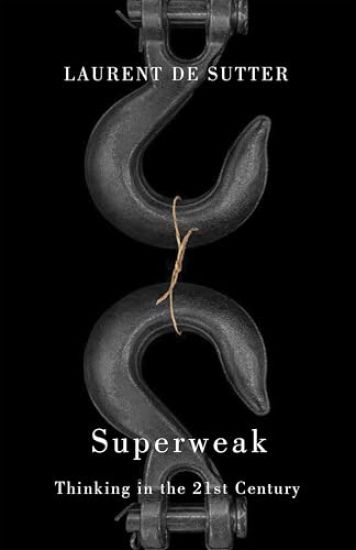
Superweak

Superweak

Laurent de Sutter

JOHN WILEY AND SONS LTD
2025
sidottu
We have become superheroes. Nothing can resist us anymore – persons, ideas, facts, realities, beings. We have become superheroes because we have seized on a tool that subjects everything to the scrutiny of our judgement: critique. Since its first formulation at the end of the sixteenth century, the project of critique spread from one sphere to another until it became almost universal: everyone was transformed into someone whose capacity to judge, approve and discard equals that of others. If modernity is defined as the journey we have taken to move away from the myths and dogmas of the past, then critique, with its emphasis on reason and the autonomy of judgement, has been the lynchpin of modernity. But today the critical project is showing signs of exhaustion. We are beginning to realize that being right is useless, now that everyone can lay claim to the same power as we can. The democratization of reason, proceeding alongside the development of critique through modernity, has produced a stalemate: for every judgement that we pronounce, there is another opposing one – with grounds as solid as ours, and the same right to exert itself. Rather than elevating us above the world, critique has plunged us into a downward spiral of claim and counter-claim. The age of critique is now over, argues Laurent de Sutter, and in its place we need to develop a postcritical form of thinking, one that could be called ‘superweakness’, a form of thinking whose main tenet is not based on judgement, grounds, reasons or explanation but on our ability to experiment with and explore what is stronger than us.
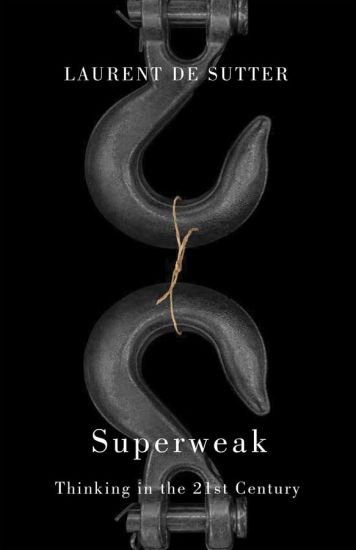
Superweak

Superweak

Laurent de Sutter

JOHN WILEY AND SONS LTD
2025
nidottu
We have become superheroes. Nothing can resist us anymore – persons, ideas, facts, realities, beings. We have become superheroes because we have seized on a tool that subjects everything to the scrutiny of our judgement: critique. Since its first formulation at the end of the sixteenth century, the project of critique spread from one sphere to another until it became almost universal: everyone was transformed into someone whose capacity to judge, approve and discard equals that of others. If modernity is defined as the journey we have taken to move away from the myths and dogmas of the past, then critique, with its emphasis on reason and the autonomy of judgement, has been the lynchpin of modernity. But today the critical project is showing signs of exhaustion. We are beginning to realize that being right is useless, now that everyone can lay claim to the same power as we can. The democratization of reason, proceeding alongside the development of critique through modernity, has produced a stalemate: for every judgement that we pronounce, there is another opposing one – with grounds as solid as ours, and the same right to exert itself. Rather than elevating us above the world, critique has plunged us into a downward spiral of claim and counter-claim. The age of critique is now over, argues Laurent de Sutter, and in its place we need to develop a postcritical form of thinking, one that could be called ‘superweakness’, a form of thinking whose main tenet is not based on judgement, grounds, reasons or explanation but on our ability to experiment with and explore what is stronger than us.