Kirjojen hintavertailu. Mukana 11 342 296 kirjaa ja 12 kauppaa.

Kirjahaku

Etsi kirjoja tekijän nimen, kirjan nimen tai ISBN:n perusteella.

5 kirjaa tekijältä Laurie Essig

Love, Inc.

Love, Inc.

Laurie Essig

University of California Press
2019
sidottu
The notion of “happily ever after” has been ingrained in many of us since childhood—meet someone, date, have the big white wedding, and enjoy your well-deserved future. But why do we buy into this idea? Is love really all we need? Author Laurie Essig invites us to flip this concept of romance on its head and see it for what it really is—an ideology that we desperately cling to as a way to cope with the fact that we believe we cannot control or affect the societal, economic, and political structures around us. From climate change to nuclear war, white nationalism to the worship of wealth and conspicuous consumption—as the future becomes seemingly less secure, Americans turn away from the public sphere and find shelter in the private. Essig argues that when we do this, we allow romance to blind us to the real work that needs to be done—building global movements that inspire a change in government policies to address economic and social inequality.

Love, Inc.

Love, Inc.

Laurie Essig

University of California Press
2019
pokkari
The notion of “happily ever after” has been ingrained in many of us since childhood—meet someone, date, have the big white wedding, and enjoy your well-deserved future. But why do we buy into this idea? Is love really all we need? Author Laurie Essig invites us to flip this concept of romance on its head and see it for what it really is—an ideology that we desperately cling to as a way to cope with the fact that we believe we cannot control or affect the societal, economic, and political structures around us. From climate change to nuclear war, white nationalism to the worship of wealth and conspicuous consumption—as the future becomes seemingly less secure, Americans turn away from the public sphere and find shelter in the private. Essig argues that when we do this, we allow romance to blind us to the real work that needs to be done—building global movements that inspire a change in government policies to address economic and social inequality.

American Plastic

American Plastic

Laurie Essig

Beacon Press
2011
pokkari
The story of how credit and cosmetic surgery have created a subprime mortgage crisis of the body. In this provocative book, sociologist Laurie Essig traces the history of plastic surgery, tracks the effect of fashion and porn on our desire to "fix" ourselves, and explores our image- and youth-obsessed culture. In over two hundred interviews of plastic surgeons and surgery recipients, Essig creates an unforgettable portrait of contemporary America. "American Plastic" is a powerful and original commentary on the relationship between cosmetic surgery, credit, and culture.
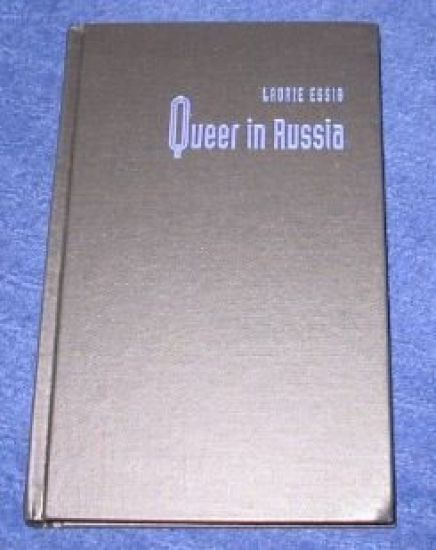
Queer in Russia

Queer in Russia

Laurie Essig

Duke University Press
1999
sidottu
In Queer in Russia Laurie Essig examines the formation of gay identity and community in the former Soviet Union. As a sociological fieldworker, she began her research during the late 1980s, before any kind of a public queer identity existed in that country. After a decade of conducting interviews, as well as observing and analyzing plays, books, pop music, and graffiti, Essig presents the first sustained study of how and why there was no Soviet gay community or even gay identity before perestroika and the degree to which this situation has-or has not-changed.While male homosexual acts were criminalized in Russia before 1993, women attracted to women were policed by the medical community, who saw them less as criminals than as diseased persons potentially cured by drug therapy or transsexual surgery. After describing accounts of pre-perestroika persecution, Essig examines the more recent state of sexual identities in Russia. Although the fall of communism brought new freedom to Russian queers, there are still no signs of a mass movement forming around the issue, and few identify themselves as lesbians or gay men, even when they are involved in same-sex relations. Essig does reveal, however, vibrant manifestations of gay life found at the local level-in restaurants, discos, clubs, and cruising strips, in newspapers, journals, literature, and the theater. Concluding with a powerful exploration of the surprising affinities between some of Russia’s most prominent nationalists and its queers, Queer in Russia fills a gap in both Russian and cultural studies.
Queer in Russia

Queer in Russia

Laurie Essig

Duke University Press
1999
pokkari
In Queer in Russia Laurie Essig examines the formation of gay identity and community in the former Soviet Union. As a sociological fieldworker, she began her research during the late 1980s, before any kind of a public queer identity existed in that country. After a decade of conducting interviews, as well as observing and analyzing plays, books, pop music, and graffiti, Essig presents the first sustained study of how and why there was no Soviet gay community or even gay identity before perestroika and the degree to which this situation has-or has not-changed.While male homosexual acts were criminalized in Russia before 1993, women attracted to women were policed by the medical community, who saw them less as criminals than as diseased persons potentially cured by drug therapy or transsexual surgery. After describing accounts of pre-perestroika persecution, Essig examines the more recent state of sexual identities in Russia. Although the fall of communism brought new freedom to Russian queers, there are still no signs of a mass movement forming around the issue, and few identify themselves as lesbians or gay men, even when they are involved in same-sex relations. Essig does reveal, however, vibrant manifestations of gay life found at the local level-in restaurants, discos, clubs, and cruising strips, in newspapers, journals, literature, and the theater. Concluding with a powerful exploration of the surprising affinities between some of Russia’s most prominent nationalists and its queers, Queer in Russia fills a gap in both Russian and cultural studies.