Kirjojen hintavertailu. Mukana 11 456 652 kirjaa ja 12 kauppaa.

Kirjahaku

Etsi kirjoja tekijän nimen, kirjan nimen tai ISBN:n perusteella.

5 kirjaa tekijältä Laurie Zoloth

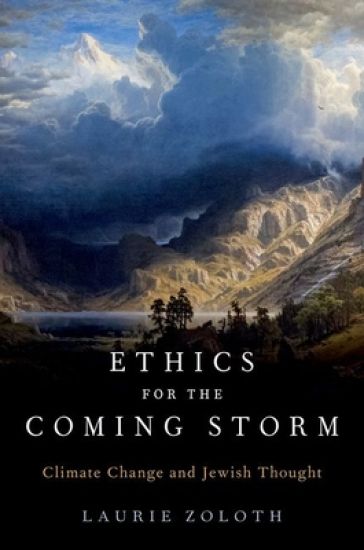
Second Texts and Second Opinions

Second Texts and Second Opinions

Laurie Zoloth

OXFORD UNIVERSITY PRESS INC
2023
sidottu
This book takes as its subject the intensely private discussions that arise when ordinary people confront life and death choices and struggle with decisions in a world of medical and scientific complexity. Laurie Zoloth began her work in bioethics in a large public California hospital system, where she was part of a group tasked with the creation of an ethics committee in every hospital in the system, that would hear hundreds of cases every year, including pediatric cases from the hospital's intensive care, neonatal intensive care, burn, and oncology units. The book explores the dilemmas presented in these cases and reflects on the competing, often incommensurate moral appeals offered by the participants. It then analyzes the cases against and with similar concepts within Jewish thought, using rabbinic texts to make legible the factors at play as one makes ethical judgments. This philosophical position is feminist as it considers and at times advocates for the inclusion of family and community in the rationale of the clinical setting. Intertwined with legal statements in the Talmud are aggadot, or midrashic texts, literary narratives used to argue a point, or to complicate a point, or to deepen the meaning of the communal discourse, adding history, case studies, or fictive tales to the discussion. Zoloth argues that these texts can be usefully applied to problems in bioethics. She develops the case for a textual turn that is fully imagined and enriched by the many possible re-interpretations of narrative: biblical, rabbinic, medieval, modern, and post-modern.
Second Texts and Second Opinions

Second Texts and Second Opinions

Laurie Zoloth

OXFORD UNIVERSITY PRESS INC
2022
nidottu
This book takes as its subject the intensely private discussions that arise when ordinary people confront life and death choices and struggle with decisions in a world of medical and scientific complexity. Laurie Zoloth began her work in bioethics in a large public California hospital system, where she was part of a group tasked with the creation of an ethics committee in every hospital in the system, that would hear hundreds of cases every year, including pediatric cases from the hospital's intensive care, neonatal intensive care, burn, and oncology units. The book explores the dilemmas presented in these cases and reflects on the competing, often incommensurate moral appeals offered by the participants. It then analyzes the cases against and with similar concepts within Jewish thought, using rabbinic texts to make legible the factors at play as one makes ethical judgments. This philosophical position is feminist as it considers and at times advocates for the inclusion of family and community in the rationale of the clinical setting. Intertwined with legal statements in the Talmud are aggadot, or midrashic texts, literary narratives used to argue a point, or to complicate a point, or to deepen the meaning of the communal discourse, adding history, case studies, or fictive tales to the discussion. Zoloth argues that these texts can be usefully applied to problems in bioethics. She develops the case for a textual turn that is fully imagined and enriched by the many possible re-interpretations of narrative: biblical, rabbinic, medieval, modern, and post-modern.
Ethics for the Coming Storm

Ethics for the Coming Storm

Laurie Zoloth

OXFORD UNIVERSITY PRESS INC
2023
sidottu
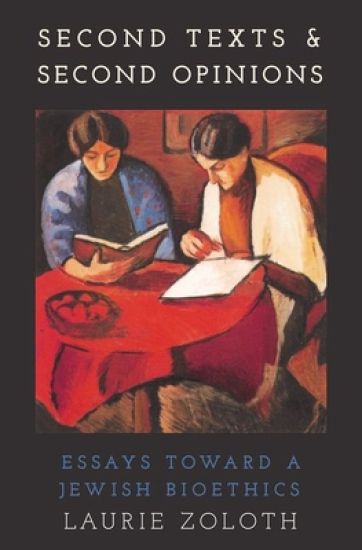
How can we come to understand our existence on this earth, surrounded by air and light and water, while living in a place we deliberately and carelessly abuse, where resources are becoming scarce, and where the well-being and basic health of our neighbors is threatened? In Ethics for the Coming Storm, Laurie Zoloth argues that our debates about environmental issues have largely been driven by the language of economics and political power, and have become both deeply divisive and symbolic, turning our differing truth claims and moral appeals into signs of identity. This discourse has utterly failed to change the human behavior or political and economic structures necessary to face global warming head on. So Zoloth turns to another language, found in the texts and traditions of Jewish thought--the language of Scripture, the Talmud, and philosophy of Judaism--which, she contends, offers a different kind of argument for such a change. In fact, Zoloth claims, the traditions, histories, and texts of Jewish thought address precisely the sort of existential crisis that we now face, and thus deepen and enrich our public discourse about what to do, and who to be. This book uses a careful attention to rabbinic and philosophical sources in Jewish thought to provide a novel framework through which we can reassess the choices we make that affect our climate, our environment, and our social structures.
Ethics for the Coming Storm

Ethics for the Coming Storm

Laurie Zoloth

OXFORD UNIVERSITY PRESS INC
2024
nidottu
How can we come to understand our existence on this earth, surrounded by air and light and water, while living in a place we deliberately and carelessly abuse, where resources are becoming scarce, and where the well-being and basic health of our neighbors is threatened? In Ethics for the Coming Storm, Laurie Zoloth argues that our debates about environmental issues have largely been driven by the language of economics and political power, and have become both deeply divisive and symbolic, turning our differing truth claims and moral appeals into signs of identity. This discourse has utterly failed to change the human behavior or political and economic structures necessary to face global warming head on. So Zoloth turns to another language, found in the texts and traditions of Jewish thought--the language of Scripture, the Talmud, and philosophy of Judaism--which, she contends, offers a different kind of argument for such a change. In fact, Zoloth claims, the traditions, histories, and texts of Jewish thought address precisely the sort of existential crisis that we now face, and thus deepen and enrich our public discourse about what to do, and who to be. This book uses a careful attention to rabbinic and philosophical sources in Jewish thought to provide a novel framework through which we can reassess the choices we make that affect our climate, our environment, and our social structures.