
Kirjahaku
Etsi kirjoja tekijän nimen, kirjan nimen tai ISBN:n perusteella.
13 kirjaa tekijältä Lawrence A. Hoffman
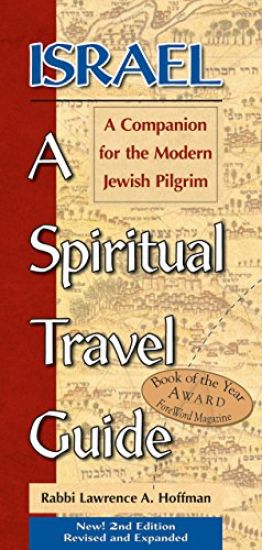
Israel—A Spiritual Travel Guide (2nd Edition)
Lawrence A. Hoffman
Turner Publishing Company
2005
pokkari
Be spiritually prepared for your journey in Israel. The only travel guide to Israel that will help you to prepare spiritually for your visit. Combining, in quick reference format, ancient blessings, medieval prayers, biblical references, and modern poetry, it helps today’s pilgrim tap into the deep spiritual meaning of the ancient—and modern—sites of the Holy Land. For each of 25 major tourist destinations—from the Western Wall to Masada to a kibbutz in the Galilee—it gives guidance in sharply focused, four-step sections: Anticipation: To read in advance. Information to help orient you in the site’s historical context. Approach: To read on the way there. Readings from traditional and modern sources to orient you in the site’s spiritual context. Acknowledgment: To read at the site. A prayer or blessing to integrate the experience into your spiritual consciousness. Afterthought: Journaling space for writing your own thoughts and impressions. More than a guidebook: It is a spiritual map of the Holy Land.
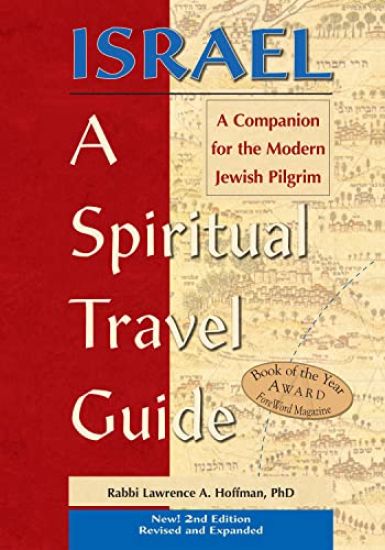
Israel—A Spiritual Travel Guide (2nd Edition)
Lawrence A. Hoffman
Turner Publishing Company
2005
sidottu
Be spiritually prepared for your journey in Israel. The only travel guide to Israel that will help you to prepare spiritually for your visit. Combining, in quick reference format, ancient blessings, medieval prayers, biblical references, and modern poetry, it helps today’s pilgrim tap into the deep spiritual meaning of the ancient—and modern—sites of the Holy Land. For each of 25 major tourist destinations—from the Western Wall to Masada to a kibbutz in the Galilee—it gives guidance in sharply focused, four-step sections: Anticipation: To read in advance. Information to help orient you in the site’s historical context. Approach: To read on the way there. Readings from traditional and modern sources to orient you in the site’s spiritual context. Acknowledgment: To read at the site. A prayer or blessing to integrate the experience into your spiritual consciousness. Afterthought: Journaling space for writing your own thoughts and impressions. More than a guidebook: It is a spiritual map of the Holy Land.

Central to both biblical narrative and rabbinic commentary, circumcision has remained a defining rite of Jewish identity, a symbol so powerful that challenges to it have always been considered taboo. Lawrence Hoffman seeks to find out why circumcision holds such an important place in the Jewish psyche. He traces the symbolism of circumcision through Jewish history, examining its evolution as a symbol of the covenant in the post-exilic period of the Bible and its subsequent meaning in the formative era of Mishnah and Talmud. In the rabbinic system, Hoffman argues, circumcision was neither a birth ritual nor the beginning of the human life cycle, but a rite of covenantal initiation into a male "life line." Although the evolution of the rite was shaped by rabbinic debates with early Christianity, the Rabbis shared with the church a view of blood as providing salvation. Hoffman examines the particular significance of circumcision blood, which, in addition to its salvific role, contrasted with menstrual blood to symbolize the gender dichotomy within the rabbinic system. His analysis of the Rabbis' views of circumcision and menstrual blood sheds light on the marginalization of women in rabbinic law. Differentiating official mores about gender from actual practice, Hoffman surveys women's spirituality within rabbinic society and examines the roles mothers played in their sons' circumcisions until the medieval period, when they were finally excluded.
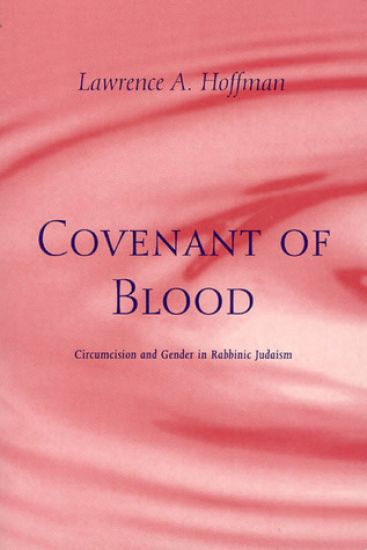
Central to both biblical narrative and rabbinic commentary, circumcision has remained a defining rite of Jewish identity, a symbol so powerful that challenges to it have always been considered taboo. Lawrence Hoffman seeks to find out why circumcision holds such an important place in the Jewish psyche. He traces the symbolism of circumcision through Jewish history, examining its evolution as a symbol of the covenant in the post-exilic period of the Bible and its subsequent meaning in the formative era of Mishnah and Talmud. In the rabbinic system, Hoffman argues, circumcision was neither a birth ritual nor the beginning of the human life cycle, but a rite of covenantal initiation into a male "life line." Although the evolution of the rite was shaped by rabbinic debates with early Christianity, the Rabbis shared with the church a view of blood as providing salvation. Hoffman examines the particular significance of circumcision blood, which, in addition to its salvific role, contrasted with menstrual blood to symbolize the gender dichotomy within the rabbinic system. His analysis of the Rabbis' views of circumcision and menstrual blood sheds light on the marginalization of women in rabbinic law. Differentiating official mores about gender from actual practice, Hoffman surveys women's spirituality within rabbinic society and examines the roles mothers played in their sons' circumcisions until the medieval period, when they were finally excluded.
This unique and groundbreaking study moves "beyond the texts" of prayers to carefully study the worshipping community from an anthropological perspective. Hoffman's innovative approach opens up the world of prayer to the academy and the community at large. With the publication of this book, the study of liturgy will never again be the same.
Canonization of the Synagogue Service, the
Lawrence A. Hoffman
University of Notre Dame Press
1979
nidottu
Lawrence A. Hoffman's inquiry into the reasons for the canonization of the Jewish style synagogue service between the eighth and eleventh centuries presents a novel reinterpretation of the available evidence that will have repercussions for studies of Jewish and Christian liturgy. The author suggests that Babylonian Jewish authorities attempted to fix Jewish liturgy during the height of the geonic period (c. 750-1025 A. D.) in response to changing social and economic conditions, and that this period, customarily considered as a whole, should be divided instead into three distinct eras. Because the changing attitude toward liturgical canonization during this period reflects the Jewish community's self-perception and its view of other groups with whom it dealt, Professor Hoffman's findings cast fresh light on such important matters as the Karaite schism and the condition of the medieval Palestinian community. In addition, many of the ancient liturgical alternatives discussed provide essential background for studies of both Jewish and Christian liturgies of antiquity. To enhance usefulness of the book for nonexperts, this volume contains a glossary of liturgical terms and rubrics, introductory surveys of the history of the prayers discussed, and full biography and notes for further reading.
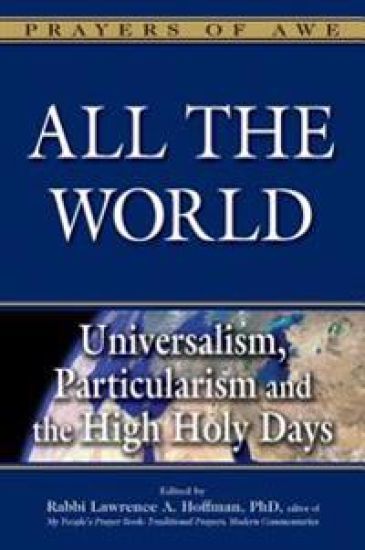
Rosh Hashanah is just one of two surviving Jewish new years from antiquity, the other being the month in which Passover falls. The two are exactly six months apart, proper symbolism of the age-old Jewish struggle to balance two contrasting principles: universalism and particularism. Passover's central theme is the particularistic tale of the Jewish People released from servitude in Egypt to fulfill its historic destiny. The message of Rosh Hashanah, by contrast, is the universalistic definition of that destiny, the role that every Jew must play simply by virtue of being human, and the role of Judaism in helping Jews play that role with proper passion and commitment.All the World combines the particularistic concern for Israel as a People called by God with the universalistic proclamation that Israel is called for universal ends. It assembles some forty contributors scholars, rabbis, artists and thinkers from Canada, France, Germany, Israel, the Netherlands, the UK and USA to launch the crucial discussion of what the High Holy Days have to say about universalism and particularism in Judaism."
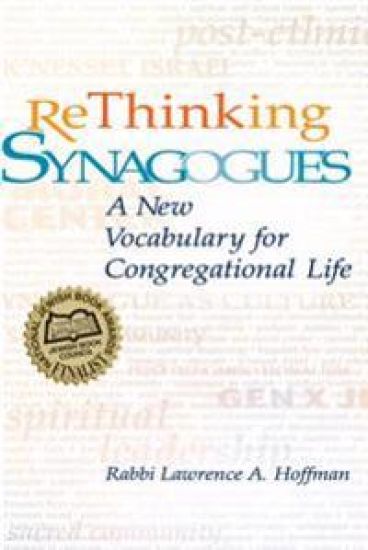
A critical and challenging look at reinventing the synagogue, as the centerpiece of a refashioned Jewish community. "America is undergoing a spiritual revolution: only the fourth religious awakening in its history. I plead, therefore, for an equally spiritual synagogue, knowing that any North American Jewish community that hopes to be around in a hundred years must have religion at its center, with the synagogue, the religious institution that best fits North American culture, at its very core." —from Chapter 1 Synagogues are under attack, and for good reasons. But they remain the religious backbone of Jewish continuity, especially in America, the sole Western industrial or post-industrial nation where religion and spirituality continue to grow in importance. To fulfill their mandate for the American future, synagogues need to replace old and tired conversation with a new way of talking about their goals, their challenges and their vision for the future. In this provocative clarion call for synagogue transformation, Rabbi Lawrence A. Hoffman summarizes a decade of research with Synagogue 2/3000—a pioneering experiment that reconceptualized synagogue life—providing fresh ways for synagogues to think as they undertake the exciting task of global change.
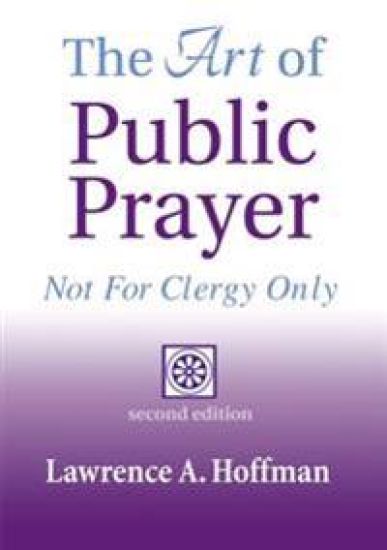
A resource for worshipers today looking to change hardened worship patterns that stand in the way of everyday spirituality. All too often, those who attend church or synagogue find themselves bored or baffled by the service. Their predominant thought is how slowly the time ticks by—and that the service never seems to end. Written for laypeople and clergy of any denomination, The Art of Public Prayer examines how and why religious ritual works—and why it often doesn't work. The Art of Public Prayer uses psychology, social science, theology and common sense to explain the key roles played by ritual, symbolism, liturgy and song in services. Each chapter features "conversation points" designed to get you and your faith community thinking and talking about your own worship patterns—where they succeed, and where they need improvement. The Art of Public Prayer can help you and your fellow congregants revitalize your worship service by allowing you to organize and direct your own worship, making it a meaningful and fulfilling part of your life.
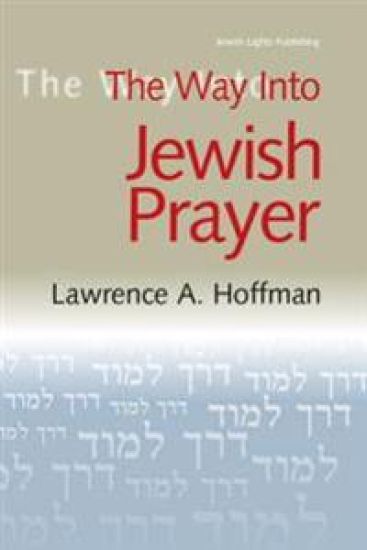
An accessible introduction to the reasons for and the ways of Jewish prayer. The Way Into Jewish Prayer helps us to explore the reasons for and the ways of Jewish prayer. It opens the door to 3,000 years of Jewish prayer, making available all you need to feel at home in the Jewish way of communicating with God.