Kirjojen hintavertailu. Mukana 11 342 296 kirjaa ja 12 kauppaa.

Kirjahaku

Etsi kirjoja tekijän nimen, kirjan nimen tai ISBN:n perusteella.

9 kirjaa tekijältä Lawrence Bohme

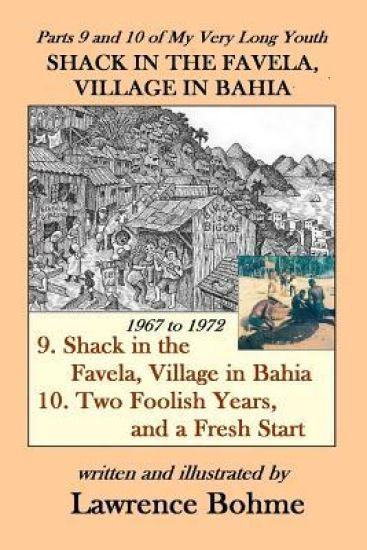
Shack in the Favela, Village in Bahia: Parts 9 and 10 of Lawrence's memoir My Very Long Youth
The year 1967 finds Lawrence alone in Rio, having quarrelled both with Jonathon, his New York friend in Brazil on a linguistics grant, and the wealthy Brazilian who, thanks again to Olimpio, has let him stay at his flat on Copacabana Beach. Having in the meantime befriended a fisherman's family, in their shack on a hillside in Ipanema, Lawrence agrees to teach English to young Joaninha in exchange for room and board, living in a cobbler's shop shared "with the cobbler by day and the rats by night". But his unglazed window gloriously overlooks the entrance to the bay, of which Lawrence makes several drawings with his pen (shown among the illustrations). As the sole truly white man in the favela and having already learned some samba steps, Lawrence is recruited to take part in the carnival parade, disguised as a legendary Portuguese plantation owner who marries his beautiful mulatta slave. His costume - "fantasia" - consists of a top hat and a large "diamond" brooch on his cravate, as well as a blue "silk" coat... At the language school where Lawrence teaches English, he befriends a Japanese immigrant, Yukio, who works in the crafts boutique next door. Soon the two friends set up a factory employing the favela people to make leather sandals and handbags, and move into a one-room Copacabana apartment "so we could entertain our girlfriends in privacy". Lawrence's mother comes from California and soon persuades her devoted son to spend a year in a fishing village in Bahia, where they can paint and write... The two rent a house surrounded with coconut trees in a village up the coast from Salvador, where the fishermen go out on spindly rafts called "jangadas" and bring back groupers and octopus, which Joan's favourite "pescador" cooks in coconut milk and palm oil for their dinner. After five years in Brazil, though, Lawrence decides it is time to go back "to civilization" to find a publisher for the book he's been writing about Brazilian life. By the end of 1970 he's back in Lower Manhattan in a rent-controlled tenement flat where he practices his new trade as a custom-made leather goods maker with success. But after two fruitless years of searching for a publisher, he throws the only copy of his manuscript into a garbage can on Spring Street, and desperately resolves - "for lack of anything better to do with my life" - to set off on a new adventure, in the Black Republic Haiti, just two years after the ruthless dictator "Papa Doc" Duvalier has been replaced by his relatively benign son "Baby Doc".Lawrence Bohme's whimsically told but scrupulously faithful "personal history" of his first 41 years is entitled My Very Long Youth because "due to a force beyond my control I only started growing up, or calming down, after that age". The eclectic author - "a half-European, half-American child of the second half of the 20th century" - describes his opus as simultaneously "a retrospective diary, an eye-witness history book, an idiosyncratic collection of drawings and photographs, a one-way, slow-motion travel guide, a movie made up of stills and, to put it politely, a partially contrite confession of compulsive concupiscence"...
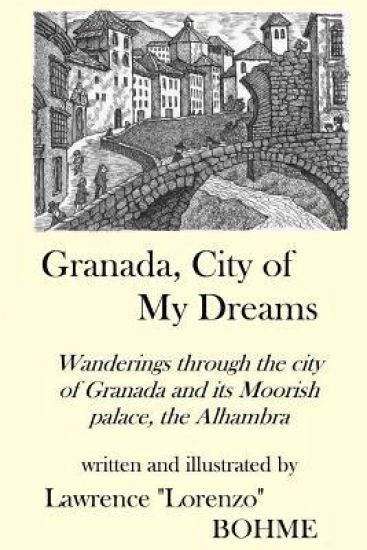
Granada, City of My Dreams: An Historical and Artistic Guide to Granada and its Moorish Palace the Alhambra
Granada, the city of the Alhambra Palace and the last Moorish kingdom of Andalucia, has a special place in our imagination, whether we have visited it or not. As well as being a city of exceptional beauty and interest, it is a symbol for all of us of what happens when different civilizations meet. That is why "Granada, City of My Dreams", in the words of the author, was written not only as a guide but as "a book about Granada for the nun in Norway sitting in her armchair and wishing to travel there in the mind".For, what fascinates us about this universal city is not only its monuments but its marvellous story, "the encounter between Moor and Christian, gypsy and Jew, medieval and Renaissance, glistening snow and Mediterranean sun, in this green balcony of Europe overlooking the naked shores of Africa". Lawrence Bohme, poet, illustrator and curious traveller, has filled these pages with luminous descriptions and drawings, the culmination of forty years of wanderings through the palaces and labyrinths of his adopted homeland, Granada.Things about Granada you can find in this book...A history of Granada / Mirador de San Crist bal and San Miguel Alto / Cathedral quarter / Plaza de Bibarrambla / Mercado de San Agust n / chumbos, caracoles and chirimoyas / Corral del Carb n / Alcaicer a / Madraza / Royal Chapel / Cathedral / Sagrario / the heroic feat of Hern n del Pulgar / Gran V a de Col n / the sons of the sugar beet / Albaicin / The Gate of Paradise / Calderer a to San Nicol s / Placeta de Carvajales / Minaret of San Jos / Plaza de San Miguel Bajo / Palace of King Badis / Cuesta de la Lona / Palace of Dar al-Horra / Convent of Santa Isabel la Real / View from San Nicol s / from San Nicol s to Plaza Larga / from Plaza Larga down Cuesta de la Alhacaba to Puerta de Elvira / Hospital Real / Saint John of God and the Triumph of the Virgin / Plaza Nueva / Casa de Pisa / River Darro and its bridges / El Ba uelo - the Bath / Convents of Zafra and Concepci n / Casa de Castril / Paseo de los Tristes / Sacromonte / San Juan de los Reyes / Alhambra / Alhambra Alta / Monastery of San Francisco / Church of Santa Mar a de la Alhambra and the two monks / Puerta del Vino - Gate of Wine / Alcazaba / Palace of Carlos Quinto / Nasrid Palaces / a brief history of al-Andalus, from the Visigoths to the Catholic Monarchs / Mexuar and its oratory / Cuarto Dorado / Tower of Comares / The Hall of Power / Courtyard of the Lions / Hall of Abencerrajes / Hall of the Kings - Sala de los Reyes / Hall of the Two Sisters / Sala de camas - the Bath / Rooms of Carlos Quinto / Tocador de la Reina - Queen's Dressing Room / Partal, Torre de las Damas and the Mosque / The four towers / Generalife / Hill of the Martyrs / Torres Bermejas / Saint John of the Cross / Casa de Manuel de Falla / Realejo / Campo del Pr ncipe / Church of Santo Domingo / Casa de los Tiros / Vestiges and ghosts of the old Granada / Puerta Real / Palace of Bibataub n / Plaza del Campillo, Calle Ganivet and the old "Manigua" / Calle Recogidas, and the convent which gave it its name / The uncloistered fountains of San Agust n and La Trinidad / Street of the Boards and Street of the Little Bridges / Cuarto Real de Santo Domingo / The Green Bridge and "French Granada" / Ermita de San Sebasti n / Alc zar Genil / Puerta de San Lorenzo, the gate that got lost / Cuarto Real de Santo Domingo / Acequia Gorda and Paseo de las Palmas / Epilogue - What became of the Moors of Granada? / some other pieces / Aben Humeya and the War of the Alpujarra / The Queen and the gypsies / The King's Jews / The multiple origins of "marrano" / Moro, mud jar and morisco.
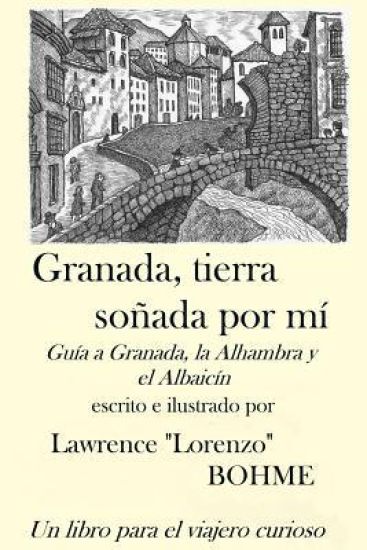
Granada, tierra soñada por mí: Una guía histórica y artística de la Alhambra y el Albaicín de Granada
Lorenzo Bohme nos habla de su amor a Granada con estas palabras luminosas: "Granada ocupa un lugar muy especial en la imaginaci n de cada uno, incluso para el que nunca haya pisado el laberinto de sus callejones y plazuelas. Buen ejemplo de esta fascinaci n universal es la misma canci n que se podr a llamar himno oficial de la ciudad, "Granada", y que fue compuesta no por un andaluz sino por un mejicano que nunca hab a puesto pie ni siquiera en Europa, por el miedo que ten a a los barcos. La famosa estrofa sugiere este amor a distancia claramente: Granada, tierra so ada por m . Si lo he tomado como t tulo de mi libro es porque Granada siempre ha tenido para m , tanto como para el m sico Agust n Lara, un car cter irreal, de ensue o. Pues lo que fascina de Granada, a n m s que sus monumentos, es su maravillosa historia, el encuentro de moro y cristiano, gitano y jud o, medieval y renacentista, en este verdoso balc n de Europa que mira hacia las costas ridas de frica."Lorenzo escribi e ilustr su homenaje a la historia de Granada en 2001, fruto de sus incansables paseos por la ciudad y sus antig edades, y tambi n de sus lecturas, buscando siempre las verdaderas explicaciones de los misterios de tan enigm tico lugar. Este enfoque universal es lo que confiere a la obra su inter s y autenticidad. Como dice el propio autor, "la historia de nuestra ciudad es fascinante en s misma, tal como existi y sin las populares leyendas y t picos ideol gicos que no hacen sino ocultar su realidad humana. Granada no fue como se ha pretendido el escenario casi milagroso, en plena Edad Media, de una utop a racial y religiosa, pues se tratar a de un anacronismo que sencillamente no pudo existir en ninguna parte antes del siglo XVIII, cuando nace por primera vez la idea filos fica de la tolerancia. Insistir en ver Granada ba ada en esta luz fantasiosa es condenarla a ser un sitio nost lgico y pintoresco m s, y su historia un mero cuento de hadas, bueno para satisfacer a los turistas ingenuos pero no a los amantes de la verdad y la vida."Acompa e pues a Lorenzo, granadino de adopci n desde que estudi Filosof a y Letras aqu en 1961, en sus andanzas por la Alhambra y el Albaic n, el Sacromonte y su abad a, el Paseo de los Tristes con sus puentes y sus conventos, la Casa de las Chirim as con su pasado goyesco, el "peque o Marruecos" de la Calderer a, el minarete de San Jos que despu s fue campanario, el Colegio de San Salvador, donde los sacerdotes intentaron evangelizar a los moros vencidos, con su Patio de los Limoneros hecho por los Almohades, y por otros vestigios del pasado que milagrosamente escaparon demoliciones y restauraciones, como la casi olvidada Ermita de San Sebasti n, nico morabito almohade que ha sobrevivido en Espa a. Mientras vas caminando, Lorenzo te contar tambi n la tr gica historia de Mariana Pineda, rom ntica hero na inmortalizada por Lorca, y la de ngel Ganivet, el atormentado intelectual granadino que fue muy joven a suicidarse en las aguas heladas del Mar B ltico. Tambi n te explicar la diferencia, tan crucial en la Edad Media, entre "moro", "mud jar" y "morisco", entre cristiano viejo y cristiano nuevo, "moz rabe" y "elche", entre "jud o p blico", "cristiano judaizante" y "marrano", y - c mo no? - entre esclavos y "esclavones". Te desvelar las evoluciones y contradicciones de la Reconquista con sus extra as alianzas entre cristianos y musulmanes formadas cuando de intereses comunes se trataba, de la tentativa desesperada que hicieron los Reyes Cat licos de convertir a los jud os que termin con su expulsi n masiva, y de la llegada al final de la Edad Media de un pueblo oriental muy distinto de los que le preced an, los gitanos...
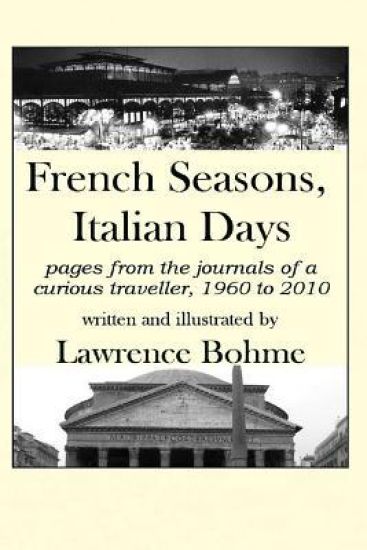
French Seasons, Italian Days: Pages from the life of a curious traveller, 1960-2010

French Seasons, Italian Days: Pages from the life of a curious traveller, 1960-2010

Lawrence Bohme

Createspace Independent Publishing Platform
2016
nidottu
Lawrence Bohme presently resides in the French Basque Country where, since retiring from his work as an external Unesco translator in Paris, he has been writing the story of his long and adventurous life, entitled "My Very Long Youth". . Fascinated by history, art, food, cinema and "life", Lawrence has selected a number of articles and extracts from his book, reflecting his years in France and, also, his many visits to Italy. Among the pieces selected for this colourful and free-wheeling anthology: French Seasons...My First Trip To Paris, December 1960 / Chez V quaud, Avenue Parmentier / Sainte-Chapelle, Pont Neuf And Le Vert-Galant / "Paris, nous deux" / La Rue Champollion, Cinema Street / Place de la Contrescarpe / The Belly of Paris / Mount of Martyrs / Steak Tartare At Le Drugstore / Earthly Nourishments / The Laughing Cow / Bridge of The Arts / Two Parises / Villa Externa To Place des Ternes / Rue Poncelet, Horn of Plenty / The Red Balloon / Baudelaire, Mon Fr re / Verlaine and Rimbaud, The Two Poets Who Go Together / Montesquieu, My Favourite "Philosophe" / Flaubert And The Lost Art of Letter-writing / The True Story of Heloise and Abelard / The Algerian War In Paris / Down Napoleon's Road, 1982 / Moustiers Sainte-Marie, a Medieval Shrine / Three Singing Poets, Brassens, Trenet and Ferr / Blood of Talleyrand / Four Burgundian Churches / Long Winter In Quartier Croulebarbe / A Tale of Two Tyrants / Rich Kids' Revolution / Three New Bridges / Other Curious Changes...and Italian DaysPorta Settimiana, My Corner of Rome / Santa Maria in Trastevere, Church and Piazza / Roman Divorce / Two Similar But Different Domes / Siena Made Me / La Casa di Carmelo / All For the Sassetta / Day-dream In Perugia / Up a Ladder In Arrezzo / Assisi, House of Art / The Mystery of Ravenna / Last Try In Sicily / No, We Are English / Arabs and Normans, Enemies Who Created a Style / Unearthly Silence
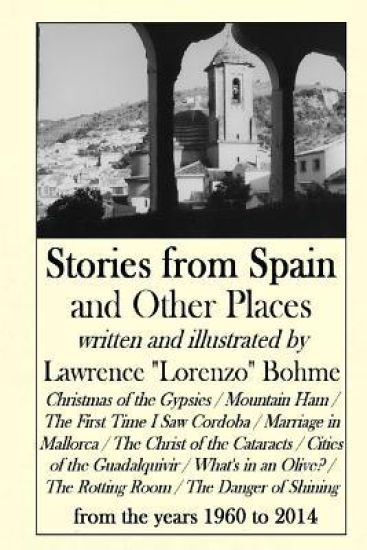
Stories from Spain and Other Places

Stories from Spain and Other Places

Lawrence Bohme

Createspace Independent Publishing Platform
2016
nidottu
Stories of adventures and discoveries in Spain and other parts of Europe, told and illustrated by world traveller, author, illustrator and linguist Lawrence Bohme. This collection is composed of scenes from Lawrence's life between the years 1960 to 2014: The First Time I Saw Cordoba / The Necessary Courage / Montefrio, Last Stop / The House at the Corner of Jesus / The Butcher Who Sang Like a Bird / Flamenco Summer / The Englishman Goes Away / Visitor From the Past / The Christ of the Cataracts / Lorca, Poet of Granada / My "Ridiculum Vitae" / George Sand, Tourist Before Her Time / Cities of the Guadalquivir / Apocalypse in Puerto Lope / The Rotting Room / The Danger of Shining.
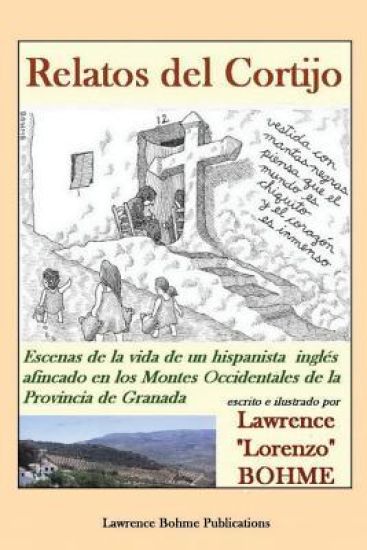
Relatos del Cortijo: Escenas de la vida de un hispanista inglés

Relatos del Cortijo: Escenas de la vida de un hispanista inglés

Lawrence Bohme

Createspace Independent Publishing Platform
2017
nidottu
Relatos "sacados de la vida real" contados por Lawrence "Lorenzo" Bohme, hispanista ingl s, escritor, traductor y dibujante. Descubri el pueblo granadino de Montefrio en el a o 1960 y conoci un gran cantaor de flamenco, Manuel Avila, vivi entre los campesinos y los gitanos durante veinte a os. Cuenta tambi n sus aventuras de estudiante en Madrid en los a os 60, en el Valle de los Ca dos cuando Francisco Franco fue humillado a gritos durante la misa funebre por Jos Antonio; como conoci al poeta franc s Jean Cocteau en la feria taurina de M laga; su amistad con el cantaor Manuel Garc a vila - "Manolo" - el carnicero cantante de Montefr o, que "cantaba como un pajarito" toda su vida para aliviar su frustraci n por no haber sido "un moro con cuarenta mujeres"; su larga relaci n con una pobre gitana conocida como La Sierra; la curiosa tradici n cripto-feminista que ten an las gitanas de Montefrio de bailar en la Plaza de la Iglesia por la ma ana del d a del a o; las visitas a Espa a de su padre, el viejo aventurero Eduardo que le puso un nuevo nombre al buque de guerra Alfonso XIII el d a de la proclamaci n de la Rep blica en 1931; la triste pero tambi n rocambulesca historia de Las Gazapillas, unas hermanas que viv an en una cueva donde vend an sus cuerpos a soldados y civiles; como Lorenzo se hizo traductor libre de la Unesco en Par s, como su pap lo hab a sido por los caminos en su propia juventud; y una noche de samba en la favela de Rio donde el autor vivi cinco a os, que termin con una aparatosa escena de celos provocada por la bailarina mulatta Heloiza...
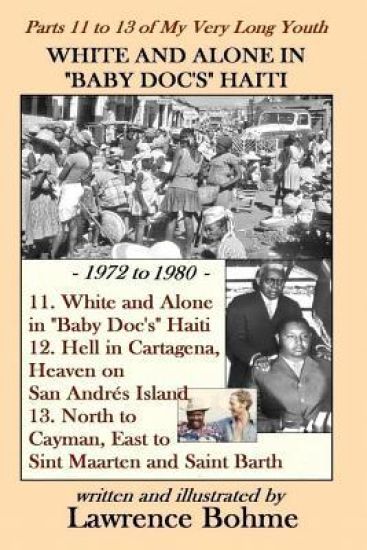
White and Alone in "Baby Doc's" Haiti: Parts 11, 12 and 13 of My Very Long Youth

White and Alone in "Baby Doc's" Haiti: Parts 11, 12 and 13 of My Very Long Youth

Lawrence Bohme

Createspace Independent Publishing Platform
2017
nidottu
Lawrence flies to Haiti with the plan of making his leather satchels and handbags, after reading in the New York Times that under Duvalier's young heir foreigners are being encouraged to set up businesses there, using the cheap local labour. In the next seat is a churchman from Indianapolis who suggests he set up shop on a missionary outpost in the south, where he will be given a disused Red Cross station to live in and install a crafts factory, as long as teaches the local peasants a trade. Soon Lawrence has hired four former sugar cane cutters and two unemployed tailors, as well as a charming housekeeper, a prot g e of the Episcopalian church, charged by the Haitian mission priest with caring for Monsieur Laurent "as if he is your husband", which Sophilia does with almost excessive zeal... Lawrence learns to speak creole with gusto, setting out every afternoon on his small white horse "Blanc" to explore the farms and hills of the Momonce River valley, where he makes many friends. He attempts to revive the former Red Cross "nutrition center", seeing that many of the children have orange-hair and swollen bellies due to severe protein deficiency. The self-styled humanitarian, as a gesture of good will towards his neighbours, pays for the gruel out of his own pocket, but the venture ends in a fiasco when, to save money until a handbag payment arrives from his customer in New York, he has the porridge made with salt which - even in the land of sugar cane - is much cheaper than the sugar they prefer. A mob of parents gathers outside his gate to angrily accuse not him, the "Blanc", but his housekeeper, "Madame Blanc", of secretly pocketing the difference... Lawrence's mother comes from New York to paint but, finding the rural life too primitive, moves to the coastal town of Jacmel to run a craftwork outlet in a ramshackle but beautiful wooden house... Lawrence's cook/mistress, afraid of being sent to take care of his mother on the coast lest a potential rival usurp her place by his side, enlists the help of a voodoo priest to make him marry her but to no effect... Lawrence's mother's innocent flirtation with the libidinous priest sours when, after she rejects his advances, the man plots to have Lawrence deported and his workshop "expropriated" by Duvalier's dreaded "Tonton Macoute" henchmen, on the orders of the very Interior Minister who was supposed to be legalizing his situation. Lawrence flees in the night in a loaded truck to Jacmel where he sets up his workshop in more civilized circumstances, selling his wares to adventurous and well-heeled tourists in his Indigo Boutique. But the atmosphere in Haiti sours with "communist" rebels in the hills trying to oust Baby Doc, casting suspicion on foreigners who live too close to the peasants. So with heavy hearts mother and son get out with whatever they can and head for their next stop, the supposedly safer port of Cartagena de Indias, in Colombia. The next years find our happy, but often hapless hero recovering from the burglary of his handbag factory which leaves him without "even a stone to sharpen our knives on", and then finding his heaven on the island of San Andres, a Colombian possession where the natives, descendants of Jamaican slaves, still speak a lilting version of Queen Victoria's English. He falls in love with a sinewy and up-and-coming island girl he plans to marry, but after she balks at sharing his picturesque house on stilts they break off their engagement. Worst of all, he and Joan run out of money, and after desperately asking for some from Edward in Vancouver they take off for the more peaceful, "but much less charming" island of Grand Cayman. Two dull but profitable years later they are on Sint Maarten, where they soon decide that the best place for them to live and sell their original leather goods - and now pen-and-ink postcards as well - is the pristine and very exclusive French island visible on the horizon, Saint Barth.
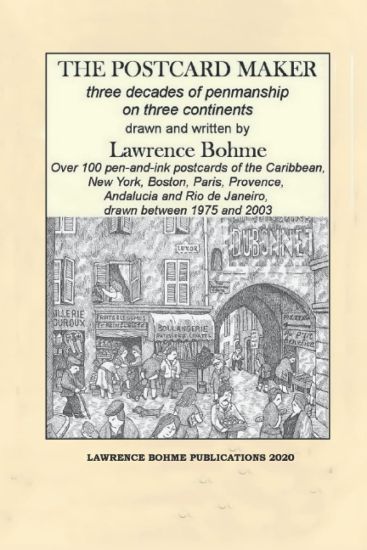
The Postcard Maker: Three Decades of Penmanship on Three Continents
Poet, author, self-taught historian and illustrator Lawrence Bohme looks back on one of his many trades, that of pen-and-ink-artist capturing scenes of life and beauty in the countries where he lived as a young man - drawings designed to be printed as postcards and sold in boutiques and boutiques in places as different as the Latin Quarter, Greenwich Village and Copacabana, Rio de Janeiro.
Old Nice's Changing Heart

Old Nice's Changing Heart

Lawrence Bohme

Independently Published
2019
nidottu
Old Nice - or Vieux-Nice in French, and "Babazouk" in the local slang - is the ancient corner of the great Riviera town famous for its Promenade des Anglais. After four decades of visiting this "heart of Nice", Lawrence Bohme - or Lorenzo as he's known in several Mediterranean places - has dreamed of "staying here long enough to learn how this jumble of teeming alleyways and crossroads came into being". And now "in the autumn" of life, he's produced this whimsically written but also well-informed book, "as it could only be, from the pen of a largely self-taught historian"."Old Nice's Changing Heart" is, therefore, the fruit of seven or eight seasons of "straggling back and forth in the honeycomb of crevices here called streets", Lawrence recounts, and also "reading everything which might shed light on this living relic and its amazing past: first, in the Middle Ages, a fishing village perched atop the castle hill, and then, in the Renaissance, forced for lack of space to rebuild itself down below, between castle and stream" - just a few steps from what became the glamorous "new Nice" of hotels and jewellery shops we all know.. Yet, Lawrence muses, "in spite of their nearness to one another, the two sides of Nice, ancient and modern, have - fortunately - remained as distinct as if they were on different planets". Now, this first book in English devoted to unravelling "Babazouk's" origins, from Proven al county to Savoyard seaport, and then after many twists of fortune returning "like the prodigal son" to France in the 19th century, will help the curious visitor to go a step beyond what might be just a picturesque if confusing stroll in what Lawrence calls "the triangular labyrinth of Babazouk".... ABOUT THE AUTHOR: Lawrence Bohme was born in London in 1942 and raised in Vancouver, Mexico City and Kingston, Jamaica. He finished school in New York's Greenwich Village and went on to study at the Universities of Madrid and the Sorbonne "but restlessly dropped out of both". After five years fending for himself as a language teacher in Rio de Janeiro, where he lived in a favela and also learned to become a leather craftsman, he sought other adventures in "Baby Doc's" Haiti where he taught cane-cutters to make leather handbags and learned to speak cr ole, followed "for fear of the tonton-macoutes" by the fascinating fortress-town of Cartagena on the South American shore "where I was soon relieved of everything I had". After such calamities, the author - still accompanied by his mother Joan, a painter, and her little flock of dachshunds - "sensibly" opted for a less challenging existence on the Caribbean islands of San Andr s, Grand Cayman, Sint Maarten and Saint Barth. Finally, weary of adventures, Lawrence returned to Europe in 1983 to practice a new profession, that of external translator for Unesco and, later, simultaneous interpreter."Old Nice's Changing Heart" is the latest of Lawrence's collection of "artistic and historical guides for the curious traveller", which began with his classic Granada, City of My Dreams, published in 2001. As well as his "books for the curious traveller", Lawrence is the author of My Very Long Youth, a "fast-moving memoir" in seven volumes, followed by the "somewhat more sedate sequel" Life After Mother. All of Bohme's books are richly illustrated with his own drawings and photographs "because I miss the time when not only children's books had pictures".