Kirjojen hintavertailu. Mukana 11 244 527 kirjaa ja 12 kauppaa.

Kirjahaku

Etsi kirjoja tekijän nimen, kirjan nimen tai ISBN:n perusteella.

13 kirjaa tekijältä Lawrence Buell

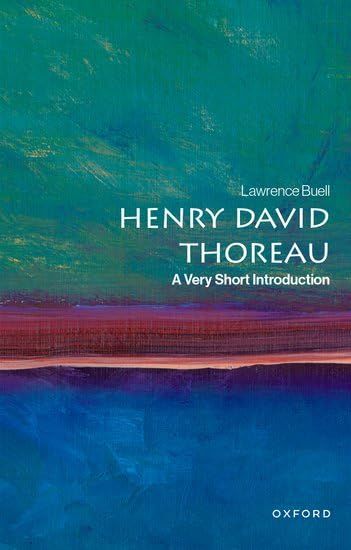
Henry David Thoreau

Henry David Thoreau

Lawrence Buell

OXFORD UNIVERSITY PRESS INC
2025
nidottu
"When I wrote the following pages, or rather the bulk of them, I lived alone, in the woods, a mile from any neighbor, in a house which I had built myself, on the shore of Walden Pond..." Henry David Thoreau (1817-1862) was a leading figure in the American Transcendentalist movement and the era of U. S. literary emergence, an intellectual with worldwide influence as essayist, social thinker, naturalist-environmentalist, and sage. Thoreau's Walden, an autobiographical narrative of his two-year sojourn in a self-built lakeside cabin, is one of the most widely studied works of American literature. It has generated scores of literary imitations and thousands of neo-Walden experiments in back-to-basics living, both rural and urban. Thoreau's great essay, "Civil Disobedience," is a classic of American political activism and a model for nonviolent reform movements around the world. Thoreau also stands as an icon of modern American environmentalism, the father of American nature writing, a forerunner of modern ecology, and a harbinger of freelance spirituality combining the wisdom of west and east. Thoreau is also a controversial figure. From his day to ours, he has provoked sharply opposite reactions ranging from reverence to dismissal. Scholars have regularly offered conflicting assessments of the significance of his work, the evolution of his thought, even the facts of his life. Some disagreements are in the eye of the beholder, but many follow from challenges posed by his own cross-grained idiosyncrasies. He was an advocate for individual self-sufficiency who never broke away from home, a self-professed mystic now also acclaimed as a pioneer natural and applied scientist, and a seminal theorist of nonviolent protest who defended the most notorious guerrilla fighter of his day. All told, he remains a rather enigmatic figure both despite and because we know so much about him, beginning with the two-million-word journal he kept throughout his adult life. The esteemed Thoreau scholar Lawrence Buell gives due consideration to all these aspects of Thoreau's art and thought, framing key issues and complexities in historical and literary context.
Henry David Thoreau

Henry David Thoreau

Lawrence Buell

OXFORD UNIVERSITY PRESS INC
2024
sidottu
"When I wrote the following pages, or rather the bulk of them, I lived alone, in the woods, a mile from any neighbor, in a house which I had built myself, on the shore of Walden Pond..." Henry David Thoreau (1817-1862) was a leading figure in the American Transcendentalist movement and the era of U. S. literary emergence, an intellectual with worldwide influence as essayist, social thinker, naturalist-environmentalist, and sage. Thoreau's Walden, an autobiographical narrative of his two-year sojourn in a self-built lakeside cabin, is one of the most widely studied works of American literature. It has generated scores of literary imitations and thousands of neo-Walden experiments in back-to-basics living, both rural and urban. Thoreau's great essay, "Civil Disobedience," is a classic of American political activism and a model for nonviolent reform movements around the world. Thoreau also stands as an icon of modern American environmentalism, the father of American nature writing, a forerunner of modern ecology, and a harbinger of freelance spirituality combining the wisdom of west and east. Thoreau is also a controversial figure. From his day to ours, he has provoked sharply opposite reactions ranging from reverence to dismissal. Scholars have regularly offered conflicting assessments of the significance of his work, the evolution of his thought, even the facts of his life. Some disagreements are in the eye of the beholder, but many follow from challenges posed by his own cross-grained idiosyncrasies. He was an advocate for individual self-sufficiency who never broke away from home, a self-professed mystic now also acclaimed as a pioneer natural and applied scientist, and a seminal theorist of nonviolent protest who defended the most notorious guerrilla fighter of his day. All told, he remains a rather enigmatic figure both despite and because we know so much about him, beginning with the two-million-word journal he kept throughout his adult life. The esteemed Thoreau scholar Lawrence Buell gives due consideration to all these aspects of Thoreau's art and thought, framing key issues and complexities in historical and literary context.
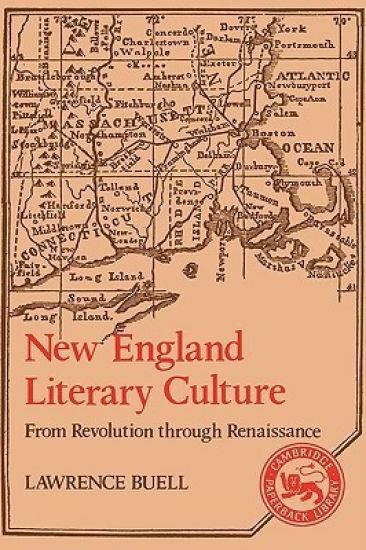
New England Literary Culture

New England Literary Culture

Lawrence Buell

Cambridge University Press
1989
pokkari
This book is a study of the development of New England literature and literary institutions from the American Revolutionary era to the late nineteenth century. Professor Buell explores the foundations, growth and literary results of the professionalization of the writing vocation. He pays particular attention to the major writers - Emerson, Thoreau, Hawthorne, Stowe and Dickinson - but surveys them with a number of lesser-known authors, and explores the conventions, values and institutions which affected them all. Some of the main topics covered include the distinctive features of the Early National and Antebellum periods in New England writing; the importance of certain literary genres (poetry, oratory and religious narrative; etc.); the impact of Puritanism and its values; and the invention of acceptable conventions for portraying the New England landscape and institutions in literature.
Writing for an Endangered World

Writing for an Endangered World

Lawrence Buell

The Belknap Press
2003
nidottu
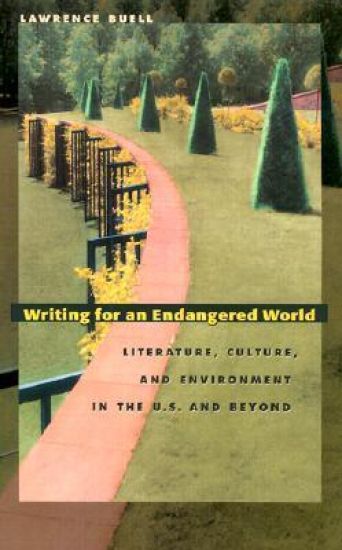
The environmental imagination does not stop short at the edge of the woods. Nor should our understanding of it, as Lawrence Buell makes powerfully clear in his new book that aims to reshape the field of literature and environmental studies. Emphasizing the influence of the physical environment on individual and collective perception, his book thus provides the theoretical underpinnings for an ecocriticism now reaching full power, and does so in remarkably clear and concrete ways.Writing for an Endangered World offers a conception of the physical environment--whether built or natural--as simultaneously found and constructed, and treats imaginative representations of it as acts of both discovery and invention. A number of the chapters develop this idea through parallel studies of figures identified with either "natural" or urban settings: John Muir and Jane Addams; Aldo Leopold and William Faulkner; Robinson Jeffers and Theodore Dreiser; Wendell Berry and Gwendolyn Brooks. Focusing on nineteenth- and twentieth-century writers, but ranging freely across national borders, his book reimagines city and country as a single complex landscape.
Emerson

Emerson

Lawrence Buell

The Belknap Press
2004
nidottu
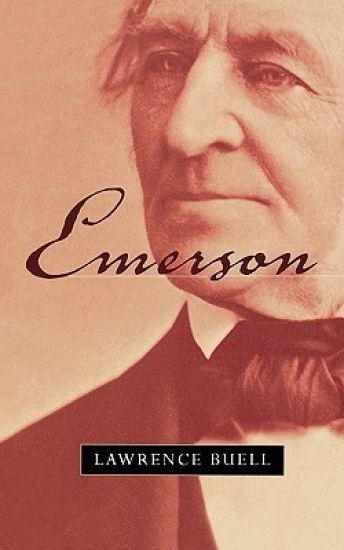
"An institution is the lengthened shadow of one man," Ralph Waldo Emerson once wrote--and in this book, the leading scholar of New England literary culture looks at the long shadow Emerson himself has cast, and at his role and significance as a truly American institution. On the occasion of Emerson's 200th birthday, Lawrence Buell revisits the life of the nation's first public intellectual and discovers how he became a "representative man."Born into the age of inspired amateurism that emerged from the ruins of pre-revolutionary political, religious, and cultural institutions, Emerson took up the challenge of thinking about the role of the United States alone and in the world. With characteristic authority and grace, Buell conveys both the style and substance of Emerson's accomplishment--in his conception of America as the transplantation of Englishness into the new world, and in his prodigious work as writer, religious thinker, and philosopher. Here we see clearly the paradoxical key to his success, the fierce insistence on independence that acted so magnetically upon all around him. Steeped in Emerson's writings, and in the life and lore of the America of his day, Buell's book is as individual--and as compelling--as its subject. At a time when Americans and non-Americans alike are struggling to understand what this country is, and what it is about, Emerson gives us an answer in the figure of this representative American, an American for all, and for all times.
The Environmental Imagination

The Environmental Imagination

Lawrence Buell

The Belknap Press
1996
nidottu
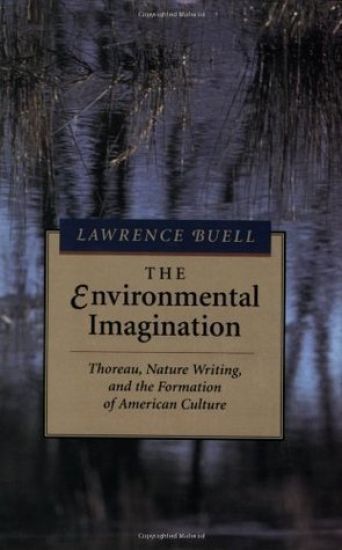
With the environmental crisis comes a crisis of the imagination, a need to find new ways to understand nature and humanity's relation to it. This is the challenge Lawrence Buell takes up in The Environmental Imagination, the most ambitious study to date of how literature represents the natural environment. With Thoreau's Walden as a touchstone, Buell gives us a far-reaching account of environmental perception, the place of nature in the history of western thought, and the consequences for literary scholarship of attempting to imagine a more "ecocentric" way of being. In doing so, he provides a major new understanding of Thoreau's achievement and, at the same time, a profound rethinking of our literary and cultural reflections on nature.The green tradition in American writing commands Buell's special attention, particularly environmental nonfiction from colonial times to the present. In works by writers from Crevecoeur to Wendell Berry, John Muir to Aldo Leopold, Rachel Carson to Leslie Silko, Mary Austin to Edward Abbey, he examines enduring environmental themes such as the dream of relinquishment, the personification of the nonhuman, an attentiveness to environmental cycles, a devotion to place, and a prophetic awareness of possible ecocatastrophe. At the center of this study we find an image of Walden as a quest for greater environmental awareness, an impetus and guide for Buell as he develops a new vision of environmental writing and seeks a new way of conceiving the relation between human imagination and environmental actuality in the age of industrialization. Intricate and challenging in its arguments, yet engagingly and elegantly written, The Environmental Imagination is a major work of scholarship, one that establishes a new basis for reading American nature writing.
The Dream of the Great American Novel

The Dream of the Great American Novel

Lawrence Buell

The Belknap Press
2016
nidottu
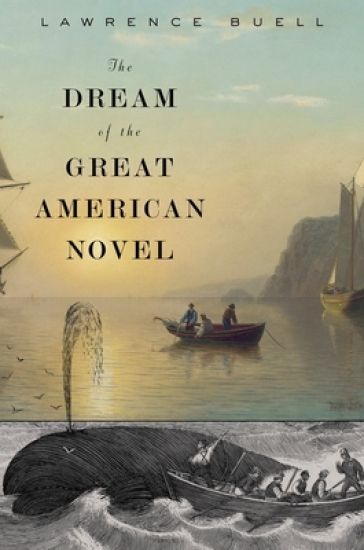
The idea of "the great American novel" continues to thrive almost as vigorously as in its nineteenth-century heyday, defying 150 years of attempts to dismiss it as amateurish or obsolete. In this landmark book, the first in many years to take in the whole sweep of national fiction, Lawrence Buell reanimates this supposedly antiquated idea, demonstrating that its history is a key to the dynamics of national literature and national identity itself.The dream of the G.A.N., as Henry James nicknamed it, crystallized soon after the Civil War. In fresh, in-depth readings of selected contenders from the 1850s onward in conversation with hundreds of other novels, Buell delineates four "scripts" for G.A.N. candidates. One, illustrated by The Scarlet Letter, is the adaptation of the novel's story-line by later writers, often in ways that are contrary to the original author's own design. Other aspirants, including The Great Gatsby and Invisible Man, engage the American Dream of remarkable transformation from humble origins. A third script, seen in Uncle Tom's Cabin and Beloved, is the family saga that grapples with racial and other social divisions. Finally,mega-novels from Moby-Dick to Gravity's Rainbow feature assemblages of characters who dramatize in microcosm the promise and pitfalls of democracy.The canvas of the great American novel is in constant motion, reflecting revolutions in fictional fashion, the changing face of authorship, and the inseparability of high culture from popular. As Buell reveals, the elusive G.A.N. showcases the myth of the United States as a nation perpetually under construction.
A Keener Perception

A Keener Perception

Lawrence Buell

The University of Alabama Press
2009
sidottu
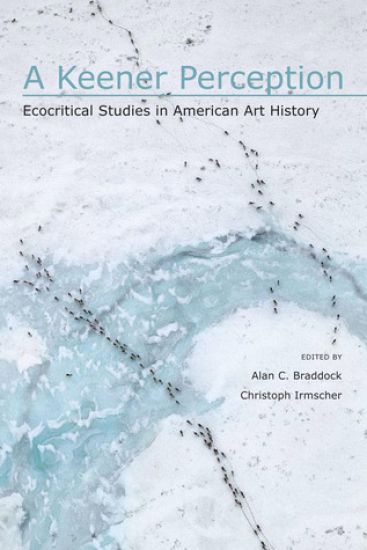
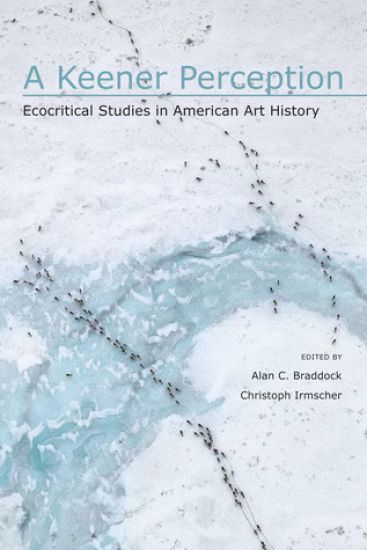
Issues of ecology - both as they appear in the works of nature writers and in the works of literary writers for whom place and the land are central issues - have long been of interest to literary critics, and have given rise over the last two decades to the now firmly established field of ecocriticism. The essays in this volume, written by art historians and literary critics, seek to bring the study of American art into the expanding discourse of ecocriticism. ""A Keener Perception"" offers a series of case studies on topics ranging from John White's watercolors of the Carolina landscape executed during Sir Walter Raleigh's 1585 Roanoke expedition to photographs by environmental activist Eliot Porter. Rather than merely resurrect past instances of ecologically attuned art, this volume features essays that resituate many canonical figures, such as Thomas Eakins, Aaron Douglas, and Isamu Noguchi, in an ecocritical light by which they have yet to be viewed. Studying such artists and artworks through an ecocritical lens not only provides a better understanding of these works and the American landscape, but also brings a new interpretive paradigm the field of art history - a field that many of these critics believe would do well to embrace environmental concerns as a vital area of research. In highlighting the work of scholars who bring ecological agendas to their study of American art, as well as providing models for literary scholars who might like to better incorporate the visual arts into their own scholarship and teaching, ""A Keener Perception"" is truly a landmark collection - timely, consequential, and controversial.
A Keener Perception

A Keener Perception

Lawrence Buell

The University of Alabama Press
2009
nidottu
Issues of ecology - both as they appear in the works of nature writers and in the works of literary writers for whom place and the land are central issues - have long been of interest to literary critics, and have given rise over the last two decades to the now firmly established field of ecocriticism. The essays in this volume, written by art historians and literary critics, seek to bring the study of American art into the expanding discourse of ecocriticism. ""A Keener Perception"" offers a series of case studies on topics ranging from John White's watercolors of the Carolina landscape executed during Sir Walter Raleigh's 1585 Roanoke expedition to photographs by environmental activist Eliot Porter. Rather than merely resurrect past instances of ecologically attuned art, this volume features essays that resituate many canonical figures, such as Thomas Eakins, Aaron Douglas, and Isamu Noguchi, in an ecocritical light by which they have yet to be viewed. Studying such artists and artworks through an ecocritical lens not only provides a better understanding of these works and the American landscape, but also brings a new interpretive paradigm the field of art history - a field that many of these critics believe would do well to embrace environmental concerns as a vital area of research. In highlighting the work of scholars who bring ecological agendas to their study of American art, as well as providing models for literary scholars who might like to better incorporate the visual arts into their own scholarship and teaching, ""A Keener Perception"" is truly a landmark collection - timely, consequential, and controversial.
Susan Fenimore Cooper

Susan Fenimore Cooper

Lawrence Buell

University of Georgia Press
2001
sidottu
Collected here are detailed and diverse essays, some that examine Rural Hours, Susan Fenimore Cooper's most famous work, and others that help establish Cooper as a major practitioner and theorist of American nature writing and as a socially engaged artist in many other genres. These essays discuss Cooper's uses and manipulations of various literary conventions, such as the picturesque, the literary village sketch, and domestic fiction, and illuminate her positions on conservation, religion, and woman's place in society.The engaging collection is divided into four sections. The first features essays examining Cooper's work in light of her relationship with her famous literary father, James Fenimore Cooper, and their devotion to and cultivation of each other's careers. The second focuses on Cooper's fascination with landscape and its relation to her environmental philosophies. Rural Hours is the subject of the third section, which presents new readings on its subtly crafted authorial stance, its two complementary conceptions of time, and its re-valuation of rural and scientific ways of knowing. The collection concludes with four works whose insights into Cooper's views on gender, domesticity, and environmental philosophy grow out of comparisons with several contemporary women writers.These remarkable essays by both established and emerging scholars of nineteenth-century literature present new findings and insights into a writer who is being reintroduced to the fields of eco-criticism and American literature.
Thoreau's Sense of Place

Thoreau's Sense of Place

Lawrence Buell

University of Iowa Press
2000
nidottu
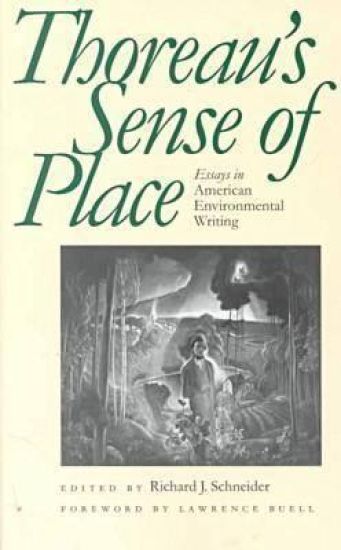
The contributors to this work address how the environmentalist Henry David Thoreau and his successors attempted to cope with the epistemological split between the perceiver and place inherent in writing about nature. They discuss the kinds of discourse most effective for writing about place.
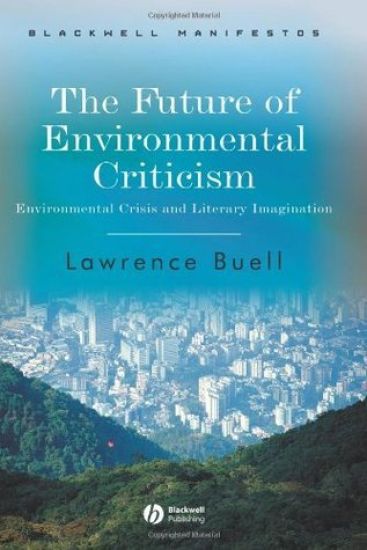
The Future of Environmental Criticism

The Future of Environmental Criticism

Lawrence Buell

Wiley-Blackwell (an imprint of John Wiley Sons Ltd)
2005
sidottu
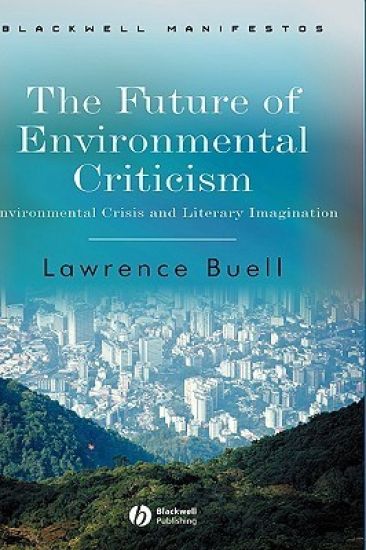
Written by one of the world’s leading theorists in ecocriticism, this manifesto provides a critical summary of the ecocritical movement. A critical summary of the emerging discipline of “ecocriticism”. Written by one of the world’s leading theorists in ecocriticism. Traces the history of the ecocritical movement from its roots in the 1970s through to its diversification and proliferation today. Takes account of different ecocritical positions and directions. Describes major tensions within ecocriticism and addresses major criticisms of the movement. Looks to the future of ecocriticism, proposing that discourses of the environment should become a permanent part of literary and cultural studies.
The Future of Environmental Criticism

The Future of Environmental Criticism

Lawrence Buell

Wiley-Blackwell (an imprint of John Wiley Sons Ltd)
2005
nidottu
Written by one of the world’s leading theorists in ecocriticism, this manifesto provides a critical summary of the ecocritical movement. A critical summary of the emerging discipline of “ecocriticism”. Written by one of the world’s leading theorists in ecocriticism. Traces the history of the ecocritical movement from its roots in the 1970s through to its diversification and proliferation today. Takes account of different ecocritical positions and directions. Describes major tensions within ecocriticism and addresses major criticisms of the movement. Looks to the future of ecocriticism, proposing that discourses of the environment should become a permanent part of literary and cultural studies.