Kirjojen hintavertailu. Mukana 12 424 317 kirjaa ja 12 kauppaa.

Kirjahaku

Etsi kirjoja tekijän nimen, kirjan nimen tai ISBN:n perusteella.

4 kirjaa tekijältä Lawrence J. Brown

Intersubjective Processes and the Unconscious
Intersubjective Processes and the Unconscious looks at how the minds of the therapist and the patient interact with each other in a profound and unconscious way: a concept first described by Freud. This book expands Freud’s ideas further and examines how these have been greatly elaborated by contributions from the Kleinian School as well as from the work of Bion. It explores how, together, patient and therapist co-create a narrative through these unconscious intersubjective processes. Topics of discussion include: the unconscious dimensions of intersubjective processes an historical overview of Freudian, Kleinian and Bionian contributionsan integrated theory of the nature of unconscious intersubjective processesthe central importance of dreaming in intersubjective processesthe clinical implications of this intersubjective model The author offers in-depth clinical examples and case vignettes to illustrate the application of these principles when working with trauma, countertransference dreams and supervision. As such, this book will be invaluable to all psychoanalysts and psychotherapists interested in the topic of intersubjectivity as well as those who want to learn more about the interactional dimensions of Freud, Klein and Bion.
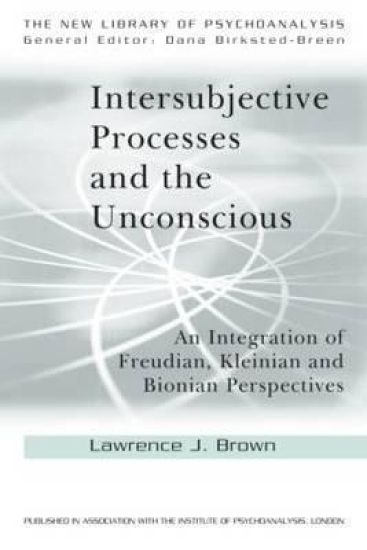
Intersubjective Processes and the Unconscious
Intersubjective Processes and the Unconscious looks at how the minds of the therapist and the patient interact with each other in a profound and unconscious way: a concept first described by Freud. This book expands Freud’s ideas further and examines how these have been greatly elaborated by contributions from the Kleinian School as well as from the work of Bion. It explores how, together, patient and therapist co-create a narrative through these unconscious intersubjective processes. Topics of discussion include: the unconscious dimensions of intersubjective processes an historical overview of Freudian, Kleinian and Bionian contributionsan integrated theory of the nature of unconscious intersubjective processesthe central importance of dreaming in intersubjective processesthe clinical implications of this intersubjective model The author offers in-depth clinical examples and case vignettes to illustrate the application of these principles when working with trauma, countertransference dreams and supervision. As such, this book will be invaluable to all psychoanalysts and psychotherapists interested in the topic of intersubjectivity as well as those who want to learn more about the interactional dimensions of Freud, Klein and Bion.

Transformational Processes in Clinical Psychoanalysis
In this book, Lawrence J. Brown offers a contemporary perspective on how the mind transforms, and gives meaning to, emotional experience that arises unconsciously in the here-and-now of the clinical hour. Brown surveys the developments in theory and practice that follow from Freud’s original observations and traces this evolution from its conception to contemporary analytic field theory. Brown emphasizes that these unconscious transformational processes occur spontaneously, in the blink of an eye, through the "unconscious work" in which the analyst and patient are engaged. Though unconscious, these processes are accessible and the analyst must train himself to become aware of the subtle ways he is affected by the patient in the clinical moment. By paying attention to one’s reveries, countertransference manifestations and even supposed "wild" or extraneous thoughts, the analyst is able to obtain a glimpse of how his unconscious is transforming the ambient emotions of the session in order to formulate an interpretation. Brown casts a wide theoretical net in his exploration of these transformational processes and builds on the contributions of Freud, Theodor Reik, Bion, Ogden, the Barangers, Cassorla, Civitarese and Ferro. Bion’s theories of alpha function, transformations, dreaming and his clinical emphasis on the present moment are foundational to this book. Brown’s writing is clear and aims to describe the various theoretical ideas as plainly as possible. Detailed clinical material is given in most chapters to illustrate the theoretical perspectives. Brown applies this theory of transformational processes to a variety of topics, including the analyst’s receptivity, countertransference as transformation, the analytic setting, the paintings of J.M.W. Turner, "autistic transformations" and other clinical situations in the analysis of children and adults.Transformational Processes in Clinical Psychoanalysis will be of great interest to all psychoanalysts and psychoanalytic psychotherapists.
Transformational Processes in Clinical Psychoanalysis
In this book, Lawrence J. Brown offers a contemporary perspective on how the mind transforms, and gives meaning to, emotional experience that arises unconsciously in the here-and-now of the clinical hour. Brown surveys the developments in theory and practice that follow from Freud’s original observations and traces this evolution from its conception to contemporary analytic field theory. Brown emphasizes that these unconscious transformational processes occur spontaneously, in the blink of an eye, through the "unconscious work" in which the analyst and patient are engaged. Though unconscious, these processes are accessible and the analyst must train himself to become aware of the subtle ways he is affected by the patient in the clinical moment. By paying attention to one’s reveries, countertransference manifestations and even supposed "wild" or extraneous thoughts, the analyst is able to obtain a glimpse of how his unconscious is transforming the ambient emotions of the session in order to formulate an interpretation. Brown casts a wide theoretical net in his exploration of these transformational processes and builds on the contributions of Freud, Theodor Reik, Bion, Ogden, the Barangers, Cassorla, Civitarese and Ferro. Bion’s theories of alpha function, transformations, dreaming and his clinical emphasis on the present moment are foundational to this book. Brown’s writing is clear and aims to describe the various theoretical ideas as plainly as possible. Detailed clinical material is given in most chapters to illustrate the theoretical perspectives. Brown applies this theory of transformational processes to a variety of topics, including the analyst’s receptivity, countertransference as transformation, the analytic setting, the paintings of J.M.W. Turner, "autistic transformations" and other clinical situations in the analysis of children and adults.Transformational Processes in Clinical Psychoanalysis will be of great interest to all psychoanalysts and psychoanalytic psychotherapists.