Kirjojen hintavertailu. Mukana 11 697 765 kirjaa ja 12 kauppaa.

Kirjahaku

Etsi kirjoja tekijän nimen, kirjan nimen tai ISBN:n perusteella.

21 kirjaa tekijältä Lawrence Kramer

Music as Cultural Practice, 1800-1900

Music as Cultural Practice, 1800-1900

Lawrence Kramer

University of California Press
1993
pokkari
In Music as Cultural Practice, Lawrence Kramer adapts the resources of contemporary literary theory to forge a genuinely new discourse about music. Rethinking fundamental questions of meaning and expression, he demonstrates how European music of the nineteenth century collaborates on equal terms with textual and sociocultural practices in the constitution of self and society. In Kramer's analysis, compositional processes usually understood in formal or emotive terms reappear as active forces in the work of cultural formation. Thus Beethoven's last piano sonata, Op. 111, forms both a realization and a critique of Romantic utopianism; Liszt's Faust Symphony takes bourgeois gender ideology into a troubled embrace; Wagner's Tristan und Isolde articulates a basic change in the cultural construction of sexuality. Through such readings, Kramer works toward the larger conclusion that nineteenth-century European music is concerned as much to challenge as to exemplify an ideology of organic unity and subjective wholeness. Anyone interested in music, literary criticism, or nineteenth-century culture will find this book pertinent and provocative.
Classical Music and Postmodern Knowledge

Classical Music and Postmodern Knowledge

Lawrence Kramer

University of California Press
1996
pokkari
A leading cultural theorist and musicologist opens up new possibilities for understanding mainstream Western art music--the "classical" music composed between the eighteenth and early twentieth centuries that is, for many, losing both its prestige and its appeal. When this music is regarded esoterically, removed from real-world interests, it increasingly sounds more evasive than transcendent. Now Lawrence Kramer shows how classical music can take on new meaning and new life when approached from postmodernist standpoints. Kramer draws out the musical implications of contemporary efforts to understand reason, language, and subjectivity in relation to concrete human activities rather than to universal principles. Extending the rethinking of musical expression begun in his earlier Music as Cultural Practice, he regards music not only as an object that invites aesthetic reception but also as an activity that vitally shapes the personal, social, and cultural identities of its listeners. In language accessible to nonspecialists but informative to specialists, Kramer provides an original account of the postmodernist ethos, explains its relationship to music, and explores that relationship in a series of case studies ranging from Haydn and Mendelssohn to Ives and Ravel.
After the Lovedeath

After the Lovedeath

Lawrence Kramer

University of California Press
2000
pokkari
This elegantly written book is a bold attempt to reinterpret the nature of sexual violence and to imagine the possibility of overcoming it. Lawrence Kramer traces today's sexual identities to their nineteenth-century sources, drawing on the music, literature, and thought of the period to show how normal identity both promotes and rationalizes violence against women. To make his case, Kramer uses operatic lovedeaths, Beethoven's 'Kreutzer Sonata' and the Tolstoy novella named after it; the writings of Walt Whitman and Alfred Lord Tennyson, psychoanalysis, and the logic of dreams. In formal and informal reflections, he explores the self-contradictions of masculinity, the shifting alignments of femininity, authority, and desire, and the interdependency of hetero- and homosexuality. At the same time, he imagines alternatives that could allow gender to be freed from the existing system of polarities that inevitably promote sexual violence. Kramer's writing avoids the conventional dress of intellectual authority and moves between music and literature in a style that is both intimate and effective. He combines informed scholarship with candid personal utterance and makes clear what is at stake in this crucial debate. "After the Lovedeath" will have a profound impact on anyone interested in new ways to think about gender.
Opera and Modern Culture

Opera and Modern Culture

Lawrence Kramer

University of California Press
2007
pokkari
In this enlightening and entertaining book, one of the most original and sophisticated musicologists writing today turns his attention to music's most dramatic genre. Extending his ongoing project of clarifying music's various roles in Western society, Kramer brings to opera his distinctive and pioneering blend of historical concreteness and theoretical awareness. Opera is legendary for going to extremes, a tendency that has earned it a reputation for unreality. Opera and Modern Culture shows the reverse to be true. Kramer argues that for the past two centuries the preoccupation of a group of famous operas with the limits of supremacy and debasement helped to define a normality that seems the very opposite of the operatic. Exemplified in a series of beloved examples, a certain idea of opera--a fiction of opera--has contributed in key ways to the modern era's characterizations of desire, identity, and social order. Opera and Modern Culture exposes this process at work in operas by Richard Wagner, who put modernity on the agenda in ways no one after him could ignore, and by the young Richard Strauss. The book continues the initiative of much recent writing in treating opera as a multimedia rather than a primarily musical form. From Lohengrin and The Ring of the Niebelung to Salome and Elektra, it traces the rich interplay of operatic visions and voices and their contexts in the birth pangs of modern life.
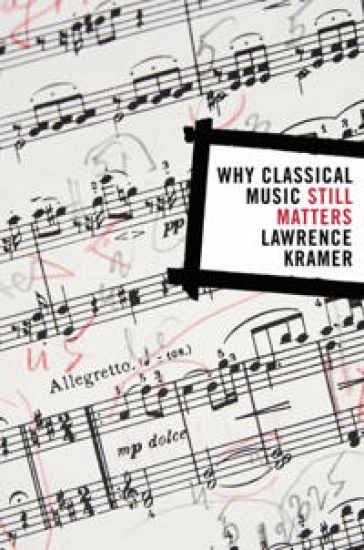
Why Classical Music Still Matters

Why Classical Music Still Matters

Lawrence Kramer

University of California Press
2009
pokkari
'What can be done about the state of classical music?' Lawrence Kramer asks in this elegant, sharply observed, and beautifully written extended essay. Classical music, whose demise has been predicted for at least a decade, has always had its staunch advocates, but in today's media-saturated world there are real concerns about its viability. "Why Classical Music Still Matters" takes a forthright approach by engaging both skeptics and music lovers alike. In seven highly original chapters, "Why Classical Music Still Matters" affirms the value of classical music - defined as a body of nontheatrical music produced since the eighteenth century with the single aim of being listened to - by revealing what its values are: the specific beliefs, attitudes, and meanings that the music has supported in the past and which, Kramer believes, it can support in the future. "Why Classical Music Still Matters" also clears the air of old prejudices. Unlike other apologists, whose defense of the music often depends on arguments about the corrupting influence of popular culture, Kramer admits that classical music needs a broader, more up-to-date rationale. He succeeds in engaging the reader by putting into words music's complex relationship with individual human drives and larger social needs. In prose that is fresh, stimulating, and conversational, he explores the nature of subjectivity, the conquest of time and mortality, the harmonization of humanity and technology, the cultivation of attention, and the liberation of human energy.
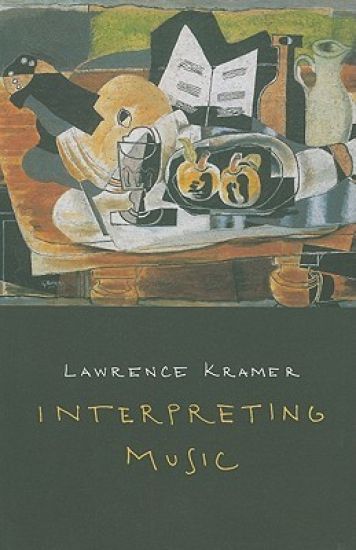
Interpreting Music

Interpreting Music

Lawrence Kramer

University of California Press
2010
sidottu
"Interpreting Music" is a comprehensive essay on understanding musical meaning and performing music meaningfully - 'interpreting music' in both senses of the term. Synthesizing and advancing two decades of highly influential work, Lawrence Kramer fundamentally rethinks the concepts of work, score, performance, performativity, interpretation, and meaning - even the very concept of music - while breaking down conventional wisdom and received ideas. Kramer argues that music, far from being closed to interpretation, is ideally open to it, and that musical interpretation is the paradigm of interpretation in general. The book illustrates the many dimensions of interpreting music through a series of case studies drawn from the classical repertoire, but its methods and principles carry over to other repertoires just as they carry beyond music by working through music to wider philosophical and cultural questions.
Interpreting Music

Interpreting Music

Lawrence Kramer

University of California Press
2010
pokkari
"Interpreting Music" is a comprehensive essay on understanding musical meaning and performing music meaningfully - 'interpreting music' in both senses of the term. Synthesizing and advancing two decades of highly influential work, Lawrence Kramer fundamentally rethinks the concepts of work, score, performance, performativity, interpretation, and meaning - even the very concept of music - while breaking down conventional wisdom and received ideas. Kramer argues that music, far from being closed to interpretation, is ideally open to it, and that musical interpretation is the paradigm of interpretation in general. The book illustrates the many dimensions of interpreting music through a series of case studies drawn from the classical repertoire, but its methods and principles carry over to other repertoires just as they carry beyond music by working through music to wider philosophical and cultural questions.
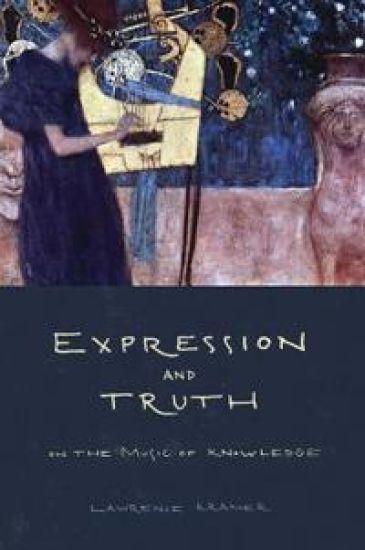
Expression and Truth

Expression and Truth

Lawrence Kramer

University of California Press
2012
sidottu
Expression and truth are traditional opposites in Western thought: expression supposedly refers to states of mind, truth to states of affairs. Expression and Truth rejects this opposition and proposes fluid new models of expression, truth, and knowledge with broad application to the humanities. These models derive from five theses that connect expression to description, cognition, the presence and absence of speech, and the conjunction of address and reply. The theses are linked by a concentration on musical expression, regarded as the ideal case of expression in general, and by fresh readings of Ludwig Wittgenstein's scattered but important remarks about music. The result is a new conception of expression as a primary means of knowing, acting on, and forming the world. "Recent years have seen the return of the claim that music's power resides in its ineffability. In Expression and Truth, Lawrence Kramer presents his most elaborate response to this claim. Drawing on philosophers such as Wittgenstein and on close analyses of nineteenth-century compositions, Kramer demonstrates how music operates as a medium for articulating cultural meanings and that music matters too profoundly to be cordoned off from the kinds of critical readings typically brought to the other arts. A tour-de-force by one of musicology's most influential thinkers."--Susan McClary, Desire and Pleasure in Seventeenth-Century Music.
Expression and Truth

Expression and Truth

Lawrence Kramer

University of California Press
2012
pokkari
Expression and truth are traditional opposites in Western thought: expression supposedly refers to states of mind, truth to states of affairs. Expression and Truth rejects this opposition and proposes fluid new models of expression, truth, and knowledge with broad application to the humanities. These models derive from five theses that connect expression to description, cognition, the presence and absence of speech, and the conjunction of address and reply. The theses are linked by a concentration on musical expression, regarded as the ideal case of expression in general, and by fresh readings of Ludwig Wittgenstein's scattered but important remarks about music. The result is a new conception of expression as a primary means of knowing, acting on, and forming the world. "Recent years have seen the return of the claim that music's power resides in its ineffability. In Expression and Truth, Lawrence Kramer presents his most elaborate response to this claim. Drawing on philosophers such as Wittgenstein and on close analyses of nineteenth-century compositions, Kramer demonstrates how music operates as a medium for articulating cultural meanings and that music matters too profoundly to be cordoned off from the kinds of critical readings typically brought to the other arts. A tour-de-force by one of musicology's most influential thinkers."--Susan McClary, Desire and Pleasure in Seventeenth-Century Music.
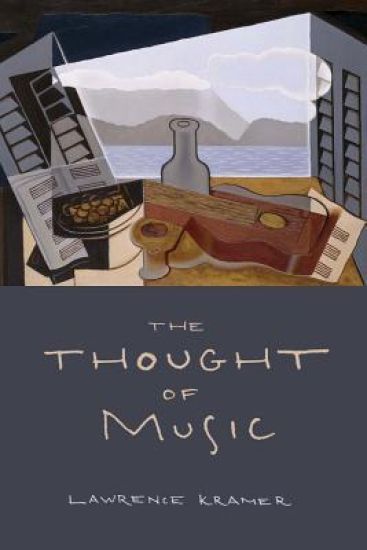
The Thought of Music

The Thought of Music

Lawrence Kramer

University of California Press
2016
sidottu
What, exactly, is knowledge of music? And what does it tell us about humanistic knowledge in general? The Thought of Music grapples directly with these fundamental questions - questions especially compelling at a time when humanistic knowledge is enmeshed in debates about its character and future. In this third volume in a trilogy on musical understanding that includes Interpreting Music and Expression and Truth, Lawrence Kramer seeks answers in both thought about music and thought in music-thinking in tones. He skillfully assesses musical scholarship in the aftermath of critical musicology and musical hermeneutics and in view of more recent concerns with embodiment, affect, and performance. This authoritative and timely work challenges the prevailing conceptions of every topic it addresses: language, context, and culture; pleasure and performance; and, through music, the foundations of understanding in the humanities. The publisher gratefully acknowledges the Joseph Kerman Endowment of the American Musicological Society, funded in part by the National Endowment for the Humanities and the Andrew W. Mellon Foundation.
The Thought of Music

The Thought of Music

Lawrence Kramer

University of California Press
2016
pokkari
What, exactly, is knowledge of music? And what does it tell us about humanistic knowledge in general? The Thought of Music grapples directly with these fundamental questions-questions especially compelling at a time when humanistic knowledge is enmeshed in debates about its character and future. In this third volume in a trilogy on musical understanding that includes Interpreting Music and Expression and Truth, Lawrence Kramer seeks answers in both thought about music and thought in music-thinking in tones. He skillfully assesses musical scholarship in the aftermath of critical musicology and musical hermeneutics and in view of more recent concerns with embodiment, affect, and performance. This authoritative and timely work challenges the prevailing conceptions of every topic it addresses: language, context, and culture; pleasure and performance; and, through music, the foundations of understanding in the humanities. The publisher gratefully acknowledges the Joseph Kerman Endowment of the American Musicological Society, funded in part by the National Endowment for the Humanities and the Andrew W. Mellon Foundation.
The Hum of the World

The Hum of the World

Lawrence Kramer

University of California Press
2019
sidottu
The Hum of the World is an invitation to contemplate what would happen if we heard the world as attentively as we see it. Balancing big ideas, playful wit and lyrical prose, this imaginative volume identifies the role of sound in Western experience as the primary medium in which the presence and persistence of life acquires tangible form. The positive experience of aliveness is not merely in accord with sound, but inaccessible, even inconceivable, without it. Lawrence Kramer’s poetic book roves freely over music, media, language, philosophy, and science from the ancient world to the present, along the way revealing how life is apprehended through sounds ranging from pandemonium to the faint background hum of the world. This innovative meditation on auditory culture uncovers the knowledge and pleasure waiting when we learn that the world is alive with sound.
Musical Meaning

Musical Meaning

Lawrence Kramer

University of California Press
2021
pokkari
Ranging widely over classical music, jazz, popular music, and film and television music, Musical Meaning uncovers the historical importance of asking about meaning in the lived experience of musical works, styles, and performances. Lawrence Kramer has been a pivotal figure in the development of new resources for understanding music. In this accessible and eloquently written book, he argues boldly that humanistic, not just technical, meaning is a basic force in music history and an indispensable factor in how, where, and when music is heard. He demonstrates that thinking about music can become a vital means of thinking about general questions of meaning, subjectivity, and value. First published in 2001, Musical Meaning anticipates many of the musicological topics of today, including race, performance, embodiment, and media. In addition, Kramer explores music itself as a source of understanding via his composition Revenants for piano, revised for this edition and available on the UC Press website.
The Hum of the World

The Hum of the World

Lawrence Kramer

University of California Press
2021
pokkari
The Hum of the World is an invitation to contemplate what would happen if we heard the world as attentively as we see it. Balancing big ideas, playful wit and lyrical prose, this imaginative volume identifies the role of sound in Western experience as the primary medium in which the presence and persistence of life acquires tangible form. The positive experience of aliveness is not merely in accord with sound, but inaccessible, even inconceivable, without it. Lawrence Kramer’s poetic book roves freely over music, media, language, philosophy, and science from the ancient world to the present, along the way revealing how life is apprehended through sounds ranging from pandemonium to the faint background hum of the world. This warm meditation on auditory culture uncovers the knowledge and pleasure waiting when we learn that the world is alive with sound.
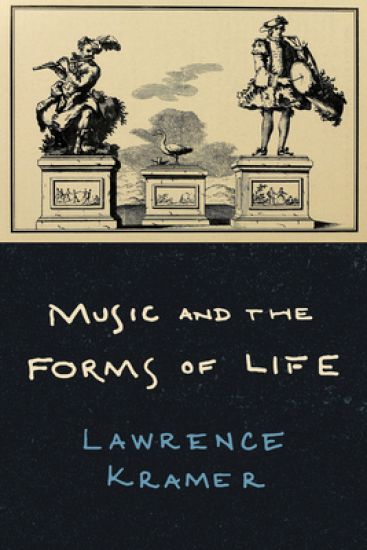
Music and the Forms of Life

Music and the Forms of Life

Lawrence Kramer

University of California Press
2022
sidottu
Inventors in the age of the Enlightenment created lifelike androids capable of playing music on real instruments. Music and the Forms of Life examines the link between such simulated life and music, which began in the era's scientific literature and extended into a series of famous musical works by Haydn, Mozart, and Beethoven. Music invented auditory metaphors for the scientific elements of life (drive, pulse, sensibility, irritability, even metabolism), investigated the affinities and antagonisms between life and mechanism, and explored questions of whether and how mechanisms can come to life. The resulting changes in the conceptions of both life and music had wide cultural resonance at the time, and those concepts continued to evolve long after. A critical part of that evolution was a nineteenth-century shift in focus from moving androids to the projection of life in motion, culminating in the invention of cinema. Weaving together cultural and musical practices, Lawrence Kramer traces these developments through a collection of case studies ranging from classical symphonies to modernist projections of waltzing specters by Mahler and Ravel to a novel linking Bach's Goldberg Variations to the genetic code. The publisher gratefully acknowledges the generous support of the AMS 75 PAYS Fund of the American Musicological Society, supported in part by the National Endowment for the Humanities and the Andrew W. Mellon Foundation.
Music and the Forms of Life

Music and the Forms of Life

Lawrence Kramer

University of California Press
2022
pokkari
Inventors in the age of the Enlightenment created lifelike androids capable of playing music on real instruments. Music and the Forms of Life examines the link between such simulated life and music, which began in the era's scientific literature and extended into a series of famous musical works by Haydn, Mozart, and Beethoven. Music invented auditory metaphors for the scientific elements of life (drive, pulse, sensibility, irritability, even metabolism), investigated the affinities and antagonisms between life and mechanism, and explored questions of whether and how mechanisms can come to life. The resulting changes in the conceptions of both life and music had wide cultural resonance at the time, and those concepts continued to evolve long after. A critical part of that evolution was a nineteenth-century shift in focus from moving androids to the projection of life in motion, culminating in the invention of cinema. Weaving together cultural and musical practices, Lawrence Kramer traces these developments through a collection of case studies ranging from classical symphonies to modernist projections of waltzing specters by Mahler and Ravel to a novel linking Bach's Goldberg Variations to the genetic code. The publisher gratefully acknowledges the generous support of the AMS 75 PAYS Fund of the American Musicological Society, supported in part by the National Endowment for the Humanities and the Andrew W. Mellon Foundation.
Experiencing Sound

Experiencing Sound

Lawrence Kramer

University of California Press
2024
sidottu
From the winds of Mars to a baby's first laugh, a prolific philosopher-composer reflects on the profound imperative of sound in everyday life. Experiencing Sound presents its subject as fundamental to all experience—sensation, perception, and understanding. Lawrence Kramer turns on its head the widespread notion that vision takes pride of place among the senses and demonstrates how paying attention to sound can transform how we make meaning out of experience. Through a series of brief, lyrical forays, Kramer shows that sound, whether heard or unheard, is the object of a primary need and an essential component in the sensation of being alive and the perception of time. It is something that we may suffer—or be made to suffer—as well as enjoy. Like its predecessor The Hum of the World, this book ranges widely across music, philosophy, literature, art, media, and history, from classical antiquity to the present, as it invites us to experience sound anew.
Franz Schubert

Franz Schubert

Lawrence Kramer

Cambridge University Press
2003
pokkari
This is the first book to examine Schubert’s songs as active shaping forces in the culture of their era rather than as mere reflections of it. Responding to rising new forms of social organisation, Schubert discovered that songs could serve as a medium for shuffling and reshuffling the basic building blocks of identity and desire, especially sexual desire. His songs project a kaleidoscopic array of unexpected human types, all of whom are eligible for a sympathetic response, even the strangest and most disconcerting. Schubert sought to validate these subjective types without subordinating them to a central social or sexual norm. The book describes and contextualises this process and tracks it concretely in a wide variety of songs. Combining close attention to both music and poetry, the book addresses both specialists and non-specialists in a lively, accessible style unburdened by excessive jargon.
Critical Musicology and the Responsibility of Response

Critical Musicology and the Responsibility of Response

Lawrence Kramer

Ashgate Publishing Limited
2006
sidottu
Why does music move us? Lawrence Kramer suggests we should ask this old question in a different way: what is responsible for our response to music, and to what is our response responsible? The essays in this outstanding collection explore this question amongst many others, and by finding cultural meaning in music they exemplify the critical turn in musicology. Sixteen essays have been selected, most of them previously published, from the late 1980s to the present day. These are prefaced by an excellent introduction which traces the intellectual development of critical musicology and discusses the part these essays have had to play in that movement.
Critical Musicology and the Responsibility of Response
Why does music move us? Lawrence Kramer suggests we should ask this old question in a different way: what is responsible for our response to music, and to what is our response responsible? The essays in this outstanding collection explore this question amongst many others, and by finding cultural meaning in music they exemplify the critical turn in musicology. Sixteen essays have been selected, most of them previously published, from the late 1980s to the present day. These are prefaced by an excellent introduction which traces the intellectual development of critical musicology and discusses the part these essays have had to play in that movement.