Kirjojen hintavertailu. Mukana 12 016 292 kirjaa ja 12 kauppaa.

Kirjahaku

Etsi kirjoja tekijän nimen, kirjan nimen tai ISBN:n perusteella.

4 kirjaa tekijältä Lawrence M. Principe

The Scientific Revolution

The Scientific Revolution

Lawrence M. Principe

Oxford University Press
2011
nidottu
The sixteenth and seventeenth centuries witnessed such fervent investigations of the natural world that the period has been called the 'Scientific Revolution.' New ideas and discoveries not only redefined what human beings believed, knew, and could do, but also forced them to redefine themselves with respect to the strange new worlds revealed by ships and scalpels, telescopes and microscopes, experimentation and contemplation. Driven by religious devotion, by practical need, by the promise of fame and profit, or by the simple desire to know, a broad range of thinkers and workers explored and reconceptualized the world around them. Explanatory systems were made, discarded, and remade by some of the best-known names in the entire history of science - Copernicus, Galileo, Newton - and by many others less recognized but no less important. In this Very Short Introduction Lawrence M. Principe explores the exciting developments in the sciences of the stars (astronomy, astrology, and cosmology), the sciences of earth (geography, geology, hydraulics, pneumatics), the sciences of matter and motion (alchemy, chemistry, kinematics, physics), the sciences of life (medicine, anatomy, biology, zoology), and much more. The story is told from the perspective of the historical characters themselves, emphasizing their background, context, reasoning, and motivations, and dispelling well-worn myths about the history of science. ABOUT THE SERIES: The Very Short Introductions series from Oxford University Press contains hundreds of titles in almost every subject area. These pocket-sized books are the perfect way to get ahead in a new subject quickly. Our expert authors combine facts, analysis, perspective, new ideas, and enthusiasm to make interesting and challenging topics highly readable.
The Secrets of Alchemy

The Secrets of Alchemy

Lawrence M. Principe

University of Chicago Press
2015
nidottu
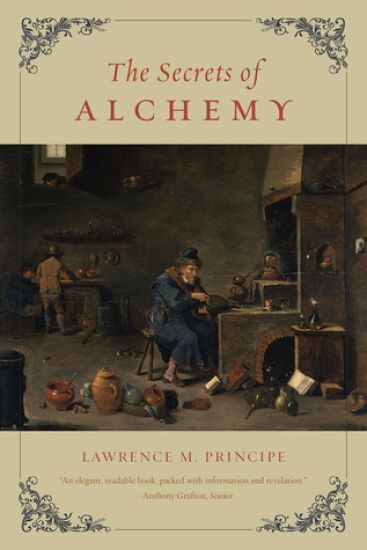
In The Secrets of Alchemy, Lawrence M. Principe, one of the world's leading authorities on the subject, brings alchemy out of the shadows and restores it to its important place in human history and culture. By surveying what alchemy was and how it began, developed, and overlapped with a range of ideas and pursuits, Principe illuminates the practice. He vividly depicts the place of alchemy during its heyday in early modern Europe, and then explores how alchemy has fit into wider views of the cosmos and humanity, touching on its enduring place in literature, fine art, theater, and religion as well as its recent acceptance as a serious subject of study for historians of science. In addition, he introduces the reader to some of the most fascinating alchemists, such as Zosimos and Basil Valentine, whose lives dot alchemy's long reign from the third century down to the present day. Through his exploration of alchemists and their times, Principe pieces together closely guarded clues from obscure and fragmented texts to reveal alchemy's secrets, and - most exciting for budding alchemists - uses them to recreate many of the most famous recipes in his lab, including those for the "glass of antimony" and "philosophers' tree." This unique approach brings the reader closer to the actual work of alchemy than any other book.
The Book of the Light of the Great Magistery of John of Rupescissa (Liber lucis magisterii magni)
Convinced that the antichrist was “at our gates,” the Franciscan friar, alchemist, and prophet John of Rupescissa (ca. 1310-1366) wrote the Book of Light of the Great Magistery to help his future brethren restore a devastated Christendom. Written in 1354, this text provides a detailed process for making the philosophers’ stone, the substance able to transmute base metals easily into gold and silver. With this manufactured gold and silver, the true Franciscans, the “poor men of the Gospel,” could rebuild the Church and help usher in an era of peace and prosperity. This volume presents the first critical edition, modern English translation, and focussed study of John’s Book of Light. Based on over one hundred surviving manuscripts, many recently discovered, this critical edition restores substantial original text that was omitted from the printed editions and corrects longstanding textual errors. In the accompanying study, Principe explores John’s sources and ideas, especially his striking theories of matter and material change, and follows the transmission, reception, vernacularization, and multiple modifications of John’s text as readers engaged with it over the next three centuries. Modern laboratory reworkings, fully illustrated and explained, go hand-in-hand with the textual analyses, providing a vivid picture of the friar’s practices and observational skills and deeper understanding of his text. John of Rupescissa stands revealed as an innovative theorist and observant practitioner; he was not an “armchair” alchemist whose knowledge came only from textual sources. The clear evidence of his practice presented here provokes in turn a close reevaluation of the conditions of his nearly twenty-year confinement at a papal prison in Avignon where he learned and practiced much of his alchemy before writing the Book of Light. Historians of science and technology, medievalists, book historians, manuscript scholars, and many others will find new and important information in this third volume of the series Sources of Alchemy and Chemistry.
The Book of the Light of the Great Magistery of John of Rupescissa (Liber lucis magisterii magni)
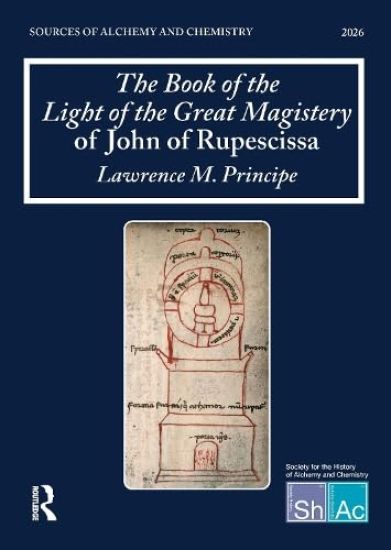
Convinced that the antichrist was “at our gates,” the Franciscan friar, alchemist, and prophet John of Rupescissa (ca. 1310-1366) wrote the Book of Light of the Great Magistery to help his future brethren restore a devastated Christendom. Written in 1354, this text provides a detailed process for making the philosophers’ stone, the substance able to transmute base metals easily into gold and silver. With this manufactured gold and silver, the true Franciscans, the “poor men of the Gospel,” could rebuild the Church and help usher in an era of peace and prosperity. This volume presents the first critical edition, modern English translation, and focussed study of John’s Book of Light. Based on over one hundred surviving manuscripts, many recently discovered, this critical edition restores substantial original text that was omitted from the printed editions and corrects longstanding textual errors. In the accompanying study, Principe explores John’s sources and ideas, especially his striking theories of matter and material change, and follows the transmission, reception, vernacularization, and multiple modifications of John’s text as readers engaged with it over the next three centuries. Modern laboratory reworkings, fully illustrated and explained, go hand-in-hand with the textual analyses, providing a vivid picture of the friar’s practices and observational skills and deeper understanding of his text. John of Rupescissa stands revealed as an innovative theorist and observant practitioner; he was not an “armchair” alchemist whose knowledge came only from textual sources. The clear evidence of his practice presented here provokes in turn a close reevaluation of the conditions of his nearly twenty-year confinement at a papal prison in Avignon where he learned and practiced much of his alchemy before writing the Book of Light. Historians of science and technology, medievalists, book historians, manuscript scholars, and many others will find new and important information in this third volume of the series Sources of Alchemy and Chemistry.