Kirjojen hintavertailu. Mukana 11 627 463 kirjaa ja 12 kauppaa.

Kirjahaku

Etsi kirjoja tekijän nimen, kirjan nimen tai ISBN:n perusteella.

7 kirjaa tekijältä Lawrence Samuel

The American Middle Class

The American Middle Class

Lawrence Samuel

Routledge
2013
sidottu
The middle class is often viewed as the heart of American society, the key to the country’s democracy and prosperity. Most Americans believe they belong to this group, and few politicians can hope to be elected without promising to serve the middle class. Yet today the American middle class is increasingly seen as under threat. In The American Middle Class: A Cultural History, Lawrence R. Samuel charts the rise and fall of this most definitive American population, from its triumphant emergence in the post-World War II years to the struggles of the present day.Between the 1920s and the 1950s, powerful economic, social, and political factors worked together in the U.S. to forge what many historians consider to be the first genuine mass middle class in history. But from the cultural convulsions of the 1960s, to the 'stagflation' of the 1970s, to Reaganomics in the 1980s, this segment of the population has been under severe stress. Drawing on a rich array of voices from the past half-century, The American Middle Class explores how the middle class, and ideas about it, have changed over time, including the distinct story of the black middle class. Placing the current crisis of the middle class in historical perspective, Samuel shows how the roots of middle-class troubles reach back to the cultural upheaval of the 1960s.The American Middle Class takes a long look at how the middle class has been winnowed away and reveals how, even in the face of this erosion, the image of the enduring middle class remains the heart and soul of the United States.
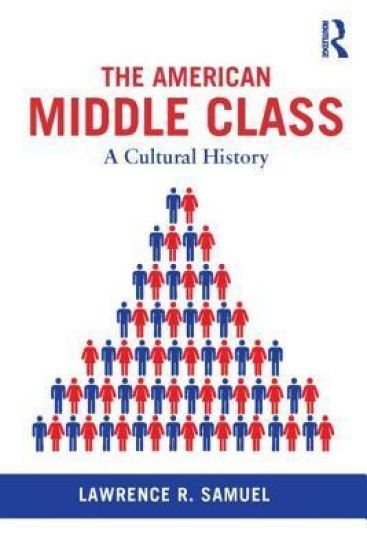
The American Middle Class

The American Middle Class

Lawrence Samuel

Routledge
2013
nidottu
The middle class is often viewed as the heart of American society, the key to the country’s democracy and prosperity. Most Americans believe they belong to this group, and few politicians can hope to be elected without promising to serve the middle class. Yet today the American middle class is increasingly seen as under threat. In The American Middle Class: A Cultural History, Lawrence R. Samuel charts the rise and fall of this most definitive American population, from its triumphant emergence in the post-World War II years to the struggles of the present day.Between the 1920s and the 1950s, powerful economic, social, and political factors worked together in the U.S. to forge what many historians consider to be the first genuine mass middle class in history. But from the cultural convulsions of the 1960s, to the 'stagflation' of the 1970s, to Reaganomics in the 1980s, this segment of the population has been under severe stress. Drawing on a rich array of voices from the past half-century, The American Middle Class explores how the middle class, and ideas about it, have changed over time, including the distinct story of the black middle class. Placing the current crisis of the middle class in historical perspective, Samuel shows how the roots of middle-class troubles reach back to the cultural upheaval of the 1960s.The American Middle Class takes a long look at how the middle class has been winnowed away and reveals how, even in the face of this erosion, the image of the enduring middle class remains the heart and soul of the United States.
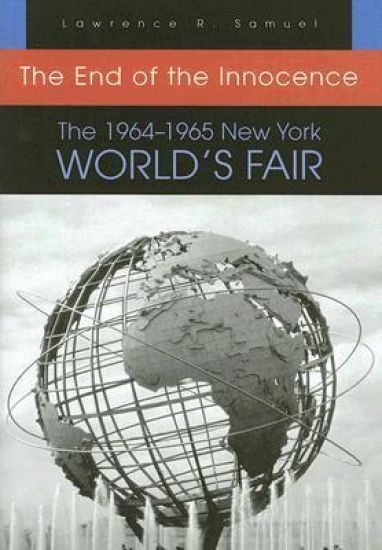
End of the Innocence 1964-1965

End of the Innocence 1964-1965

Lawrence Samuel

Syracuse University Press
2007
sidottu
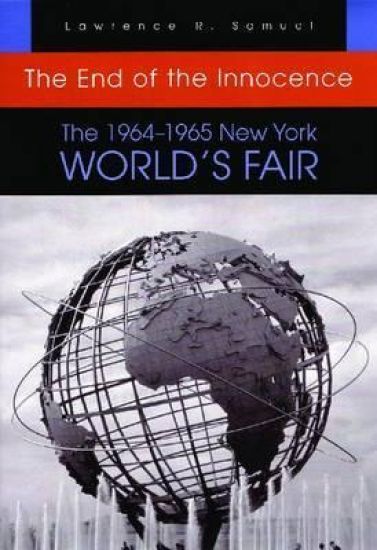
From April 1964 to October 1965, some 52 million people from around the world flocked to the New York World's Fair, an experience that lives on in the memory of many individuals and in America's collective consciousness. Taking a perceptive look back at ""the last of the great world's fairs,"" Lawrence R. Samuel offers a thought-provoking portrait of this seminal event and of the cultural climate that surrounded it. Samuel counters critics' assessments of the fair as the ""ugly duckling"" of global expositions. Opening five months after President Kennedy's assassination, the fair allowed millions to celebrate international brotherhood while the conflict in Vietnam came to a boil. This event was perhaps the last time so many from so far could gather to praise harmony while ignoring cruel realities on such a gargantuan scale. This World's Fair glorified the postwar American dream of limitless optimism even as a counterculture of sex, drugs, and rock 'n' roll came into being. It could rightly be called the last gasp of that dream: The End of the Innocence. Samuel's work charts the birth of the fair from inception in 1959 to demolition in 1966 and provides a broad overview of the social and cultural dynamics that led to the birth of the event. It also traces events and thematic aspects of the fair, with its focus on science, technology, and the world of the future. Accessible, entertaining, and informative, the book is richly illustrated with contemporary photographs.
End of the Innocence 1964-1965

End of the Innocence 1964-1965

Lawrence Samuel

Syracuse University Press
2010
nidottu
From April 1964 to October 1965, some 52 million people from around the world flocked to the New York World’s Fair, an experience that lives on in the memory of many individuals and in America’s collective consciousness. Taking a perceptive look back at ""the last of the great world’s fairs,"" Samuel offers a vivid portrait of this seminal event and of the cultural climate that surrounded it. He also counters critics’ assessments of the fair as the ""ugly duckling"" of global expositions. Opening five months after President Kennedy’s assassination, the fair allowed millions to celebrate international fellowship while the conflict in Vietnam came to a boil. This event was perhaps the last time so many from so far could gather to praise harmony while ignoring cruel realities on such a gargantuan scale. This world’s fair glorified the postwar American dream of limitless optimism even as a counterculture of sex, drugs, and rock `n` roll came into being. It could rightly be called the last gasp of that dream: The End of the Innocence. Samuel’s work charts the fair from inception in 1959 to demolition in 1966 and provides a broad overview of the social and cultural dynamics that led to the birth of the event. It also traces thematic aspects of the fair, with its focus on science, technology, and the world of the future. Accessible, entertaining, and informative, the book is richly illustrated with contemporary photographs.
The American Dream

The American Dream

Lawrence Samuel

Syracuse University Press
2012
sidottu
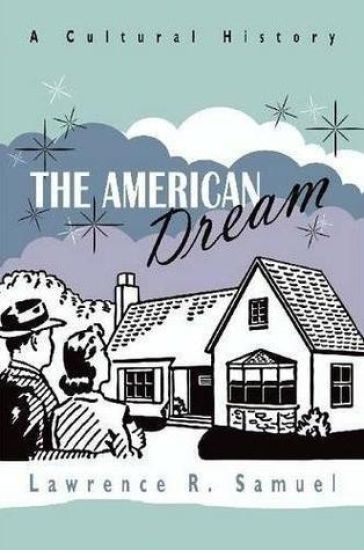
There is no better way to understand America than by understanding the cultural history of the American Dream. Rather than just a powerful philosophy or ideology, the Dream is thoroughly woven into the fabric of everyday life, playing a vital role in who we are, what we do, and why we do it. No other idea or mythology has as much influence on our individual and collective lives. Tracing the history of the phrase in popular culture, Samuel gives readers a field guide to the evolution of our national identity over the last eighty years. Samuel tells the story chronologically, revealing that there have been six major eras of the mythology since the phrase was coined in 1931. Relying mainly on period magazines and newspapers as his primary source material, the author demonstrates that journalists serving on the front lines of the scene represent our most valuable resource to recover unfiltered stories of the Dream. The problem, Samuel reveals, is that it does not exist; the Dream is just that, a product of our imagination. That it is not real ultimately turns out to be the most significant finding and what makes the story most compelling.
Home Ownership in America

Home Ownership in America

Lawrence Samuel

TAYLOR FRANCIS LTD
2024
nidottu
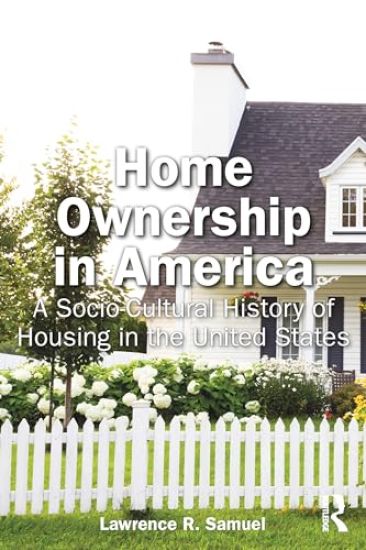
A wide-ranging cultural history centered around the concepts of real estate, the family home, and the American dream, and how they evolved over the years, Home Ownership in America: A Socio-Cultural History of Housing in the United States traces narratives around home ownership from the 1920s to today.As a product of the emergence of a large middle class during the Roaring Twenties, the modern concept of home ownership continued through the shaky Great Depression years, holding pattern of World War II, and glory days of the postwar era, when home ownership became a reality for much of the White middle class. While the late 1960s and 1970s were difficult years for home ownership as the postwar economic engine ran out of steam, a renaissance took place in the 1980s and 1990s due to tens of millions of baby boomers wanting to nest. Although there have been a few bumps in the road over the last couple of decades, home ownership, or at least the pursuit of it, is once again booming, making the subject as relevant as ever.With the single-family home central to the American idea and experience, this book touches on a host of issues related to our social divisions of race, gender, and class. Home Ownership in America is a truly interdisciplinary study, crossing over into a wide variety of subjects including sociology, family, urban history/planning, suburban studies, the built environment, public policy, business, finance, economics, politics, architecture, design, technology, and popular and consumer culture.
Home Ownership in America

Home Ownership in America

Lawrence Samuel

TAYLOR FRANCIS LTD
2024
sidottu
A wide-ranging cultural history centered around the concepts of real estate, the family home, and the American dream, and how they evolved over the years, Home Ownership in America: A Socio-Cultural History of Housing in the United States traces narratives around home ownership from the 1920s to today.As a product of the emergence of a large middle class during the Roaring Twenties, the modern concept of home ownership continued through the shaky Great Depression years, holding pattern of World War II, and glory days of the postwar era, when home ownership became a reality for much of the White middle class. While the late 1960s and 1970s were difficult years for home ownership as the postwar economic engine ran out of steam, a renaissance took place in the 1980s and 1990s due to tens of millions of baby boomers wanting to nest. Although there have been a few bumps in the road over the last couple of decades, home ownership, or at least the pursuit of it, is once again booming, making the subject as relevant as ever.With the single-family home central to the American idea and experience, this book touches on a host of issues related to our social divisions of race, gender, and class. Home Ownership in America is a truly interdisciplinary study, crossing over into a wide variety of subjects including sociology, family, urban history/planning, suburban studies, the built environment, public policy, business, finance, economics, politics, architecture, design, technology, and popular and consumer culture.