Kirjojen hintavertailu. Mukana 11 699 587 kirjaa ja 12 kauppaa.

Kirjahaku

Etsi kirjoja tekijän nimen, kirjan nimen tai ISBN:n perusteella.

20 kirjaa tekijältä Lawrence Weschler

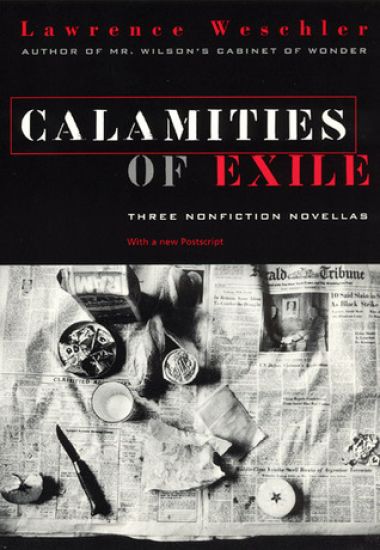
Calamities of Exile

Calamities of Exile

Lawrence Weschler

University of Chicago Press
1999
nidottu
From the author of Mr. Wilson's Cabinet of Wonder, Calamities of Exile combines three gripping narratives that afford a sort of double CAT scan into the natures of both modern totalitarianism and timeless exile."Beautiful but harrowing chronicles of three exiles that probe the moral and personal risks of their encounters with totalitarianism. . . . Piercing and timely."—Kirkus Reviews, starred review"Weschler . . . combines a novelist's gift for drama with the objectivity and research skills of a journalist. . . . The result is three gripping profiles of very human but also extraordinary men."—Publishers Weekly"[Weschler's] thorough accounting of the men's covert operations, assumed identities and strained relationships with fathers, wives, and colleagues creates a disturbing triptych of the perils of totalitarianism."—Lance Gould, New York Times Book Review"Weschler tells these three tragic tales with an admirable combination of psychological penetration, intellectual thrust, concision and compassion."—Francis King, Spectator"Endlessly absorbing. . . . Breathtaking."—Jeri Laber, Los Angeles Times Book Review
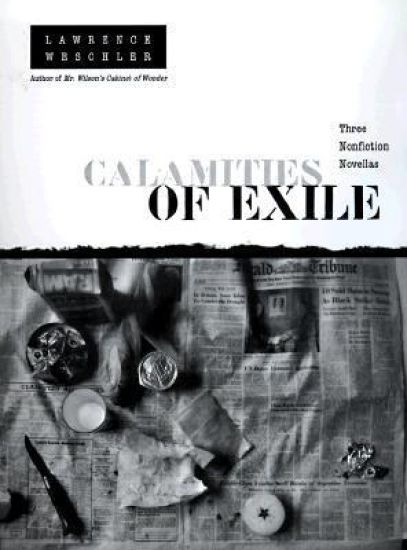
Calamities of Exile

Calamities of Exile

Lawrence Weschler

University of Chicago Press
1996
sidottu
From the author of Mr. Wilson's Cabinet of Wonder, Calamities of Exile combines three gripping narratives that afford a sort of double CAT scan into the natures of both modern totalitarianism and timeless exile. "Beautiful but harrowing chronicles of three exiles that probe the moral and personal risks of their encounters with totalitarianism...Piercing and timely."--Kirkus Reviews, starred review "Weschler ...combines a novelist's gift for drama with the objectivity and research skills of a journalist...The result is three gripping profiles of very human but also extraordinary men."--Publishers Weekly "[Weschler's] thorough accounting of the men's covert operations, assumed identities and strained relationships with fathers, wives, and colleagues creates a disturbing triptych of the perils of totalitarianism."--Lance Gould, New York Times Book Review "Weschler tells these three tragic tales with an admirable combination of psychological penetration, intellectual thrust, concision and compassion."--Francis King, Spectator "Endlessly absorbing...Breathtaking."--Jeri Laber, Los Angeles Times Book Review
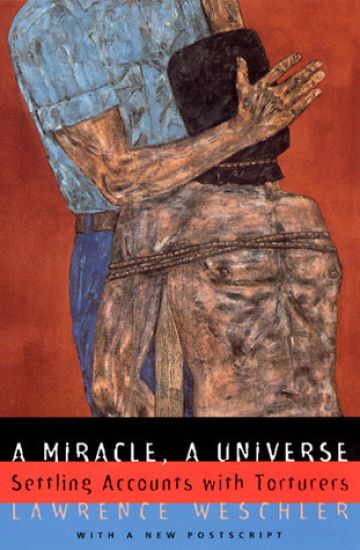
A Miracle, A Universe

A Miracle, A Universe

Lawrence Weschler

University of Chicago Press
1998
nidottu
During the past fifteen years, one of the most vexing issues facing fledgling transitional democracies around the world--from South Africa to Eastern Europe, from Cambodia to Bosnia--has been what to do about the still-toxic security apparatuses left over from the previous regime. In this now-classic and profoundly influential study, the New Yorker's Lawrence Weschler probes these dilemmas across two gripping narratives (set in Brazil and Uruguay, among the first places to face such concerns), true-life thrillers in which torture victims, faced with the paralysis of the new regime, themselves band together to settle accounts with their former tormentors. "Disturbing and often enthralling."--New York Times Book Review "Extraordinarily moving...Weschler writes brilliantly."--Newsday "Implausible, intricate and dazzling."--Times Literary Supplement "As Weschler's interviewees told their tales, I paced agitatedly, choked back tears...Weschler narrates these two episodes with skill and tact...An inspiring book."--George Scialabba, Los Angeles Weekly
Boggs

Boggs

Lawrence Weschler

University of Chicago Press
2000
nidottu
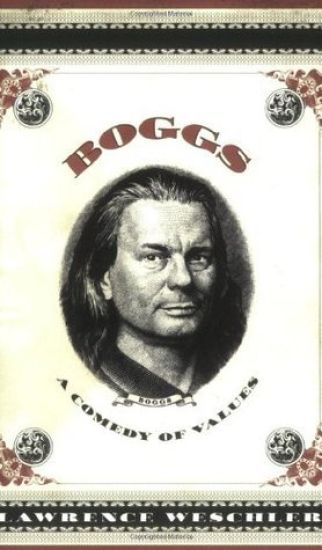
In this text, Lawrence Weschler chronicles the antics of J.S.G. Boggs, a young artist with a certain panache, a certain flair, an artist whose consuming passion is money, or perhaps, more precisely, value. What Boggs likes to do is to draw money - actual paper notes in the denominations of standard currencies from all over the world - and then to go out and try to spend those drawings. Instead of selling his money drawings outright to interested collectors, Boggs looks for merchants who will accept his drawings in lieu of cash payment for their wares or services as part of elaborately choreographed transactions, complete with receipts and even proper change - an artistic practice which regularly lands him in trouble with treasury around the world. This volume teases out these transactions and their sometimes dramatic legal consequences, following Boggs on a larkish, though at the same time disconcertingly profound, econo-philosophic chase. For in a madcap Socratic fashion, Boggs is raising all sorts of truly fundamental questions - what is it that we value in art, or, for that matter, in money? Indeed, how do we place a value on anything at all? And in particular, why do we, why should we, how can we place such trust in anything as confoundingly insubstantial as paper money? In passing, Weschler frames a concise, highly entertaining history of money itself - from cowrie shells through hedge funds.
And How Are You, Dr. Sacks?

And How Are You, Dr. Sacks?

Lawrence Weschler

Farrar, Straus Giroux Inc
2019
sidottu
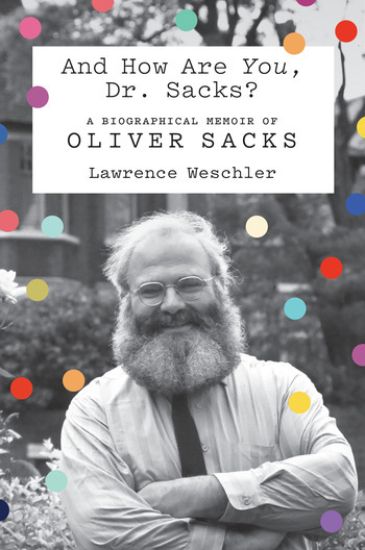
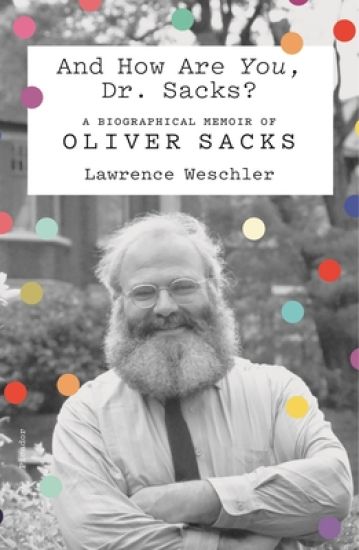
The author Lawrence Weschler began spending time with Oliver Sacks in the early 1980s, when he set out to profile the neurologist for his own new employer, The New Yorker. Almost a decade earlier, Dr. Sacks had published his masterpiece Awakenings - the account of his long-dormant patients’ miraculous but troubling return to life in a Bronx hospital ward. But the book had hardly been an immediate success, and the rumpled clinician was still largely unknown. Over the ensuing four years, the two men worked closely together until, for wracking personal reasons, Sacks asked Weschler to abandon the profile, a request to which Weschler acceded. The two remained close friends, however, across the next thirty years and then, just as Sacks was dying, he urged Weschler to take up the project once again. This book is the result of that entreaty. Weschler sets Sacks’s brilliant table talk and extravagant personality in vivid relief, casting himself as a beanpole Sancho to Sacks’s capacious Quixote. We see Sacks rowing and ranting and caring deeply; composing the essays that would form The Man Who Mistook His Wife for a Hat; recalling his turbulent drug-fueled younger days; helping his patients and exhausting his friends; and waging intellectual war against a medical and scientific establishment that failed to address his greatest concern: the spontaneous specificity of the individual human soul. And all the while he is pouring out a stream of glorious, ribald, hilarious, and often profound conversation that establishes him as one of the great talkers of the age. Here is the definitive portrait of Sacks as our preeminent romantic scientist, a self-described “clinical ontologist” whose entire practice revolved around the single fundamental question he effectively asked each of his patients: How are you? Which is to say, How do you be? A question which Weschler, with this book, turns back on the good doctor himself.
Seeing Is Forgetting the Name of the Thing One Sees

Seeing Is Forgetting the Name of the Thing One Sees

Lawrence Weschler

University of California Press
2009
pokkari
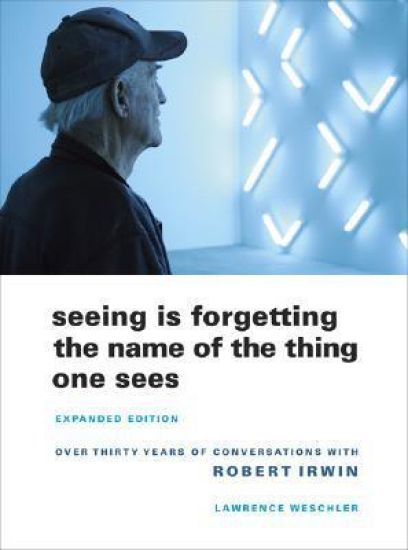
When this book first appeared in 1982, it introduced readers to Robert Irwin, the Los Angeles artist 'who one day got hooked on his own curiosity and decided to live it'. Now expanded to include six additional chapters and twenty-four pages of color plates, "Seeing Is Forgetting the Name of the Thing One Sees" chronicles three decades of conversation between Lawrence Weschler and light and space master Irwin. It surveys many of Irwin's site-conditioned projects - in particular the Central Gardens at the Getty Museum (the subject of an epic battle with the site's principal architect, Richard Meier) and the design that transformed an abandoned Hudson Valley factory into Dia's new Beacon campus - enhancing what many had already considered the best book ever on an artist.
True to Life

True to Life

Lawrence Weschler

University of California Press
2009
pokkari
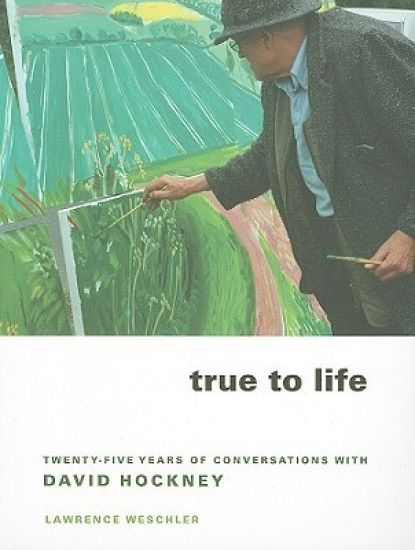
Soon after the book's publication in 1982, artist David Hockney read Lawrence Weschler's "Seeing Is Forgetting the Name of the Thing One Sees: A Life of Contemporary Artist" Robert Irwin and invited Weschler to his studio to discuss it, initiating a series of engrossing dialogs, gathered here for the first time. Weschler chronicles Hockney's protean production and speculations, including his scenic designs for opera, his homemade xerographic prints, his exploration of physics in relation to Chinese landscape painting, his investigations into optical devices, his taking up of watercolor - and then his spectacular return to oil painting, around 2005, with a series of landscapes of the East Yorkshire countryside of his youth. These conversations provide an astonishing record of what has been Hockney's grand endeavor, nothing less than an exploration of 'the structure of seeing' itself.
Mr Wilson's Cabinet of Wonder

Mr Wilson's Cabinet of Wonder

Lawrence Weschler

Vintage Books
1997
nidottu
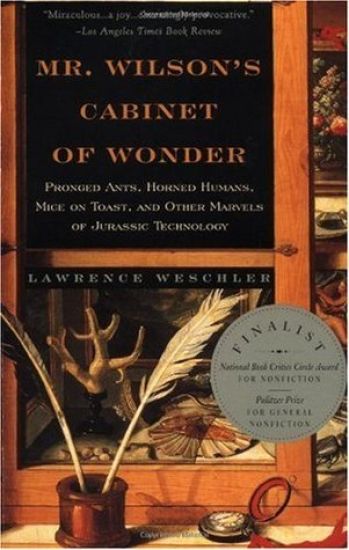
Pronged ants, horned humans, a landscape carved on a fruit pit--some of the displays in David Wilson's Museum of Jurassic Technology are hoaxes. But which ones? As he guides readers through an intellectual hall of mirrors, Lawrence Weschler revisits the 16th-century "wonder cabinets" that were the first museums and compels readers to examine the imaginative origins of both art and science. Illustrations.
Vermeer in Bosnia: Selected Writings

Vermeer in Bosnia: Selected Writings

Lawrence Weschler

VINTAGE
2005
nidottu
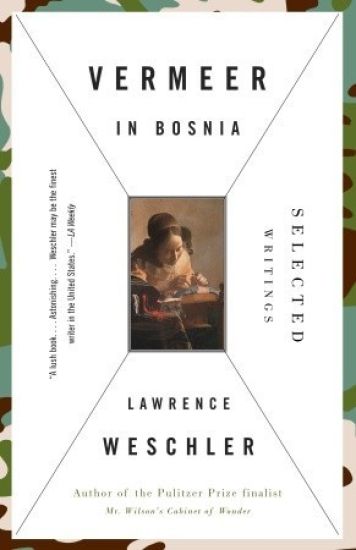
There are writers who specialize in the strange and others whose genius is to find the strangeness in the familiar, the unexpected meanings in stories we thought we knew. Of that second category, Lawrence Weschler is the master. Witness the pieces in this splendidly disorienting collection, spanning twenty years of his career and the full range of his concerns-which is to say, practically everything. Only Lawrence Weschler could reveal the connections between the twentieth century's Yugoslav wars and the equally violent Holland in which Vermeer created his luminously serene paintings. In his profile of Roman Polanski, Weschler traces the filmmaker's symbolic negotiations with his nightmarish childhood during the Holocaust. Here, too, are meditations on artists Ed Kienholz and David Hockney, on the author's grandfather and daughter, and on the light and earthquakes of his native Los Angeles. Haunting, elegant, and intoxicating, Vermeer in Bosnia awakens awe and wonder at the world around us.
And How Are You, Dr. Sacks?

And How Are You, Dr. Sacks?

Lawrence Weschler

Picador USA
2020
nidottu
The author Lawrence Weschler began spending time with Oliver Sacks in the early 1980s, when he set out to profile the neurologist for his own new employer, The New Yorker. Almost a decade earlier, Dr. Sacks had published his masterpiece Awakenings - the account of his long-dormant patients miraculous but troubling return to life in a Bronx hospital ward. But the book had hardly been an immediate success, and the rumpled clinician was still largely unknown. Over the ensuing four years, the two men worked closely together until, for wracking personal reasons, Sacks asked Weschler to abandon the profile, a request to which Weschler acceded. The two remained close friends, however, across the next thirty years and then, just as Sacks was dying, he urged Weschler to take up the project once again. This book is the result of that entreaty. Weschler sets Sacks’s brilliant table talk and extravagant personality in vivid relief, casting himself as a beanpole Sancho to Sacks’s capacious Quixote. We see Sacks rowing and ranting and caring deeply; composing the essays that would form The Man Who Mistook His Wife for a Hat; recalling his turbulent drug-fueled younger days; helping his patients and exhausting his friends; and waging intellectual war against a medical and scientific establishment that failed to address his greatest concern: the spontaneous specificity of the individual human soul. And all the while he is pouring out a stream of glorious, ribald, hilarious, and often profound conversation that establishes him as one of the great talkers of the age. Here is the definitive portrait of Sacks as our preeminent romantic scientist, a self-described “clinical ontologist” whose entire practice revolved around the single fundamental question he effectively asked each of his patients: How are you? Which is to say, How do you be? A question which Weschler, with this book, turns back on the good doctor himself.
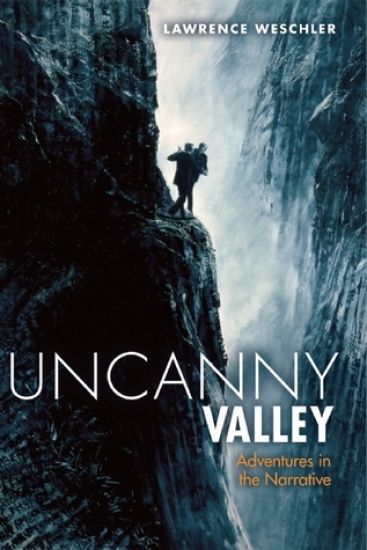
Uncanny Valley

Uncanny Valley

Lawrence Weschler

Counterpoint
2011
sidottu
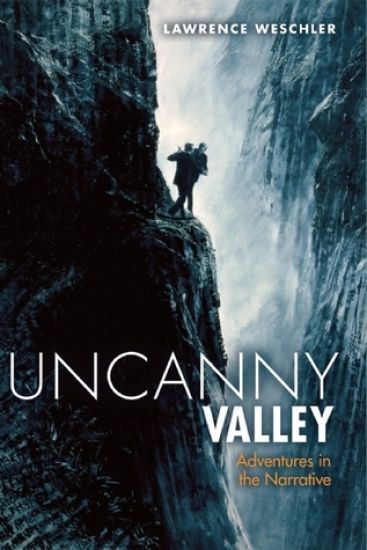
Shuttling between cultural comedies and political tragedies, Lawrence Weschler's articles have throughout his long career intrigued readers with his unique insight into everything he examines, from the ordinary to the extraordinary.Uncanny Valley continues the page-turning conversation as Weschler collects the best of his narrative nonfiction from the past fifteen years. The title piece surveys the hapless efforts of digital animators to fashion a credible human face, the endlessly elusive gold standard of the profession. Other highlights include profiles of novelist Mark Salzman, as he wrestles with a hilariously harrowing bout of writer's block; the legendary film and sound editor Walter Murch, as he is forced to revisit his work on Apocalypse Now in the context of the more recent Iraqi war film Jarhead; and the artist Vincent Desiderio, as he labors over an epic canvas portraying no less than a dozen sleeping figures.With his signature style and endless ability to wonder, Weschler proves yet again that the  world is strange, beautiful, and connected" (The Globe and Mail). Uncanny Valley demonstrates his matchless ability to analyze the marvels he finds in places and people and offers us a new, sublime way of seeing the world.
Robert Irwin Getty Garden - Revised Edition

Robert Irwin Getty Garden - Revised Edition

Lawrence Weschler

Getty Publications
2020
sidottu
Among the most beloved sites at the Getty Center, the Central Garden has aroused intense interest from the moment artist Robert Irwin was awarded the commission. First published in 2002, 'Robert Irwin Getty Garden' is comprised of a series of discussions between noted author Lawrence Weschler and Irwin, providing a lively account of what Irwin has playfully termed "a sculpture in the form of a garden aspiring to be art." The text revolves around four garden walks: extended conversations in which the artist explains the critical choices he made - from plant materials to steel - in the creation of a living work of art that has helped to redefine what a modern garden can and should be. This updated edition features new photography of the Central Garden in a smaller, more accessible format.
Uncanny Valley

Uncanny Valley

Lawrence Weschler

Counterpoint
2012
nidottu
Shuttling between cultural comedies and political tragedies, Lawrence Weschler's articles have intrigued readers throughout his long career. He examines everything, from the ordinary to the extraordinary, and his insights are illuminating. Uncanny Valley continues the page-turning conversation as Weschler collects the best of his narrative nonfiction from the past fifteen years. The title piece surveys the hapless efforts of digital animators to fashion a credible human face, the endlessly elusive gold standard of the profession. Other highlights include profiles of novelist Mark Salzman, as he wrestles with a hilariously harrowing bout of writer's block; the legendary film and sound editor Walter Murch, as he is forced to revisit his work on Apocalypse Now in the context of the more recent Iraqi war film Jarhead; and the artist Vincent Desiderio, as he labors over an epic canvas portraying no less than a dozen sleeping figures. With his signature style and endless ability to wonder, Weschler proves yet again that the  world is strange, beautiful, and connected" (The Globe and Mail). Uncanny Valley demonstrates his matchless ability to analyze the marvels he finds in places and people and offers us a new, sublime way of seeing the world.
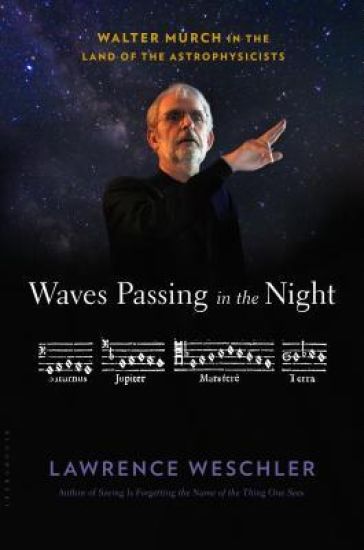
Waves Passing in the Night

Waves Passing in the Night

Lawrence Weschler

Bloomsbury USA
2017
sidottu
For film aficionados, Walter Murch is legendary--a three-time Academy Award winner, arguably the most admired sound and film editor in the world for his work on Apocalypse Now, The Godfather trilogy, The English Patient, and many others. Outside of the studio, his mind is wide-ranging; his passion, pursued for several decades, has been astrophysics, in particular the rehabilitation of Titius-Bode, a long-discredited 18th century theory regarding the patterns by which planets and moons array themselves in gravitational systems across the universe. Though as a consummate outsider he's had a hard time attracting any sort of comprehensive hearing from professional astrophysicists, Murch has made advances that even some of them find intriguing, including a connection between Titius Bode and earlier notions--going back past Kepler and Pythagorus--of musical harmony in the heavens. Unfazed by rejection, ever probing, Murch perseveres in the highest traditions of outsider science.Lawrence Weschler brings Murch's quest alive in all its seemingly quixotic, yet still plausible, splendor, probing the basis for how we know what we know, and who gets to say. "The wholesale rejection of alternative theories has repeatedly held back the progress of vital science," Weschler observes, citing early twentieth-century German amateur Alfred Wegener, whose speculations about continental drift were ridiculed at first, only to be accepted as fact decades later. Theoretical physicist Lee Smolin says "It is controversy that brings science alive"--and Murch's quest does that in spades. His fascination with the way the planets and their moons are arranged opens up the field of celestial mechanics for general readers, sparking an awareness of the vast and (to us) invisible forces constantly at play in the universe.
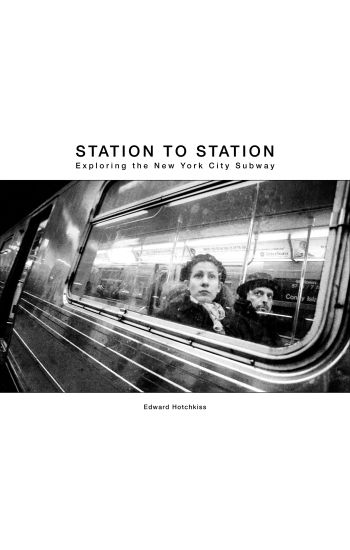
Station to Station

Station to Station

Lawrence Weschler

Daylight Books
2022
sidottu
Photographer Ed Hotchkiss traveled to neighborhoods from the north Bronx to Rockaway; from the teeming center of Queens to the western edge of midtown. This unexpected odyssey resulted in a group of photographs that reveals the true humanity on the NYC subway.
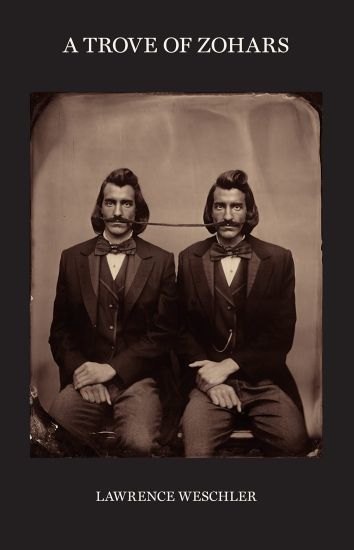
A Trove of Zohars

A Trove of Zohars

Lawrence Weschler

Hat Beard Press
2023
sidottu
So Lawrence Weschler was minding his own business, as all his stories begin, when he got a call from Gravity Goldberg. Gravity (her real name ) introduced herself as the Director of Public Programs and Visitor Experience at The Contemporary Jewish Museum in San Francisco. She was calling, she told him, to apprise him of an upcoming show--an inaugural exhibition, that is, of a recently uncovered trove of work by Shimmel Zohar, a mid-19th-century Lithuanian immigrant photographer (contemporary of Mathew Brady), who had chronicled the Jewish immigrant community of the Lower East Side of 1860s-1870s Manhattan in unparalleled detail, compiling a complete inventory of professions and types. Or not. There was, she suggested, some slippage in the whole story, and they were trying to find someone who might be willing to investigate things, and they were wondering, might he be interested? Thus begins an antic tale of investigative perplex and vertiginous inquiry, as Weschler tracks down Stephen Berkman, the wet-collodion devotee who claims to have discovered the trove in question, but it's a long and loopy story. And indeed, Weschler's account evolves into the fourth volume of his ongoing "Chronicles of Slippage" series, doing for the early history of photography and the long heritance of Judaism what the series' first volume, the Pulitzer-shortlisted Mr. Wilson's Cabinet of Wonder, once did for the history of museums and the phenomenology of marvel. And that's just the half of it, for the main text sprouts a veritable delirium of digressive footnotes (taking up more than half the book), constituting what may be the closest we are going to ever get by way of memoir from this confounding and beloved writer.
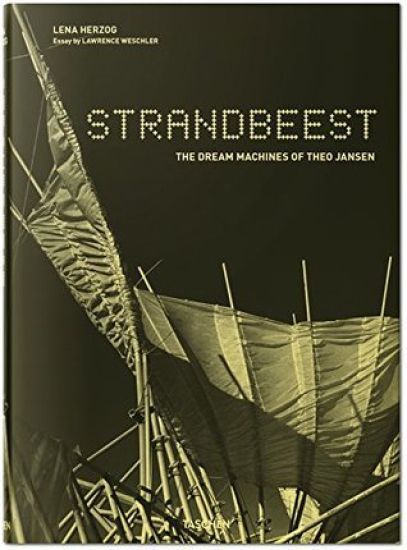
Strandbeest. The Dream Machines of Theo Jansen
For seven years, photographer and artist Lena Herzog followed the evolution of a new kinetic species. Intricate as insects but with bursts of equine energy, the “Strandbeests,” or “beach creatures,” are the creation of Dutch artist Theo Jansen, who has been working for nearly two decades to generate these new life-forms that move, and even survive, on their own. Set to roam the beaches of Holland, the Strandbeests pick up the wind in their gossamer wings and spring, as if by metamorphosis, into action. As if it were blood, not the breeze, running through their delicate forms, they quiver, cavort, and trot against the sun and sea, pausing to change direction if they sense loose sand or water that might destabilize their movement. Coinciding with a traveling exhibition, Herzog’s photographic tribute captures Jansen’s menagerie in a meditative black and white, showcasing Jansen’s imaginative vision, as well as the compelling intersection of animate and inanimate in his creatures. The result is a work of art in its own right and a mesmerizing encounter not only with a very surrealist brand of marvelous, but also with whole new ideas of existence.
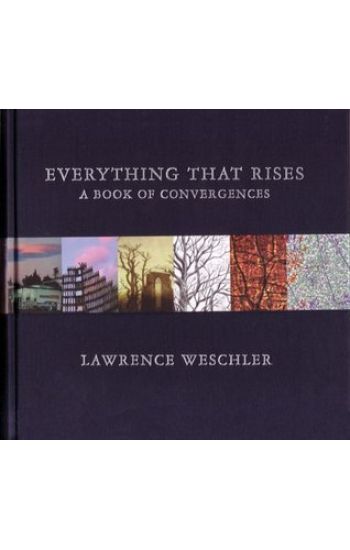
Everything That Rises

Everything That Rises

Lawrence Weschler

McSweeney's Publishing
2006
sidottu
From a cuneiform tablet to a Chicago prison, from the depths of the cosmos to the text on our T-shirts, art historian and journalist Lawrence Weschler finds strange connections wherever he looks. The farther one travels (through geography, through art, through science, through time), the more everything seems to converge -- at least, it does through Weschler's giddy, brilliant eyes. Weschler combines his keen insights into art (both contemporary and Renaissance), his years of experience as a chronicler of the fall of Communism, and his triumphs and failures as the father of a teenage girl into a series of essays that are sure to illuminate, educate, and astound.