Kirjojen hintavertailu. Mukana 11 627 670 kirjaa ja 12 kauppaa.

Kirjahaku

Etsi kirjoja tekijän nimen, kirjan nimen tai ISBN:n perusteella.

44 kirjaa tekijältä Lea Rawls

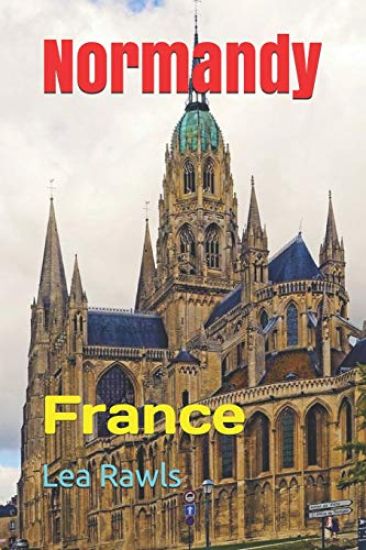
Normandy: France

Normandy: France

Lea Rawls

Independently Published
2019
nidottu
Normandy is one of the 18 regions of France, roughly referring to the historical Duchy of Normandy.Normandy is divided into five administrative departments: Calvados, Eure, Manche, Orne, and Seine-Maritime. It covers 30,627 square kilometres (11,825 sq mi), comprising roughly 5% of the territory of metropolitan France. Its population of 3.37 million accounts for around 5% of the population of France. The inhabitants of Normandy are known as Normans, and the region is the historic homeland of the Norman language.The historical region of Normandy comprised the present-day region of Normandy, as well as small areas now part of the departments of Mayenne and Sarthe. The Channel Islands (French: les Anglo-Normandes) are also historically part of Normandy; they cover 194 km and comprise two bailiwicks: Guernsey and Jersey, which are British Crown dependencies over which Queen Elizabeth II reigns as Duke of Normandy. Normandy's name comes from the settlement of the territory by mainly Danish and Norwegian Vikings ("Northmen") from the 9th century, and confirmed by treaty in the 10th century between King Charles III of France and the Viking jarl Rollo. For a century and a half following the Norman conquest of England in 1066, Normandy and England were linked by Norman and Frankish rulers.Between 1956 and 2015 Normandy was divided into two administrative regions: Lower Normandy and Upper Normandy; the regions were merged into one single region on 1 January 2016. Upper Normandy (Haute-Normandie) consisted of the French departments of Seine-Maritime and Eure, and Lower Normandy (Basse-Normandie) of the departments of Orne, Calvados, and Manche.Normandy is sparsely forested: 12.8% of the territory is wooded, compared to a French average of 23.6%, although the proportion varies between the departments. Eure has most cover (21%) while Manche has least (4%), a characteristic shared with the Islands.The Regional Council has 102 members who are elected under a system of proportional representation. The executive consists of a president and vice-presidents. Herv Morin from the Centre party was elected president of the council in January 2016.Much of Normandy is predominantly agricultural in character, with cattle breeding the most important sector (although in decline from the peak levels of the 1970s and 1980s).The main cities (population given from the 1999 census) are Rouen (518,316 in the metropolitan area), the capital since 2016 of the province and formerly of Upper Normandy; Caen (420,000 in the metropolitan area) and formerly the capital of Lower Normandy; Le Havre (296,773 in the metropolitan area); and Cherbourg (117,855 in the metropolitan area).The traditional provincial flag of Normandy, gules, two leopards passant or, is used in both modern regions. Architecturally, Norman cathedrals, abbeys (such as the Abbey of Bec) and castles characterise the former duchy in a way that mirrors the similar pattern of Norman architecture in England following the Norman Conquest of 1066.Fish and seafood are of superior quality in Normandy. Turbot and oysters from the Cotentin Peninsula are major delicacies throughout France. Normandy is the chief oyster-cultivating, scallop-exporting, and mussel-raising region in France.
Khmer: Cambodia

Khmer: Cambodia

Lea Rawls

Independently Published
2018
nidottu
Cambodia (/k mˈboʊdiə/ ( listen); 8] Khmer: កម្ពុជា, or Kampuchea: IPA: kam.pu.ciə], French: Cambodge), officially known as the Kingdom of Cambodia (Khmer) is a sovereign state located in the southern portion of the Indochina peninsula in Southeast Asia. It is 181,035 square kilometres (69,898 square miles) in area, bordered by Thailand to the northwest, Laos to the northeast, Vietnam to the east and the Gulf of Thailand to the southwest. The head of government is the Prime Minister, currently Hun Sen, the longest serving non-royal leader in Southeast Asia, ruling Cambodia since 1985. In 802 AD, Jayavarman II declared himself king, uniting the warring Khmer princes of Chenla under the name "Kambuja".] This marked the beginning of the Khmer Empire, which flourished for over 600 years, allowing successive kings to control and exert influence over much of Southeast Asia and accumulate immense power and wealth. The Indianised kingdom built more than 5,000 temples and monuments including Angkor Wat, now a World Heritage Site, and facilitated the spread of first Hinduism then Buddhism to much of Southeast Asia. After the fall of Angkor to Ayutthaya in the 15th century, a reduced and weakened Cambodia was then ruled as a vassal state by its neighbours. In 1863, Cambodia became a protectorate of France, which doubled the size of the country by reclaiming the north and west from Thailand. Cambodia gained independence in 1953. The Vietnam War extended into the country with the US bombing of Cambodia from 1969 until 1973. Following the Cambodian coup of 1970 which installed the right-wing pro-US Khmer Republic, the deposed king gave his support to his former enemies, the Khmer Rouge. The Khmer Rouge emerged as a major power, taking Phnom Penh in 1975 and later carrying out the Cambodian genocide from 1975 until 1979, when they were ousted by Vietnam and the Vietnamese-backed People's Republic of Kampuchea, supported by the Soviet Union in the Cambodian-Vietnamese War (1979-91). Following the 1991 Paris Peace Accords, Cambodia was governed briefly by a United Nations mission (1992-93). The UN withdrew after holding elections in which around 90 percent of the registered voters cast ballots. The 1997 factional fighting resulted in the ousting of the government by Prime Minister Hun Sen and the Cambodian People's Party, who remain in power as of 2018. Cambodia is a member of the United Nations since 1955, ASEAN, the East Asia Summit, the WTO, the Non-Aligned Movement and La Francophonie. Cambodia has one of the fastest growing economies in Asia, with growth averaging 7.6 percent over the last decade. Agriculture remains the dominant economic sector, with strong growth in textiles, construction, garments and tourism leading to increased foreign investment and international trade.
Mount Fuji: Japan

Mount Fuji: Japan

Lea Rawls

Independently Published
2018
nidottu
Mount Fuji (富士山 Fujisan) located on Honshū, is the highest mountain in Japan at 3,776.24 m (12,389 ft), 2nd-highest peak of an island (volcanic) in Asia, and 7th-highest peak of an island in the world. 1] It is an activestratovolcano that last erupted in 1707-1708. 4] 5] Mount Fuji lies about 100 kilometers (60 mi) south-west of Tokyo, and can be seen from there on a clear day. Mount Fuji's exceptionally symmetrical cone, which is snow-capped for about 5 months a year, is a well-known symbol of Japan and it is frequently depicted in art and photographs, as well as visited by sightseers and climbers. 6] Mount Fuji is one of Japan's "Three Holy Mountains" (三霊山 Sanreizan) along with Mount Tate and Mount Haku. It is also a Special Place of Scenic Beauty and one of Japan's Historic Sites. 7] It was added to the World Heritage List as a Cultural Site on June 22, 2013. 7] According to UNESCO, Mount Fuji has "inspired artists and poets and been the object of pilgrimage for centuries". UNESCO recognizes 25 sites of cultural interest within the Mount Fuji locality. These 25 locations include the mountain and the shrine, Fujisan Hongū Sengen Taisha, as well as the Taisekiji Head Temple founded in 1290, later immortalized by Japanese ukiyo-eartist Katsushika Hokusai. In English, the mountain is known as Mount Fuji. Some sources refer to it as "Fuji-san", "Fujiyama" or, redundantly, "Mt. Fujiyama". Mount Fuji is an attractive volcanic cone and a frequent subject of Japanese art especially after 1600, when Edo (now Tokyo) became the capital and people saw the mountain while traveling on the Tōkaidō road. Mount Fuji is a very distinctive feature of the geography of Japan. The summit of Mount Fuji has a tundra climate (K ppen climate classification ET). The temperature is very low at the high altitude, and the cone is covered by snow for several months of the year. The lowest recorded temperature is -38.0 C (-36.4 F) recorded in February 1981, and the highest temperature was 17.8 C (64.0 F) recorded in August 1942. Mount Fuji is located at a trench-trench-trench triple junction where the Amurian Plate (Eurasian Plate), the Okhotsk Plate(North American Plate), and the Philippine Sea Plate meet. The forest at the north west base of the mountain is named Aokigahara. Folk tales and legends tell of ghosts, demons, Approximately 300,000 people climbed Mount Fuji in 2009. The most-popular period for people to hike up Mount Fuji is from July to August, while huts and other facilities are operating.
Volcano: Eruption

Volcano: Eruption

Lea Rawls

Independently Published
2018
nidottu
A volcano is a rupture in the crust of a planetary-mass object, such as Earth, that allows hot lava, volcanic ash, and gases to escape from a magma chamber below the surface. Earth's volcanoes occur because its crust is broken into 17 major, rigid tectonic plates that float on a hotter, softer layer in its mantle.. Therefore, on Earth, volcanoes are generally found where tectonic plates are diverging or converging, and most are found underwater. For example, a mid-oceanic ridge, such as the Mid-Atlantic Ridge, has volcanoes caused by divergent tectonic plates whereas the Pacific Ring of Fire has volcanoes caused by convergent tectonic plates. Volcanoes can also form where there is stretching and thinning of the crust's plates, e.g., in the East African Rift and the Wells Gray-Clearwater volcanic field and Rio Grande Rift in North America. This type of volcanism falls under the umbrella of "plate hypothesis" volcanism. Volcanism away from plate boundaries has also been explained as mantle plumes. These so-called "hotspots", for example Hawaii, are postulated to arise from upwelling diapirs with magma from the core-mantle boundary, 3,000 km deep in the Earth. Volcanoes are usually not created where two tectonic plates slide past one another. Erupting volcanoes can pose many hazards, not only in the immediate vicinity of the eruption. One such hazard is that volcanic ash can be a threat to aircraft, in particular those with jet engines where ash particles can be melted by the high operating temperature; the melted particles then adhere to the turbine blades and alter their shape, disrupting the operation of the turbine. Large eruptions can affect temperature as ash and droplets of sulfuric acid obscure the sun and cool the Earth's lower atmosphere (or troposphere); however, they also absorb heat radiated from the Earth, thereby warming the upper atmosphere (or stratosphere). Historically, volcanic winters have caused catastrophic famines. The word volcano is derived from the name of Vulcano, a volcanic island in the Aeolian Islands of Italy whose name in turn comes from Vulcan, the god of fire in Roman mythology. The study of volcanoes is called volcanology. Hotspots are volcanic areas believed to be formed by mantle plumes, which are hypothesized to be columns of hot material rising from the core-mantle boundary in a fixed space that causes large-volume melting. Because tectonic plates move across them, each volcano becomes dormant and is eventually re-formed as the plate advances over the postulated plume. The Hawaiian Islands are said to have been formed in such a manner; so has the Snake River Plain, with the Yellowstone Caldera being the part of the North American plate above the hot spot. This theory, however, has been doubted. The features of volcanoes are much more complicated and their structure and behavior depends on a number of factors. Shield volcanoes, so named for their broad, shield-like profiles, are formed by the eruption of low-viscosity lava that can flow a great distance from a vent. They generally do not explode catastrophically. Since low-viscosity magma is typically low in silica, shield volcanoes are more common in oceanic than continental settings. The Hawaiian volcanic chain is a series of shield cones, and they are common in Iceland, as well.
Gdansk: Poland

Gdansk: Poland

Lea Rawls

Independently Published
2018
nidottu
Gdańsk is a Polish city on the Baltic coast. It is the capital of the Pomeranian Voivodeship and the capital of Kashubia, Poland's principal seaport and the centre of the country's fourth-largest metropolitan area. 2] The city lies on the southern edge of Gdańsk Bay (of the Baltic Sea), in a conurbation with the city of Gdynia, spa town of Sopot, and suburban communities, which together form a metropolitan area called the Tricity (Tr jmiasto), with a population approaching 1.4 million. Gdańsk itself has a population of 460,427 (December 2012), making it the largest city in the Pomerania region of Northern Poland. Gdańsk is the capital of Gdańsk Pomerania and the largest city of Kashubia. With its origins as a Polish stronghold erected in the 980s by Mieszko I of Poland, the city's history is complex, with periods of Polish rule, periods of Prussian or German rule, and periods of autonomy or self-rule as a "free city". In the early-modern age Gdańsk was a royal city of Poland. It was considered the wealthiest and the largest city of Poland, prior to the 18th century rapid growth of Warsaw. Between the world wars, the Free City of Danzig was in a customs union with Poland and was located between German East Prussia and the so-called Polish Corridor. Gdańsk lies at the mouth of the Motlawa River, connected to the Leniwka, a branch in the delta of the nearby Vistula River, which drains 60 percent of Poland and connects Gdańsk with the Polish capital, Warsaw. Together with the nearby port of Gdynia, Gdańsk is also a notable industrial center. In the late Middle Ages it was an important seaport and shipbuilding town and, in the 14th and 15th centuries, a member of the Hanseatic League. In the interwar period, owing to its multi-ethnic make-up and history, Danzig lay in a disputed region between Poland and the Weimar Republic, and later Nazi Germany. The city's ambiguous political status was exploited, furthering tension between the two countries, which would ultimately culminate in the Invasion of Poland and the first clash of the Second World War just outside the city limits. In the 1980s it would become the birthplace of the Solidarity movement, which played a major role in bringing an end to Communistrule in Poland and helped precipitate the collapse of the Eastern Bloc, the fall of the Berlin Wall and the dissolution of the Soviet Union. Gdańsk is home to the University of Gdańsk, Gdańsk University of Technology, the National Museum, the Gdańsk Shakespeare Theatre, the Museum of the Second World War, Polish Baltic Philharmonic and the European Solidarity Centre. The city also hosts St. Dominic's Fair, which dates back to 1260, and is regarded as one of the biggest trade and cultural events in Europe. The industrial sections of the city are dominated by shipbuilding, petrochemical & chemical industries, and food processing. Gdańsk has a climate with both oceanic and continental influences.
Volcanic: Hot Lava

Volcanic: Hot Lava

Lea Rawls

Independently Published
2018
nidottu
A volcano is a rupture in the crust of a planetary-mass object, such as Earth, that allows hot lava, volcanic ash, and gases to escape from a magma chamber below the surface.Earth's volcanoes occur because its crust is broken into 17 major, rigid tectonic plates that float on a hotter, softer layer in its mantle. Therefore, on Earth, volcanoes are generally found where tectonic plates are diverging or converging, and most are found underwater. For example, a mid-oceanic ridge, such as the Mid-Atlantic Ridge, has volcanoes caused by divergent tectonic plates whereas the Pacific Ring of Fire has volcanoes caused by convergent tectonic plates. Volcanoes can also form where there is stretching and thinning of the crust's plates, e.g., in the East African Rift and the Wells Gray-Clearwater volcanic field and Rio Grande Rift in North America. This type of volcanism falls under the umbrella of "plate hypothesis" volcanism. Volcanism away from plate boundaries has also been explained as mantle plumes. These so-called "hotspots", for example Hawaii, are postulated to arise from upwelling diapirs with magma from the core-mantle boundary, 3,000 km deep in the Earth. Volcanoes are usually not created where two tectonic plates slide past one another.Erupting volcanoes can pose many hazards, not only in the immediate vicinity of the eruption. One such hazard is that volcanic ash can be a threat to aircraft, in particular those with jet engines where ash particles can be melted by the high operating temperature; the melted particles then adhere to the turbine blades and alter their shape, disrupting the operation of the turbine. Large eruptions can affect temperature as ash and droplets of sulfuric acid obscure the sun and cool the Earth's lower atmosphere (or troposphere); however, they also absorb heat radiated from the Earth, thereby warming the upper atmosphere (or stratosphere). Historically, volcanic winters have caused catastrophic famines.A volcanic winter is thought to have taken place around 70,000 years ago after the supereruption of Lake Toba on Sumatra island in Indonesia. According to the Toba catastrophe theory to which some anthropologists and archeologists subscribe, it had global consequences, killing most humans then alive and creating a population bottleneck that affected the genetic inheritance of all humans today. It has been suggested that volcanic activity caused or contributed to the End-Ordovician, Permian-Triassic, Late Devonian mass extinctions, and possibly others. The massive eruptive event which formed the Siberian Traps, one of the largest known volcanic events of the last 500 million years of Earth's geological history, continued for a million years and is considered to be the likely cause of the "Great Dying" about 250 million years ago, which is estimated to have killed 90% of species existing at the time.
Animal Yawning: Reflex Consisting

Animal Yawning: Reflex Consisting

Lea Rawls

Independently Published
2018
nidottu
A yawn is a reflex consisting of the simultaneous inhalation of air and the stretching of the eardrums, followed by an exhalation of breath.Yawning (oscitation) most often occurs in adults immediately before and after sleep, during tedious activities and as a result of its contagious quality. It is commonly associated with tiredness, stress, sleepiness, or even boredom and hunger. In humans, yawning is often triggered by others yawning (e.g. seeing a person yawning, talking to someone on the phone who is yawning) and is a typical example of positive feedback. This "contagious" yawning has also been observed in chimpanzees, dogs, cats, birds, and reptiles, and can occur across species. Approximately 20 psychological reasons for yawning have been proposed by scholars, but there is little agreement on the primacy of any one. During a yawn, the tensor tympani muscle in the middle ear contracts, creating a rumbling noise from within the head. Yawning is sometimes accompanied, in humans and animals, by an instinctive act of stretching several parts of the body, including arms, neck, shoulders and back.In animals, yawning can serve as a warning signal. For example, Charles Darwin, in his book The Expression of the Emotions in Man and Animals, mentioned that baboons yawn to threaten their enemies, possibly by displaying large canine teeth. Similarly, Siamese fighting fish yawn only when they see a conspecific (same species) or their own mirror-image, and their yawn often accompanies aggressive attack. Guinea pigs also yawn in a display of dominance or anger, displaying their impressive incisor teeth. This is often accompanied by teeth chattering, purring and scent marking. Adelie penguins employ yawning as part of their courtship ritual. Penguin couples face off and the males engage in what is described as an "ecstatic display", opening their beaks and pointing their faces skyward. This trait has also been seen among emperor penguins. Researchers have been attempting to discover why these two different species share this trait, despite not sharing a habitat. Snakes yawn, both to realign their jaws after a meal and for respiratory reasons, as their trachea can be seen to expand when they do this. Dogs, and occasionally cats, often yawn after seeing people yawn and when they feel uncertain. Dogs demonstrate contagious yawning when exposed to human yawning. Dogs are very adept at reading human communication actions, so it is unclear if this phenomenon is rooted in evolutionary history or a result of domestication. Fish can also yawn, and they increase this behavior due to lack of oxygen.
Unicorn: Legendary Creature

Unicorn: Legendary Creature

Lea Rawls

Independently Published
2018
nidottu
The unicorn is a legendary creature that has been described since antiquity as a beast with a single large, pointed, spiraling hornprojecting from its forehead. The unicorn was depicted in ancient seals of the Indus Valley Civilization and was mentioned by the ancient Greeks in accounts of natural history by various writers, including Ctesias, Strabo, Pliny the Younger, and Aelian. The Biblealso describes an animal, the re'em, which some versions translate as unicorn. In European folklore, the unicorn is often depicted as a white horse-like or goat-like animal with a long horn and cloven hooves (sometimes a goat's beard). In the Middle Ages and Renaissance, it was commonly described as an extremely wild woodland creature, a symbol of purity and grace, which could be captured only by a virgin. In the encyclopedias, its horn was said to have the power to render poisoned water potable and to heal sickness. In medieval and Renaissance times, the tusk of the narwhal was sometimes sold as unicorn horn.The horn itself and the substance it was made of was called alicorn, and it was believed that the horn holds magical and medicinal properties.One traditional method of hunting unicorns involved entrapment by a virgin.In one of his notebooks Leonardo da Vinci wrote: The unicorn, through its intemperance and not knowing how to control itself, for the love it bears to fair maidens forgets its ferocity and wildness; and laying aside all fear it will go up to a seated damsel and go to sleep in her lap, and thus the hunters take it.The famous late Gothic series of seven tapestry hangings The Hunt of the Unicorn are a high point in European tapestry manufacture, combining both secular and religious themes. The tapestries now hang in the Cloisters division of the Metropolitan Museum of Art in New York City. In heraldry the unicorn is best known as the symbol of Scotland.Golden coins known as the unicorn and half-unicorn, both with a unicorn on the obverse, were used in Scotland in the 15th and 16th century. In the same realm, carved unicorns were often used as finials on the pillars of Mercat crosses, and denoted that the settlement was a royal burgh. Certain noblemen such as the Earl of Kinnoull were given special permission to use the unicorn in their arms, as an augmentation of honour. The crest for Clan Cunningham bears a unicorn head
Alaska: Aurora Borealis

Alaska: Aurora Borealis

Lea Rawls

Independently Published
2018
nidottu
Alaska is a U.S. state in the northwest extremity of North America. The Canadian administrative divisions of British Columbia and Yukon border the state to the east, its most extreme western part is Attu Island, and it has a maritime border with Russia (Chukotka Autonomous Okrug) to the west across the Bering Strait. To the north are the Chukchi and Beaufort seas-the southern parts of the Arctic Ocean. The Pacific Ocean lies to the south and southwest. It is the largest state in the United States by area and the seventh largest subnational division in the world. In addition, it is the 3rd least populous and the most sparsely populated of the 50 United States; nevertheless, it is by far the most populous territory located mostly north of the 60th parallel in North America: its population-estimated at 738,432 by the U.S. Census Bureau in 2015 5]- is more than quadruple the combined populations of Northern Canada and Greenland. Approximately half of Alaska's residents live within the Anchorage metropolitan area. Alaska's economy is dominated by the fishing, natural gas, and oil industries, resources which it has in abundance. Military bases and tourism are also a significant part of the economy.The United States purchased Alaska from the Russian Empire on March 30, 1867, for 7.2 million U.S. dollars at approximately two cents per acre ($4.74/km2). The area went through several administrative changes before becoming organized as a territory on May 11, 1912. It was admitted as the 49th state of the U.S. on January 3, 1959.The Interior is the largest region of Alaska; much of it is uninhabited wilderness. Fairbanks is the only large city in the region. Denali National Park and Preserve is located here. Denali is the highest mountain in North America.Alaska has more than three million lakes. Marshlands and wetland permafrost cover 188,320 square miles (487,747 km2) (mostly in northern, western and southwest flatlands). Glacier ice covers about 28,957 square miles (75,000 km2) of Alaska. The Bering Glacier is the largest glacier in North America, covering 2,008 square miles (5,200 km2) alone.In 1960, the Census Bureau reported Alaska's population as 77.2% White, 3% Black, and 18.8% American Indian and Alaska Native.According to the 2010 United States Census, Alaska, had a population of 710,231. In terms of race and ethnicity, the state was 66.7% White (64.1% Non-Hispanic White), 14.8% American Indian and Alaska Native, 5.4% Asian, 3.3% Black or African American, 1.0% Native Hawaiian and Other Pacific Islander, 1.6% from Some Other Race, and 7.3% from Two or More Races. Hispanics or Latinos of any race made up 5.5% of the population. As of 2011, 50.7% of Alaska's population younger than one year of age belonged to minority groups (i.e., did not have two parents of non-Hispanic white ancestry).
Vancouver: Hollywood North

Vancouver: Hollywood North

Lea Rawls

Independently Published
2018
nidottu
Vancouver is a coastal seaport city in western Canada, located in the Lower Mainland region of British Columbia. As the most populous city in the province, the 2016 census recorded 631,486 people in the city, up from 603,502 in 2011. The Greater Vancouver area had a population of 2,463,431 in 2016, making it the third-largest metropolitan area in Canada. Vancouver has the highest population density in Canada with over 5,400 people per square kilometre, which makes it the fifth-most densely populated city with over 250,000 residents in North America behind New York City, Guadalajara, San Francisco, and Mexico City according to the 2011 census. Vancouver is one of the most ethnically and linguistically diverse cities in Canada according to that census; 52% of its residents have a first language other than English. Roughly 30% of the city's inhabitants are of Chinese heritage. Vancouver is classed as a Beta global city.Vancouver is consistently named as one of the top five worldwide cities for livability and quality of life, and the Economist Intelligence Unit acknowledged it as the first city ranked among the top-ten of the world's most well-living cities for five consecutive years. Vancouver has hosted many international conferences and events, including the 1954 British Empire and Commonwealth Games, UN Habitat I, Expo 86, the World Police and Fire Games in 1989 and 2009; and the 2010 Winter Olympics and Paralympics which were held in Vancouver and Whistler, a resort community 125 km (78 mi) north of the city. In 2014, following thirty years in California, the TED conference made Vancouver its indefinite home. Several matches of the 2015 FIFA Women's World Cup were played in Vancouver, including the final at BC Place. The original settlement, named Gastown, grew up on clearcuts on the west edge of the Hastings Mill logging sawmill's property, where a makeshift tavern had been set up on a plank between two stumps and the proprietor, Gassy Jack, persuaded the curious millworkers to build him a tavern, on July 1, 1867. From that first enterprise, other stores and some hotels quickly appeared along the waterfront to the west. Gastown became formally laid out as a registered town site dubbed Granville, B.I. ("B.I" standing for "Burrard Inlet"). As part of the land and political deal whereby the area of the town site was made the railhead of the Canadian Pacific Railway (CPR), it was renamed "Vancouver" and incorporated shortly thereafter as a city, in 1886. By 1887, the Canadian Pacific transcontinental railway was extended westward to the city to take advantage of its large natural seaport to the Pacific Ocean, which soon became a vital link in a trade route between the Orient / East Asia, Eastern Canada, and Europe. As of 2014, Port Metro Vancouver is the third-largest port by tonnage in the Americas (recently displacing New York City), 27th in the world, the busiest and largest in Canada, and the most diversified port in North America. While forestry remains its largest industry, Vancouver is well known as an urban centre surrounded by nature, making tourism its second-largest industry. Major film production studios in Vancouver and nearby Burnaby have turned Greater Vancouver and nearby areas into one of the largest film production centres in North America, earning it the nickname "Hollywood North".
Afghanistan: Kabul

Afghanistan: Kabul

Lea Rawls

Independently Published
2018
nidottu
Afghanistan is a landlocked country with estimated population at at 29.2 million in 2017.Human habitation in Afghanistan dates back to the Middle Paleolithic Era, and the country's strategic location along the Silk Road connected it to the cultures of the Middle East and other parts of Asia. The land has historically been home to various peoples and has witnessed numerous military campaigns, including those by Alexander the Great, Mauryas, Muslim Arabs, Mongols, British, Soviets, and since 2001 by the United States with NATO-allied countries. It has been called "unconquerable"" and nicknamed the "graveyard of empires". The land also served as the source from which the Kushans, Hephthalites, Samanids, Saffarids, Ghaznavids, Ghorids, Khaljis, Mughals, Hotaks, Durranis, and others have risen to form major empires. The political history of the modern state of Afghanistan began with the Hotak and Durrani dynasties in the 18th century. In the late 19th century, Afghanistan became a buffer state in the "Great Game" between British India and the Russian Empire. By 1996 most of Afghanistan was captured by the Islamic fundamentalist group the Taliban, who ruled most of the country as a totalitarian regime for over five years. The Taliban were forcibly removed by the NATO-led coalition, and a new democratically-elected government political structure was formed.Afghanistan is a unitary presidential Islamic republic with a population of 31 million, mostly composed of ethnic Pashtuns, Tajiks, Hazaras and Uzbeks. It is a member of the United Nations, the Organisation of Islamic Cooperation, the Group of 77, the Economic Cooperation Organization, and the Non-Aligned Movement. Afghanistan's economy is the world's 108th largest, with a GDP of $64.08 billion; the country fares much worse in terms of per-capita GDP (PPP), ranking 167th out of 186 countries in a 2016 report from the International Monetary Fund.Michael E. O'Hanlon of the Brookings Institution estimated that if Afghanistan generates about $10 billion per year from its mineral deposits, its gross national product would double and provide long-term funding for Afghan security forces and other critical needs. The United States Geological Survey (USGS) estimated in 2006 that northern Afghanistan has an average 2.9 billion (bn) barrels (bbl) of crude oil, 15.7 trillion cubic feet (440 bn m3) of natural gas, and 562 million bbl of natural gas liquids. In 2011, Afghanistan signed an oil exploration contract with China National Petroleum Corporation (CNPC) for the development of three oil fields along the Amu Darya river in the north. The country has significant amounts of lithium, copper, gold, coal, iron ore, and other minerals. The Khanashin carbonatite in Helmand Province contains 1,000,000 metric tons (1,100,000 short tons) of rare earth elements. In 2007, a 30-year lease was granted for the Aynak copper mine to the China Metallurgical Group for $3 billion, making it the biggest foreign investment and private business venture in Afghanistan's history. The state-run Steel Authority of India won the mining rights to develop the huge Hajigak iron ore deposit in central Afghanistan. Government officials estimate that 30% of the country's untapped mineral deposits are worth at least $1 trillion. One official asserted that "this will become the backbone of the Afghan economy" and a Pentagon memo stated that Afghanistan could become the "Saudi Arabia of lithium". In a 2011 news story, the CSM reported, "The United States and other Western nations that have borne the brunt of the cost of the Afghan war have been conspicuously absent from the bidding process on Afghanistan's mineral deposits, leaving it mostly to regional powers."
Fjord: Glacier

Fjord: Glacier

Lea Rawls

Independently Published
2018
nidottu
Geologically is a long, narrow inlet with steep sides or cliffs, created by a glacier. There are many fjords on the coasts of Alaska, Antarctica, British Columbia, Chile, Greenland, the Faroe Islands, Iceland, Kamchatka, the Kerguelen Islands, New Zealand, Norway, Novaya Zemlya, Labrador, Nunavut, Newfoundland, Quebec, Scotland, South Georgia Island, and Washington state. Norway's coastline is estimated at 29,000 kilometres (18,000 mi) with nearly 1,200 fjords, but only 2,500 kilometres (1,600 mi) when fjords are excluded.A true fjord is formed when a glacier cuts a U-shaped valley by ice segregation and abrasion of the surrounding bedrock. According to the standard model, glaciers formed in pre-glacial valleys with a gently sloping valley floor. The work of the glacier then left an over deepened U-shaped valley that ends abruptly at a valley or trough end. Such valleys are fjords when flooded by the ocean. Thresholds above sea level create freshwater lakes. Glacial melting is accompanied by the rebounding of Earth's crust as the ice load and eroded sediment is removed (also called isostasy or glacial rebound). In some cases this rebound is faster than sea level rise. Most fjords are deeper than the adjacent sea; Sogne fjord, Norway, reaches as much as 1,300 m (4,265 ft) below sea level. Fjords generally have a sill or shoal (bedrock) at their mouth caused by the previous glacier's reduced erosion rate and terminal moraine. In many cases this sill causes extreme currents and large saltwater rapids (see skookumchuck). Saltstraumen in Norway is often described as the world's strongest tidal current. These characteristics distinguish fjords from rias (e.g. the Bay of Kotor), which are drowned valleys flooded by the rising sea. Drammensfjorden is cut almost in two by the Svelvik "ridge", a sandy moraine that during the ice cover was under sea level but after the post-glacial rebound reaches 60 m (200 ft) above the fjord.In Scandinavia, fjord is used for a narrow inlet of the sea in Norway, Denmark and western Sweden, but this is not its only application. In Norway and Iceland, the usage is closest to the Old Norse, with fjord used for both a firth and for a long, narrow inlet. In eastern Norway, the term is also applied to long narrow freshwater lakes (for instance Mj sa commonly referred to as fjorden], Randsfjorden and Tyrifjorden) and sometimes even to rivers (in local usage, for instance in Fl in Hallingdal, the Hallingdal river is referred to as fjorden). In southeast Sweden, the name fjard fj rd is a subdivision of the term 'fjord' used for bays, bights and narrow inlets on the Swedish Baltic Sea coast, and in most Swedish lakes. This latter term is also used for bodies of water off the coast of Finland where Finland Swedish is spoken. In Danish, the word may even apply to shallow lagoons. In modern Icelandic, fj r ur is still used with the broader meaning of firth or inlet. In Faroese fj r ur is used both about inlets and about broader sounds, whereas a narrower sound is called sund. In the Finnish language, a word vuono is used although there is only one fjord in Finland. Small waterfalls within these fjords are also used as freshwater resources for the people of Scandinavia and, in particular, Norway.
National Palace Museum: Beijing

National Palace Museum: Beijing

Lea Rawls

Independently Published
2018
nidottu
The National Museum of China (Chinese: 中国国家博物馆; pinyin: Zhōnggu gu jiā b w guǎn) flanks the eastern side of Tiananmen Square in Beijing, China. The museum's mission is to educate about the arts and history of China. It is directed by the Ministry of Culture of the People's Republic of China.It is one of the largest museums in the world, and with over eight million visitors in 2017, the National Museum of China was the second-most visited art museum in the world, just after the Louvre.The museum was established in 2003 by the merging of the two separate museums that had occupied the same building since 1959: the Museum of the Chinese Revolution in the northern wing (originating in the Office of the National Museum of the Revolution founded in 1950 to preserve the legacy of the 1949 revolution) and the National Museum of Chinese History in the southern wing (with origins in both the Beijing National History Museum, founded in 1949, and the Preliminary Office of the National History Museum, founded in 1912, tasked to safeguard China's larger historical legacy).The building was completed in 1959 as one of the Ten Great Buildings celebrating the ten-year anniversary of the founding of the People's Republic of China. It complements the opposing Great Hall of the People that was built at the same time. The structure sits on 6.5 hectares (16 acres) and has a frontal length of 313 metres (1,027 ft), a height of four stories totaling 40 metres (130 ft), and a width of 149 metres (489 ft). The front displays ten square pillars at its center.After four years of renovation, the museum reopened on March 17, 2011, with 28 new exhibition halls, more than triple the previous exhibition space, and state of the art exhibition and storage facilities. It has a total floor space of nearly 200,000 m2 (2.2 million square feet) to display. The renovations were designed by the German firm Gerkan, Marg and Partners.The museum, covering Chinese history from the Yuanmou Man of 1.7 million years ago to the end of the Qing Dynasty (the last imperial dynasty in Chinese history), has a permanent collection of 1,050,000 items, with many precious and rare artifacts not to be found in museums anywhere else in China or the rest of the world. Among the most important items in the National Museum of China are the "Simuwu Ding" from the Shang Dynasty (the heaviest piece of ancient bronzeware in the world, at 832.84 kg), the square shaped Shang Dynasty bronze zun decorated with four sheep heads, a large and rare inscribed Western Zhou Dynasty bronze water pan, a gold-inlaid Qin Dynasty bronze tally in the shape of a tiger, Han Dynasty jade burial suits sewn with gold thread, and a comprehensive collection of Tang Dynasty tri-colored glazed sancai and Song Dynasty ceramics. The museum also has an important numismatic collection, including 15,000 coins donated by Luo Bozhao.
Melbourne: Australia

Melbourne: Australia

Lea Rawls

Independently Published
2018
nidottu
Melbourne is the capital and most populous city of the Australian state of Victoria, and the second most populous city in Australia and Oceania. Its name refers to an urban agglomeration of 9,992.5 km2 (3,858.1 sq mi), comprising a metropolitan area with 31 municipalities, and is also the common name for its city centre. The city occupies much of the coastline of Port Phillip bay and spreads into the hinterlands towards the Dandenong and Macedon ranges, Mornington Peninsula and Yarra Valley. It has a population of approximately 5 million (19% of the population of Australia), and its inhabitants are referred to as "Melburnians".The city was founded on 30 August 1835, in what was the British colony of New South Wales, by free settlers from the colony of Van Diemen's Land. It was incorporated as a Crown settlement in 1837 and named in honour of the British Prime Minister, William Lamb, 2nd Viscount Melbourne. It was declared a city by Queen Victoria in 1847, after which it became the capital of the new colony of Victoria in 1851. In the wake of the 1850s Victorian gold rush, the city entered the "Marvellous Melbourne" boom period, transforming into one of the most important cities in the British Empire and one of the largest and wealthiest in the world. After the federation of Australia in 1901, it served as interim seat of government of the new nation until Canberra became the permanent capital in 1927. Today, it is a leading financial centre in the Asia-Pacific region and ranks 20th in the Global Financial Centres Index. The city is home to many of the best-known cultural institutions in the nation, such as the Melbourne Cricket Ground, the National Gallery of Victoria and the World Heritage-listed Royal Exhibition Building. It is also the birthplace of Australian impressionism, Australian rules football, the Australian film and television industries and Australian contemporary dance. More recently, it has been recognised as a UNESCO City of Literature and a global centre for street art, live music and theatre. It is the host city of annual international events such as the Australian Grand Prix, the Australian Open and the Melbourne Cup, and has also hosted the 1956 Summer Olympics and the 2006 Commonwealth Games. Due to it rating highly in entertainment, tourism and sport, as well as education, health care, research and development, the EIU currently ranks it the second most liveable city in the world. The main airport serving the city is Melbourne Airport (also referred to as Tullamarine Airport), which is the second busiest in Australia, and Australia's busiest seaport the Port of Melbourne. Its main metropolitan rail terminus is Flinders Street station and its main regional rail and road coach terminus is Southern Cross station. It also has the most extensive freeway network in Australia and the largest urban tram network in the world.
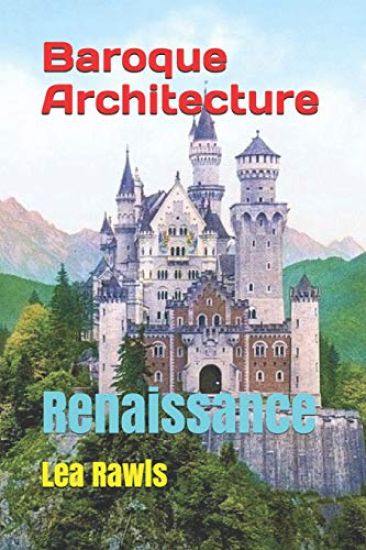
Baroque Architecture: Renaissance

Baroque Architecture: Renaissance

Lea Rawls

Independently Published
2018
nidottu
Baroque architecture is the building style of the Baroque era, begun in late 16th-century Italy, that took the Roman vocabulary of Renaissance architecture and used it in a new rhetorical and theatrical fashion, often to express the triumph of the Catholic Church. It was characterized by new explorations of form, light and shadow, and dramatic intensity. Common features of Baroque architecture included gigantism of proportions; a large open central space where everyone could see the altar; twisting columns, theatrical effects, including light coming from a cupola above; dramatic interior effects created with bronze and gilding; clusters of sculpted angels and other figures high overhead; and an extensive use of trompe-l'oeil, also called "quadratura," with painted architectural details and figures on the walls and ceiling, to increase the dramatic and theatrical effect. Whereas the Renaissance drew on the wealth and power of the Italian courts and was a blend of secular and religious forces, the Baroque was, initially at least, directly linked to the Counter-Reformation, a movement within the Catholic Church to reform itself in response to the Protestant Reformation. Baroque architecture and its embellishments were on the one hand more accessible to the emotions and on the other hand, a visible statement of the wealth and power of the Catholic Church. The new style manifested itself in particular in the context of the new religious orders, like the Theatines and the Jesuits who aimed to improve popular piety.Lutheran Baroque art, such as the example of Dresden Frauenkirche (1726-1743), developed as a confessional marker of identity, in response to the Great Iconoclasm of Calvinists. The architecture of the High Roman Baroque can be assigned to the papal reigns of Urban VIII, Innocent X and Alexander VII, spanning from 1623 to 1667. The three principal architects of this period were the sculptor Gianlorenzo Bernini, Francesco Borromini and the painter Pietro da Cortona and each evolved his own distinctively individual architectural expression.Dissemination of Baroque architecture to the south of Italy resulted in regional variations such as Sicilian Baroque architecture or that of Naples and Lecce. To the north, the Theatine architect Camillo-Guarino Guarini, Bernardo Vittone and Sicilian born Filippo Juvarra contributed Baroque buildings to the city of Turin and the Piedmont region.A synthesis of Bernini, Borromini, and Cortona's architecture can be seen in the late Baroque architecture of northern Europe, which paved the way for the more decorative Rococo style.By the middle of the 17th century, the Baroque style had found its secular expression in the form of grand palaces, first in France-with the Ch teau de Maisons (1642) near Paris by Fran ois Mansart-and then throughout Europe.During the 17th century, Baroque architecture spread through Europe and Latin America, where it was particularly promoted by the Jesuits.
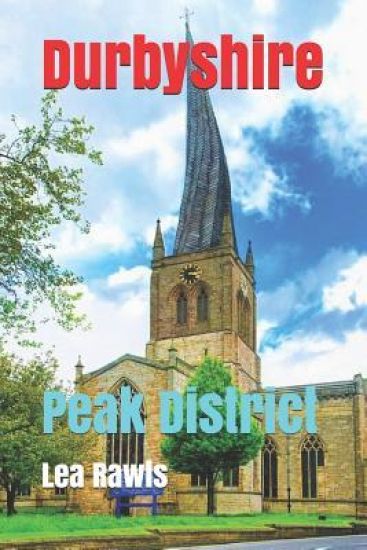
Durbyshire: Peak District

Durbyshire: Peak District

Lea Rawls

Independently Published
2018
nidottu
Derbyshire is a county in the East Midlands of England. A substantial portion of the Peak District National Park lies within Derbyshire, containing the southern extremity of the Pennine range of hills which extend into the north of the county. The county contains part of the National Forest, and borders on Greater Manchester to the northwest, West Yorkshire to the north, South Yorkshire to the northeast, Nottinghamshire to the east, Leicestershire to the southeast, Staffordshire to the west and southwest and Cheshire also to the west. Kinder Scout, at 636 metres (2,087 ft), is the highest point in the county, whilst Trent Meadows, where the River Trent leaves Derbyshire, is its lowest point at 27 metres (89 ft). The River Derwentis the county's longest river at 66 miles (106 km), and runs roughly north to south through the county. In 2003 the Ordnance Survey placed Church Flatts Farm at Coton in the Elms (near Swadlincote) as the furthest point from the sea in Great Britain.The city of Derby is a unitary authority area, but remains part of the ceremonial county of Derbyshire. The non-metropolitan county contains 30 towns with between 10,000 and 100,000 inhabitants. There is a large amount of sparsely populated agricultural upland: 75% of the population live in 25% of the area.The area that is now Derbyshire was first visited, probably briefly, by humans 200,000 years ago during the Aveley interglacialas evidenced by a Middle Paleolithic Acheulean hand axe found near Hopton. Further occupation came with the Upper Paleolithic and Neolithic periods of the Stone Age when Mesolithic hunter gatherers roamed the hilly tundra. Evidence of these nomadic tribes has been found in limestone caves located on the Nottinghamshire border. Deposits left in the caves date the occupancy at around 12,000 to 7,000 BCE.Because of its central location in England, and its altitude range from 27 metres in the south to 636 metres in the north, Derbyshire contains many species at the edge of their UK distribution ranges. Some species with a predominantly northern British distribution are at the southern limit of their range, whilst others with a more southern distribution are at their northern limit in Derbyshire. As climate change progresses, a number of sensitive species are now being seen to be either expanding or contracting their range as a result.A number of specialist organisations protect, promote and monitor records of individual animal groups across Derbyshire. The main ones are Derbyshire Ornithological Society; Derbyshire Mammal Group; Derbyshire Bat Group, Derbyshire Amphibian and Reptile Group, and the Derbyshire & Nottingham Entomological Society. All maintain databases of wildlife sightings, whilst some such as the Derbyshire Ornithological Society provide alerts of rare sightings on their websites or social media pages, and also publish major works describing the status and distribution of species.The county of Derbyshire has many attractions for both tourists and local people. The county offers Peak District scenery such as Mam Tor and Kinder Scout, and more metropolitan attractions such as Bakewell, Buxton and Derby. Local places of interest include Bolsover Castle, Castleton, Chatsworth House, National Tramway Museum at Crich, Peak Rail steam railway, Midland Railway steam railway, Dovedale, Haddon Hall, the Heights of Abraham and Matlock Bath.
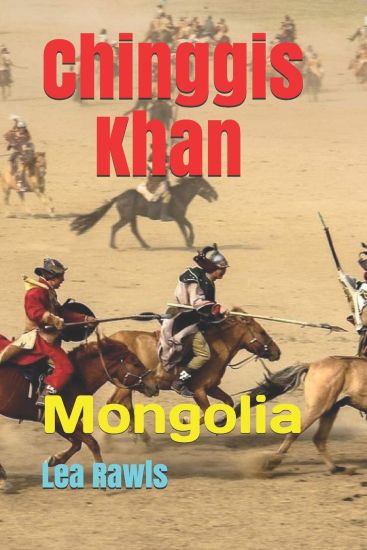
Chinggis Khan: Mongolia

Chinggis Khan: Mongolia

Lea Rawls

Independently Published
2018
nidottu
Mongolia is a landlocked country in East Asia. Its area is roughly equivalent with the historical territory of Outer Mongolia, and that term is sometimes used to refer to the current state. It is sandwiched between China to the south and Russia to the north. Mongolia does not share a border with Kazakhstan, although only 37 kilometres (23 mi) separates them.At 1,564,116 square kilometres (603,909 sq mi), Mongolia is the 18th-largest and the most sparsely populated unitary sovereign statein the world, with a population of around 3 million people. It is also the world's second-largest landlocked country behind Kazakhstan and the largest landlocked country that does not border a closed sea. The country contains very little arable land, as much of its area is covered by grassy steppe, with mountains to the north and west and the Gobi Desert to the south. Ulaanbaatar, the capital and largest city, is home to about 45% of the country's population. Ulaanbaatar also shares the rank of the world's coldest capital city with Moscow, Ottawa, and Astana. Approximately 30% of the population is nomadic or semi-nomadic; horse culture is still integral. The majority of its population are Buddhists. The non-religious population is the second largest group. Islam is the dominant religion among ethnic Kazakhs. The majority of the state's citizens are of Mongol ethnicity, although Kazakhs, Tuvans, and other minorities also live in the country, especially in the west. Mongolia joined the World Trade Organization in 1997 and seeks to expand its participation in regional economic and trade groups.The area of what is now Mongolia has been ruled by various nomadic empires, including the Xiongnu, the Xianbei, the Rouran, the Turkic Khaganate, and others. In 1206, Genghis Khan founded the Mongol Empire, which became the largest contiguous land empire in history. His grandson Kublai Khan conquered China to establish the Yuan dynasty. After the collapse of the Yuan, the Mongols retreated to Mongolia and resumed their earlier pattern of factional conflict, except during the era of Dayan Khan and Tumen Zasagt Khan.In the 16th century, Tibetan Buddhism began to spread in Mongolia, being further led by the Manchu-founded Qing dynasty, which absorbed the country in the 17th century. By the early 1900s, almost one-third of the adult male population were Buddhist monks. After the collapse of the Qing dynasty in 1911, Mongolia declared independence, and achieved actual independence from the Republic of China in 1921. Shortly thereafter, the country came under the control of the Soviet Union, which had aided its independence from China. In 1924, the Mongolian People's Republic was founded as a socialist state. After the anti-Communist revolutions of 1989, Mongolia conducted its own peaceful democratic revolution in early 1990. This led to a multi-party system, a new constitution of 1992, and transition to a market economy.The population during the Copper Age has been described as mongoloid in the east of what is now Mongolia, and as europoid in the west Tocharians (Yuezhi) and Scythians inhabited western Mongolia during the Bronze Age. The mummy of a Scythian warrior, which is believed to be about 2,500 years old, was a 30- to 40-year-old man with blond hair; it was found in the Altai, Mongolia. As equine nomadism was introduced into Mongolia, the political center of the Eurasian Steppe also shifted to Mongolia, where it remained until the 18th century CE. The intrusions of northern pastoralists (e.g. the Guifang, Shanrong, and Donghu) into China during the Shang dynasty (1600-1046 BC) and Zhou dynasty (1046-256 BC) presaged the age of nomadic empires.
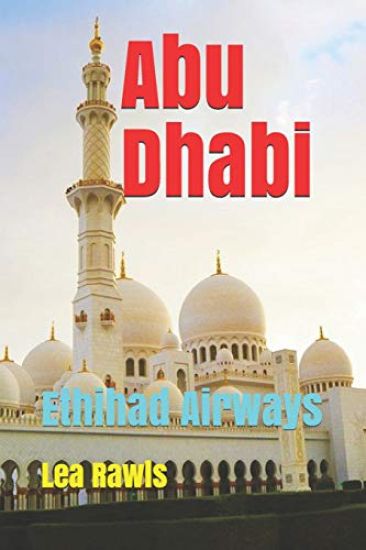
Abu Dhabi: Ethihad Airways

Abu Dhabi: Ethihad Airways

Lea Rawls

Independently Published
2019
nidottu
Abu Dhabi is the capital and the second most populous city of the United Arab Emirates (the most populous being Dubai), and also capital of the Emirate of Abu Dhabi, the largest of the UAE's seven emirates. Abu Dhabi lies on a T-shaped island jutting into the Persian Gulf from the central western coast. The city of Abu Dhabi has an estimated population of 1.8 million in 2016. Abu Dhabi houses federal government offices, is the seat of the United Arab Emirates Government, home to the Abu Dhabi Emiri Family and the President of the UAE, who is from this family. Abu Dhabi's rapid development and urbanisation, coupled with the relatively high average income of its population, has transformed the city into a large and advanced metropolis. Today the city is the country's centre of political and industrial activities, and a major cultural and commercial centre, due to its position as the capital. Abu Dhabi accounts for about two-thirds of the roughly $400-billion United Arab Emirates economy.Abu Dhabi is full of archaeological evidence that points to civilizations, such as the Umm an-Nar Culture, having been located there from the third millennium BCE. Settlements were also found farther outside the modern city of Abu Dhabi but closer to the modern city of Al Ain. There is evidence of Bronze Age Hafit period civilisation around the mountain of Hafeet (Jebel Hafeet). This location is very strategic because it is the UAE's second tallest mountain, so it would have great visibility. It also contains a lot of moisture in its springs and lakes, which means that there would have been more moisture thousands of years ago.The city of Abu Dhabi is on the southeastern side of the Arabian Peninsula, adjoining the Persian Gulf. Most of Abu Dhabi city is located on the island itself, but it has many suburban districts on the mainland, for example: Khalifa City A, B, and C; Khalifa City Al Raha Beach; Al Bahia City A, B, and C; Al Shahama; Al Rahba; Between Two Bridges; Baniyas; Shamkha; AL Wathba and Mussafah Residential.Gulf waters of Abu Dhabi holds the world's largest population of Indo-Pacific humpbacked dolphins.Abu Dhabi has a hot desert climate (K ppen climate classification BWh). Sunny blue skies can be expected throughout the year. The months of June through September are generally extremely hot and humid with maximum temperatures averaging above 38 C (100 F). During this time, sandstorms occur intermittently, in some cases reducing visibility to a few meters.The cooler season is from November to March, which ranges between moderately hot to mild. This period also sees dense fog on some days. On average, January is the coolest month in the year, while August is the hottest. Since the Tropic of Cancer passes through the emirate, the southern part falls within the Tropics. However, despite the coolest month having a 18.8 C (65.8 F) average, its climate is far too dry to be classed as tropical.Councils such as the Abu Dhabi Urban Planning Council and the Regulation and Supervision Bureau are responsible for infrastructure projects in the city. Finances are mainly through the state government.Because Abu Dhabi is the capital of the UAE, the presidents office is located here.
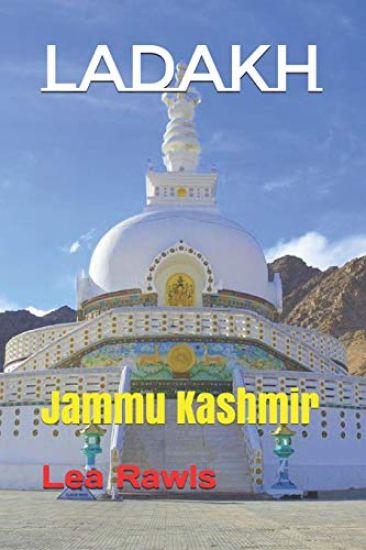
Ladakh: Jammu Kashmir

Ladakh: Jammu Kashmir

Lea Rawls

Independently Published
2019
nidottu
Ladakh ("land of high passes") is a region in the Indian state of Jammu and Kashmir that currently extends from the Siachen Glacier in the Karakoram range to the main Great Himalayas to the south, inhabited by people of Indo-Aryan and Tibetan descent. It is one of the most sparsely populated regions in Jammu and Kashmir and its culture and history are closely related to that of Tibet. Ladakh is renowned for its remote mountain beauty and culture.Historically, the region included the Baltistan (Baltiyul) valleys (now mostly in Pakistan), the entire upper Indus Valley, the remote Zanskar, Lahaul and Spiti to the south, much of Ngari including the Rudok region and Guge in the east, Aksai Chin in the northeast (extending to the Kun Lun Mountains), and the Nubra Valley to the north over Khardong La in the Ladakh Range. Contemporary Ladakh borders Tibet to the east, the Lahaul and Spiti regions to the south, the Vale of Kashmir, Jammu and Baltiyul regions to the west, and the southwest corner of Xinjiang across the Karakoram Pass in the far north.Aksai Chin is one of the disputed border areas between China and India. It is administered by China as part of Hotan County but is also claimed by India as a part of the Ladakh region of the state of Jammu and Kashmir. In 1962, China and India fought a brief war over Aksai Chin and Arunachal Pradesh, but in 1993 and 1996 the two countries signed agreements to respect the Line of Actual Control. In the past Ladakh gained importance from its strategic location at the crossroads of important trade routes, but since the Chinese authorities closed the borders with Tibet and Central Asia in the 1960s, international trade has dwindled except for tourism. Since 1974, the Government of India has successfully encouraged tourism in Ladakh. Since Ladakh is a part of strategically important Jammu and Kashmir, the Indian military maintains a strong presence in the region.The largest town in Ladakh is Leh, followed by Kargil. Tibetan Buddhists (39.7%) and Hindus (12.1%) collectively represent the majority of the population while a plurality of Ladakhis (46.4%) are Muslims (mainly Shia). Other religious groups include Sikhs etc. Some Ladakhi activists have in recent times called for Ladakh to be constituted as a union territory because of perceived unfair treatment by Kashmir and Ladakh's cultural differences with predominantly Sunni Muslim Kashmir.Ladakh is the highest plateau in the state of Jammu & Kashmir with much of it being over 3,000 m (9,800 ft). It extends from the Himalayan to the Kunlun Ranges and includes the upper Indus River valley.Ladakhi food has much in common with Tibetan food, the most prominent foods being thukpa (noodle soup) and tsampa, known in Ladakhi as ngampe (roasted barley flour). Edible without cooking, tsampa makes useful trekking food.