Kirjojen hintavertailu. Mukana 11 244 527 kirjaa ja 12 kauppaa.

Kirjahaku

Etsi kirjoja tekijän nimen, kirjan nimen tai ISBN:n perusteella.

7 kirjaa tekijältä Lee C. Barrett

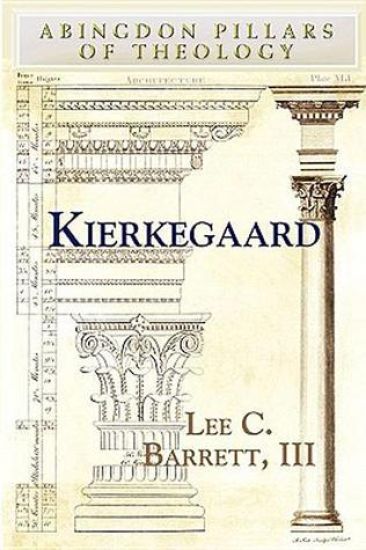
Kierkegaard

Kierkegaard

Lee C. Barrett

Abingdon Press
2010
pokkari
"Abingdon Pillars of Theology" is a series for the college and seminary classroom designed to help students grasp the basic and necessary facts, influence, and significance of major theologians. Written by noted scholars, these books will outline the context, methodology, organizing principles, primary contributions, and key writings of people who have shaped theology as we know it today.Soren Kierkegaard (1813-1855) "foresaw, the power of mass culture to numb the human spirit has only waxed in strength and virulence. The prostitution of religion to legitimate self-aggrandizing ideologies has become a veritable global industry. The reduction of neighbor-love to the most minimal standards of decent behavior has devolved to the point where slightly altruistic celebrities are heralded as Christ-like saints. The deep yearnings of the human heart are being suffocated by trivial amusements, technological toys, and the manipulation of the psyche. Now, perhaps more than ever, Christianity needs an aggravating Socrates to disturb its complicity with a culture of individual self-gratification and corporate self-deification." "from the book"Lee C. Barrett, III is Mary B. and Hanry P. Stager Chair in Theology, Professor of Systematic Theology at Lancaster Theological Seminary in Lancaster, Pennsylvania. "
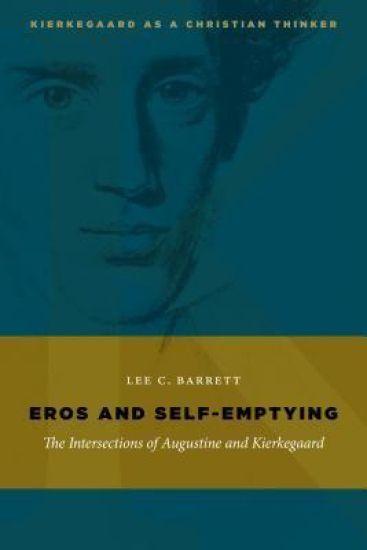
Eros and Self-Emptying

Eros and Self-Emptying

Lee C. Barrett

William B Eerdmans Publishing Co
2013
nidottu
A thought-provoking comparative take on two seminal thinkers in Christian history In this book -- the first volume in the Kierkegaard as a Christian Thinker series -- Lee Barrett offers a novel comparative interpretation of early church father Augustine and nineteenth-century philosopher-theologian Soren Kierkegaard. Though these two intellectual giants have been paired by historians of Western culture, the exact nature of their similarities and differences has never before been probed in detail. Barrett demonstrates that on many essential theological levels Augustine and Kierkegaard were more convergent than divergent. Most significantly, their parallels point to a distinctive understanding of the Christian life as a passion for self-giving love. Approaching Kierkegaard through the lens of Augustine, Barrett argues, enables the theme of desire for fulfillment in God to be seen as much more central to Kierkegaard's thought than previously imagined.
Volume 1, Tome II: Kierkegaard and the Bible - The New Testament
Exploring Kierkegaard's complex use of the Bible, the essays in this volume use source-critical research and tools ranging from literary criticism to theology and biblical studies, to situate Kierkegaard's appropriation of the biblical material in his cultural and intellectual context. The contributors seek to identify the possible sources that may have influenced Kierkegaard's understanding and employment of Scripture, and to describe the debates about the Bible that may have shaped, perhaps indirectly, his attitudes toward Scripture. They also pay close attention to Kierkegaard's actual hermeneutic practice, analyzing the implicit interpretive moves that he makes as well as his more explicit statements about the significance of various biblical passages. This close reading of Kierkegaard's texts elucidates the unique and sometimes odd features of his frequent appeals to Scripture. This volume in the series devotes one tome to the Old Testament and a second tome to the New Testament. As with the Old Testament, Kierkegaard was aware of new developments in New Testament scholarship, and troubled by them. Because these scholarly projects generated alternative understandings of the significance of Jesus, they impinged directly on his own work. It was crucial for Kierkegaard that Jesus is presented as both the enactment of God's reconciliation with humanity and as the prototype for humanity to emulate. Consequently, Kierkegaard had to struggle with the proper way to explicate persuasively the significance of Jesus in a situation of decreasing academic consensus about Jesus. He also had to contend with contested interpretations of James and Paul, two biblical authors vital for his work. As a result, Kierkegaard ruminated about the proper way to appropriate the New Testament and used material from it carefully and deliberately. The authors in the present New Testament tome seek to clarify different dimensions of Kierkegaard's interpretive theory and practice as he sought to avoid the twin pitfalls of academic skepticism and passionless biblical traditionalism.
Volume 1, Tome II: Kierkegaard and the Bible - The New Testament
Exploring Kierkegaard's complex use of the Bible, the essays in this volume use source-critical research and tools ranging from literary criticism to theology and biblical studies, to situate Kierkegaard's appropriation of the biblical material in his cultural and intellectual context. The contributors seek to identify the possible sources that may have influenced Kierkegaard's understanding and employment of Scripture, and to describe the debates about the Bible that may have shaped, perhaps indirectly, his attitudes toward Scripture. They also pay close attention to Kierkegaard's actual hermeneutic practice, analyzing the implicit interpretive moves that he makes as well as his more explicit statements about the significance of various biblical passages. This close reading of Kierkegaard's texts elucidates the unique and sometimes odd features of his frequent appeals to Scripture. This volume in the series devotes one tome to the Old Testament and a second tome to the New Testament. As with the Old Testament, Kierkegaard was aware of new developments in New Testament scholarship, and troubled by them. Because these scholarly projects generated alternative understandings of the significance of Jesus, they impinged directly on his own work. It was crucial for Kierkegaard that Jesus is presented as both the enactment of God's reconciliation with humanity and as the prototype for humanity to emulate. Consequently, Kierkegaard had to struggle with the proper way to explicate persuasively the significance of Jesus in a situation of decreasing academic consensus about Jesus. He also had to contend with contested interpretations of James and Paul, two biblical authors vital for his work. As a result, Kierkegaard ruminated about the proper way to appropriate the New Testament and used material from it carefully and deliberately. The authors in the present New Testament tome seek to clarify different dimensions of Kierkegaard's interpretive theory and practice as he sought to avoid the twin pitfalls of academic skepticism and passionless biblical traditionalism.
Kierkegaard on God’s Will and Human Freedom

Kierkegaard on God’s Will and Human Freedom

Lee C. Barrett

BLOOMSBURY PUBLISHING PLC
2023
sidottu
Søren Kierkegaard’s authorship exhibits two different trajectories concerning the relation of responsible human agency to sovereign divine agency: one trajectory stresses free human striving, while the other trajectory emphasizes the dominance of divine agency. The first theme led to the view of Kierkegaard as the champion of autonomous existential “leaps,” while the second led to the construal of Kierkegaard as a devout Lutheran who trusted absolutely in God’s gracious governance. Lee C. Barrett argues that Kierkegaard, influenced by Kant’s critique of metaphysics, did not attempt to integrate human and divine agencies in any speculative theory. Instead, Kierkegaard deploys them to encourage different passions and dispositions that can be integrated in a coherent human life, making use of literary strategies to foster the different passions and dispositions that are associated with the themes of human responsibility and divine governance. Kierkegaard on God’s Will and Human Freedom: An Upbuilding Antinomy offers an incisive account of what makes Kierkegaard’s conception of theology as a matter of edification rather than speculation so distinctive and enduringly worthwhile.