Kirjojen hintavertailu. Mukana 11 342 296 kirjaa ja 12 kauppaa.

Kirjahaku

Etsi kirjoja tekijän nimen, kirjan nimen tai ISBN:n perusteella.

11 kirjaa tekijältä Lee Clark Mitchell

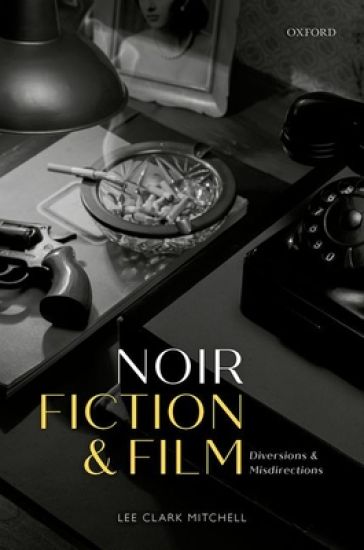
Noir Fiction and Film

Noir Fiction and Film

Lee Clark Mitchell

Oxford University Press
2021
sidottu
The argument of Noir Fiction and Film is curiously counterintuitive: that in a century of hard-boiled fiction and detective films, characteristics that at first seemed trivial swelled in importance, flourishing into crucial aspects of the genre. Among these are aimless descriptions of people and places irrelevant to plot, along with detectives consisting of little more than sparkling dialogue and flippant attitudes. What weaves together such features, however, seems to be a paradox: that a genre rooted in solving a mystery, structured around the gathering of clues, must do so by misdirecting our attention, even withholding information we think we need to generate the suspense we also desire. Yet successful noir stories and films enhance that suspense through passing diversions (descriptive details and eccentric perspectives) rather than depending on the center pieces of plot alone (suspected motives or incriminating traces). As the greatest practitioners of the genre have realized, the "how" of detective fiction (its stylistic detours) draws us in more insistently than the "what" or the "who" (its linear advance). And the achievement of recent film noir is to make that "how" become the tantalizing object of our entire attention, shorn of any pretense of reading for the plot, immersing us in the diversionary delight that has animated the genre from the beginning.
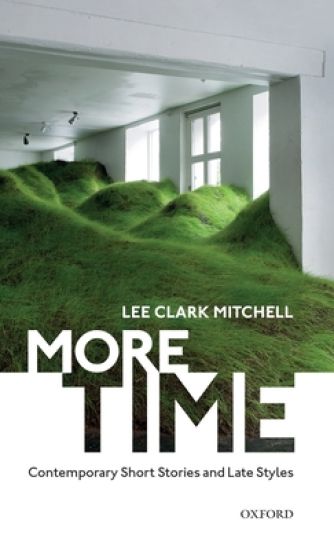
More Time

More Time

Lee Clark Mitchell

Oxford University Press
2019
sidottu
More Time studies the contemporary short story and focuses on four recent collections: Alice Munro's Dear Life (2012); Andre Dubus's Dancing After Hours (1996); Joy Williams's The Visiting Privilege (2015); and Lydia Davis's Can't and Won't (2014). Each publication has appeared near the conclusion of a career devoted all but exclusively to short stories, with each defining a 'late style' honed over a lifetime. As well, each diverges from others in ways that have profoundly shaped our generic conceptions, and collectively they represent the four most innovative practitioners of the past half-century (with the arguable exception of Raymond Carver). Yet in an era when writing programs, The New Yorker, and distinguished journals all promulgate the short story, it remains relatively under-examined as a major literary form. We continue to argue about what a story inherently is, ignoring how differences among practitioners enliven the field. Dubus, Munro, Williams, and Davis each defy critical efforts to identify the story form's presumed constitution, marked by a supposedly special shape or requisite length or distinct narrative trajectory. And the very contrast among their efforts reveals the expansiveness of the genre, though few have taken such a cross-glancing interpretive approach. This volume opens up discussion, shifting from close analysis into larger speculation about possibilities established by the most innovative writers in their later work.
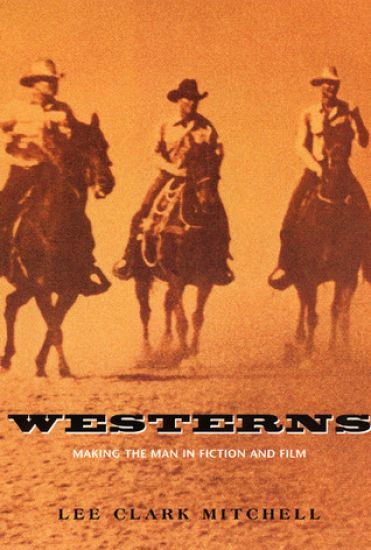
Westerns

Westerns

Lee Clark Mitchell

University of Chicago Press
1998
nidottu
Ranging from the novels of James Fenimore Cooper to Louis L'Amour, and from classic films like Stagecoach to spaghetti Westerns like A Fistful of Dollars, Mitchell shows how Westerns helped assuage a series of crises in American culture. This landmark study shows that the Western owes its perennial appeal not to unchanging conventions but to the deftness with which it responds to the obsessions and fears of its audience. And no obsession, Lee Mitchell argues, has figured more prominently in the Western than what it means to be a man."Elegantly written. . . . provocative . . . characterized by [Mitchell's] own tendency to shoot from the hip."—J. Hoberman, London Review of Books"[Mitchell's] book would be worth reading just for the way he relates Benjamin Spock's Baby and Child to the postwar Western."—The Observer"Integrating a careful handling of historical context with a keen eye for textual nuances, Mitchell reconstructs the Western's aesthetic tradition of the 19th century."—Aaron M. Wehner, San Francisco Review
Witnesses to a Vanishing America

Witnesses to a Vanishing America

Lee Clark Mitchell

Princeton University Press
2014
pokkari
Propelled across the continent by notions of rugged individualism" and "manifest destiny," pioneer Americans soon discovered that such slogans only partly disguised the fact that building an empire meant destroying a wilderness. Through an astonishing range of media, they voiced their concern about America's westward mission. Drawing on a wide variety of evidence, Lee Clark Mitchell portrays the growing apprehensions Originally published in 1981. The Princeton Legacy Library uses the latest print-on-demand technology to again make available previously out-of-print books from the distinguished backlist of Princeton University Press. These editions preserve the original texts of these important books while presenting them in durable paperback and hardcover editions. The goal of the Princeton Legacy Library is to vastly increase access to the rich scholarly heritage found in the thousands of books published by Princeton University Press since its founding in 1905.
Witnesses to a Vanishing America

Witnesses to a Vanishing America

Lee Clark Mitchell

Princeton University Press
2016
sidottu
Propelled across the continent by notions of rugged individualism" and "manifest destiny," pioneer Americans soon discovered that such slogans only partly disguised the fact that building an empire meant destroying a wilderness. Through an astonishing range of media, they voiced their concern about America's westward mission. Drawing on a wide variety of evidence, Lee Clark Mitchell portrays the growing apprehensions Originally published in 1981. The Princeton Legacy Library uses the latest print-on-demand technology to again make available previously out-of-print books from the distinguished backlist of Princeton University Press. These editions preserve the original texts of these important books while presenting them in durable paperback and hardcover editions. The goal of the Princeton Legacy Library is to vastly increase access to the rich scholarly heritage found in the thousands of books published by Princeton University Press since its founding in 1905.
Late Westerns

Late Westerns

Lee Clark Mitchell

University of Nebraska Press
2018
sidottu
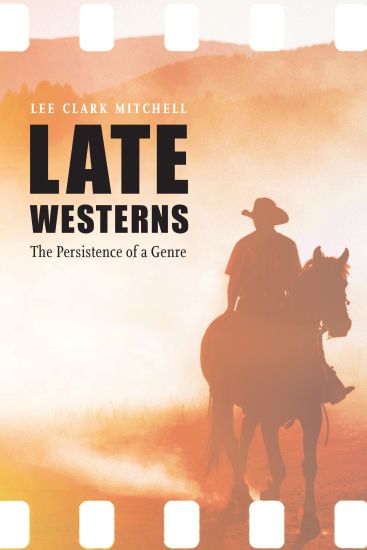
For more than a century the cinematic western has been America’s most familiar genre, always teetering on the verge of exhaustion and yet regularly revived in new forms. Why does this outmoded vehicle-with the most narrowly based historical setting of any popular genre-maintain its appeal? In Late Westerns Lee Clark Mitchell takes a position against those critics looking to attach “post” to the all-too-familiar genre. For though the frontier disappeared long ago, though men on horseback have become commonplace, and though films of all sorts have always, necessarily, defied generic patterns, the western continues to enthrall audiences. It does so by engaging narrative expectations stamped on our collective consciousness so firmly as to integrate materials that might not seem obviously “western” at all. Through plot cues, narrative reminders, and even cinematic frameworks, recent films shape interpretive understanding by triggering a long-standing familiarity audiences have with the genre. Mitchell’s critical analysis reveals how these films engage a thematic and cinematic border-crossing in which their formal innovations and odd plots succeed deconstructively, encouraging by allusion, implication, and citation the evocation of generic meaning from ingredients that otherwise might be interpreted quite differently. Applying genre theory with close cinematic readings, Mitchell posits that the western has essentially been “post” all along.
Mere Reading

Mere Reading

Lee Clark Mitchell

Bloomsbury Academic USA
2017
nidottu
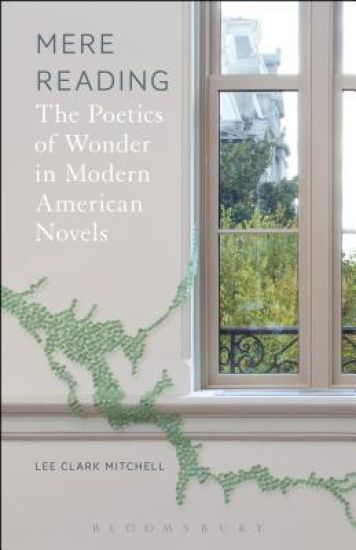
Named a Choice Outstanding Academic Title of the Year Mere Reading argues for a return to the foundations of literary study established nearly a century ago. Following a recent period dominated by symptomatic analyses of fictional texts (new historicist, Marxist, feminist, identity-political), Lee Clark Mitchell joins a burgeoning neo-formalist movement in challenging readers to embrace a rationale for literary criticism that has too long been ignored—a neglect that corresponds, perhaps not coincidentally, to a flight from literature courses themselves. In close readings of six American novels spread over the past century—Willa Cather’s The Professor’s House, Vladimir Nabokov’s Lolita, Marilynne Robinson’s Housekeeping, Cormac McCarthy’s Blood Meridian and The Road, and Junot Díaz’s The Brief Wondrous Life of Oscar Wao—Mitchell traces a shifting strain of late modernist innovation that celebrates a species of magic and wonder, of aesthetic “bliss” (as Barthes and Nabokov both coincidentally described the experience) that dumbfounds the reader and compels a reassessment of interpretive assumptions. The novels included here aspire to being read slowly, so that sounds, rhythms, repetitions, rhymes, and other verbal features take on a heightened poetic status—in critic Barbara Johnson’s words, “the rigorous perversity and seductiveness of literary language”—thwarting pressures of plot that otherwise push us ineluctably forward. In each chapter, the return to “mere reading” becomes paradoxically a gesture that honors the intractability of fictional texts, their sheer irresolution, indeed the way in which their “literary” status rests on the play of irreconcilables that emerges from the verbal tensions we find ourselves first astonished by, then delighting in.
Mere Reading

Mere Reading

Lee Clark Mitchell

Bloomsbury Academic USA
2017
sidottu
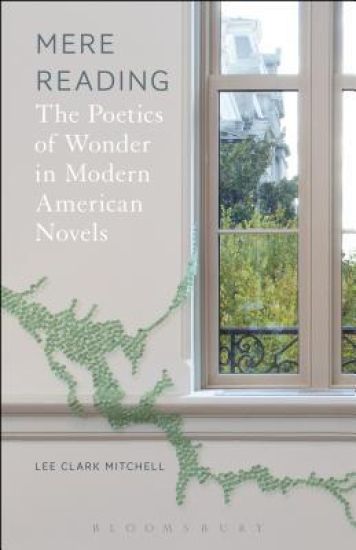
Named a Choice Outstanding Academic Title of the Year Mere Reading argues for a return to the foundations of literary study established nearly a century ago. Following a recent period dominated by symptomatic analyses of fictional texts (new historicist, Marxist, feminist, identity-political), Lee Clark Mitchell joins a burgeoning neo-formalist movement in challenging readers to embrace a rationale for literary criticism that has too long been ignored—a neglect that corresponds, perhaps not coincidentally, to a flight from literature courses themselves. In close readings of six American novels spread over the past century—Willa Cather’s The Professor’s House, Vladimir Nabokov’s Lolita, Marilynne Robinson’s Housekeeping, Cormac McCarthy’s Blood Meridian and The Road, and Junot Díaz’s The Brief Wondrous Life of Oscar Wao—Mitchell traces a shifting strain of late modernist innovation that celebrates a species of magic and wonder, of aesthetic “bliss” (as Barthes and Nabokov both coincidentally described the experience) that dumbfounds the reader and compels a reassessment of interpretive assumptions. The novels included here aspire to being read slowly, so that sounds, rhythms, repetitions, rhymes, and other verbal features take on a heightened poetic status—in critic Barbara Johnson’s words, “the rigorous perversity and seductiveness of literary language”—thwarting pressures of plot that otherwise push us ineluctably forward. In each chapter, the return to “mere reading” becomes paradoxically a gesture that honors the intractability of fictional texts, their sheer irresolution, indeed the way in which their “literary” status rests on the play of irreconcilables that emerges from the verbal tensions we find ourselves first astonished by, then delighting in.
Mark My Words

Mark My Words

Lee Clark Mitchell

Bloomsbury Academic USA
2020
nidottu
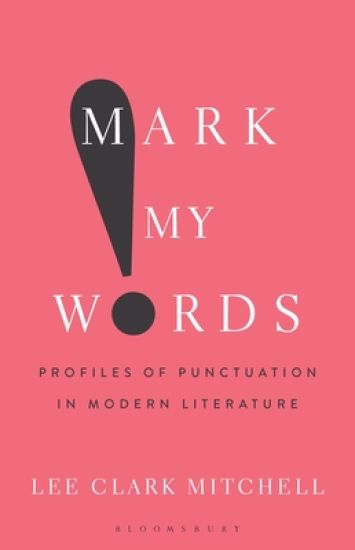
Why are Emily Dickinson and Henry James drawn habitually to dashes? What makes James Baldwin such a fan of commas, which William Carlos Williams tends to ignore? And why do that odd couple, the novelist Virginia Woolf and the short story specialist Andre Dubus II, both embrace semicolons, while E. E. Cummings and Nikki Giovanni forego punctuation entirely? More generally, what effect do such nonverbal marks (or their absence) have on an author’s encompassing vision? The first book on modern literature to compare writers’ punctuation, and to show how fully typographical marks alter our sense of authorial style, Mark My Words offers new ways of reading some of our most important and beloved writers as well as suggesting a fresh perspective on literary style itself.
Mark My Words

Mark My Words

Lee Clark Mitchell

Bloomsbury Academic USA
2020
sidottu
Why are Emily Dickinson and Henry James drawn habitually to dashes? What makes James Baldwin such a fan of commas, which William Carlos Williams tends to ignore? And why do that odd couple, the novelist Virginia Woolf and the short story specialist Andre Dubus II, both embrace semicolons, while E. E. Cummings and Nikki Giovanni forego punctuation entirely? More generally, what effect do such nonverbal marks (or their absence) have on an author’s encompassing vision? The first book on modern literature to compare writers’ punctuation, and to show how fully typographical marks alter our sense of authorial style, Mark My Words offers new ways of reading some of our most important and beloved writers as well as suggesting a fresh perspective on literary style itself.