Kirjojen hintavertailu. Mukana 11 699 587 kirjaa ja 12 kauppaa.

Kirjahaku

Etsi kirjoja tekijän nimen, kirjan nimen tai ISBN:n perusteella.

4 kirjaa tekijältä Lee M. Jenkins

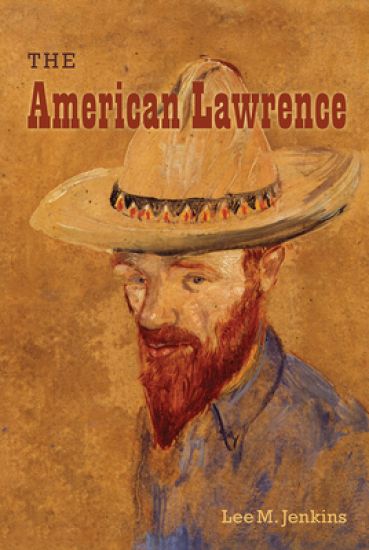
The American Lawrence

The American Lawrence

Lee M. Jenkins

University Press of Florida
2021
nidottu
Known as a distinctly English author, D.H. Lawrence is reevaluated as a creator and critic of American literature in this imaginative study. From 1922 to 1925, during his "savage pilgrimage" in Mexico and New Mexico, D.H. Lawrence completed the core of what Lee Jenkins terms his "American oeuvre" - including his major volume of criticism, Studies in Classic American Literature.By examining Lawrence's experiences in the Americas, including his fascination with indigenous cultures, Jenkins illustrates how the modernist writer helped shape both American literary criticism and the American literary canon. Reassessing Lawrence's relationship to American modernism and his literary contemporaries in the New World, Jenkins portrays Lawrence as a transatlantic writer whose significant body of work embraces and adapts both English and American traditions and innovations.
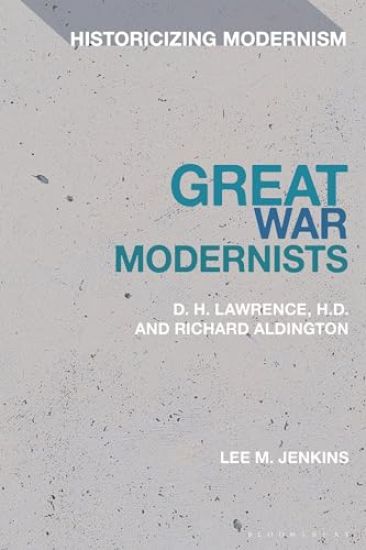
Great War Modernists

Great War Modernists

Lee M. Jenkins

BLOOMSBURY PUBLISHING PLC
2024
sidottu
Taking 44 Mecklenburgh Square as the focal point and springboard for a critical group study of D.H. Lawrence, H.D. and Richard Aldington, this book offers a fresh perspective on the relationship of modernist biofiction and poetry to the literature of the First World War. A group that Perdita Schaffner described as ‘another Bloomsbury set’, the Mecklenburgh Square writers, like the Bloomsbury Group proper, ‘lived in squares’ and ‘loved in triangles’, in Dorothy Parker’s famous formulation. Geographically adjacent, these sets intersected socially and, at points, in their aesthetics: both practiced innovative forms of what may broadly be defined as ‘life writing’. But, demarcating the Mecklenburgh Square writers from the Bloomsbury Set, the former had its origins in the transatlantic avant-garde: Lawrence. H.D., Aldington (and John Cournos) were all associated with Imagism, the poetic movement which instantiated Anglo-American modernism. Considered as a pro-tem collective, these four poets, all of whom were also novelists and translators, contest the binaries that still obtain between modernist and First World War writing. This group study of Lawrence, H.D., Aldington and Cournos tracks the transition of Imagism from a pre-war mode to a war poetics which includes but is not confined to the trench lyric and it traces, in the transtextual relations between the Mecklenburgh Square novels, the traumatic imprint of the war on modernist life writing.
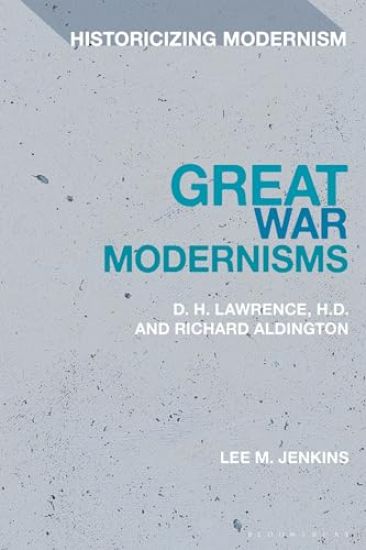
Great War Modernists

Great War Modernists

Lee M. Jenkins

BLOOMSBURY PUBLISHING PLC
2026
nidottu
Taking 44 Mecklenburgh Square as the focal point and springboard for a critical group study of D.H. Lawrence, H.D. and Richard Aldington, this book offers a fresh perspective on the relationship of modernist biofiction and poetry to the literature of the First World War. A group that Perdita Schaffner described as ‘another Bloomsbury set’, the Mecklenburgh Square writers, like the Bloomsbury Group proper, ‘lived in squares’ and ‘loved in triangles’, in Dorothy Parker’s famous formulation. Geographically adjacent, these sets intersected socially and, at points, in their aesthetics: both practiced innovative forms of what may broadly be defined as ‘life writing’. But, demarcating the Mecklenburgh Square writers from the Bloomsbury Set, the former had its origins in the transatlantic avant-garde: Lawrence. H.D., Aldington (and John Cournos) were all associated with Imagism, the poetic movement which instantiated Anglo-American modernism. Considered as a pro-tem collective, these four poets, all of whom were also novelists and translators, contest the binaries that still obtain between modernist and First World War writing. This group study of Lawrence, H.D., Aldington and Cournos tracks the transition of Imagism from a pre-war mode to a war poetics which includes but is not confined to the trench lyric and it traces, in the transtextual relations between the Mecklenburgh Square novels, the traumatic imprint of the war on modernist life writing.